
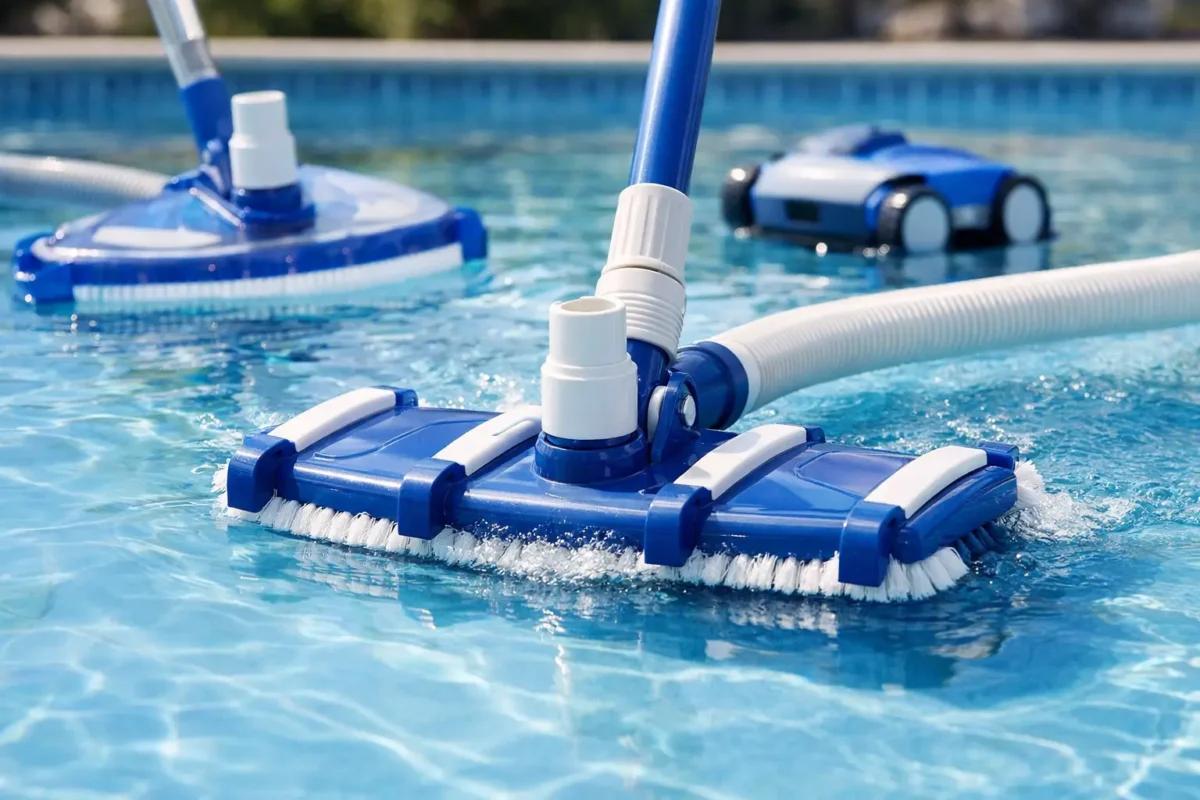
A pool can look immaculate from the deck while fine sand, settled dust, leaves, and algae spores collect across its floor. The best pool vacuum heads remove that material efficiently without scratching the finish, losing suction, or forcing maintenance teams to repeat the same work. For premium villas, hospitality facilities, and commercial properties, this seemingly simple accessory has a direct effect on water clarity, surface condition, and the time required for routine cleaning.
A vacuum head should never be selected on price alone. Pool shape, interior finish, debris load, hose size, and the strength of the filtration system all influence the right choice. A well-matched head creates a consistent seal against the floor, guides debris toward the suction point, and reaches areas where dirt naturally settles. The wrong one can float, stick in place, miss corners, or place unnecessary strain on the pump.
What Makes the Best Pool Vacuum Heads Different?
The strongest vacuum heads balance coverage, maneuverability, and durability. A wide commercial-style head may clean a large rectangular pool quickly, but it can be awkward around tight steps, curved walls, or decorative ledges. A compact weighted head can follow contours more closely, though it will take longer to cover a large pool floor.
Weight is one of the most important details. A properly weighted vacuum head stays in contact with the surface rather than lifting as water moves through the hose. This improves pickup and reduces the need for repeated passes. However, excessive weight is not always better. On delicate tiled finishes, a very heavy unit with poor-quality wheels or exposed hardware can mark grout lines or create unnecessary wear.
Construction quality also matters in high-use environments. Premium vacuum heads typically use UV-resistant molded bodies, corrosion-resistant metal components, durable brushes, and non-marking wheels. These features are especially valuable for outdoor pools exposed to intense sun, heat, and fine airborne dust. For hotels, residential towers, and facility management teams, durable equipment also means fewer replacements and more predictable maintenance costs.
Choose a Vacuum Head for the Pool Surface
The pool interior is the starting point for selection. Different finishes require different contact points and cleaning action.
Concrete, plaster, and exposed aggregate pools
Concrete and plaster surfaces often benefit from a weighted vacuum head with sturdy nylon brushes. The brushes loosen fine debris from slightly textured finishes while the suction removes it. For older plaster pools, this combination can be particularly useful because small surface imperfections tend to hold sediment.
Choose wheels that roll freely and a body with smooth edges. A pool vacuum head should clean the surface, not become another source of abrasion. Where aggregate is more pronounced, a model with flexible brush sections can maintain better contact across uneven areas.
Tile, mosaic, and premium finished pools
Tile-lined pools demand greater care. Non-marking wheels and soft brushes are essential, particularly in luxury installations where the finish is a major visual feature. Avoid heads with rough, rigid contact surfaces or unprotected metal parts that could scrape tile edges and grout.
A flexible weighted head is often the better choice for mosaic finishes because it can follow subtle changes in level. It may cost more than a basic flat head, but it protects a high-value finish and produces a more complete clean.
Vinyl liner and fiberglass pools
Vinyl and fiberglass pools need a smooth, surface-safe vacuum head. Soft brushes are useful, but the head should not have sharp corners, aggressive bristles, or wheels that can trap grit. The aim is to lift fine debris without pulling, scuffing, or stressing the liner.
For fiberglass pools with contoured floors, a flexible head can offer better coverage than a rigid, wide model. The trade-off is that it may require slower movement to prevent the hose from pulling the head off line.
Width, Shape, and Movement Matter
Vacuum head width should match the pool’s layout and maintenance routine. Wide heads, generally suited to large open floors, help operators clean faster. They are a practical choice for lap pools, hotel pools, and expansive villa pools with long straight runs. Their broad suction path reduces the number of passes needed to clear settled debris.
Narrower heads are better for pools with curved edges, narrow channels, steps, tanning ledges, and detailed architectural features. They provide more control and can reach areas a wide head may leave behind. Many professional maintenance teams keep more than one head available rather than expecting one accessory to perform every task.
The head’s shape influences how well it tracks. A triangular head can be useful for corners and tight angles. A flexible rectangular head generally provides effective coverage across large floors while adapting to minor contours. A rigid rectangular design offers steady movement on flat surfaces but may struggle around transitions and curved areas.
Wheels improve mobility, but they must be appropriate for the surface. Non-marking wheels are the premium standard for finished pools. They make it easier to guide the head without dragging it across the surface, while also helping maintain a reliable suction seal. Inspect wheel axles regularly, as trapped sand and debris can stop them from turning freely.
Suction Compatibility Is Not Optional
A high-quality vacuum head cannot perform well if it does not work correctly with the hose, telescopic pole, skimmer line, or dedicated vacuum point. Before purchasing, confirm the connection diameter and the intended method of manual vacuuming. Most professional systems use standard fittings, but assumptions can lead to air leaks, weak suction, and frustrating cleaning sessions.
Adequate suction depends on more than the head. A clogged skimmer basket, dirty pump basket, blocked hose, full filter, or poorly positioned multiport valve can reduce performance. If the vacuum head suddenly appears ineffective, the issue may be elsewhere in the circulation system.
For pools with variable-speed pumps, manual vacuuming may require temporarily increasing pump speed. This creates the flow needed to move debris through the hose and into the filtration system. The correct setting depends on the pool volume, hose length, filter condition, and amount of debris. Running at the highest speed longer than necessary adds energy use without improving the result once the pool is clean.
Essential Features for Professional Pool Maintenance
When comparing vacuum heads for a premium property or commercial facility, focus on the features that support reliable daily use:
- A weighted body that stays on the floor and maintains suction contact.
- Flexible construction for curved floors, slopes, and detailed pool designs.
- Soft brushes suited to the pool finish and non-marking wheels for protected movement.
- UV-resistant, corrosion-resistant materials built for outdoor conditions.
- Standard, secure connections for the vacuum hose and telescopic pole.
For facilities with frequent cleaning schedules, it is worth investing in commercial-grade construction. Lightweight budget heads may be acceptable for occasional use in a small pool, but they commonly flex under pressure, crack in the sun, or lose wheel performance. A durable head is a better operational decision when a pool must remain presentation-ready every day.
How to Use a Vacuum Head Without Losing Suction
Even the best equipment needs correct setup. Connect the vacuum head to the telescopic pole, attach the hose, and then fully fill the hose with water before connecting it to the skimmer or vacuum port. This removes air that could interrupt suction or cause the pump to lose prime.
Move the head slowly in overlapping lines, similar to mowing a lawn. Fast movements stir dirt into the water column, making it harder for the filter to capture immediately. Slow, controlled passes keep debris in the suction path and reduce the chance of missing sections.
For heavy dust, sand, or algae residue, monitor the filter pressure throughout the task. Cleaning a very dirty pool can load the filter quickly. Depending on the filter type and the debris involved, backwashing, rinsing, or cartridge cleaning may be required before normal circulation resumes.
After use, rinse the vacuum head, hose, and pole with clean water. Store the head out of direct sun where possible, and do not leave it resting on a finished pool surface for extended periods. Small maintenance habits preserve the equipment and help protect the pool’s visual standard.
When a Manual Vacuum Head Is the Right Choice
Robotic cleaners provide convenience, but manual vacuum heads remain essential for targeted work. They are highly effective after a dust storm, during pre-event preparation, after landscaping work, or when debris has settled in a specific area. They also allow a trained technician to inspect the pool floor closely while cleaning, identifying staining, damaged grout, loose fittings, or early signs of algae.
For luxury residences and commercial properties, the most effective approach is often a combination: automated cleaning for routine coverage and a professional manual vacuum system for precision cleaning. Aquatic Pools and Fountains can help specify surface-safe, durable vacuum equipment that fits the pool design, filtration setup, and maintenance demands of the property.
The right vacuum head should feel controlled, stable, and purposeful from the first pass. Select it according to the finish and layout of the pool, maintain the filtration system behind it, and a clear, polished pool floor becomes far easier to preserve.