
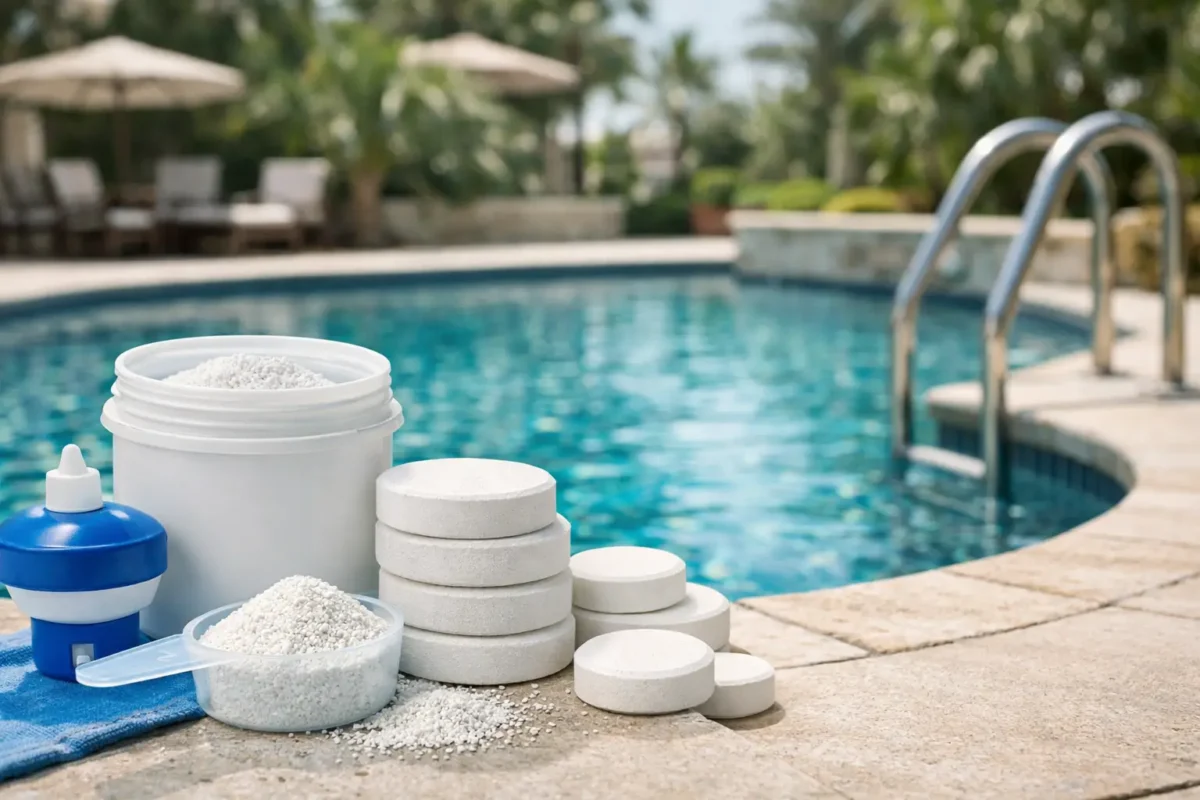
A pool can look perfectly clear and still fall short of hygienic water standards. Calcium hypochlorite is a powerful chlorine sanitizer that helps property owners and facility teams maintain the clean, inviting water expected from premium residential, hospitality, and commercial pools. Its effectiveness, however, depends on correct testing, dosing, storage, and circulation.
For a luxury villa pool, a busy hotel deck, or a high-use residential facility, chemical treatment should never be treated as an afterthought. The right sanitation program protects swimmers, supports the performance of filtration equipment, and preserves the polished appearance of the entire aquatic environment.
What Is Calcium Hypochlorite?
Calcium hypochlorite, commonly called cal hypo, is a granular or tablet-form pool sanitizer with a high available chlorine content. Commercial products commonly contain around 65% to 73% available chlorine, making them a concentrated choice for routine chlorination and targeted shock treatment.
When introduced to pool water, it releases free chlorine. This is the active sanitizer that controls bacteria, algae, and organic contaminants brought in by swimmers, wind, rain, sunscreen, and surrounding landscaping. In practical terms, it provides the chlorine reserve needed to keep water safe, fresh-smelling, and visually clear.
Unlike stabilized chlorine products, calcium hypochlorite does not add cyanuric acid to the water. That distinction matters in pools receiving frequent chlorine treatment. Excess cyanuric acid can reduce chlorine responsiveness, requiring partial draining and refilling to restore balance. Cal hypo offers a useful alternative where stabilizer levels are already elevated or where a maintenance program calls for unstabilized chlorine.
Why Calcium Hypochlorite Performs Well in Pools
The primary advantage of calcium hypochlorite is strength. Because it contains a high concentration of available chlorine, a comparatively small dose can make a meaningful correction to free chlorine levels. This is particularly valuable after heavy pool use, a dust event, high temperatures, or a period of reduced circulation.
It is also a practical product for shock treatment. A properly calculated shock dose can oxidize bather waste and other contaminants that contribute to dull water, odor, and reduced sanitizer efficiency. Pool owners often describe a sharp chlorine smell as evidence of excessive chlorine, but the opposite is frequently true. That odor can indicate chloramines, which form when free chlorine has become tied up with contaminants. Appropriate breakpoint chlorination helps resolve the issue.
For commercial and high-visibility installations, cal hypo can support a disciplined maintenance routine because it delivers predictable chlorine performance when used with accurate water testing. It is not a replacement for professional monitoring, though. Water chemistry is interconnected, and chlorine results should always be assessed alongside pH, total alkalinity, calcium hardness, cyanuric acid, and circulation performance.
Calcium Hypochlorite and Water Balance
Calcium hypochlorite affects more than free chlorine. It has a relatively high pH and adds calcium to the water. Those characteristics can be beneficial or problematic depending on the existing chemistry.
In water with low calcium hardness, cal hypo may contribute gradually toward a more suitable hardness level. In hard-water regions or pools with a history of scale formation, repeated use without testing can push calcium hardness too high. The result may be cloudy water, rough surfaces, restricted water flow, and scale deposits on tile lines, heaters, salt cells, and other equipment.
The same principle applies to pH. Since cal hypo can raise pH, regular testing and correction are essential. Most pool operators aim to maintain pH in the recommended range of approximately 7.2 to 7.8, subject to the pool system, local water conditions, and manufacturer guidance. If pH rises too far, chlorine becomes less effective and scaling risk increases.
This is why premium pool care is not simply about selecting a strong chemical. It is about matching the treatment method to the pool’s makeup water, surface finish, bather load, filtration system, and operational demands.
How to Apply Calcium Hypochlorite Correctly
Always follow the product label, as concentration and application instructions vary by manufacturer. Before dosing, test the water with a reliable kit or professional testing system. Guesswork is not an acceptable standard for a premium pool installation.
With the circulation system running, many cal hypo products should be pre-dissolved in a clean plastic bucket filled with pool water before being distributed around the pool perimeter. Add the chemical to water, never water to chemical. This helps reduce the chance of concentrated material settling on a surface and causing bleaching or damage. Some products are specifically designed for direct application, so the manufacturer label remains the authority.
Do not add calcium hypochlorite through a skimmer unless the product instructions and equipment design specifically permit it. Concentrated chlorine can travel through plumbing and create undesirable exposure for pumps, filters, heaters, or connected equipment. It should also never be placed in an inline feeder intended for trichlor tablets.
For routine treatment, calculate the dose based on the pool volume, current free chlorine reading, and target level. For shock treatment, apply the required amount after sunset where possible, then keep the pump running long enough to distribute the sanitizer thoroughly. Swimmers should stay out of the water until testing confirms that chlorine and pH have returned to a safe operating range.
Storage and Safety Standards Matter
Calcium hypochlorite is highly reactive. Quality chemical handling protects people, property, and inventory. Store it only in its original, tightly sealed container in a cool, dry, well-ventilated area away from direct sun, moisture, and heat sources.
Keep cal hypo separated from acids, petroleum products, fertilizers, paints, solvents, organic materials, and all other pool chemicals. Never mix it with trichlor, dichlor, bromine products, or any unidentified chemical residue. Even a small amount of incompatible material can create heat, toxic gas, fire, or an explosive reaction.
Use a clean, dry scoop reserved only for calcium hypochlorite. Wear appropriate gloves and eye protection while handling the product, avoid breathing dust, and wash hands after use. For commercial sites, chemical rooms should be clearly organized, labeled, ventilated, and accessible only to trained personnel.
These precautions are not excessive. They are part of responsible facility management and protect the long-term reliability of a pool operation.
Is Cal Hypo Right for Every Pool?
Calcium hypochlorite is an excellent choice for many pools, but it is not automatically the best sanitizer for every application. Pools with already high calcium hardness may be better served by another chlorination approach. A pool with delicate finishes, automated dosing equipment, or a specific manufacturer warranty may also require a more tailored program.
Saltwater pools, for example, generate chlorine through a salt cell and may only need supplemental treatment during heavy use or corrective maintenance. Indoor pools often need especially close attention to ventilation, combined chlorine, and bather load. Decorative fountains require separate consideration because their water chemistry, materials, and circulation patterns differ from those of a swimming pool.
The right decision comes from a full assessment, not from selecting chemicals based on price or availability alone. A professional review of test results and equipment condition can prevent recurring cloudiness, scale, corrosion, algae, and unnecessary chemical consumption.
A Better Standard for Pool Chemical Management
Consistent testing is what turns calcium hypochlorite into a dependable maintenance tool. Residential pools may require testing several times each week, while commercial and hospitality pools often require more frequent checks based on usage and local operating requirements. Records should document free chlorine, combined chlorine, pH, alkalinity, hardness, stabilizer, chemical additions, and any unusual operating conditions.
Aquatic Pools and Fountains supports property owners, developers, and facility managers with premium pool chemicals, water-testing solutions, equipment guidance, and technical maintenance support. The goal is not simply to add chlorine. It is to create a controlled water-care program that protects the investment in every pump, filter, finish, light, and aquatic feature.
When water quality starts to drift, respond early. A precise test, the correct calcium hypochlorite dose, and properly maintained circulation can keep a minor adjustment from becoming a costly pool recovery project.