
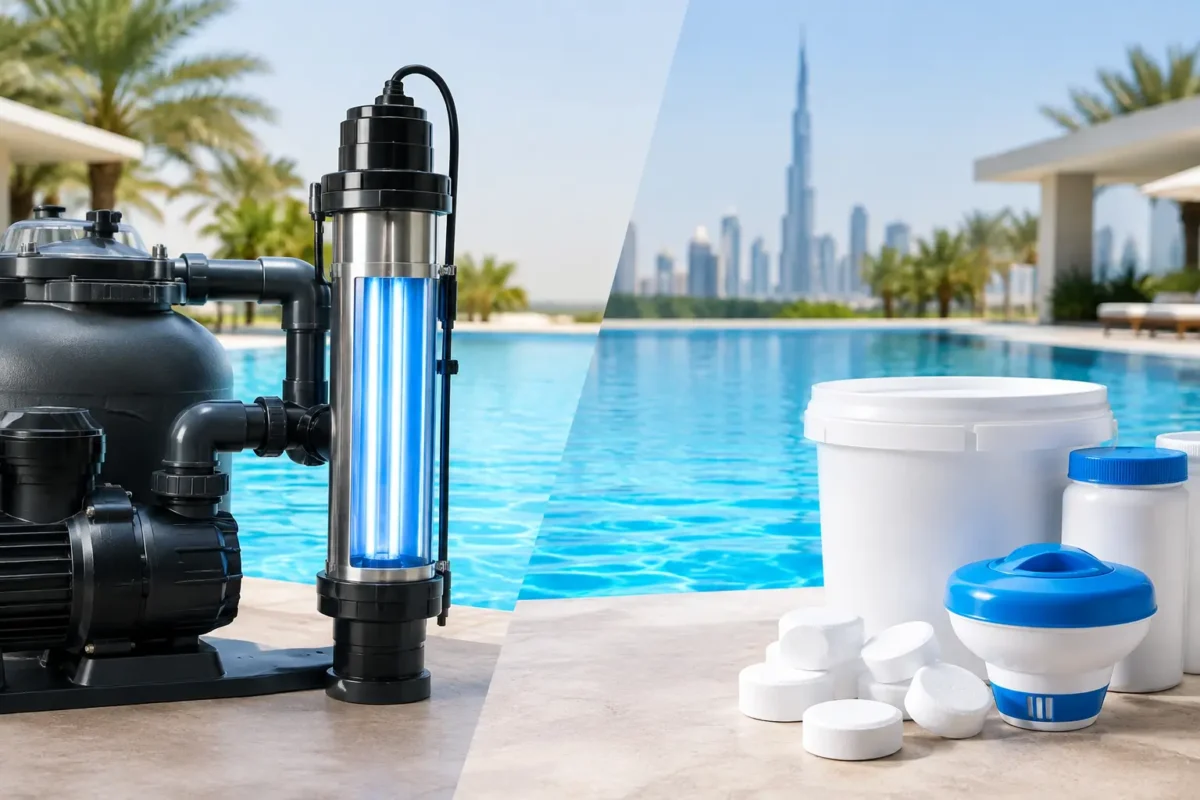
A premium pool should smell clean, feel comfortable, and remain reliably safe through intense heat, heavy bather use, and long operating hours. In the UV pool system vs chlorine decision, the most important point is often missed: UV is not usually a complete replacement for chlorine. It is a powerful secondary disinfection method that can substantially improve water quality when paired with a correctly managed residual sanitizer.
For villas, hotels, residential towers, and commercial facilities in the UAE, the right choice depends on the pool’s use, hydraulic design, maintenance capability, and the standard of guest experience expected. A well-designed system protects both the investment in the pool and the reputation of the property.
UV Pool System vs Chlorine: The Core Difference
Chlorine is a chemical sanitizer. When maintained at the correct level, it kills microorganisms in the pool water and leaves a residual disinfectant behind. That residual is essential because contamination does not occur only inside the circulation pipework. It can enter the water at any point, whether from swimmers, windblown debris, or organic matter.
A UV system disinfects water as it passes through a chamber containing an ultraviolet lamp. The UV energy damages the DNA or RNA of microorganisms, preventing them from reproducing. It is highly effective against a wide range of pathogens, including certain chlorine-resistant organisms such as Cryptosporidium.
The limitation is equally important: UV works only on water that travels through the UV chamber. It does not leave a lasting disinfectant residual in the pool. For that reason, a UV installation is generally specified alongside chlorine, salt chlorination, or another approved residual sanitizer, rather than in place of it.
This makes the practical comparison less about choosing one technology over the other and more about deciding whether a UV system justifies its additional capital cost and maintenance requirements.
Why UV Changes the Swimming Experience
The strongest argument for UV is not that it eliminates chlorine. It is that it can reduce the unpleasant byproducts associated with chlorine use.
When chlorine reacts with sweat, body oils, cosmetics, sunscreen, and nitrogen-based contaminants, it can form chloramines. These compounds are often responsible for the familiar sharp pool odor, eye irritation, dry skin, and respiratory discomfort. A strong chlorine smell is not a sign of exceptionally clean water. In many cases, it signals that chloramines need to be controlled.
UV systems help break down chloramines as circulating water passes through the reactor. With effective filtration, balanced chemistry, and correct turnover rates, this can deliver clearer water, less odor, and a more refined swimming environment. That difference is especially valuable in indoor pools, hospitality properties, wellness facilities, and luxury residential projects where comfort and presentation matter every day.
A UV system can also reduce the amount of chlorine needed to maintain the desired residual. The reduction varies significantly by bather load, water temperature, pool volume, environmental exposure, and the control strategy used. It should never be presented as a promise that chemicals will disappear. The pool still requires monitoring, adjustment, and a properly maintained sanitizer level.
Where Chlorine Remains the Practical Foundation
Chlorine remains the industry standard for good reason. It is proven, widely available, cost-effective, and suitable for pools of almost every size. It also provides continuous protection within the pool basin, which UV cannot do alone.
For a lightly used private villa pool with outdoor exposure and a straightforward maintenance routine, a quality chlorine or salt chlorination system may be the most sensible solution. It provides dependable sanitization without adding another piece of specialist equipment to service.
Chlorine is also flexible. It can be delivered manually, through automatic dosing equipment, or generated from salt. When connected to reliable water testing and dosing controls, it offers stable performance and less dependence on daily manual intervention. For facility managers responsible for several pools, that consistency can be more valuable than a system with lower chemical demand but more specialized components.
The trade-off is that chlorine-only pools can require more active attention to chloramines, especially when bather load rises. High-use hotel pools, school pools, fitness facilities, and shaded indoor pools are more likely to benefit from supplementary UV treatment.
Cost, Maintenance, and Equipment Considerations
An accurate decision starts with total cost of ownership, not the purchase price alone. A UV system requires the reactor, lamp or lamp assembly, electrical supply, suitable plumbing integration, and professional commissioning. It also needs routine inspection and periodic lamp replacement. Depending on the model, quartz sleeves must be kept clean so UV transmission remains effective.
Chlorine-based systems have ongoing chemical costs, along with testing, dosing equipment maintenance, and periodic calibration. Salt chlorinators add their own service needs, including cell inspection and replacement over time. Neither approach is maintenance-free.
UV can lower chemical consumption and reduce demand for corrective treatments, but the financial return differs from one installation to another. On a busy commercial pool, the improvement in guest comfort, water quality, and operational control may make UV a compelling long-term investment. On a small residential pool used only on weekends, the payback may be less direct.
Equipment sizing is also critical. A UV reactor must match the actual circulation flow and intended disinfection duty. Oversized or undersized equipment, poor pipework layout, inadequate filtration, or a pump operating outside its design range can compromise results. Premium aquatic installations need the full system to work as one: circulation pump, filter, dosing equipment, UV reactor, plumbing, and control system.
UAE Conditions Demand a System Approach
The UAE’s climate creates pressures that should shape every disinfection decision. High ambient temperatures, warm water, strong sunlight, dust, and frequent use can increase sanitizer demand and place greater strain on water balance. Outdoor pools may experience faster chlorine loss from ultraviolet sunlight, while indoor pools may struggle more with chloramines because of limited ventilation.
For outdoor residential pools, an automatic dosing system and correct stabilizer management may be more significant than UV alone. For indoor hotel or spa pools, UV can be an excellent addition because it supports a more comfortable atmosphere and helps manage combined chlorine.
Commercial properties should also consider operational resilience. If a UV lamp reaches the end of its service life or a control alarm is ignored, the system’s treatment performance declines. Trained maintenance personnel, stocked replacement components, and clear service schedules are essential. The same discipline applies to chlorine testing and dosing. Technology improves results only when it is monitored properly.
Choosing the Right Configuration for Your Pool
For most premium projects, the strongest recommendation is not UV instead of chlorine. It is UV plus a professionally controlled chlorine residual.
A villa owner focused on simplicity may prefer automated chlorination with high-quality filtration, circulation equipment, and scheduled service. A luxury indoor residence, boutique hotel, or wellness facility may gain more from integrating UV to reduce odor and improve swimmer comfort. High-bather-load commercial pools often benefit most when UV is combined with automated chemical dosing, precise water testing, and a maintenance plan built around actual usage patterns.
Before specifying equipment, assess the pool volume, expected bather load, indoor or outdoor location, pump flow rate, filtration condition, existing chemical controls, and local health requirements. It is also wise to consider the visual and operational expectations of the property. A pool that is technically sanitized but carries a harsh odor or causes regular guest complaints does not meet a premium standard.
The right disinfection system should be selected as part of the whole water-treatment design, not added as an afterthought. Aquatic Pools and Fountains can help property owners and facility teams assess the installation, specify compatible equipment, and establish a maintenance approach that keeps water clear, comfortable, and ready for use.