
A beautiful pool should feel like an asset to a villa, hotel, or residential development – never an unmanaged risk. The question of whether pool alarms are required has no single answer because legal obligations vary by jurisdiction, pool type, and the people who can access the water. What does remain consistent is the duty to create multiple, dependable layers of protection around every aquatic installation.
For property owners and facility managers, an alarm is not simply an accessory added after construction. It is part of a wider safety strategy that must work alongside barriers, gates, covers, supervision, lighting, and well-maintained equipment. The right solution protects guests and residents while preserving the refined appearance and efficient operation expected of a premium pool environment.
When Are Pool Alarms Required?
Pool-alarm requirements are determined by local building codes, community regulations, insurance conditions, and the classification of the property. A private residential pool may be governed differently from a hotel pool, apartment complex, school facility, or health club. In some locations, an alarm may be specifically mandated for a pool gate, a door that opens directly onto the pool area, or the water itself. Elsewhere, alarms are strongly recommended as part of compliance with broader barrier and drowning-prevention standards.
For projects in Dubai and across the UAE, owners should confirm the applicable requirements with the relevant municipality, master developer, civil defense authority, and project consultant. Requirements can also differ between a new build, a major renovation, and an existing pool undergoing a safety upgrade. A specialist site review is the most reliable way to avoid assuming that one property’s approval standard applies to another.
Commercial and shared-use environments demand particular care. Hotels, residential towers, compounds, and leisure facilities have changing users, multiple access points, and staff shifts. Even where a water-entry alarm is not explicitly required, a professionally specified alarm system can provide an additional control point that supports responsible risk management.
An Alarm Is One Layer, Not the Entire Safety Plan
An alarm can notify responsible adults or staff that a gate has opened, a protected door has been used, or there has been movement in the water. It cannot physically prevent access, replace attentive supervision, or compensate for a damaged fence. That distinction matters when selecting equipment and setting realistic expectations.
A premium pool safety plan normally combines a self-closing, self-latching gate; a secure perimeter barrier; slip-resistant surrounding surfaces; clear depth markings where appropriate; compliant drain protection; properly positioned lighting; and a defined emergency response process. The precise combination depends on the site, but the principle is simple: if one safeguard fails, another should still reduce the chance of harm.
For a family villa, the main concern may be preventing a young child from reaching the pool unnoticed. For a hospitality property, the focus often extends to after-hours access, guest behavior, response procedures, and recording maintenance activity. A device that is ideal for a small residential pool may not offer the coverage, durability, or management features required by a busy commercial facility.
Types of Pool Alarms and Where They Fit
There is no universal “best” pool alarm. The right equipment should be selected according to the access route, pool layout, occupancy pattern, and the level of supervision available on site.
Gate and perimeter alarms
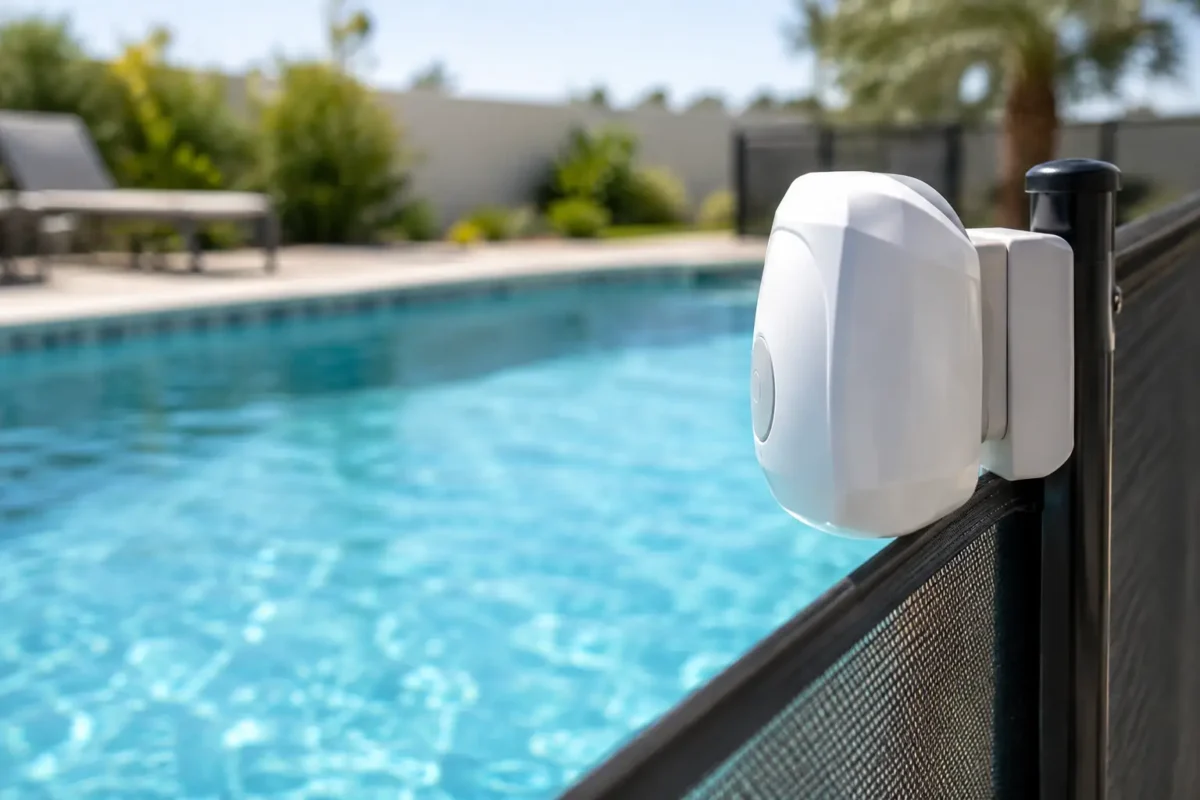
Gate alarms sound when a pool gate is opened or left unsecured. They are particularly valuable where the pool is surrounded by a dedicated fence or where service access creates a secondary entry point. Their effectiveness depends on correct installation, reliable latching hardware, and routine checks. A gate that closes slowly, catches on paving, or is routinely propped open will undermine even the best alarm.
Door and window alarms
A door alarm alerts occupants when a home or indoor facility door opens to the pool area. This option suits villas where the pool deck is directly accessible from living spaces, as well as gyms or amenity areas with internal access. These systems should be considered carefully alongside emergency exit requirements so that safety planning does not interfere with safe evacuation.
Water movement alarms
Surface-wave and subsurface alarms detect disturbance in the water. They can offer a useful additional alert when a person or object enters the pool, but conditions matter. Strong wind, water features, spa spillovers, automatic cleaners, and active filtration can affect performance or create nuisance alarms. For this reason, water alarms should be evaluated on the actual site rather than chosen solely from a product specification.
Wearable and proximity systems
Some systems use wristbands, tags, or proximity devices to alert caregivers if a child approaches or enters a designated area. These can add value in tightly managed family settings, but they rely on people consistently wearing and maintaining the device. They are not a substitute for barriers or adult supervision, especially in properties with visitors and changing occupancy.
Design Details That Affect Real-World Performance
Safety equipment should support the property’s architecture, not appear to have been added as an afterthought. On luxury villas, alarm components can be positioned and finished with discretion while keeping speakers, indicators, and controls accessible. On commercial sites, the system should be durable enough for frequent use and easy for authorized staff to test without specialist intervention.
Wireless equipment can reduce disruption during retrofit work, but it requires dependable signal strength, battery management, and environmental protection. Hardwired systems may be more appropriate for large developments, new construction, or areas where centralized monitoring is needed. Neither option is automatically superior. The better choice is the one that suits the site’s infrastructure and can be maintained correctly over time.
Audibility is another essential consideration. An alarm that cannot be heard inside the villa, at a security desk, or in the relevant operating area does not deliver meaningful protection. Large properties may require repeaters, multiple receivers, or integration with an existing building-management or security system. The alarm should be tested from the locations where a responsible person is realistically likely to be.
Installation and Maintenance Protect the Investment
Quality equipment can only perform as intended when it is installed precisely. Sensors need correct placement, gates need accurate alignment, and alarm settings must be calibrated for the surrounding conditions. A rushed retrofit may look complete while leaving blind spots, false triggers, or unreliable communication between the sensor and receiver.
Routine inspection is equally important. Batteries, control panels, latches, hinges, wiring, and sensor housings should be checked on a scheduled basis. For commercial sites, documented testing supports operational discipline and gives facility teams a clear record of the system’s condition. For villas, a simple monthly check is often enough to identify a weak battery, corroded contact, or gate that no longer closes consistently.
Pool maintenance also has a direct connection to safety. Clear water, balanced chemistry, functioning circulation, secure fittings, and properly maintained lighting make the pool easier to supervise and safer to use. A complete service approach considers these systems together instead of treating the alarm as an isolated item.
Choosing the Right Standard for Your Property
The minimum legal requirement is a starting point, not always the ideal final specification. A villa used only by adults may need a different plan from a family home with young children. A boutique hotel may prioritize discreet design and staff notification, while a large residential community may require durable, centrally managed solutions across several pools.
Before selecting equipment, assess who uses the pool, how they reach it, when the area is unattended, and which environmental factors may affect detection. Include future use as well. A property that is safe for an owner-occupied household may need additional controls when leased, sold, or used for events.
Aquatic Pools and Fountains supports residential and commercial clients with safety equipment, technical guidance, installation, and ongoing maintenance planned around the realities of each aquatic environment. The goal is not to add devices without purpose. It is to deliver a reliable, elegant safety system that complements a high-performance pool installation.
A well-designed pool alarm should quietly support confidence: access is controlled, alerts reach the right people, and the property is prepared for the moments when attention can lapse.