
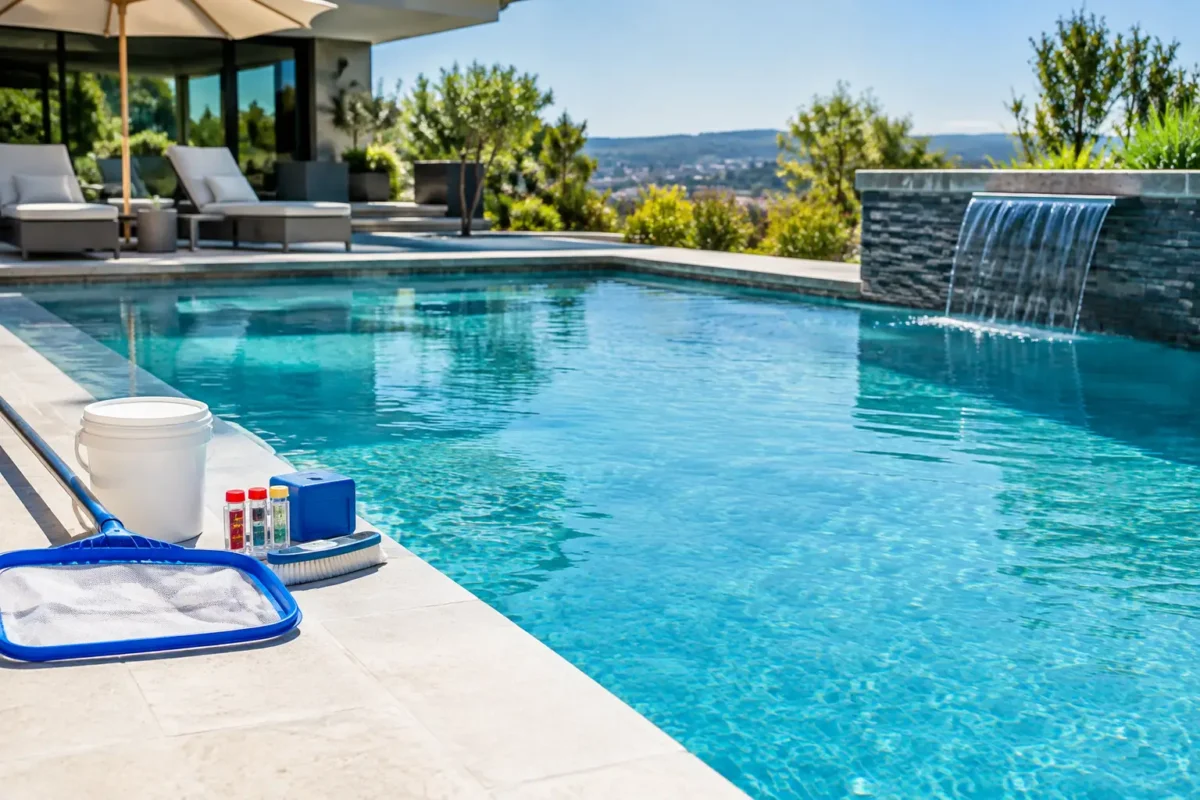
A pool can look clear in the morning and begin showing a faint green tint by afternoon when heat, sunlight, and weak water treatment combine. Knowing how to prevent pool algae is not simply about adding more chemicals. It is about maintaining a controlled water environment where circulation, filtration, sanitation, and regular cleaning work to premium standards.
For villa owners, hospitality operators, facility managers, and developers, algae prevention protects far more than appearance. It helps preserve water quality, avoids slippery pool surfaces, reduces chemical correction costs, and keeps a high-value aquatic installation ready for daily use. In Dubai and across the UAE, where elevated temperatures and intense sun place greater demands on pool systems, prevention must be consistent rather than reactive.
How to Prevent Pool Algae With Consistent Water Control
Algae spores enter nearly every outdoor pool through wind, rain, dust, leaves, swimwear, and surrounding landscaping. Their presence alone is not a concern. Problems begin when spores find warm water, sunlight, nutrients, and insufficient sanitizer.
The most reliable prevention strategy is to remove the conditions algae need to establish themselves. A pool with properly balanced water and dependable circulation is significantly less likely to turn green, yellow, or black, even during the hottest months.
Pool owners should avoid treating water clarity as the only measure of pool health. Water can appear clear while sanitizer levels are declining, filter pressure is rising, or circulation is insufficient in steps, corners, and shallow ledges. These are the areas where algae often begins before it becomes visible across the main pool surface.
Maintain the Correct Sanitizer Level
Sanitizer is the primary defense against algae. Chlorine remains a widely used option because it both disinfects water and suppresses algae growth when maintained at the appropriate level. Saltwater pools also rely on chlorine generated through the salt chlorination system, so they require the same level of attention to testing and water balance.
The exact target depends on the pool’s treatment system, bather load, water temperature, and stabilizer level. Rather than relying on a fixed dose, test regularly and adjust according to the readings. In high-use residential pools, hotel pools, and shared community facilities, testing should be more frequent because sunscreen, body oils, cosmetics, and organic debris consume sanitizer quickly.
A sudden sanitizer drop is often an early warning sign. It may indicate heavy contamination, high demand from organic material, an improperly sized disinfection system, or inadequate chemical dosing. Correct the underlying cause instead of repeatedly adding chemicals without a measurement-based plan.
Balance pH, Alkalinity, and Stabilizer
Chlorine cannot perform effectively if pool water is poorly balanced. High pH can reduce sanitizer efficiency and encourage scale formation, while low pH can create discomfort for swimmers and contribute to corrosion of equipment and fittings. Total alkalinity supports pH stability, helping prevent rapid swings that make day-to-day water management difficult.
Cyanuric acid, commonly called stabilizer, is another consideration for outdoor pools. It helps protect chlorine from ultraviolet degradation, which is particularly valuable under strong sun exposure. However, too much stabilizer can reduce chlorine’s active effectiveness. This is a common reason a pool may develop algae despite apparently acceptable chlorine readings.
Professional water testing provides a clearer picture than visual inspection or basic test strips alone. For premium installations, a reliable testing routine should evaluate sanitizer, pH, alkalinity, calcium hardness, stabilizer, and total dissolved solids. The right balance protects both water quality and expensive pool finishes, pumps, heaters, lights, and filtration equipment.
Circulation and Filtration Keep Algae From Settling
Algae favors still water. A powerful sanitizer program will underperform if water is not moving through the filtration and treatment system long enough each day. Proper circulation distributes chemicals, captures fine debris, and prevents stagnant zones from developing around benches, steps, drains, water features, and recessed details.
Run time depends on pool volume, pump capacity, filter condition, bather use, and seasonal temperature. During periods of intense heat, heavy use, or dusty conditions, pools often require longer daily circulation. Variable-speed pumps offer valuable control because they can maintain steady, energy-conscious circulation for extended periods while increasing output when vacuuming, operating water features, or responding to heavy pool use.
Filtration is equally critical. A clogged cartridge, overloaded sand filter, damaged filter element, or neglected backwashing schedule reduces water flow and leaves fine particles available as algae nutrients. Monitor filter pressure and follow the cleaning or backwashing requirements for the specific equipment installed. Cleaning too rarely is a problem, but cleaning a sand filter too frequently can also reduce its ability to capture fine material until the media develops its normal filtration layer.
For larger villas, hotels, residential towers, and commercial facilities, equipment sizing matters. An undersized pump or filter may appear to work under light conditions but struggle during peak heat or occupancy. Selecting durable, correctly matched equipment is a long-term algae prevention decision, not merely a performance upgrade.
Clean the Surfaces Algae Uses as a Starting Point
Even a well-treated pool needs physical cleaning. Brushing disrupts the thin layer of early algae growth that can cling to plaster, tile grout, coping lines, ladders, steps, and corners. It also pushes settled debris toward the main drain and skimmer so the filtration system can remove it.
Brush walls and floors on a regular schedule, with extra attention to shaded areas and surfaces with reduced water movement. Pools surrounded by trees, gardens, construction activity, or open desert landscaping may require more frequent skimming and vacuuming because dust, leaves, pollen, and fine debris increase the organic load in the water.
Do not overlook the skimmer baskets, pump basket, automatic cleaner, and vacuum hose. Restricted flow through any of these components can weaken circulation. A robotic cleaner can reduce routine labor and provide dependable floor coverage, but it should complement rather than replace water testing, brushing, and filter maintenance.
Water features deserve special consideration. Fountains, spillways, and decorative waterfalls add elegance, but they also introduce more exposed surface area and can collect debris in basins or channels. Ensure these systems circulate adequately, remain clean, and are included in the property’s regular maintenance program.
Control the Conditions That Feed Algae
Algae needs more than sunlight to grow. It also benefits from phosphates, nitrates, decaying leaves, poor drainage, and excess organic waste. Pool chemicals should be selected based on testing, not used as a substitute for removing the source of contamination.
Phosphate treatments can be useful where tests confirm elevated levels, particularly in pools exposed to landscaping runoff or frequent dust. They are not a replacement for sanitizer. If chlorine is low or circulation is poor, lowering phosphate levels alone will not resolve an active algae issue.
Encourage swimmers to rinse off before entering the pool, especially after using sunscreen, tanning products, or fitness facilities. In commercial settings, clear poolside rules and attentive maintenance reduce the amount of organic material entering the water. After storms, large gatherings, or unusual debris exposure, test the pool promptly and clean it before a small imbalance becomes a larger recovery project.
Pool covers can also help, though the benefit depends on the property and operating routine. A cover can limit debris and water evaporation, but a covered pool still requires testing and treatment. Leaving a pool covered for long periods with low sanitizer or poor circulation may create conditions that support algae rather than prevent it.
Respond Quickly to Early Signs of Growth
The first sign of algae is not always bright green water. Watch for dullness, cloudy patches, slippery walls, a green or yellow dust-like film, or small dark spots in grout and corners. Yellow algae, sometimes called mustard algae, commonly appears in shaded areas and can be resistant to routine treatment. Black algae can root deeply into porous surfaces and generally requires more intensive brushing and professional correction.
When algae appears, avoid simply adding an algaecide and waiting. Brush affected surfaces, remove debris, test and correct water balance, restore appropriate sanitizer levels, and inspect circulation and filtration performance. Clean or backwash the filter as needed after the treatment process, since dead algae must be removed from the system.
Repeated algae outbreaks deserve a technical assessment. The cause may be poor circulation design, an aging pump, inadequate filtration capacity, a failing chlorinator, inaccurate testing, or water chemistry that has drifted beyond a simple adjustment. Aquatic Pools and Fountains can support property owners and operators with quality equipment, professional maintenance, and technically matched treatment solutions for demanding residential and commercial pools.
A clear pool is maintained one measured decision at a time. Establish a disciplined service schedule, use dependable equipment sized for the installation, and address small changes in water quality before they have the opportunity to affect the experience your property is designed to deliver.