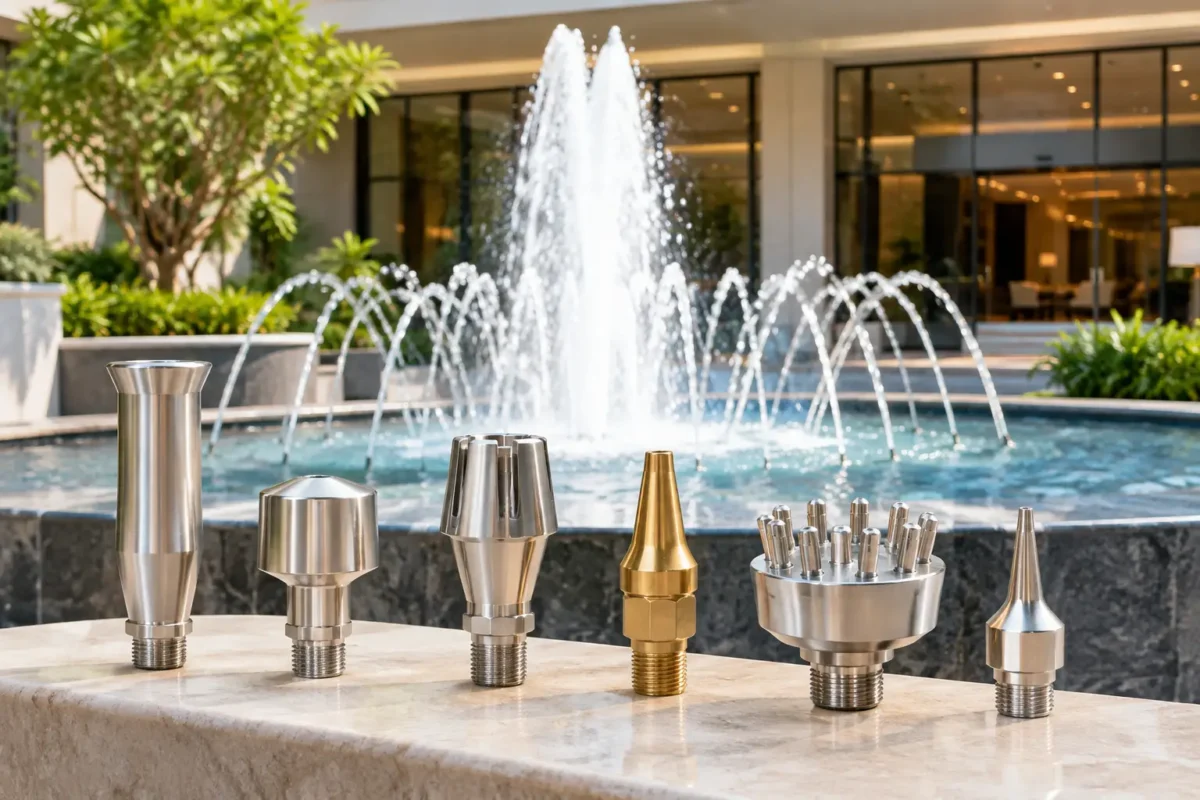
A hotel fountain is judged long before a guest reaches the reception desk. The height of the water, the clarity of each stream, the sound level, and the way the feature performs after months of operation all influence the property’s perceived standard. Selecting the best fountain nozzles for hotels is therefore not simply a decorative decision. It is an engineering choice that affects guest experience, water use, maintenance requirements, and the long-term value of the installation.
For luxury hotels, resorts, serviced residences, and commercial hospitality properties, the right nozzle system creates a memorable focal point while remaining dependable under demanding daily operating conditions. The right answer depends on the fountain’s location, design intent, pump capacity, water quality, wind exposure, and maintenance plan.
What Hotel Fountain Nozzles Must Deliver
A nozzle that looks impressive in a product catalog may not be suitable for a high-traffic hotel setting. Hospitality fountains often operate for extended hours, are visible from multiple angles, and must retain a refined appearance despite dust, heat, water evaporation, and frequent guest activity around the feature.
The first requirement is visual consistency. Hotel operators need water patterns that remain balanced and intentional, rather than irregular streams that make a premium landscape look neglected. Precision-manufactured nozzles in stainless steel or high-grade brass generally offer better corrosion resistance and pattern stability than low-cost alternatives.
The second requirement is compatibility with the complete hydraulic system. Every nozzle has a recommended flow rate and operating pressure. If the pump is undersized, a dramatic geyser nozzle can look weak and uneven. If pressure is excessive, water can overshoot the basin, create unnecessary splash, or put strain on pipes and fittings. Nozzle selection should always be coordinated with pump sizing, pipe diameter, filtration, and control equipment.
Finally, the fountain must suit the hotel environment. A quiet indoor lobby needs a controlled display with minimal splash. A large exterior arrival court can support higher, more dynamic patterns. A beachfront or rooftop property needs special consideration for wind and corrosion exposure.
Best Fountain Nozzles for Hotels by Application
Laminar Jet Nozzles for Precise, Modern Displays
Laminar jet nozzles produce clear, glass-like arcs of water. They are among the best choices for contemporary hotel entrances, pool decks, upscale restaurants, and interactive water features because the stream appears clean and highly controlled. With integrated LED lighting, a laminar jet can create a striking nighttime effect without requiring an oversized fountain basin.
Their primary advantage is precision. Properly installed laminar jets produce smooth arcs that can be arranged in parallel lines, crossing patterns, or programmed sequences. This makes them ideal for hotels seeking a modern architectural statement.
The trade-off is that laminar nozzles require clean water and careful hydraulic balancing. Fine particles, air in the line, or inconsistent pressure can interrupt the clarity of the stream. They perform best with effective filtration, stable pumps, and professional commissioning.
Fan Spray Nozzles for Elegant, Low-Height Features
Fan nozzles create a broad sheet or fan-shaped pattern that adds movement without excessive height. They work particularly well in lobby fountains, courtyard basins, spa environments, and shallow decorative pools where water should remain within a controlled footprint.
For hotel applications, fan sprays offer a refined visual effect with a softer acoustic profile than high-velocity jets. They can be installed individually for a simple statement or grouped to create layered water walls and symmetrical displays.
Wind is a key consideration outdoors. Wide fan patterns are more affected by crosswinds than narrow vertical jets. In exposed entrance plazas or rooftop terraces, a lower-angle fan and generous basin edge can reduce water loss and overspray.
Geyser and Foam Jet Nozzles for Arrival Areas
Geyser nozzles and foam jets create bold, aerated columns of water. Their white, textured appearance is highly visible in daylight, making them an excellent option for large hotel driveways, resort entrances, central courtyards, and landscape fountains that must command attention from a distance.
Foam jets are especially practical because their aerated discharge creates a full-looking water effect without the need for extremely high water flow. They can give a substantial, premium presence while maintaining a relatively compact design.
These nozzles are not usually the first choice for intimate indoor spaces, where their sound and energy may feel too strong. In an exterior focal fountain, however, they deliver an unmistakable sense of arrival and scale.
Bell and Mushroom Nozzles for Calm Luxury Spaces
Bell nozzles form a smooth, dome-like sheet of water, while mushroom nozzles create a rounded water cap over a central stem. Both are well suited to boutique hotel courtyards, spa gardens, family areas, and reception-adjacent water features where a calm atmosphere matters as much as visual impact.
The appeal of these patterns is their quiet elegance. Water falls close to the nozzle, which minimizes splash and helps retain water within smaller basins. They also work effectively with underwater lighting, where the shape of the falling water can become part of the evening design.
Bell nozzles are sensitive to leveling. Even a minor installation error can make one side of the water sheet heavier than the other. A skilled installation team should ensure the nozzle is perfectly aligned and that the supply pressure remains stable.
Cascade and Waterfall Nozzles for Architectural Integration
When the goal is to make water part of the building or landscape architecture, cascade and waterfall nozzles are often the strongest option. These outlets create a continuous curtain of water from a wall, spillway, stone feature, or raised basin edge.
Hotels use waterfall effects to define arrival zones, separate dining terraces, soften building facades, or create a dramatic backdrop behind a reception or lounge area. The result can be highly luxurious, especially when paired with stone, polished metal, or textured wall finishes.
The design must account for water collection and sound. A high waterfall can generate substantial noise, which may be desirable near an outdoor lounge but unsuitable beside guest rooms or quiet dining areas. The receiving basin also needs adequate depth and width to control splash.
Material Quality Matters in Hotel Environments
For a commercial hospitality installation, nozzle material should never be treated as a minor detail. Stainless steel, typically 304 or 316 grade depending on exposure, is a preferred choice for premium fountain systems because it combines strength, clean appearance, and corrosion resistance. In coastal locations or areas exposed to chemically treated water, 316 stainless steel provides additional protection.
Brass remains a proven option for many fountain nozzles and can deliver excellent performance when specified correctly. Plastic nozzles may suit small, low-budget decorative projects, but they are generally less appropriate for prominent hotel features where longevity, visual quality, and replacement risk are important concerns.
Material selection should also include fittings, fasteners, and supports. A premium nozzle connected to low-grade fittings will not deliver the reliability expected in a hotel environment.
Match Nozzle Design to the Basin and Pump System
The most successful fountain installations are designed as complete systems. Before choosing a nozzle, confirm the available basin dimensions, operating water level, pump duty point, pipe layout, filtration arrangement, and access for future maintenance.
A tall nozzle pattern requires a basin sized for its splash radius. As a general principle, higher and more forceful displays need wider collection zones. If a hotel wants a tall central geyser in a narrow basin, the design may require wind control, reduced operating height, or a different nozzle pattern altogether.
Variable-speed pumps and automated controls can add real value to hotel fountains. They allow operators to lower water displays during windy periods, adjust the visual program for events, and reduce energy use during quieter hours. Lighting controls can also coordinate color, timing, and water movement for a more distinctive evening presentation.
Aquatic Pools and Fountains supports this full-system approach, combining premium fountain equipment with technical guidance, installation expertise, and ongoing maintenance support for demanding commercial projects.
Plan for Maintenance Before Installation
A hotel fountain should look exceptional on opening day and remain that way through daily operation. This requires access to nozzles, pumps, filters, valves, lights, and electrical controls. A visually impressive design that cannot be serviced efficiently becomes expensive to maintain.
Water treatment is particularly important for fine-pattern nozzles. Scale, debris, and algae can alter spray shapes or restrict flow. Correct filtration, scheduled cleaning, balanced water chemistry, and routine inspections protect both the display and the equipment behind it.
For outdoor hotels in hot climates, evaporation and dust can increase maintenance needs. Wind can also carry water outside the basin, increasing top-up requirements and leaving mineral deposits on nearby finishes. Choosing a pattern suited to local conditions is often more valuable than selecting the tallest or most complicated display.
Choosing the Right Nozzle Mix for Your Property
The strongest hotel fountains rarely rely on one nozzle type alone. A central foam jet can establish scale, while surrounding fan sprays add width and laminar jets introduce precision and light. In a quieter spa setting, bell nozzles and low cascades may create a more suitable atmosphere than vertical jets.
Start with the guest experience you want to create: a landmark arrival moment, a calm retreat, a lively family zone, or a sophisticated nighttime display. Then build the nozzle selection around hydraulic performance, service access, water quality, and the realities of the site. A professionally specified fountain does more than move water – it gives the property a lasting signature guests remember.