
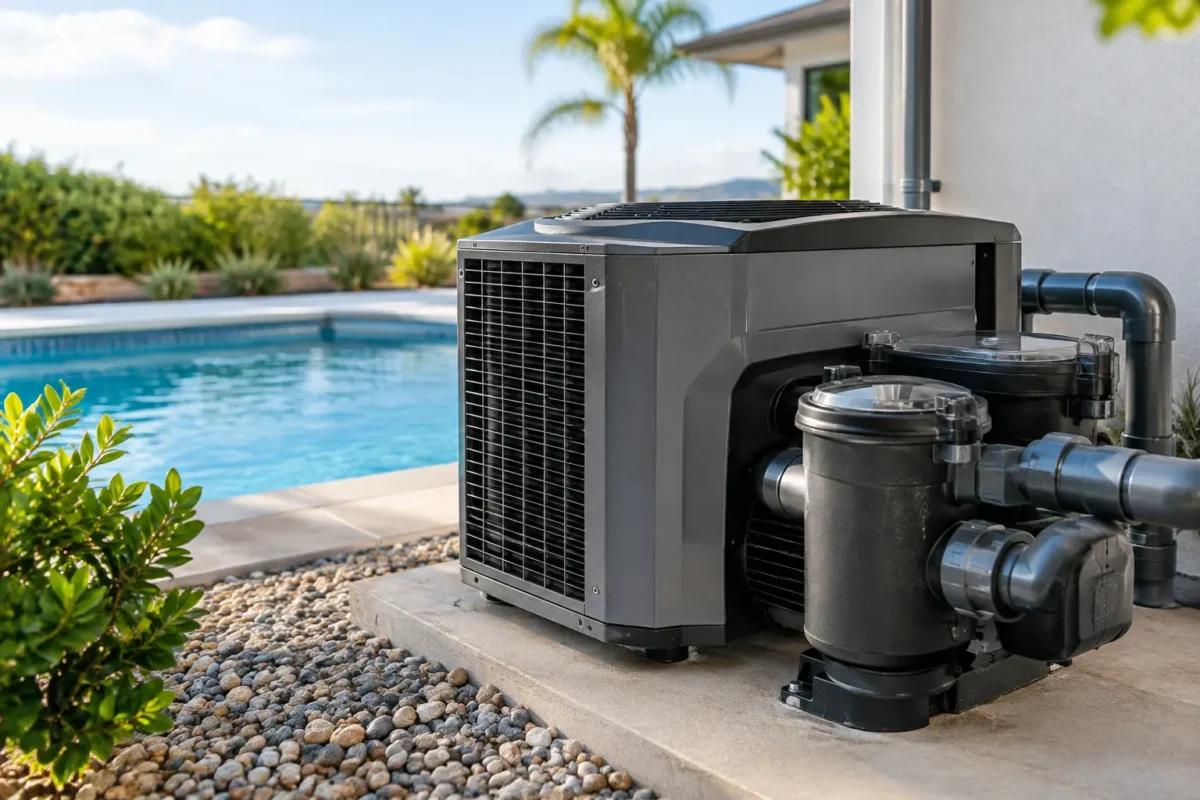
A pool that is too warm in August or too cold on a winter evening quickly becomes an underused asset. A professionally selected heat cool pool pump gives villa owners, hospitality operators, and facility managers control over water temperature across changing conditions in Dubai and the UAE. It turns a beautiful pool into an inviting amenity for more days of the year while supporting the premium experience residents and guests expect.
Unlike a conventional heater that only raises water temperature, a heat-cool pump can heat and cool through one integrated system. That flexibility matters in the Gulf, where intense summer heat can push pool water beyond a comfortable swimming range and cooler months can limit early-morning or evening use.
What a Heat Cool Pool Pump Does
A heat-cool pool pump transfers heat rather than creating it directly through electric resistance. In heating mode, it draws available warmth from the surrounding air and transfers it into the pool water. In cooling mode, the cycle reverses, removing heat from the water and releasing it outdoors.
This operating principle makes the equipment highly efficient under suitable conditions. For premium residential pools, hotel pools, and shared community facilities, it provides a practical way to maintain a selected water temperature without relying on separate heating and cooling equipment.
The result is not simply warmer water in winter. It is controlled comfort. A pool can remain refreshing during the hottest period of the year and pleasant enough for extended use when the air temperature drops. For properties where the pool is a central part of the lifestyle or guest offering, that added usability can make a measurable difference.
Why Pool Cooling Matters in the UAE
Many pool owners initially focus only on heating. In the UAE, cooling is often just as valuable. Direct sun exposure, high ambient temperatures, warm paving, and limited shade can raise water temperatures to a point where swimming feels less refreshing than it should.
Overheated water can also affect the overall pool environment. Higher temperatures can increase evaporation, place additional pressure on water chemistry, and make it harder to preserve the crisp, clean feel associated with a well-maintained luxury pool. Cooling does not replace correct chemical treatment, circulation, or filtration, but it supports a more stable and enjoyable operating environment.
The required cooling capacity depends on several factors: pool volume, depth, sun exposure, wind exposure, desired setpoint, usage pattern, and whether the pool is covered when not in use. A compact shaded plunge pool and an expansive rooftop pool will not have the same equipment requirements. This is why capacity should be specified from actual site conditions, not chosen from a broad estimate alone.
Selecting the Right Heat Cool Pool Pump
A heat-cool unit should be selected as part of the complete pool system. The best model is not automatically the largest available unit. Oversizing can increase upfront cost and lead to unnecessary cycling, while undersizing may prevent the system from maintaining the desired temperature during peak weather conditions.
Start With Pool Volume and Heat Load
Water volume is the starting point, but it is only one part of the calculation. A pool with strong all-day sun exposure may gain significant heat even if its volume is modest. Similarly, an indoor pool may have lower solar gain but different ventilation and humidity considerations.
A technical assessment should account for the pool’s dimensions, finish color, location, exposure, operating hours, and temperature target. Commercial pools also need to consider bather load. Hotels, fitness centers, and residential developments may require faster recovery after periods of heavy use.
Consider Energy Efficiency at Real Operating Conditions
Heat pump efficiency is commonly measured by coefficient of performance, or COP. A higher COP generally indicates that the unit can transfer more heat for each unit of electricity it consumes. However, performance figures should be interpreted in context. Ambient air temperature, water temperature, humidity, and operating mode all affect actual results.
For UAE projects, choosing equipment designed to perform reliably in high ambient temperatures is essential. Premium units with inverter technology can adjust output instead of operating only at full capacity. This can support quieter performance, more stable water temperatures, and better energy management during periods when full output is not required.
Match the Pump to Your Hydraulic System
The heat-cool pump must work correctly with the circulation pump, filter, pipework, valves, and control system. Water flow that is too low may trigger protection alarms or reduce efficiency. Excessive flow can create unnecessary pressure and affect equipment performance.
Professional installation includes checking hydraulic compatibility, electrical supply, drainage, and placement. For larger projects, controls may also need to integrate with building management systems, automated pool covers, or remote monitoring platforms. This level of planning protects the equipment investment and simplifies day-to-day operation.
Installation Details That Protect Performance
Location has a direct effect on heat-cool pump performance. The unit needs sufficient open space for air circulation and must be installed according to manufacturer clearance requirements. Restricting airflow with walls, screens, dense landscaping, or poorly planned enclosures can reduce efficiency and cause the unit to work harder.
Drainage is equally important. During operation, heat pumps produce condensate. This water needs a controlled route away from equipment pads, walkways, and sensitive finishes. Electrical protection, safe isolation access, and properly sized cabling should be addressed from the beginning rather than treated as afterthoughts.
Noise is another consideration for villas, hospitality properties, and residential towers. Modern inverter models can operate quietly, but acoustic placement still matters. Positioning should consider bedrooms, terraces, neighboring properties, service corridors, and the direction of discharged air. A high-performing unit installed in the wrong location can create avoidable concerns.
For projects with visual requirements, equipment can be integrated into a service area or carefully screened enclosure. The design must preserve service access and airflow. A clean installation should look considered without sacrificing technical performance.
Operating a Heat Cool System Efficiently
Temperature control works best when expectations are realistic. A heat-cool pump is designed to maintain water temperature progressively, not instantly transform the pool after a large temperature change. Establishing a setpoint and allowing the system to operate consistently is generally more efficient than frequent, dramatic adjustments.
Pool covers can make a substantial difference, particularly overnight. They reduce heat loss during cooler weather and limit solar gain and evaporation during hot weather. For many properties, pairing a quality cover with temperature control equipment is one of the most effective ways to improve operating efficiency.
Circulation schedules should also support the heat-cool unit. The system requires adequate filtration run time and water flow to perform correctly. Variable-speed pumps can be valuable where the system is properly configured, allowing the pool to maintain appropriate flow without running at maximum speed throughout the day.
Water chemistry remains central to equipment longevity. Balanced pH, sanitizer levels, calcium hardness, and total alkalinity help protect heat exchangers and internal components. Poor chemistry can lead to scale, corrosion, and reduced heat-transfer efficiency. Premium equipment deserves the same disciplined maintenance standards as the rest of the pool installation.
Maintenance for Reliable Year-Round Use
Heat-cool pumps are engineered for dependable operation, but they are not maintenance-free. Routine inspections help identify small issues before they affect comfort, energy use, or equipment life. Technicians should inspect water flow, electrical connections, control settings, condensate drainage, and the condition of the heat exchanger.
The outdoor coil must be kept clean and clear of dust, leaves, and debris. In sandy environments, regular attention is particularly important. Restricted airflow can reduce output and increase operating strain. Pool filters should also be cleaned or backwashed as required, since poor circulation can limit the performance of every connected component.
For commercial sites, planned maintenance is especially valuable. A hotel or residential facility cannot afford unexpected downtime during a busy period. Scheduled service creates a record of performance, supports warranty requirements, and gives facility teams a clearer view of equipment condition.
A Premium Pool Deserves Temperature Control That Fits
A heat cool pool pump is a strong investment when the goal is more than occasional swimming. It supports year-round enjoyment, helps protect the guest experience, and gives owners greater control over how their aquatic space performs in demanding weather.
At Aquatic Pools and Fountains, the right approach begins with the pool itself: its size, exposure, equipment configuration, usage expectations, and finish standard. With correct specification, professional installation, and consistent maintenance, temperature control becomes a quiet, dependable part of a pool environment that is ready whenever people want to use it.