
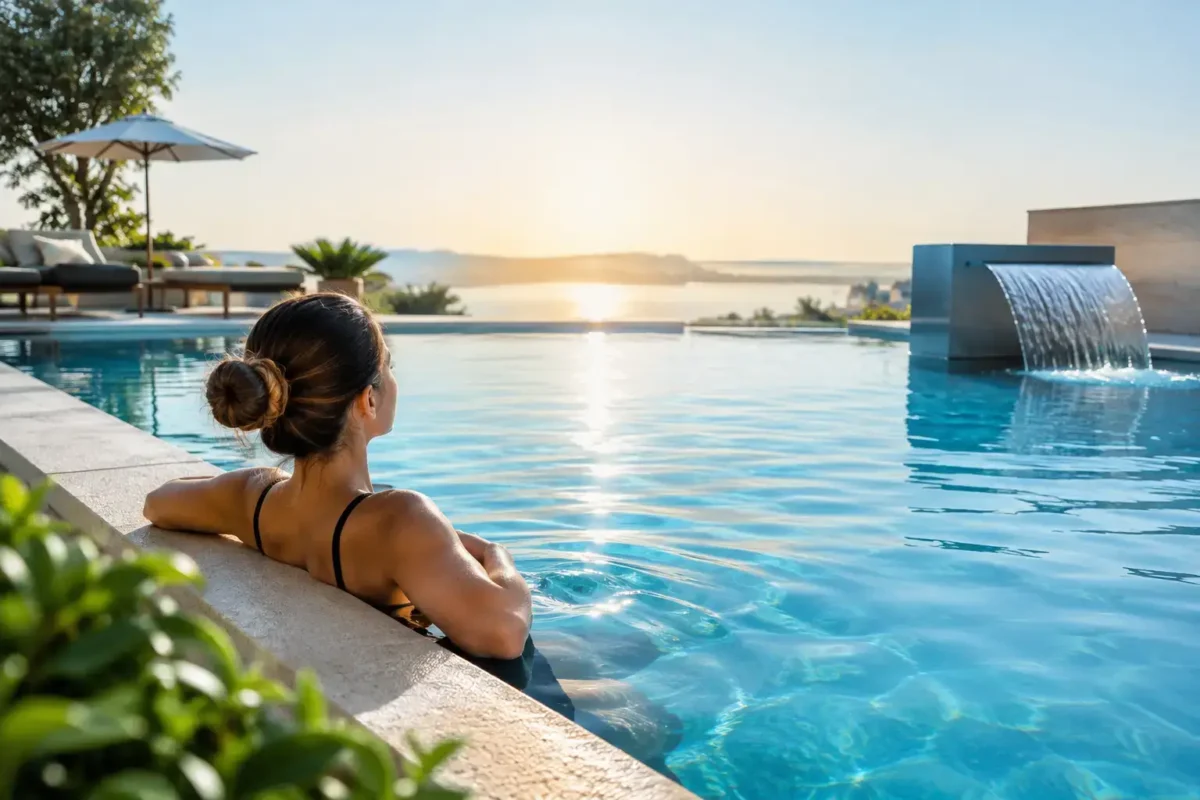
A premium pool in the UAE is no longer judged only by its tile finish, size, or view. Property owners and developers increasingly expect it to support comfort, recovery, privacy, and year-round enjoyment. The most influential aquatic wellness trends reflect that shift: pools and water features are being specified as high-performance wellness environments, not simply visual amenities.
For luxury villas, hotels, residential towers, and corporate properties, this changes the technical conversation from the earliest design stage. Water temperature, circulation quality, lighting, sound, accessibility, and maintenance planning must work together. A beautiful pool that is difficult to operate, uncomfortable in summer, or costly to maintain will not deliver the long-term value expected from a premium installation.
Aquatic Wellness Trends Redefining Pool Design
Wellness-led aquatic design is not one product category. It is a coordinated approach that makes water more inviting and useful across different times of day, seasons, and user needs. The strongest projects combine elegant finishes with equipment that delivers dependable performance under demanding UAE conditions.
Thermal comfort is becoming a core specification
In Dubai and across the UAE, water temperature can determine whether a pool is used daily or left untouched for long periods. Heat-cool pumps are therefore moving from optional upgrades to central wellness equipment. They allow owners to manage water temperature more precisely through extreme summer heat, cooler winter evenings, and changing guest preferences.
A temperature-controlled pool can support an early-morning exercise routine, a family swim in the afternoon, or a relaxed evening soak without relying on a narrow seasonal window. For hospitality properties, this greater usability can also improve the value of a pool deck, spa zone, or rooftop amenity.
The right system depends on pool volume, ambient conditions, operating hours, bather load, and the level of insulation provided by the structure and cover. Oversizing equipment can create unnecessary capital cost, while undersizing may result in slow recovery times and inconsistent comfort. Professional sizing and installation are essential, particularly for commercial pools with high demand.
Cleaner-feeling water matters as much as clear water
Traditional visual checks are no longer enough for premium properties. Guests and residents recognize the difference between water that merely looks clear and water that feels fresh, balanced, and comfortable on the skin and eyes.
Modern disinfection systems, effective filtration, controlled chemical dosing, and reliable water testing are central to this experience. Salt chlorination, UV treatment, ozone-compatible solutions, and automated monitoring may all have a place, depending on the application. These technologies can reduce the sharp odor and irritation often associated with poorly managed pool chemistry, but none eliminate the need for disciplined water balance and scheduled service.
The trade-off is straightforward: advanced water-treatment equipment improves control, but it needs correct commissioning, compatible components, and ongoing technical oversight. A system should be selected as part of the full circulation design, including pumps, filters, piping, fittings, and flow rates. Installing premium disinfection equipment on an underperforming hydraulic system will not produce a premium result.
Recovery Features Are Moving Into Main Pool Areas
Dedicated spa rooms remain relevant, but many homeowners and developers now want recovery-oriented experiences integrated into the primary aquatic area. This can include hydrotherapy jets, air massage, shallow lounge zones, neck jets, resistance swimming systems, and carefully designed entry steps that encourage users to remain in the water longer.
For private villas, a compact spa section connected to the main pool can provide a practical balance between exercise, social use, and relaxation. In hotels and residential communities, separate hydrotherapy or vitality zones can create a stronger amenity offering without requiring an oversized pool footprint.
Hydrotherapy should be designed around purpose rather than novelty. Jet placement, pump capacity, seat depth, and water temperature all affect whether a feature offers genuine comfort. A high-powered jet in the wrong position can be unpleasant; a visually appealing spa bench without adequate circulation may become difficult to maintain. Technical planning protects both the user experience and the asset.
Low-impact fitness is influencing pool layouts
Swimming remains one of the most accessible forms of low-impact exercise, but aquatic fitness now extends beyond lap lanes. Resistance currents, walking zones, and shallow training areas allow a broader range of users to exercise comfortably, including older adults, rehabilitation clients, and residents who prefer gentler movement.
This matters for developers planning long-term residential assets. A pool designed only for visual impact may photograph well, yet a pool that accommodates exercise, families, and recovery has wider everyday appeal. The best layouts preserve the architectural statement while providing practical depth transitions, safe access, and clear circulation around the water.
For compact urban properties, counter-current systems can be especially valuable. They create a controlled swimming experience in a smaller footprint, although they require careful attention to power supply, hydraulic design, noise control, and service access. The feature should be selected for the way the property will actually be used, not because it is currently fashionable.
Intelligent Controls Are Raising Service Standards
A premium pool should not require constant manual adjustment. Automated controls are becoming standard in high-value installations because they give property owners and facility teams greater visibility over essential equipment.
Smart control systems can coordinate filtration schedules, lighting scenes, temperature settings, water features, and selected treatment functions. For villa owners, this means simpler daily operation and the ability to prepare the pool before use. For hotels, towers, and commercial facilities, centralized oversight can support more consistent operating standards across multiple zones.
Automation is most effective when it remains intuitive. Complex systems with unclear programming can frustrate users and create dependence on a single operator. A well-specified control solution should provide useful information, practical alerts, and straightforward access for trained technicians. It must also be protected appropriately from heat, moisture, and outdoor exposure.
Lighting and Water Features Are Becoming Sensory Design Tools
Wellness is not limited to physical recovery. The atmosphere around water has a direct effect on how people use a space. Underwater LED lighting, subtle landscape illumination, fountain effects, and the controlled sound of moving water can turn an ordinary pool area into a calmer, more memorable environment after sunset.
The premium direction is toward restraint. Rather than using constantly changing colors or overly aggressive water displays, many luxury projects favor warm white illumination, carefully placed accent lighting, and fountain features that complement the architecture. This creates an elegant setting for entertaining while preserving a sense of calm.
Decorative water features also require the same level of engineering as a pool. Pump selection, filtration, water level management, nozzle alignment, drainage, and access for maintenance determine whether a fountain remains impressive over time. For commercial properties, durability and reliable spare-parts availability should be part of the selection criteria from the start.
Sustainability Is Becoming a Performance Requirement
Sustainable aquatic design is increasingly measured through operating efficiency, not surface-level claims. Variable-speed pumps, efficient filtration, optimized circulation schedules, pool covers, and heat-cool systems selected for the correct capacity can reduce unnecessary energy and water consumption while protecting comfort.
Variable-speed pumps are particularly relevant because they can run at lower speeds for routine filtration and increase output only when required for cleaning, water features, or heavy bather use. This can lower operating costs and reduce equipment strain compared with a single-speed approach. However, the savings depend on correct programming and a properly designed circulation system.
Water conservation also deserves attention. Leak detection, disciplined backwashing practices, correctly maintained filters, and balanced chemistry all help prevent waste. In the UAE, where environmental conditions place significant demands on aquatic equipment, proactive maintenance is not an afterthought. It is a critical part of efficient ownership.
What Premium Buyers Should Prioritize
The most successful wellness-focused pool projects begin with a clear brief. A villa owner may prioritize family comfort, quiet relaxation, and easy control. A hotel may need high bather capacity, fast equipment recovery, and dependable service support. A real estate developer may need an amenity that looks exceptional, operates efficiently, and remains manageable for the facilities team after handover.
Before selecting finishes or features, establish the intended use, expected occupancy, operating schedule, privacy requirements, and maintenance responsibility. Then specify the pump, filter, disinfection system, heat-cool equipment, lighting, safety products, and water features as one connected system.
Aquatic Pools and Fountains supports this level of planning with premium equipment, technical guidance, installation support, and ongoing maintenance for residential and commercial projects across the UAE. The goal is not to add more equipment than a project needs. It is to create an aquatic environment that performs with the same precision and elegance it displays.
The best wellness pool is the one people choose to use repeatedly: cool and inviting on a hot afternoon, comfortably warm when the weather changes, clean without compromise, and simple to maintain long after the opening day.