
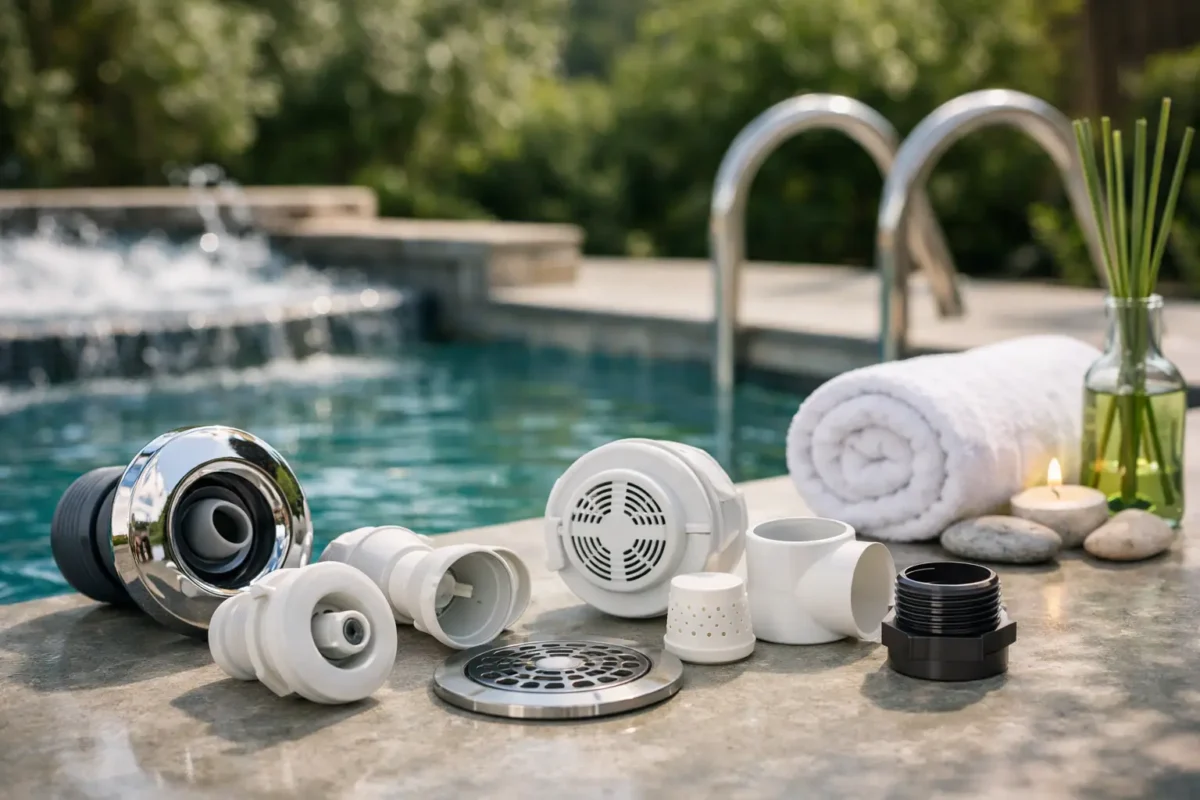
A pool can look flawless on the surface and still underperform because of the small components behind the finish. That is why spa and pool fittings deserve more attention during planning, specification, and maintenance. These parts control water movement, support safety, protect equipment, and shape the overall user experience in both residential and commercial installations.
For villa owners, developers, hospitality operators, and facility teams, fittings are not a minor line item. They influence circulation quality, visual finish, durability, and service life. In a market like Dubai and the wider UAE, where pools and spas operate in demanding conditions and design standards are high, selecting the right fittings is a technical decision as much as an aesthetic one.
Why spa and pool fittings matter more than most buyers expect
A premium pool system depends on more than pumps, filters, and lights. The fittings connect the system, direct the water, and help each core component do its job properly. Return inlets, main drains, suction fittings, vacuum points, skimmers, overflow components, and jets all work together to maintain circulation and keep the water clean, balanced, and comfortable.
When these components are chosen well, the system runs efficiently and the finish remains refined. When they are selected based only on price or appearance, issues tend to appear later – poor circulation, pressure imbalance, difficult maintenance access, visible wear, or premature replacement.
For commercial properties, the stakes are even higher. Hotels, residential towers, and wellness facilities need fittings that perform consistently under heavy use. Residential buyers may prioritize appearance and ease of care, while commercial buyers often focus on durability, code alignment, and serviceability. In practice, both groups need the same thing: dependable fittings that match the demands of the project.
Core spa and pool fittings and what they do
Not every project uses the same configuration, but certain fittings are central to most systems. Main drains and suction fittings help pull water through the circulation system. Return inlets send treated water back into the pool and influence how effectively water moves across the vessel. Skimmers remove floating debris before it sinks or reaches the filtration equipment.
In spa systems, jets, air controls, and specialized suction and return fittings shape the comfort experience. The placement and quality of these parts affect hydrotherapy performance, noise levels, and overall user comfort. A spa that looks impressive but delivers uneven jet pressure will never feel premium in use.
Overflow and balancing tank fittings are also critical in many high-end and commercial designs. These elements support water level management and cleaner visual lines, especially where mirror-edge or infinity-edge effects are part of the design brief. In decorative or architecturally sensitive settings, the fitting must do its job without disrupting the visual language of the installation.
How to evaluate spa and pool fittings for premium projects
The right selection starts with matching the fitting to the hydraulic design, finish material, and usage profile. A fitting that performs well in a compact private plunge pool may not be suitable for a large commercial pool or a heavily used spa. Flow rate, vessel size, bather load, and maintenance access all matter.
Material quality is one of the first things to assess. In premium projects, buyers typically look for fittings built to resist chemical exposure, UV stress, and constant water contact without fading, cracking, or degrading. This is particularly important in outdoor UAE environments where heat and prolonged sun exposure can accelerate wear.
Finish is another practical concern, not just a visual one. Stainless steel, engineered plastics, and specialty finishes each have their place. Stainless steel often suits high-visibility or luxury environments because it offers a polished appearance and strong durability. High-grade plastic fittings can also perform very well, especially where corrosion resistance, cost control, or discreet integration are priorities. The better choice depends on the environment and the design intent.
Installation compatibility should never be treated as an afterthought. The fitting must work cleanly with the pool shell, tile or stone finish, waterproofing approach, and pipe layout. A premium-looking component that creates installation complications or future leak risks is not a premium solution.
Spa and pool fittings for residential vs commercial use
Residential projects usually allow more flexibility in styling and feature selection. Homeowners may want discreet returns, elegant drain covers, and spa jets that blend into the finish. In these settings, the best outcome often comes from balancing performance with a clean visual presentation.
Commercial projects tend to demand a tougher specification. Fittings in hotels, health clubs, residential towers, and public-use environments must handle heavier cycles, more frequent maintenance, and stricter operational expectations. In these cases, easy access, repeatable performance, and long-term durability often carry more weight than purely decorative concerns.
That said, the difference is not always strict. A luxury villa with a large family spa may need fittings closer in quality and durability to commercial-grade selections. A boutique hospitality project may also require fittings that are both visually refined and technically resilient. The right specification depends on actual use, not labels alone.
Common mistakes when selecting fittings
One of the most common issues is treating fittings as interchangeable. They are not. Small differences in flow capacity, mounting style, material grade, and compatibility can affect system performance and maintenance over time.
Another mistake is underestimating the importance of hydraulic balance. If returns, suctions, or jets are poorly placed or wrongly sized, the result may be dead spots, weak circulation, and inconsistent treatment distribution. These problems can lead to higher maintenance effort and less reliable water quality.
Buyers also sometimes focus heavily on visible equipment while overlooking hidden system components. Pumps and lights attract attention, but fittings often determine whether those premium systems perform as intended. The visible finish may set the first impression, yet the concealed details protect long-term value.
A final issue is choosing products without technical guidance. On paper, many fittings look similar. In real applications, installation conditions, water chemistry, and operating patterns reveal major differences. Experienced support during specification helps avoid expensive corrections later.
The value of coordinated supply and technical support
Sourcing spa and pool fittings from a supplier with technical depth offers a clear advantage. Product availability matters, but project success depends on more than stock. Buyers benefit when the supplier can guide selection, align fittings with pumps and filtration systems, support installation teams, and remain available for maintenance needs after commissioning.
This is especially valuable for developers, facility managers, and procurement teams handling multiple assets or complex sites. Standardizing quality across projects, reducing replacement cycles, and simplifying service planning all start with the right specification stage support.
For premium residential clients, technical support brings confidence. It means the chosen fitting is not only elegant but also suitable for the vessel design, finish detail, and expected usage. That combination protects both the appearance and the performance of the investment.
Aquatic Pools and Fountains serves this need by combining product range, technical guidance, and installation and maintenance support for high-end residential and commercial aquatic environments.
What to look for in a supplier of spa and pool fittings
A serious supplier should offer breadth, but also clarity. Buyers need access to quality fittings across key categories, along with practical guidance on what suits each application. The ability to source from recognized global brands is important, yet so is the ability to recommend the right product rather than simply the most available one.
Responsiveness matters too. Delays in replacing a drain cover, return fitting, or spa jet can affect project timelines and operational continuity. Strong stock availability helps, but reliable after-sales support is what turns a supplier into a long-term project partner.
It is also worth assessing whether the supplier understands the level of finish your property requires. In luxury and commercial settings, details are visible. A poorly matched fitting can interrupt the design language of the entire water feature. A well-selected one supports the architecture quietly and effectively.
Spa and pool fittings as a long-term investment
The most successful pool and spa environments are built on consistent technical decisions. Fittings may be smaller than pumps, filters, or heat systems, but they have an outsized impact on circulation, appearance, maintenance, and user satisfaction.
Choosing well means looking beyond catalog images and unit pricing. It means asking how the fitting will perform after months of heat, chemicals, daily use, and routine cleaning. It means selecting components that support both the engineering of the system and the standard of the property.
When spa and pool fittings are specified with care, they help create water environments that look polished, operate reliably, and hold their value over time. That is the level of detail premium projects deserve, and it is often where the difference between average and exceptional becomes clear.