
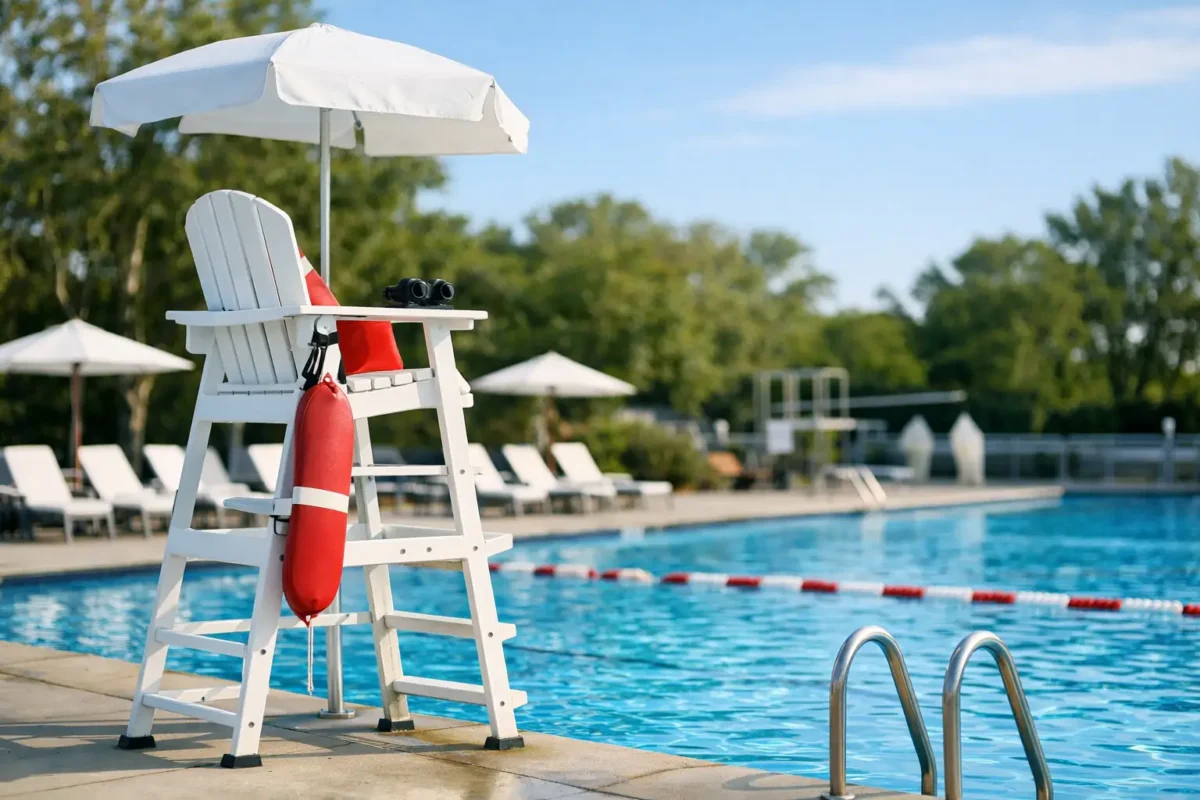
A swimming pool life guard chair is not a decorative accessory placed beside the water. It is a safety station that gives trained personnel the height, comfort, and immediate access needed to monitor swimmers effectively. For luxury villas, hotels, residential communities, schools, and commercial facilities, the right chair supports a more controlled pool environment while reinforcing the professional standard of the property.
At Aquatic Pools and Fountains, safety equipment is selected with the same attention given to pumps, filtration, lighting, and pool finishes. A well-specified lifeguard chair must suit the pool layout, expected bather load, operating hours, and the demanding outdoor conditions common across Dubai and the UAE.
Why a Swimming Pool Life Guard Chair Matters
A lifeguard’s response begins before an emergency occurs. Elevated seating gives the attendant a better view of the water surface, pool floor, entry points, and areas where swimmers may be obscured by glare, activity, or pool furniture. From ground level, even a large commercial pool can develop blind spots. A properly positioned chair reduces them.
Height also improves authority and visibility. Guests can quickly identify where to find assistance, while staff have a defined operating position rather than standing, walking, or sitting in unsuitable locations. This is especially valuable at hotel pools, community leisure decks, water features with adjacent swimming zones, and high-traffic facilities where supervision must remain consistent throughout the day.
The chair alone does not replace trained lifeguards, clear safety procedures, compliant signage, rescue equipment, or water-quality management. It does, however, provide the practical base from which supervision can be maintained. In a premium facility, that distinction matters: safety equipment should be integrated into the operating plan, not added as an afterthought.
Selecting the Right Swimming Pool Life Guard Chair
The best model depends on the pool’s purpose and surroundings. A compact chair may be appropriate for a private villa pool with occasional supervised use. A hotel, school, sports club, or residential tower will often require a taller, more substantial unit designed for extended shifts and regular public exposure.
Choose a height that matches the pool geometry
Chair height should be selected based on the pool’s width, shape, water depth changes, and potential visual barriers. A higher platform can improve coverage across a larger pool, but excessive height may make communication with swimmers more difficult or look out of scale on a refined pool deck. The goal is clear, direct sightlines across the entire bathing area, including steps, corners, shallow play zones, and access ladders.
For irregular pool shapes, infinity edges, or pools with landscaping and cabanas nearby, one chair may not provide full coverage. A site assessment can determine whether the facility needs more than one observation point or a different deck arrangement.
Prioritize stable, corrosion-resistant construction
Outdoor pool environments are demanding. Heat, UV exposure, humidity, chlorinated water, saltwater systems, cleaning chemicals, and frequent use can quickly affect poorly constructed equipment. Premium chairs are typically manufactured from materials selected for corrosion resistance and strength, such as marine-grade aluminum, stainless steel suited to poolside conditions, or high-quality commercial resin systems.
Material selection is not simply an aesthetic choice. A lightweight chair may be convenient to move, yet it must remain stable in wind and during rapid entry or exit. A heavier commercial chair can offer superior permanence but may be less practical where the deck needs to be reconfigured for private events. The correct balance depends on whether the installation is fixed, seasonal, or regularly repositioned.
Evaluate access and operator comfort
A lifeguard chair needs safe steps, secure handrails, a stable platform, and a seat that supports focused observation. Staff may remain on duty for long periods in high temperatures, so poor ergonomics can affect alertness and performance. Look for non-slip step surfaces, sensible step spacing, and a seat design that allows the operator to sit upright, turn easily, and stand quickly.
Footrests, arm support, and a practical seating height can be worthwhile on commercial chairs, particularly at hospitality venues and residential compounds with long operating hours. Comfort should never compromise fast access to the water. The chair must allow a trained attendant to leave the station without delay.
Consider the visual standard of the property
For a luxury pool deck, safety equipment should look purposeful and well maintained. A chair that appears flimsy, faded, or mismatched can undermine the overall presentation of an otherwise high-quality pool environment. Clean-lined finishes and durable materials help the chair complement contemporary tile, natural stone, timber-look decking, or landscaped surroundings.
This does not mean choosing style over function. The most effective solution combines a professional appearance with structural strength, clear visibility, and easy maintenance. At hotels and premium residential developments, that combination protects both guests and the property’s reputation.
Placement Is as Important as the Chair
Even a best-in-class chair cannot deliver proper supervision if it is placed incorrectly. Position the unit where the attendant has an uninterrupted view of the main swimming area and can reach the water quickly. Avoid locating it behind umbrellas, planters, decorative screens, loungers, food service stations, or large water features that interrupt sightlines.
Sun angle deserves careful attention. Strong reflected light can make it difficult to see below the surface, especially during peak daylight hours. Depending on the pool orientation, a chair may need to be positioned to reduce glare at the times of greatest use. Shade can improve operator comfort, but any canopy or umbrella must not obstruct visibility or create a hazard in wind.
The chair should also remain close enough to emergency equipment and a clear access route. Rescue tubes, first-aid provisions, communication devices, and pool safety signage should be organized as part of one coordinated station. For commercial facilities, this arrangement should align with the site’s safety procedures and applicable local requirements.
Matching the Chair to Different Pool Applications
Private villas often benefit from a chair that is compact, durable, and easy to store or reposition when the pool is not actively supervised. For families with children, the chair can establish a clear supervision point during gatherings or scheduled pool use. It should still have stable steps and a quality finish suited to outdoor exposure.
Hotels and resorts need equipment built for visibility, daily operation, and guest-facing presentation. These properties may require multiple chairs for separate pools, children’s areas, or expansive leisure decks. Consistent design across the facility creates a more organized appearance while helping guests recognize designated safety personnel.
Residential towers, compounds, schools, and clubs typically need a commercial-grade approach. Usage can be unpredictable, and chairs may be exposed to frequent cleaning, high humidity, and continuous sunlight. Durability, secure footing, and serviceability become more valuable than a low initial purchase price.
For specialized pool environments, such as lap pools, wave-effect areas, or pools combined with interactive water features, the supervision plan should be reviewed in greater detail. Water movement, noise, and changing user behavior can affect what an attendant can see and how quickly assistance can be provided.
Maintenance Protects Safety and Appearance
A lifeguard chair should be included in the pool’s routine inspection schedule. Check fasteners, welds, steps, railings, seat mounting points, and non-slip surfaces for wear or movement. Any looseness, corrosion, cracking, or sharp edge should be addressed immediately. A chair that feels unstable discourages correct use and creates an avoidable risk.
Routine cleaning is equally important. Rinse away chemical residue, dirt, and salt deposits, then use cleaning products appropriate to the chair material. Avoid abrasive methods that damage protective finishes. In outdoor facilities, periodic checks after high winds, heavy use, or maintenance activity help ensure the unit remains secure and correctly positioned.
Replacement planning is also a mark of professional facility management. When a chair no longer provides stable access, reliable support, or a polished appearance, replacement is more cost-effective than repeated temporary repairs. Poolside safety equipment should communicate readiness, not compromise.
A properly selected lifeguard chair brings visibility, confidence, and operational discipline to the pool deck. Whether the requirement is for a refined villa setting or a demanding commercial installation, professional guidance can ensure the chair, surrounding safety equipment, and pool layout work together as one dependable system.