
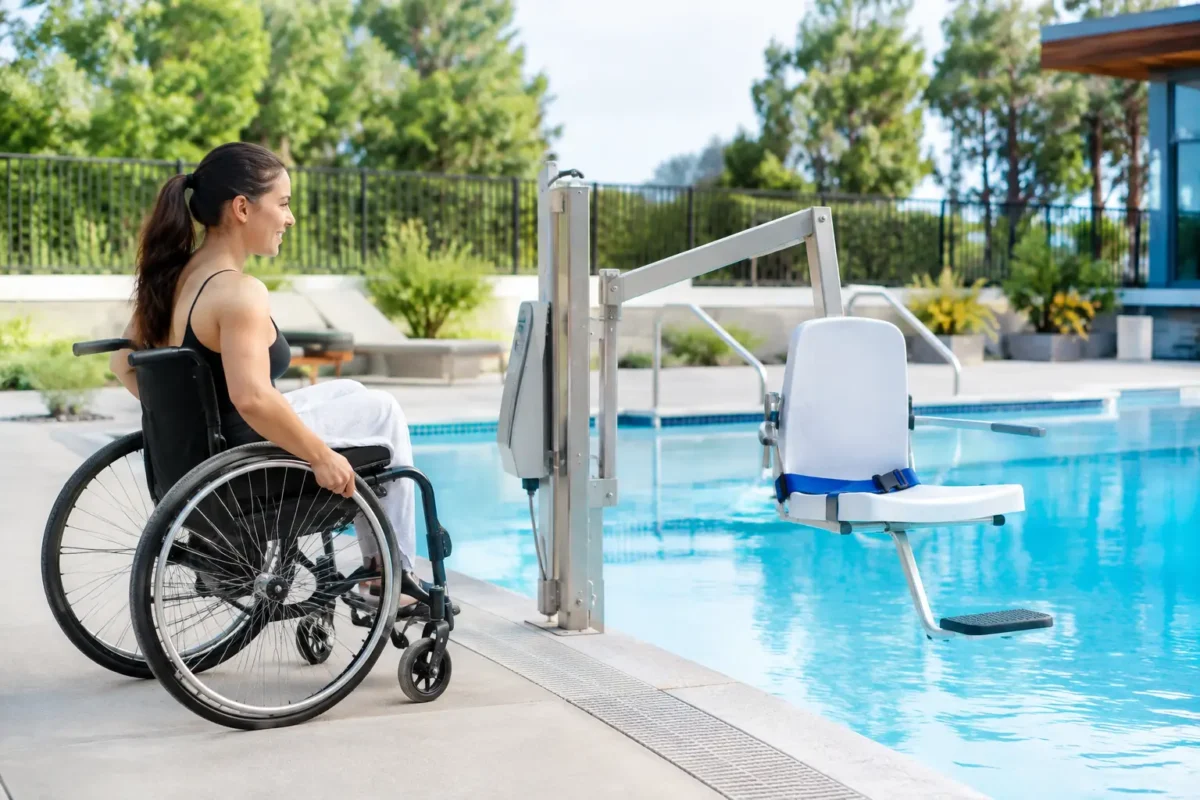
A beautiful pool should invite people in, not leave them watching from the deck. Pool accessibility is the practical design of safe, dignified access for guests, residents, children, older adults, and people with limited mobility. For luxury villas, hotels, residential towers, and commercial properties, it is also a mark of considered planning: the pool environment works for more people while retaining the clean lines and premium finish expected of a high-value aquatic installation.
Accessibility is not solved by placing a handrail at the shallow end after construction. It starts with the route from the property to the water, continues across the pool deck, and ends with a reliable way to enter, use, and exit the pool. Each element must suit the property, the users, the pool structure, and the operational demands of the site.
What Pool Accessibility Really Covers
Pool access is often reduced to one question: how will a person get into the water? That question matters, but it is only part of the picture. A properly planned solution considers the full guest journey, including parking or drop-off areas, gates, changing facilities, deck surfaces, pool edges, water-entry equipment, and emergency assistance.
For a villa, the priority may be helping an older family member continue enjoying the pool without compromising the landscape design. A hotel may need reliable access arrangements for guests with varied mobility needs, along with equipment that withstands frequent daily use. At a residential tower or community club, facility managers must balance inclusive access with durability, supervision, hygiene, and maintenance planning.
The best approach depends on the pool type and the expected users. A compact plunge pool has different physical limits than a large overflow pool. A new-build project offers more freedom than a completed deck with finished stonework. That is why technical assessment should come before product selection.
Start With the Deck, Not the Device
The pool deck is where many access problems begin. Even a high-quality lift or rail provides limited value if the route to it is difficult to navigate. Access paths should be firm, stable, and slip resistant, with sufficient clear space for walkers, wheelchairs, attendants, and maintenance teams where required.
Surface selection deserves particular attention in Dubai and across the UAE, where high temperatures, glare, and wet bare feet create demanding conditions. Premium deck finishes should combine visual appeal with dependable traction. Drainage must move water away effectively without creating awkward level changes, open gaps, or standing water near entry points.
Changes in elevation should be handled deliberately. Gradual transitions are generally easier to use than isolated steps, while clearly defined edges, handholds, and appropriate lighting help guests judge depth and direction. At night, pool lighting should support visibility at stairs, rails, and access equipment without producing harsh reflections across the water.
Choosing the Right Pool Entry Solution
There is no single best access method for every pool. The right solution is the one that serves real users reliably and fits the engineering of the installation.
Wide steps and integrated handrails
Wide, gently graduated steps are among the most natural entry options for ambulatory users, children, and guests who prefer to move slowly into the water. When paired with well-positioned stainless steel handrails, they can provide strong support without changing the character of a premium pool design.
This option is most effective when included during the design stage. Retrofitting steps into an existing pool can involve structural alterations, waterproofing work, tile matching, and hydraulic adjustments. For many villa renovations, a rail upgrade may be more practical than rebuilding the pool shell, but it will not meet every user’s needs.
Sloped entries and beach-style access
A gradual, beach-style entry can be elegant and highly usable, especially in resorts and larger residential projects. It provides a gentle transition into shallow water and can blend beautifully with contemporary landscape architecture. However, it consumes more pool area than conventional steps and requires careful attention to water circulation, depth markers, finishes, and cleaning access.
For compact pools, this trade-off may be too significant. A well-designed step bay, supported by rails or a lift, can deliver better practical value while preserving swimming space.
Pool lifts
A pool lift provides a controlled transfer from deck level into the water for people who cannot safely use steps or a sloped entry. It can be a highly effective option for hospitality venues, apartment amenities, rehabilitation-focused facilities, and private homes where a family member requires assisted access.
Lift selection should never be based on appearance alone. Consider the lifting capacity, seat style, rotation range, anchoring method, battery system, corrosion resistance, deck clearance, and whether an attendant can operate it comfortably. The equipment must also be positioned where the transfer area is level, accessible, and clear of furniture or circulation obstacles.
In coastal or high-humidity environments, marine-grade materials and disciplined maintenance are essential. A lift that is rarely tested, poorly charged, or exposed to corrosion cannot provide dependable access when it is needed.
Transfer systems and specialized solutions
Some users may benefit from transfer walls, transfer platforms, or customized support arrangements rather than a standard lift. These solutions should be considered carefully with the property owner, facility operator, designer, and qualified technical team. The goal is not to install the most complex equipment. It is to create access that users can operate safely, confidently, and with appropriate independence.
Design for Safety Without Sacrificing Elegance
Premium pool accessibility should feel integrated, not improvised. Stainless steel rails can complement modern tile, stone, and glass finishes when their profile, placement, and anchoring are selected with care. Lift sleeves and mounting points can be planned into the deck so the final installation remains orderly. Contrasting finishes at step edges can improve visibility while still supporting a refined palette.
Safety details also influence the everyday experience of all pool users. Non-slip surfaces, stable rails, clear depth transitions, and well-planned lighting reduce the likelihood of slips and missteps for children, guests carrying towels, and staff working around wet areas. Inclusive design often improves the facility for everyone.
For commercial properties, accessibility should be coordinated with broader pool safety measures, including compliant fencing, gates, signage, rescue equipment, circulation routes, and supervision procedures. Equipment alone is not a safety strategy. It must function within a well-managed pool environment.
Installation Quality Determines Long-Term Performance
A premium access product can underperform when installation is treated as an afterthought. Anchors must suit the deck structure. Fixings need correct alignment and load distribution. Penetrations through finished surfaces must be sealed properly to protect waterproofing systems. Nearby drainage, expansion joints, and service lines should be reviewed before work begins.
This is especially relevant for retrofit projects. An existing pool deck may conceal reinforcement, piping, electrical conduits, or waterproofing layers that affect where equipment can be installed. A site survey helps identify these constraints early and avoids costly corrective work after finishes have been disturbed.
Aquatic Pools and Fountains supports pool projects with technical guidance, quality equipment, professional installation, and ongoing service planning. For developers and facility managers, working with one qualified partner from assessment through maintenance helps keep specifications, installation standards, and future support aligned.
Maintenance Is Part of Accessibility
Access equipment needs the same discipline as pumps, filters, lights, and disinfection systems. Rails should be checked for rigidity, corrosion, sharp edges, and loose anchors. Lift batteries require scheduled charging and testing. Moving components need inspection according to manufacturer requirements, while seats, belts, and controls should be kept clean and ready for use.
Facility teams should also know how to operate the equipment and what to do if a guest needs assistance. A lift stored behind furniture, a missing charging unit, or staff who have never tested the controls can turn a well-intended installation into a point of failure. Regular checks are straightforward, but they must be assigned, documented, and completed.
For hospitality and shared facilities, preventive maintenance is usually more cost-effective than emergency repair. It protects guest confidence, reduces downtime, and helps preserve the appearance of premium equipment exposed to water, chemicals, heat, and frequent use.
Plan for Requirements and Real Users
Accessibility obligations can vary by jurisdiction, property type, and project scope. Developers and operators should review applicable building codes, local authority requirements, and any project-specific standards with qualified professionals. A private villa may have more design flexibility than a public-facing leisure facility, yet practical accessibility can still be a worthwhile investment for comfort, resale value, and long-term usability.
The most effective brief starts with real questions. Who uses this pool now? Who may use it in five or ten years? Is the facility intended for families, hotel guests, residents, rehabilitation, or organized activities? Will an attendant be available when needed? Answers to these questions shape a solution that is proportionate, attractive, and genuinely useful.
A well-designed pool should make participation feel natural. When access is considered early, quality equipment and thoughtful detailing can create a safer, more welcoming aquatic space without compromising the elegance that makes the property distinctive.