A premium pool is judged long before anyone enters the water. Gates that latch correctly, clear depth markings, stable handrails, well-managed water quality, and an organized equipment room all signal that the property is professionally operated. This pool safety compliance guide helps villa owners, developers, hospitality teams, and facility managers turn that expectation into a disciplined safety program.
Compliance is not a single product purchase or an inspection-day exercise. It is the ongoing alignment of pool design, safety equipment, water treatment, maintenance records, and trained personnel with the requirements that apply to the property. Exact obligations vary by jurisdiction, property type, pool use, and local authority requirements. A private villa pool and a hotel pool may require very different levels of supervision, documentation, access control, and operational oversight.
Start With the Applicable Safety Requirements
Before selecting barriers, signs, drains, or treatment equipment, establish which rules govern the site. In the UAE, property owners and operators should confirm requirements with the relevant local authority, municipality, civil defense authority, developer, insurer, and property management standards. Hotels, schools, clubs, residential towers, and public-facing leisure facilities often have additional operational obligations beyond those of a private residence.
This step matters because compliance cannot be assessed from photographs or a product catalog alone. A technically excellent pool can still fall short if the wrong barrier height is installed, emergency access is overlooked, records are incomplete, or circulation capacity does not match bather load. For new projects, safety requirements should be reviewed during design rather than after finishes are complete. Retrofitting drains, railings, gates, electrical systems, or plant-room access is usually more disruptive and more expensive.
Create a site-specific compliance file that identifies the pool classification, responsible operator, applicable approvals, inspection history, equipment specifications, maintenance schedule, and emergency procedures. This file gives facility teams a clear reference point and helps prevent essential tasks from being lost during staff or contractor changes.
Control Access Before Controlling Risk
Unsupervised access is one of the most preventable risks around a pool. A well-designed barrier system should separate the water area from surrounding gardens, walkways, parking areas, and indoor living spaces where practical. Gates should close and latch reliably, with hardware selected for outdoor exposure and frequent use.
For luxury villas, the priority is often a barrier that preserves the visual quality of the landscape without compromising function. Frameless glass systems, carefully specified metal fencing, secure covers, and discreet self-closing gates can support a refined design. The right solution depends on the layout, the ages of occupants, nearby doors, and whether the pool is used regularly by children or guests.
For commercial and hospitality properties, access control needs to withstand higher traffic. Consider how guests enter the area, where towels and furniture are placed, whether service teams need separate access, and how the facility is secured outside operating hours. A gate that performs well in a quiet residence may not be suitable for a busy hotel deck.
Access control should also include the equipment room. Pump rooms, chemical storage areas, electrical panels, and automated dosing equipment must be protected from unauthorized entry. Secure doors, warning signage, adequate ventilation, and clear working space help protect both guests and maintenance personnel.
Covers Are Useful, but Not a Substitute for a Barrier
Pool covers can reduce accidental access, limit debris, and support heat retention depending on the system selected. However, not every cover is designed or rated as a safety cover. Operators should never assume that a lightweight thermal cover provides the same protection as a purpose-designed, correctly installed safety solution. Review the cover’s intended use, loading capability, anchoring method, and operating instructions before relying on it for safety.
Keep Water Quality Safe, Stable, and Documented
Clear water is not necessarily safe water. Chemical balance, effective filtration, disinfection performance, circulation time, and routine testing all determine whether a pool remains suitable for use. A premium finish, sophisticated lighting system, and elegant waterline tile lose value immediately when water quality is inconsistent.
Reliable water treatment begins with correctly matched equipment. Pumps must provide appropriate circulation, filters must be sized for the pool’s volume and use, and disinfection systems must suit the operating conditions. Heat, heavy guest use, windblown debris, sunscreen, and make-up all increase the burden on the treatment system. Commercial pools may also experience sharp changes in bather load that require close monitoring and responsive dosing.
Routine testing should follow the applicable operating standard and the manufacturer guidance for the equipment and chemicals in use. Keep test results, corrective actions, chemical deliveries, service reports, and incidents documented. These records are valuable for operational control, not merely for inspections. They make it easier to identify repeat issues such as unstable sanitizer readings, unusual chemical demand, filter pressure changes, or recurring cloudiness.
Chemical storage deserves the same level of attention as the pool itself. Store products in their original labeled containers, separate incompatible substances, keep the area dry and ventilated, and limit access to trained staff. Mixing chemicals casually, transferring products to unmarked containers, or storing them near heat sources creates avoidable risk.
Inspect Physical Safety Features Every Day
A pool deck changes constantly. Furniture is moved, tiles become wet, covers are removed, handrails loosen, and signs fade under sun and cleaning chemicals. Daily visual checks catch small issues before they become guest incidents or major repairs.
The inspection should cover the water surface, coping, deck drainage, grates, ladders, handrails, steps, lighting, depth markers, safety signs, gates, and surrounding surfaces. Look for loose fittings, cracked or slippery tiles, damaged drain covers, standing water, exposed cables, sharp edges, and trip hazards. If a feature is unsafe, isolate the area or close the pool until it is corrected.
Drain safety requires particular attention. Covers and grates should be intact, properly secured, and appropriate for the installed suction system. Any damaged, missing, or questionable cover requires immediate professional assessment. This is not an area for improvised repairs.
Lighting should also be checked as both a safety and presentation feature. Underwater lights, deck illumination, and pathway lighting help guests see steps, edges, changes in depth, and exits after dark. Flickering fixtures, water intrusion, or electrical concerns should be addressed by qualified technicians without delay.
Build an Operating Routine Your Team Can Maintain
The strongest safety plan is one that works on a busy Friday, during a holiday period, and when the regular facility manager is absent. That requires simple routines, clear ownership, and trained personnel rather than a binder that remains on a shelf.
Assign responsibility for opening checks, water testing, cleaning, plant-room inspections, and closing procedures. In a commercial setting, define who has authority to close the pool when conditions are unsafe. In a villa, ensure household staff, maintenance contractors, and family members understand who to contact when alarms, pumps, or gates do not function as expected.
For properties with employees or regular attendants, training should address emergency response, safe chemical handling, basic equipment awareness, guest communication, and incident reporting. The exact training requirement depends on the property and local rules, but every team should know how to respond calmly to a distressed swimmer, chemical spill, electrical concern, or contaminated water event.
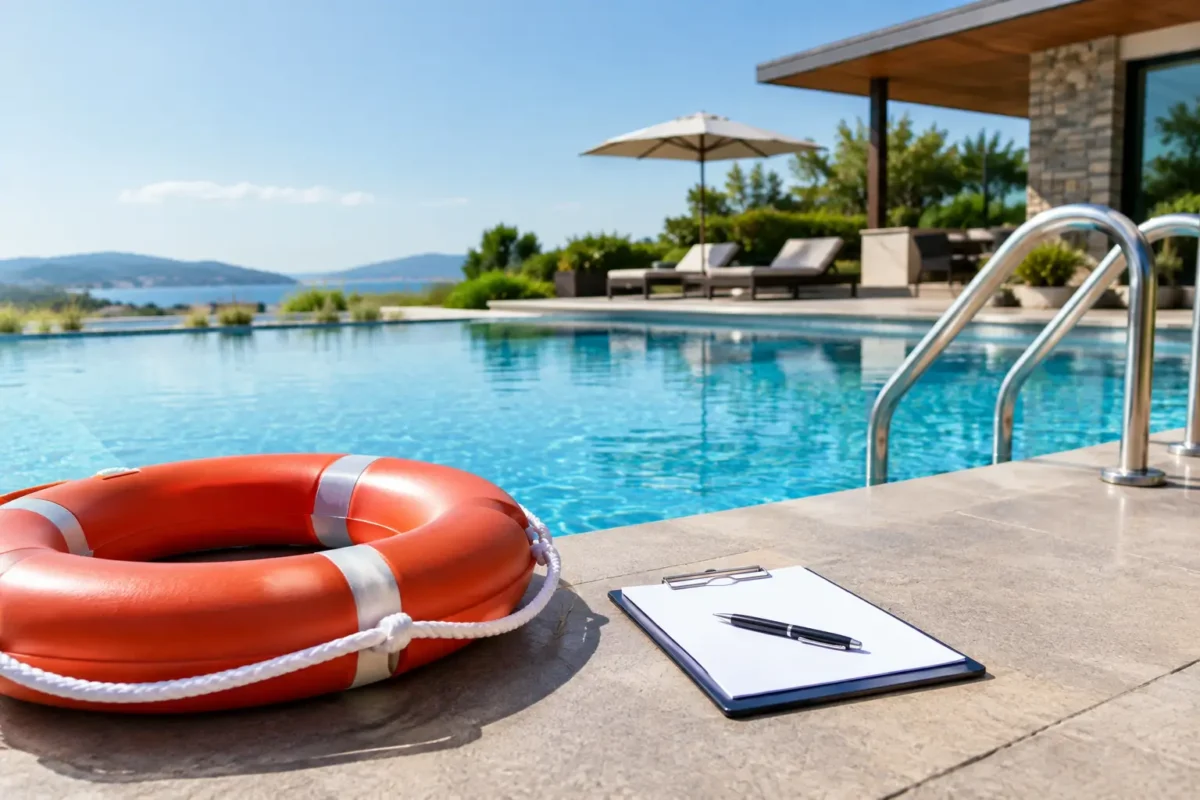
Emergency equipment must be visible, accessible, maintained, and appropriate for the facility. Depending on the site and applicable requirements, this may include rescue equipment, first-aid supplies, emergency contact information, communication devices, and clear instructions for summoning help. Do not position essential equipment behind locked doors or allow it to become hidden by furniture, landscaping, or stored supplies.
Plan Maintenance as a Compliance Measure
Deferred maintenance is one of the fastest ways for a high-value pool to become a safety concern. A worn pump seal may lead to a plant-room leak. A failing automatic dosing system may cause unstable water chemistry. A neglected deck drain can leave standing water in a high-traffic area. These are operational issues with direct safety consequences.
Preventive maintenance should follow equipment manufacturer recommendations while reflecting the actual use of the pool. A private pool with occasional use may have a different service schedule from a residential tower, school, or hotel. The trade-off is straightforward: reducing service frequency can lower immediate costs, but it increases the chance of unplanned downtime, emergency callouts, water-quality failures, and premature equipment replacement.
A qualified aquatic service partner can review the complete system rather than treating each fault in isolation. Aquatic Pools and Fountains supports premium residential and commercial facilities with pool equipment, water-treatment solutions, safety products, technical support, and maintenance expertise suited to demanding operating environments.
Make Compliance Part of the Property Standard
Safety should feel integrated into the property, not added as an afterthought. The best pool environments combine elegant finishes with dependable barriers, properly selected equipment, clean plant rooms, precise water management, and staff who know what good operation looks like. Guests may never ask about circulation rates or gate hardware, but they notice the confidence that comes from a well-managed facility.
Set a review date before the next peak-use season, walk the site with a qualified professional, and correct small deficiencies while they are still straightforward. That single habit protects people, preserves the asset, and keeps a premium pool ready for the standard of use it was built to deliver.