
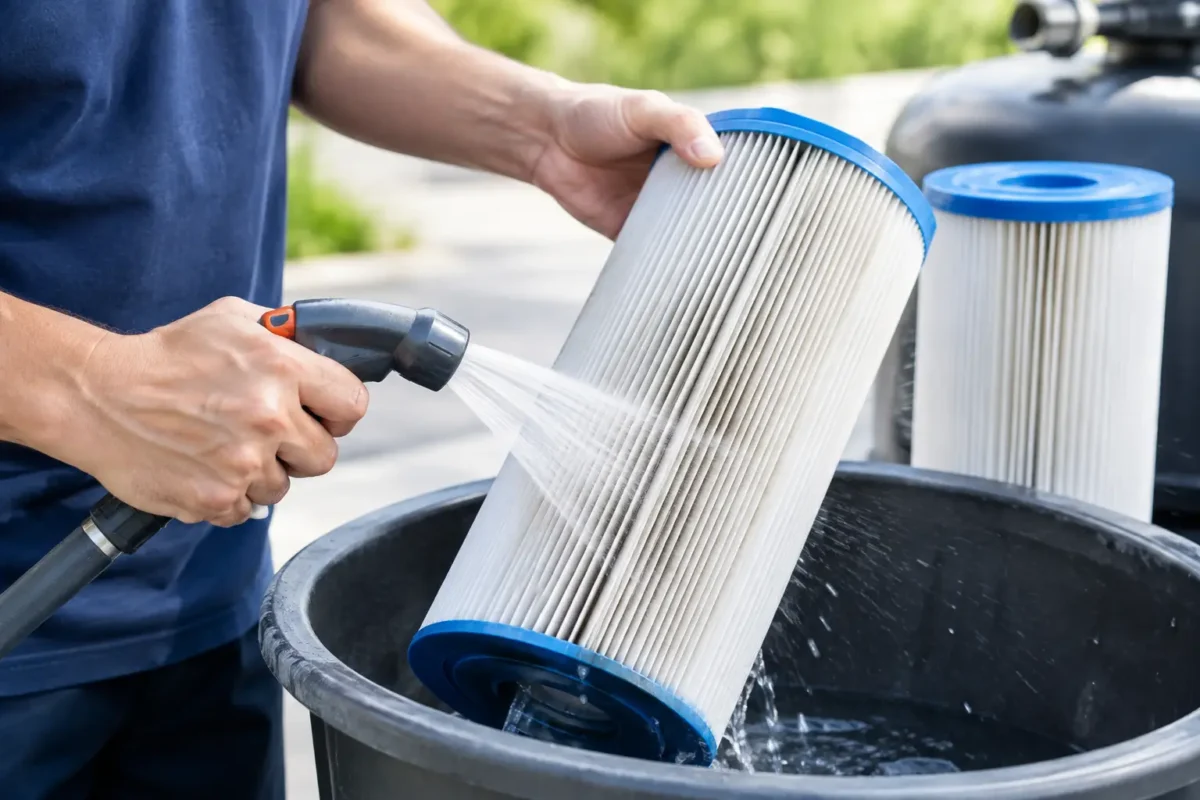
A cartridge filter can look clean on the outside while its pleats are holding the debris that is restricting circulation, clouding water, and forcing the pump to work harder. Knowing how to clean cartridge filters correctly protects the performance of a premium pool or fountain system, especially in high-use villas, hospitality settings, and commercial properties where water quality cannot be left to chance.
Cartridge filtration is valued for its fine filtration capability, compact footprint, and straightforward servicing. However, the cartridge itself is a working component, not a permanent one. Cleaning it with the wrong pressure, harsh chemicals, or poor timing can shorten its life and compromise the water clarity your property depends on.
Why Clean Cartridge Filters on Schedule
As water passes through a cartridge filter, the pleated media captures dust, fine sand, leaves, insects, sunscreen residue, body oils, and other suspended contaminants. In Dubai and across the UAE, airborne dust can build up quickly, particularly in outdoor pools and decorative fountains exposed to wind and open landscaping.
A lightly loaded filter can improve filtration because the first layer of collected particles helps catch finer debris. Once the cartridge becomes overly loaded, though, water flow drops. The circulation pump must then operate against greater resistance, which can reduce turnover, increase energy demand, and place unnecessary strain on equipment.
The pressure gauge is the most reliable service indicator. Record the clean starting pressure after installing or thoroughly cleaning the cartridge. When operating pressure rises around 8 to 10 psi above that baseline, the filter should be cleaned. Do not rely only on a calendar. A shaded residential pool with limited use may need less frequent attention than a hotel pool, a busy villa, or a fountain located near a construction area.
Other signs include weak return flow, cloudy water that does not respond to balanced chemistry, reduced skimmer pull, and a pump that sounds as though it is laboring. These symptoms can also point to other issues, such as a blocked pump basket or undersized plumbing, so professional assessment is valuable when the cause is unclear.
How to Clean Cartridge Filters Properly
Before opening any filter housing, switch off the pump at the breaker or isolator. Never release a pressurized filter tank. Close relevant valves where fitted, open the air relief valve, and confirm that pressure has dropped completely before removing the clamp or lid.
Take the cartridge out carefully and inspect it before cleaning. Look for cracked end caps, torn bands, collapsed pleats, flattened sections, or damaged seals. A cartridge with structural damage should be replaced rather than returned to service. Continuing to operate with a compromised element allows debris to bypass the filter and may create issues elsewhere in the circulation system.
Rinse Between Every Pleat
Use a garden hose with a standard spray nozzle. Hold the nozzle at an angle and work from the top of the cartridge down, separating the pleats gently with your fingers as needed. The objective is to flush debris out from deep within the folds without tearing or spreading them apart.
Avoid pressure washers. Their force can damage the fine filter media, deform pleats, and reduce the cartridge’s effective filtration area. A cartridge may appear brighter after pressure washing, yet it can perform worse and need replacement sooner.
Rinse until runoff is clear, then allow the cartridge to drain. If the element only contains routine dust and organic debris, this basic rinse may be sufficient. Reinstall it only after checking that the tank interior, lid O-ring, and sealing surfaces are clean and in good condition.
Remove Oils and Mineral Scale When Needed
A hose rinse does not remove all contaminants. Sunscreen, cosmetics, body oils, and certain environmental residues can coat the media, making the cartridge feel slick or look gray even after rinsing. In these cases, use a cartridge-specific filter cleaner according to the product instructions. Soak the cartridge in a clean container, then rinse it thoroughly before reinstalling.
Scale is another common issue in regions with mineral-rich water. A cartridge may feel stiff, show white or tan deposits, or retain high pressure after being cleaned. For mineral deposits, a properly selected descaling treatment may be required. The order matters: remove oils first, then address scale. Acid applied to an oily cartridge can set contaminants into the media and make cleaning more difficult.
Chemical cleaning should be occasional, not routine. Excessive soaking, overly concentrated solutions, and extended exposure can weaken cartridge materials. For high-value installations, the safest approach is to have a qualified pool technician inspect the element and choose the appropriate cleaning method based on the deposit type.
Common Mistakes That Reduce Filter Life
The most expensive filter problems often begin with a shortcut. Cleaning only the outer pleats leaves the center of the cartridge blocked. Reinstalling an element without lubricating and correctly seating the lid O-ring can lead to air leaks or water leaks. Using household detergents can create foam and introduce residues that affect water balance.
Another common mistake is waiting until water turns visibly cloudy. By that stage, restricted circulation may already be affecting sanitizer distribution and pump efficiency. Routine pressure checks allow maintenance to happen before a minor service need becomes a water-quality complaint.
Do not clean a cartridge more aggressively simply because pressure rises again soon after service. Rapid pressure increase may indicate heavy bather load, an algae event, poor water balance, inadequate sanitizer, or a cartridge nearing the end of its usable life. The correct answer is not always more cleaning.
When to Replace a Cartridge Filter
Even the best cartridge filters have a service life. Cleaning gradually wears the media, while repeated exposure to oils, chemicals, and pressure cycles reduces its ability to capture fine particles effectively. A well-maintained cartridge may last one to three years, but actual life depends on filter size, usage, water chemistry, and cleaning practices.
Replacement is usually the better investment when pleats remain flattened after cleaning, the bands are broken, end caps crack, or pressure rises quickly despite thorough maintenance. Persistent cloudy water with otherwise balanced chemistry can also indicate that the filter media is no longer performing as intended.
Choosing the right replacement requires more than matching the cartridge’s height. Diameter, core size, end-cap style, square-foot rating, and manufacturer compatibility all matter. An incorrect element can cause bypass, poor fitment, circulation restrictions, or damage to the filter housing. Premium pool and fountain systems benefit from quality replacement cartridges that match the equipment specification rather than generic substitutions selected only by appearance.
Protecting Pool and Fountain Equipment Beyond the Filter
Clean filtration works best alongside disciplined water care. Keep skimmer baskets and pump baskets clear, maintain proper water level, and test chemistry consistently. Balanced pH, sanitizer, calcium hardness, and total alkalinity reduce scale formation and help cartridges last longer.
For fountains, maintenance deserves equal attention. Decorative systems often operate for long hours and may collect leaves, dust, and fine debris from surrounding landscapes. Their smaller bodies of water can show contamination quickly, while restricted flow can affect nozzles, visual patterns, and the refined appearance of the feature.
At Aquatic Pools and Fountains, our technical team supports residential and commercial clients with correctly matched filtration equipment, replacement cartridges, water-treatment products, and maintenance guidance for demanding aquatic environments. Whether the priority is a private villa pool, a hospitality asset, or a statement fountain, every component should support reliable circulation and polished water presentation.
A clean cartridge is not just a maintenance detail. It is one of the simplest ways to preserve clear water, protect circulation equipment, and keep an aquatic installation looking as exceptional as the property around it.