
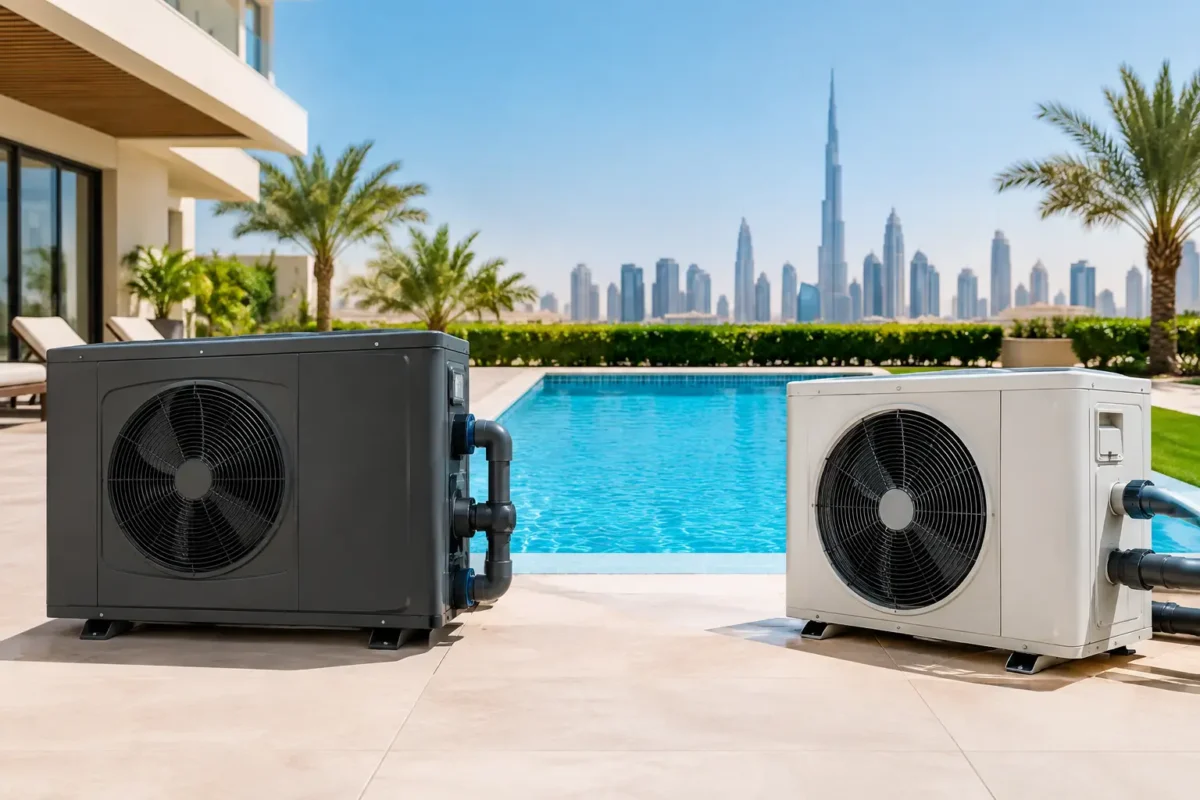
A pool that reaches 95°F by midday is not a luxury amenity anyone wants to use. Yet for many Dubai villas, hotels, and residential developments, that is the reality during peak summer. The pool chiller versus heater decision is therefore not simply about adding another piece of equipment. It determines whether the water remains inviting, how efficiently the plant room operates, and whether the pool delivers the comfort expected from a premium property.
For UAE projects, cooling is often the first concern. Heating still has a clear role, especially for evening swimming, shaded pools, indoor facilities, and winter use. The right solution depends on the pool’s exposure, operating schedule, water volume, and the standard of comfort the property intends to provide.
Pool Chiller Versus Heater: The Core Difference
A pool chiller removes heat from the water and rejects it into the surrounding air. Its purpose is to bring overly warm pool water down to a more refreshing temperature. In Dubai’s long hot season, this can transform a pool from a visual feature into a genuinely usable outdoor space.
A pool heater adds heat to raise or maintain water temperature. Traditional pool heaters may use gas or electricity, while a heat pump captures ambient heat and transfers it into the water. Heating is most valuable when air temperatures fall, when pools are used early in the morning or late at night, or when guests expect a consistently warm swimming experience.
A heat-cool pump combines both functions in one system. It can heat water during cooler months and cool it when summer temperatures push pool water above the desired range. For many high-use UAE pools, this is the most flexible long-term approach, provided the unit is correctly sized and professionally integrated.
Why Dubai Pools Often Need Cooling First
Sun exposure is the dominant factor for outdoor pools in the UAE. A shallow pool with dark tile, limited shade, and long hours of direct sunlight can absorb heat quickly. Warm surrounding decks, high ambient temperatures, and low overnight cooling can keep water uncomfortably hot for extended periods.
A chiller helps maintain a selected setpoint rather than allowing temperatures to climb unchecked. Many owners find that water in the upper 70s to mid-80s Fahrenheit feels more comfortable for active swimming, although the preferred temperature varies by user and pool type. A family recreation pool, a lap pool, and a hotel leisure pool may each require a different target.
Cooling also supports water quality management. Extremely warm water can accelerate chlorine consumption and encourage algae growth if sanitization and circulation are not managed carefully. A chiller is not a substitute for proper filtration, disinfection, chemical balance, or circulation time, but it helps create more stable operating conditions during the hottest months.
When a Pool Heater Is the Better Investment
Heating is the priority when a property uses its pool through the UAE winter or wants reliable comfort beyond daylight hours. While Dubai winters are mild compared with colder climates, water temperature can still drop enough to discourage swimming, particularly in larger pools, shaded courtyards, rooftop installations, and properties with wind exposure.
Hotels, wellness facilities, and premium residential communities often benefit from heating because their pools must meet guest expectations year-round. A warm pool extends usable hours, supports children and older swimmers, and makes the amenity more valuable during cooler evenings.
Indoor pools present a different case. They generally receive less solar gain, so overheating is less severe. However, their heating requirement may be higher because consistent water and air temperatures are central to user comfort. The pool room’s ventilation and dehumidification design must also be considered alongside the heating equipment.
Is a Heat-Cool Pump Worth It?
For a villa or commercial property with year-round pool use, a heat-cool pump is often the strongest answer to the pool chiller versus heater question. Instead of installing separate systems, the property has one unit capable of responding to seasonal conditions. This can simplify controls, reduce plant-room complexity, and offer efficient temperature management across the year.
The investment makes the most sense where the pool is a core lifestyle or hospitality feature rather than an occasional-use amenity. It is particularly suitable for luxury villas, hotels, apartment communities, and corporate properties where a closed pool or overheated pool affects the perception of the entire asset.
That said, a dual-function system is not automatically the right choice for every pool. An outdoor pool used only in summer may gain more immediate value from dedicated chilling. A pool used mainly on winter weekends may justify heating without cooling. Equipment selection should follow the operating requirement, not a one-size-fits-all specification.
Sizing Is More Than Pool Volume
Pool volume is the starting point for selecting a chiller, heater, or heat-cool pump, but it is not enough on its own. Two pools with the same number of gallons can require very different capacities.
A precise assessment considers the surface area exposed to sunlight, depth profile, desired water temperature, local weather conditions, wind, surrounding shade, pool finish, and expected daily use. The equipment must also work with the existing circulation pump, filter system, plumbing diameter, electrical supply, and available installation space.
Undersized equipment runs longer without achieving the target temperature. This increases operating cost and causes unnecessary wear. Oversized equipment can raise the initial investment and may cycle inefficiently if controls are not configured correctly. A professional load calculation protects both performance and long-term value.
Plant Room Conditions Matter
Heat pumps and chillers need adequate airflow to reject or absorb heat effectively. Units placed in tight, poorly ventilated enclosures can lose efficiency and may recirculate hot discharge air. Noise, service access, drainage, and corrosion protection also deserve attention, especially in coastal locations where salt-laden air can affect equipment life.
The installation should allow technicians to inspect connections, clean coils, and service electrical components without disrupting the pool’s wider operation. For commercial facilities, this practical detail is essential for dependable maintenance planning.
Operating Cost and Efficiency Considerations
The lowest purchase price does not always create the lowest ownership cost. Energy consumption depends on the equipment type, capacity, target temperature, runtime, ambient conditions, and the amount of heat entering or leaving the pool each day.
A thermal pool cover is one of the most effective supporting measures. It reduces heat gain in some conditions, limits evaporation, and helps retain warmth when heating is required. For heated pools, it can substantially reduce energy loss overnight. For chilled pools, the right cover strategy should be reviewed carefully because covers can also trap heat if left on during intense sun.
Variable-speed circulation pumps, automated controls, clean filters, balanced water chemistry, and well-maintained plumbing all contribute to efficient temperature control. A premium temperature-management system should be treated as part of the complete pool system, not as an isolated appliance.
Controls That Protect Comfort and Equipment
Modern controls allow operators to set a preferred temperature range, schedule operation around occupancy, and prevent heating and cooling from working against each other. This is especially useful for hospitality properties and residential communities with changing usage patterns.
Automation can also coordinate the chiller or heat pump with circulation schedules and remote monitoring. For facility managers, this provides greater oversight of energy use and equipment status. For villa owners, it offers convenience without sacrificing the precise experience expected from a high-end pool.
Choosing the Right System for Your Property
Choose a dedicated pool chiller when summer comfort is the primary issue and the pool sees most of its use during hot months. Choose a heater when the goal is to extend swimming through cooler weather, support night use, or maintain warm water for a wellness-focused environment.
Select a heat-cool pump when the pool must stay comfortable throughout the year and the property demands flexibility, efficiency, and refined control. This is often the preferred route for premium villas, resorts, and high-visibility commercial amenities, where water temperature has a direct effect on guest satisfaction and asset appeal.
Aquatic Pools and Fountains can assess the pool environment, equipment room, and usage requirements to specify a solution that performs reliably in UAE conditions. The best system is not the unit with the largest capacity or the lowest initial cost. It is the one engineered around how your pool is actually used, so every swim feels intentional rather than dictated by the weather.