Aquatic

Categories
Uncategorized

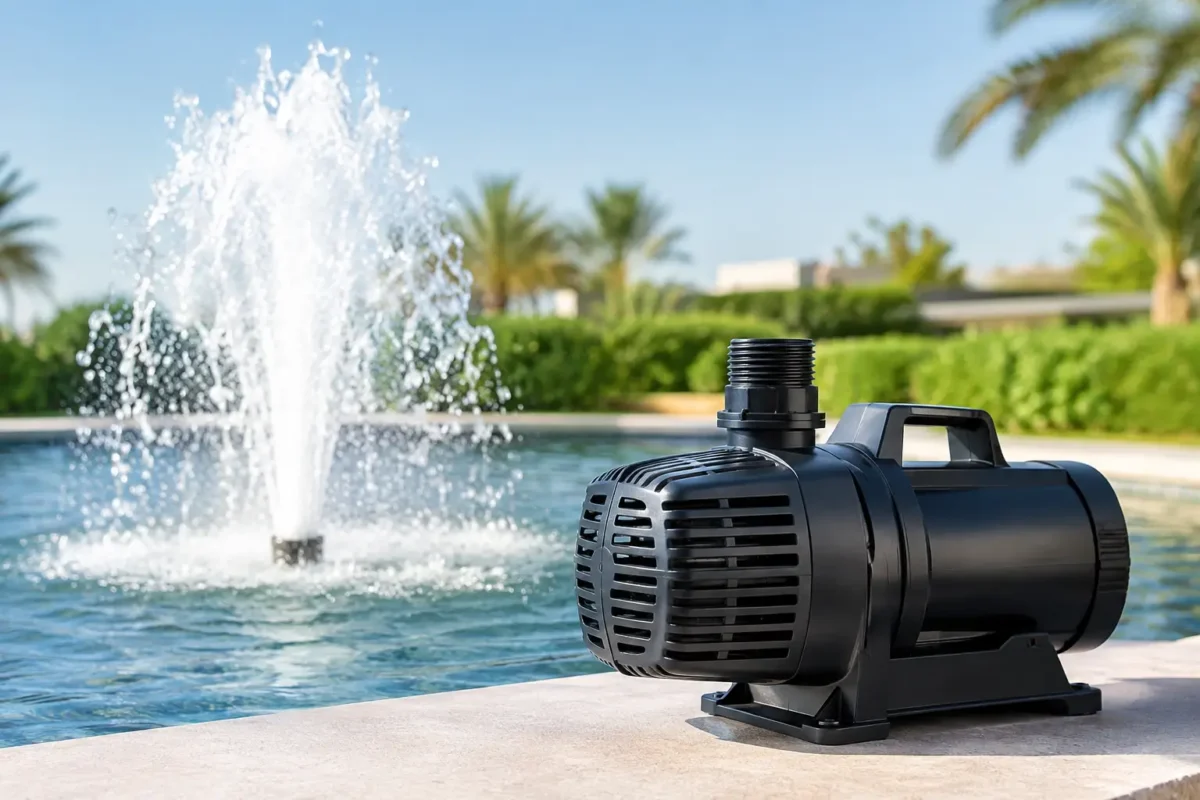
SFP-48000 Fountain Pump Selection for UAE Projects

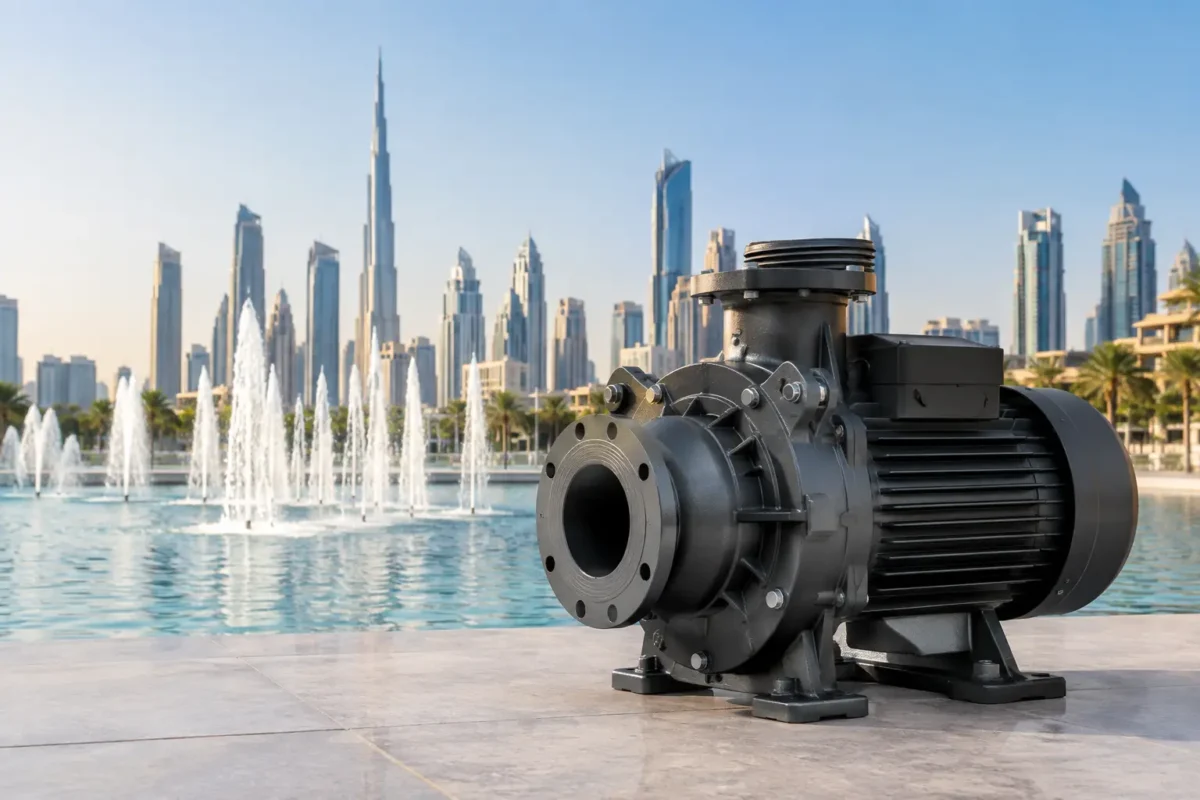
A fountain is judged in seconds: the height of its water, the consistency of each jet, the clarity of the display, and the sound it creates around the property. The sfp-48000 fountain pump is therefore not simply an item on an equipment schedule. For villas, hotels, residential developments, and commercial landscapes, it is a central component in delivering a refined water feature that performs reliably day after day.

Selecting a high-capacity fountain pump requires more than matching a model name to a desired spray effect. The correct choice depends on the fountain’s hydraulic design, nozzle configuration, pipework, electrical supply, control requirements, and operating environment. In the UAE, heat, dust, long operating hours, and demanding presentation standards make professional sizing and installation especially valuable.

What the SFP-48000 Fountain Pump Must Deliver

A fountain pump’s job is to move a defined volume of water at sufficient pressure to create the intended visual effect. With a model such as the SFP-48000 fountain pump, the decision should begin with the design duty point, not the pump’s maximum flow figure alone.

The duty point combines two measurements: flow rate and total dynamic head. Flow rate determines how much water reaches the feature, while total dynamic head accounts for the vertical lift, friction through pipework and fittings, losses through valves and filters, and the pressure needed at the nozzle. A pump may appear powerful on paper yet produce a weak display if it is selected without these real-world losses.

For a formal cascade, the priority may be steady, even water delivery across a wide spillway. For a jet fountain, the pump must provide the pressure and flow needed to maintain the specified jet height. Laminar nozzles, aerating jets, fan sprays, and water walls all behave differently. Their requirements should be evaluated as a complete system.

Maximum output is not the operating output

The maximum stated capacity of a pump is measured under particular conditions. In an installed fountain, pipe length, pipe diameter, bends, manifolds, control valves, strainers, and elevation all change the delivered performance. This is why pump curve review is essential before purchase.

A properly selected unit operates close to its efficient working range at the required duty point. An oversized pump can increase energy use, create excessive turbulence, and place unnecessary stress on nozzles and fittings. An undersized pump may fail to achieve the intended water height or leave distant nozzles visibly weaker than those closest to the pump.

Start With the Fountain Design, Not the Equipment List

Premium fountain projects are designed from the water effect outward. Before specifying an SFP-48000 fountain pump, establish what the feature is meant to do visually and operationally.

A decorative courtyard fountain may require a calm, balanced display that can operate for extended daily periods. A hotel arrival feature may need more dramatic jet heights, lighting coordination, and programmable sequences. A large public landscape installation may require zoned circuits so that different effects can operate independently and maintenance can be carried out without shutting down the entire feature.

The following project details directly affect pump selection:

  • The number, type, and intended height of fountain nozzles
  • The elevation between the pump water level and the highest discharge point
  • Pipe diameters, route lengths, fittings, and manifold arrangement
  • Whether the system uses filters, UV treatment, valves, or other inline equipment
  • Required operating hours, control modes, and visual sequences
  • Electrical capacity, equipment-room ventilation, and access for service

These details allow technicians to calculate realistic hydraulic losses and recommend equipment that supports the design rather than compromising it.

Pipework can make or break the display

Correct pipe sizing is often underestimated. Undersized pipework creates high friction losses, forcing the pump to work harder while reducing flow at the nozzle. The result can be inconsistent spray patterns, higher operating costs, and unnecessary mechanical load.

For larger fountain systems, well-designed manifolds are equally important. A balanced manifold helps distribute water evenly across multiple nozzles. Isolation valves should be positioned so individual zones can be adjusted or serviced. Where visual precision matters, these details distinguish a professional installation from a system that looks acceptable only on the first day.

Installation Considerations for UAE Conditions

Dubai and the wider UAE demand more from fountain equipment than many mild-climate locations. Outdoor equipment can be exposed to high ambient temperatures, airborne dust, intense sunlight, and variable water quality. Equipment selection should account for these conditions from the beginning.

The pump location needs adequate ventilation, safe drainage, and clear access for inspection. A cramped equipment room can trap heat and make basic maintenance more difficult than it should be. Electrical protection, correct cable sizing, grounding, and suitable control panels are also fundamental to dependable operation.

Water quality has a direct effect on both appearance and equipment life. Scale formation, debris, and poor chemical balance can restrict nozzles, stain finishes, and reduce hydraulic performance. A well-planned fountain system includes the appropriate filtration and water treatment approach for the basin volume, operating pattern, and source water conditions.

For exposed outdoor features, regular removal of leaves, sand, and debris from strainers is not optional. It protects the pump, preserves circulation, and helps maintain the clean visual standard expected in luxury properties and hospitality spaces.

Controls That Add Value Without Adding Complexity

The right controls can make a high-capacity fountain installation more efficient and more impressive. A basic on-off timer may be suitable for a private garden feature with fixed operating hours. However, commercial, hospitality, and high-visibility residential projects often benefit from more advanced control strategies.

Variable-speed control can allow a fountain to run at a lower output during quiet hours and increase performance for evening events or peak visitor periods. Zoned controls can operate separate nozzle groups independently, creating movement and variation without requiring several fountains. Coordinated lighting controls can also ensure that water effects and illumination activate together for a polished presentation.

There is a trade-off. Sophisticated programming adds flexibility, but it should remain practical for the property team responsible for daily operation. The best system is not the one with the most functions. It is the one that delivers the desired effect consistently, with controls that facility staff can understand and maintain.

Plan Maintenance Before the Fountain Opens

A premium fountain should be designed for serviceability from the first installation phase. Pumps, filters, valves, and control components need enough clearance for inspection and replacement. If a technician cannot access a strainer basket or isolation valve without dismantling surrounding equipment, routine maintenance becomes slower and more expensive.

A maintenance program for an SFP-48000 fountain pump installation typically includes checking flow and pressure behavior, cleaning strainers, inspecting nozzles, monitoring water balance, verifying electrical connections, and reviewing control settings. The schedule depends on site conditions. A sheltered indoor feature may require less frequent attention than a busy outdoor hotel fountain exposed to dust and organic debris.

Early warning signs should be addressed promptly. Reduced jet height, uneven nozzle output, unusual noise, visible air in the lines, or repeated tripping can indicate a blockage, air leak, valve issue, electrical concern, or developing pump fault. Prompt technical assessment protects both the equipment investment and the fountain’s visual impact.

A Professional Approach to Fountain Pump Selection

For property owners and project teams, the most reliable route is to treat the pump as part of an engineered fountain package. The product specification, nozzle layout, hydraulic calculations, filtration, control panel, pipework, and commissioning process should work together.

Aquatic Pools and Fountains supports this approach with premium fountain equipment, technical guidance, professional installation support, and ongoing maintenance capability for residential and commercial UAE projects. Whether the goal is an elegant villa centerpiece or a high-output feature for a hospitality development, proper assessment helps ensure the selected equipment matches the project’s actual operating demands.

A fountain should feel effortless to the people who see it. That result comes from careful hydraulic planning, quality equipment, and a service plan that keeps every jet performing as intended long after the opening day.
Categories
Uncategorized

How to Install a Pool Overflow Drain Correctly

A luxury pool should look controlled even when swimmers enter the water, heavy rain arrives, or the automatic fill system operates. To install a pool overflow drain correctly, the drainage route must be engineered as part of the pool shell, waterproofing system, and surrounding landscape – not treated as a minor finishing detail. The right installation protects the deck, prevents staining and washout, and preserves the refined appearance expected of premium residential and commercial properties.

For villas, hotels, residential developments, and high-traffic facilities, an overflow drain is a practical safeguard with a visible impact on property value and operational reliability. Its performance depends on accurate levels, quality fittings, suitable pipe sizing, and a compliant discharge plan.

What a Pool Overflow Drain Does

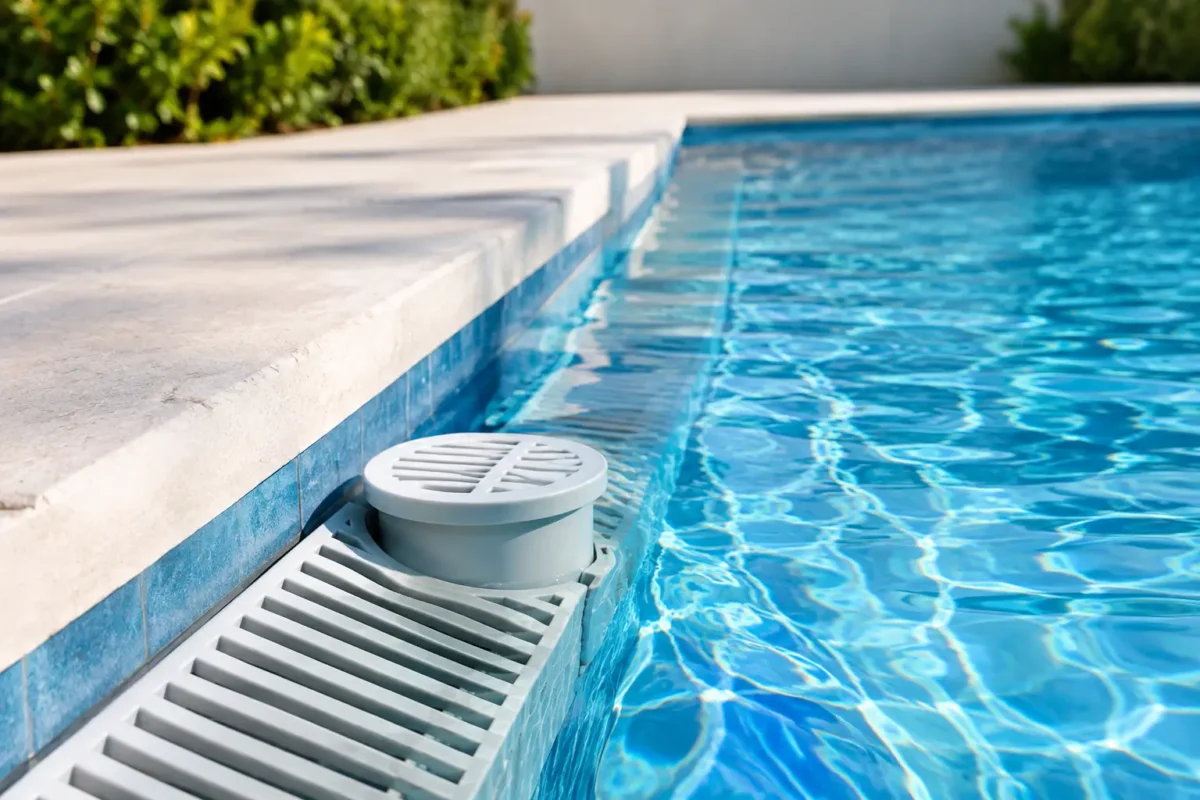
A pool overflow drain manages water that rises above the intended operating level. This can happen after rainfall, when bathers displace water, during top-up cycles, or when a level-control component malfunctions. Rather than allowing excess water to spill across coping stones and into the deck finish, the overflow point directs it into a dedicated drainage line.

This is different from a perimeter overflow or deck-level pool system. In a true overflow pool, water continuously passes over a channel or slot and returns to a balance tank for recirculation. A conventional skimmer pool overflow drain is usually a higher-level emergency or relief outlet that operates only when water exceeds the set level. Both systems require thoughtful hydraulic design, but their pipework and operating purpose are different.

For a premium project, the overflow point should be discreet without being inaccessible. It needs to sit at the correct elevation, integrate cleanly with the interior finish or skimmer arrangement, and remain serviceable after the project is complete.

Plan the Drain Before Construction Begins

The best time to define overflow drainage is during the pool design and excavation stage. Retrofitting an overflow drain into a completed pool can be possible, but it may require cutting finished surfaces, disturbing waterproofing, and rebuilding sections of the deck. Early coordination avoids expensive compromises.

Start by confirming the pool type, finished waterline, overflow location, and final deck levels. The overflow inlet must sit below the coping line but above the normal operating level. If it is set too low, the pool loses water unnecessarily. If it is too high, water may reach the deck before the drain begins to work.

The discharge destination deserves equal attention. The drain may connect to an approved stormwater system, a site drainage network, or another locally permitted point of disposal. It should never be casually routed toward the building foundation, neighboring property, planted areas that cannot tolerate chlorinated water, or a location where it can cause erosion. Local authority requirements and the project plumbing design should always govern the final connection.

In Dubai and across the UAE, high temperatures, intensive irrigation, hardscape-heavy plots, and occasional heavy rain events make site drainage coordination especially valuable. Water that appears minor at the pool edge can quickly become a costly issue when it has nowhere controlled to go.

Establish the Finished Levels First

Drainage failures often begin with incorrect levels rather than poor-quality equipment. The pool waterline, overflow inlet, coping, deck slope, linear drainage, and nearby door thresholds must work together. A professional team uses verified benchmarks and checks dimensions after structural work, waterproofing, tile installation, and final finishing.

Do not assume that a drain at the pool wall will compensate for a flat or inward-sloping deck. The pool overflow line manages excess pool water. Surface drainage around the pool must independently direct rainwater away from structures and walking areas.

Select Quality Components and the Right Pipe Size

The overflow assembly should be specified for pool use and compatible with the pool shell, finish, and plumbing material. Premium-grade fittings, solvent-welded joints where applicable, reliable seals, and corrosion-resistant visible grilles or covers all contribute to long-term performance. Low-cost components hidden behind finished surfaces create an unnecessary maintenance risk.

Pipe diameter depends on the expected flow, length of the run, number of bends, and discharge configuration. A small residential pool with a short, direct line has different requirements from a large hotel pool or a deck-level installation. Oversimplifying pipe sizing can lead to slow discharge, backed-up water, or noisy flow during heavy use.

The pipe must maintain a continuous fall toward its discharge point. As a practical principle, the route should be short, direct, and free from low spots where debris or stagnant water can collect. Excessive elbows reduce flow and make cleaning more difficult. Where the layout requires direction changes, plan access points so the line can be inspected and cleared without breaking finished surfaces.

For an overflow channel system, the drain network may also require a balance tank, surge capacity calculations, and correctly sized return pipework. This work should be handled as a complete hydraulic package, not as a collection of individual products.

How to Install a Pool Overflow Drain Step by Step

A reliable installation follows a controlled sequence. The exact method varies with the pool construction system, but the technical priorities remain consistent.

First, mark the approved overflow elevation using the project benchmark. Install the overflow fitting or channel body securely so it will not shift during concrete placement, backfilling, or tile work. Its face should align with the intended finished surface, allowing for tile adhesive, plaster, stone, or coping thickness.

Next, connect the drain pipe with the designed fall toward the approved discharge route. Support the pipework properly and protect it from movement or crushing before the deck is completed. Every joint must be clean, correctly prepared, and allowed to cure according to the material requirements. Poor joint preparation is a common source of hidden leaks.

Before covering the line, perform a water test. Fill or flood the overflow point and confirm that water travels freely to the discharge location without pooling, leakage, or backflow. This is the moment to correct an inadequate slope, obstruction, or misplaced connection. Once concrete, tile, or landscaping is complete, the same repair becomes far more disruptive.

After testing, complete waterproofing around penetrations with a system compatible with the pool construction and finish. The pipe penetration is not merely a plumbing connection. It is a vulnerable point in the waterproof envelope and must be detailed with the same precision as lights, returns, skimmers, and suction fittings.

Finally, complete the visible finish and test the pool at its normal operating level. Verify that the overflow activates at the intended height, that the surrounding deck remains protected, and that all covers or grilles sit securely and flush with the design.

Avoid These Costly Installation Errors

The most common mistake is sending overflow water into an unsuitable drainage point. Chlorinated or treated water may be restricted from certain discharge locations, and poor routing can damage landscaping or undermine paving. Confirm the approved destination before pipework starts.

Another frequent issue is relying on a shallow or inconsistent pipe slope. A line may appear acceptable during a quick test, then perform poorly once debris accumulates or a larger volume of water enters the system. Maintaining the specified slope throughout the full route is essential.

Waterproofing shortcuts also cause long-term problems. A drain fitting that is mechanically secure can still leak around its perimeter if the waterproofing transition is incomplete. This can cause moisture migration behind finishes, efflorescence, tile failure, or damage to adjacent structural elements.

Finally, avoid burying every access point. A premium pool installation should be elegant, but it should also support efficient maintenance. Cleanouts and inspection points can be positioned discreetly within service zones, planting areas, or equipment spaces while remaining available when needed.

When Professional Design Is the Better Choice

A straightforward overflow outlet on a small pool may seem simple, yet the design becomes more demanding when the property includes a basement, retaining walls, a rooftop deck, a zero-edge pool, integrated fountains, or dense surrounding hardscape. Commercial properties add heavier bather loads, stricter maintenance expectations, and greater consequences if water reaches guest walkways or interior finishes.

Professional specification brings together hydraulic capacity, plumbing quality, waterproofing detail, equipment access, and visual integration. Aquatic Pools and Fountains supports premium pool projects with quality drainage fittings, technical guidance, installation support, and dependable maintenance planning for properties that cannot afford drainage problems after handover.

A properly installed overflow drain stays almost invisible during daily use. That is precisely the result to aim for: water controlled at the correct level, finishes protected, and a pool environment that continues to perform with the same elegance it showed on opening day.

Categories
Uncategorized

SunSun HQB-5500 Fountain Pumps for UAE Features

A fountain can look perfectly composed in an architectural drawing and disappoint the moment water starts moving. The usual reason is not the nozzle or the basin finish. It is pump selection. hqb-5500 fountain pumps from sunsun are a practical option for decorative features that need dependable circulation, visible water movement, and a compact submersible configuration. For villas, landscape fountains, courtyard features, and selected commercial displays, the right installation approach matters as much as the pump itself.

The HQB-5500 should be assessed as part of a complete hydraulic system. Its stated flow capacity is only one part of the decision. Pipe diameter, vertical lift, fountain nozzle design, filtration, water quality, control requirements, and maintenance access all affect the final visual result. A pump that is suitable for a low, wide water feature may not produce the pressure needed for a tall central jet.

Where SunSun HQB-5500 Fountain Pumps Fit Best

The SunSun HQB-5500 is generally considered for medium-duty decorative water circulation where a submerged pump is preferred over an external pump arrangement. Its compact format can simplify installation inside a fountain reservoir, balance tank, or protected pump chamber. This is particularly valuable where equipment must remain out of sight to preserve a clean landscape or architectural finish.

For a residential villa, the pump may suit wall spouts, bubbling urns, sheet-water details, small cascades, or a modest multi-nozzle feature. In commercial settings, it can be considered for reception fountains, retail landscape displays, and ornamental water elements with a carefully calculated duty requirement. The decisive factor is not the size of the property. It is the required flow at the actual operating head.

A low-head circulation application and a high-jet fountain are very different assignments. As the water must travel higher or through longer pipe runs, the available flow declines. Elbows, valves, undersized fittings, UV units, filters, and decorative nozzles also introduce resistance. Selecting a pump only by its maximum flow figure can leave a feature underpowered once all these losses are included.

Flow, Head, and the Fountain Effect

A fountain pump is selected against its performance curve, not its headline capacity. The performance curve shows how much water the pump can deliver at different head heights. This information allows a technician to match the unit to the desired fountain pattern with greater accuracy.

Start with the required visual effect. A gentle spillway needs a consistent volume of water across its width. A vertical jet requires pressure as well as flow. A tiered fountain needs enough water to fill each level evenly without excessive splash. Then calculate the vertical distance from the reservoir water level to the discharge point and add friction loss from the pipe route and accessories.

Pipe sizing deserves particular attention. A pipe that is too small restricts flow and increases system resistance, forcing the pump to work harder for a weaker result. An appropriately sized pipe supports more efficient movement and helps reduce unnecessary noise. In premium projects, this detail protects both presentation and long-term equipment performance.

If a feature includes multiple outlets, each outlet must receive a balanced share of water. This may require a manifold, individual control valves, or a different pump configuration. A single HQB-5500 may be suitable for several small outlets, but it should not be expected to perform like a dedicated high-pressure fountain pump for a large public display.

Match the Pump to the Nozzle

Nozzles shape the water, but they also create resistance. Foam jets, bell nozzles, spray rings, and laminar-style effects each have different hydraulic demands. A nozzle with a refined visual profile may require more pressure than a simple open outlet.

For this reason, a pump should never be chosen separately from the nozzle schedule. The best result comes from checking the nozzle manufacturer’s flow and pressure requirement, then confirming that the HQB-5500 can meet that requirement at the calculated total dynamic head. Where the feature must perform consistently for guests, tenants, or hotel visitors, this calculation should be completed before construction is finalized.

Installation Standards That Protect Performance

Submersible fountain pumps need clean, stable operating conditions. The pump should sit on a level support and remain fully submerged during operation. It should not be placed directly on loose sediment, decorative gravel, or basin debris, as these materials can obstruct the intake and accelerate wear.

A protected pump chamber or raised base is often the better approach. It allows water to enter around the pump while keeping leaves, silt, and larger debris away from the intake. This is especially relevant for outdoor fountains in Dubai, where windblown dust and landscape debris can quickly affect circulation if a basin is not maintained properly.

The electrical installation must also be designed for wet-area safety. Use a properly rated power connection, correct grounding, and suitable protective devices in accordance with local electrical requirements. Cable joints should not be improvised inside the basin. For premium residential and commercial installations, electrical work should be coordinated by qualified professionals who understand both fountain equipment and site safety expectations.

It is also wise to include an isolation valve and a union fitting on the discharge line. These small additions make future maintenance far easier because the pump can be removed or serviced without dismantling the complete pipe route. If flow adjustment is needed, use a valve on the discharge side only. Restricting the intake is not an acceptable way to control performance.

Water Quality Is Part of Pump Care

A fountain pump operates in the same water that defines the appearance of the feature. If that water becomes contaminated with debris, scale, algae, or chemical imbalance, the pump and fountain finish are both affected. Poor water quality can clog intake screens, reduce water clarity, stain surfaces, and impair moving components over time.

Regular basin cleaning and water treatment are therefore not cosmetic extras. They protect circulation equipment. The required maintenance frequency depends on whether the fountain is indoors or outdoors, exposed to trees or dust, and operated continuously or on a timer. High-visibility features at hospitality and commercial properties should follow a preventive service schedule rather than waiting for flow to weaken.

Where a fountain uses treated water, confirm that the pump materials and surrounding components are compatible with the intended water chemistry. Avoid excessive chemical dosing. A correctly managed system protects the pump, preserves the finish of nozzles and stonework, and keeps the water feature aligned with the quality expected of the property.

When the HQB-5500 May Not Be the Right Choice

The HQB-5500 is not automatically the best answer for every fountain. Large architectural water walls, tall jets, extensive pipe networks, and heavily programmed commercial displays can require higher-head equipment, multiple pumps, variable-speed control, or a purpose-built fountain pump system. A pump that runs near its limit may still move water, but it may not deliver the consistency or visual strength a signature installation requires.

Likewise, projects with complex lighting, synchronized water effects, automatic level control, and filtration should be planned as integrated systems. The pump is one component among many. The most elegant installations are engineered so that hydraulics, electrical controls, water treatment, access panels, and finishes work together from the beginning.

For straightforward decorative circulation, the HQB-5500 can offer a practical balance of performance and installation convenience. For higher-demand applications, a technical review avoids costly revisions after the fountain is complete.

Professional Support for Fountain Equipment in Dubai

Aquatic Pools and Fountains supports villa owners, developers, facility teams, and hospitality properties with equipment selection and technical guidance for fountain systems. The right recommendation starts with the feature’s dimensions, nozzle type, pipe routing, desired water effect, operating schedule, and maintenance access – not a one-size-fits-all product choice.

Before purchasing, confirm the expected flow at operating head, the power supply requirements, the available basin depth, and the service plan for the feature. A well-selected pump should disappear into the background while the fountain delivers the movement, sound, and visual elegance the space was designed to achieve.

Categories
Uncategorized

Pool Surge Tanks for Balanced Commercial Pools

A negative-edge pool should look effortless from the deck: a clean water line, a calm catch basin, and no visible interruption to the view. Behind that result, pool surge tanks perform the essential work. They receive displaced water, stabilize the hydraulic system, and give filtration equipment the consistent supply it needs to operate correctly.

For villas, hotels, residential towers, and high-traffic leisure facilities, a surge tank is not simply an added vessel below grade. It is a major part of the pool’s engineered water-management system. Incorrect sizing, poor pipework, or weak level control can lead to pump cavitation, overflow, low water levels, and an edge effect that falls short of the premium standard the property requires.

What Pool Surge Tanks Do

A pool surge tank, also called a balance tank, is a dedicated reservoir connected to an overflow, perimeter gutter, or negative-edge catch basin. When swimmers enter the pool, water is displaced. Instead of spilling onto the deck or overwhelming the gutter, that water flows into the tank. When bather load drops or evaporation lowers the pool level, the system returns water to circulation as required.

This controlled volume is particularly valuable for infinity pools. Water continuously passes over the vanishing edge into a trough or catch basin before moving to the surge tank and filtration system. The tank holds the variable water volume that makes this continuous visual effect possible without starving the circulation pump.

In commercial pools, it also absorbs the changing load created by dozens of users entering, leaving, and moving through the water. A properly engineered tank helps maintain a stable operating level even during peak use, supporting water clarity, disinfection performance, and a more professional guest experience.

Why Surge Tank Design Cannot Be an Afterthought

The visible pool shell may receive most of the attention during a luxury build, but hydraulic design determines how well the installation performs every day. A surge tank that is too small may overflow when occupancy rises. One that is excessively large can add avoidable excavation, construction, and water-treatment costs.

Tank volume depends on more than the main pool capacity. The design team must account for the surface area of the pool, the volume contained in gutters and catch basins, the type of overflow detail, expected bather displacement, filter backwash demand where applicable, and operational reserve. A calm residential plunge pool and a hotel rooftop infinity pool can have very different requirements, even if their visible dimensions appear similar.

The tank location matters as well. It must be accessible for inspection and cleaning, yet integrated discreetly into the project. Below-ground installations require reliable waterproofing, drainage, ventilation, and structural coordination. For rooftop or podium pools, dead load, service access, and plant-room layout deserve early attention. Solving these issues after finishes are complete is expensive and disruptive.

Water Level Control Is the Operating Heart

Automated level control keeps the system from relying on manual intervention. Level sensors or probes monitor the water in the tank and activate make-up water when levels fall below the set point. High-level protection can alert the operator to an abnormal condition before water reaches areas where it should not be.

The controls must be selected and calibrated for the actual operating conditions. Constant false alarms, poorly positioned sensors, or a make-up line that cannot keep up with demand can undermine an otherwise well-built system. For high-value properties, a clear control strategy should include visual indication, safe overflow routing, and practical access for routine testing.

Key Decisions Before Selecting a Tank

The right surge tank is designed around the pool, not chosen as a standard accessory. During planning, the project team should establish four practical points:

  • the maximum expected bather load and associated displacement volume;
  • the overflow configuration, including gutters, skimmers, slots, or infinity-edge catch basins;
  • filtration flow rate, pump duty, and the minimum water level needed to protect circulation equipment; and
  • site constraints such as available footprint, structural loading, drainage, access, and local authority requirements.

Material selection follows these decisions. Reinforced concrete tanks are common where the tank is integrated into the civil structure and can be waterproofed to a high standard. Prefabricated fiberglass or polyethylene tanks may suit projects that need faster installation, corrosion resistance, or a compact modular arrangement. Stainless steel can be specified for specialized applications, but the final choice should reflect water chemistry, location, structural conditions, and lifecycle maintenance needs.

The best solution is not always the most complex one. A private villa with a carefully controlled bather load may need a more compact arrangement than a resort pool. Conversely, reducing tank capacity to save space on a busy commercial project often transfers the risk directly to daily operations.

Surge Tanks and Water Quality Performance

Pool surge tanks do not replace filtration or disinfection equipment, but they help those systems work as intended. Stable water levels allow pumps to draw consistently, which supports predictable turnover and reduces the risk of air entering the hydraulic line. This is especially relevant where variable-speed pumps and automated treatment systems are used.

Tank water must be treated as part of the overall pool water body. It needs circulation, periodic cleaning, and appropriate water-quality management. Stagnant zones, sediment accumulation, or inaccessible corners create unnecessary maintenance challenges. A tank should be designed with adequate inlet and outlet positioning, a low-point drain, safe internal access where needed, and a layout that allows technicians to inspect critical components.

For premium installations, integrating the surge tank with automated dosing, water testing, and centralized controls can strengthen operational reliability. Facility teams can identify abnormal water use, low-level events, or dosing irregularities earlier, rather than waiting for a guest complaint or visible decline in water quality.

Common Problems and What They Usually Indicate

Repeated water loss around the pool deck may indicate a tank that is undersized, an overflow route that is restricted, or an incorrect operating level. A pump that loses prime or makes unusual noise may be receiving insufficient water from the tank. These are not cosmetic issues. Continued operation under poor hydraulic conditions can damage equipment and compromise circulation.

An infinity edge that looks uneven can also point to more than a finish issue. The cause may be an unlevel weir, inadequate catch-basin flow, incorrect valve balancing, or a fluctuating tank level. Identifying the true cause requires reviewing the complete hydraulic path rather than adjusting one visible component.

Odor, debris, or cloudy water in the tank should be addressed promptly. The tank is not a hidden area that can be ignored because guests do not see it. It is part of the active circulation system, and its condition influences the quality and reliability of the pool as a whole.

Installation and Maintenance Standards That Protect the Investment

A high-performing surge tank installation begins with coordinated drawings. Civil, waterproofing, MEP, pool, and landscape teams need a shared understanding of levels, penetrations, drainage routes, access points, and equipment connections. This is particularly important in Dubai and across the UAE, where luxury projects often combine demanding architecture with high ambient temperatures and intensive seasonal use.

Before handover, the system should be commissioned under realistic conditions. That includes verifying operating water levels, testing automatic fill functions, confirming pump protection, checking overflow behavior, and balancing the edge or gutter flow. It is far easier to make refinements during commissioning than after the pool enters full use.

Ongoing maintenance should include scheduled tank inspection, debris removal, sensor checks, valve assessment, and review of make-up water behavior. Commercial operators may require a documented maintenance program, while villa owners benefit from having a qualified service team inspect the tank as part of regular pool care.

Aquatic Pools and Fountains supports premium pool projects with equipment supply, technical guidance, installation coordination, and maintenance expertise. For a new build or an underperforming overflow pool, a professional system review can establish whether the tank capacity, controls, circulation, and access arrangements meet the demands of the property.

A well-designed surge tank stays out of sight, but its results are visible every day: a stable water line, dependable equipment, cleaner operation, and an infinity edge that delivers the intended sense of precision.

Categories
Uncategorized

How to Troubleshoot Pool Air Leaks Safely

A pump basket that will not stay full, bubbles returning through the pool jets, or a pump that loses prime after switching off are not cosmetic issues. They are early warnings that the circulation system is drawing air where it should be drawing only water. To troubleshoot pool air leaks correctly, start at the suction side of the system and work methodically toward the pump. Fast diagnosis protects pump seals, improves filtration, and prevents a small fitting issue from becoming an expensive equipment failure.

Why Pool Air Leaks Demand Prompt Attention

Your pool pump is designed to pull water from the skimmer, main drain, vacuum line, or balance tank and push it through the filter, heater, sanitizer, and returns. Any opening before the pump impeller can admit air because that section of plumbing operates under vacuum while the pump is running.

A minor air leak may still allow the system to circulate, but it forces the pump to work harder and less efficiently. Over time, repeated loss of prime can overheat the pump, damage the mechanical seal, reduce water turnover, and leave areas of the pool with inadequate sanitizer distribution. For villas, hospitality properties, and commercial facilities, that creates avoidable operating costs and an inconsistent guest experience.

Air is not always coming from a plumbing failure. A low water level, a loose pump lid, a worn O-ring, or a blocked skimmer can produce similar symptoms. The goal is to isolate the source before replacing parts unnecessarily.

The Most Common Signs of a Suction-Side Air Leak

The clearest sign is a visible air pocket under the clear pump lid while the pump is operating. A small bubble can be normal in some systems, particularly immediately after a cleaning cycle or when water features are active. A large, persistent, or growing pocket is not.

You may also see bubbles from return fittings in the pool, intermittent flow from water features, lower pressure at the filter gauge, or a pump that takes too long to prime. In more advanced cases, the pump may surge, make a gravel-like sound, or shut down on thermal protection. Never allow a pump to run dry while investigating. Turn it off if it cannot establish a stable prime within a reasonable period.

Do not confuse a suction leak with a pressure-side leak. Water escaping from a pipe, heater union, filter clamp, or return fitting after the pump is usually a pressure-side issue. Air entering the system before the pump is a suction-side issue, and it often leaves no visible water leak because the line is pulling inward.

Troubleshoot Pool Air Leaks Step by Step

Start with the pool water level and skimmer

Bring the water level to approximately the center of the skimmer opening before testing anything else. If the level is too low, the skimmer can form a vortex and pull air into the line, especially at high pump speeds or when the skimmer basket is partially blocked.

Remove leaves, debris, and broken skimmer weir parts. A stuck or missing weir can affect skimming performance, although it is less likely to be the sole cause of severe air intake. If your pool has multiple suction points, confirm that valves are set to provide adequate water supply to the pump. A valve that heavily restricts the skimmer, main drain, or vacuum line can make a marginal condition appear worse.

Inspect the pump lid, lid O-ring, and drain plugs

Switch off the pump at the breaker or local isolator before opening the pump basket. Clean the lid O-ring and its seating surface with a soft cloth. Check for flattening, cracks, stretching, or cuts. Apply a small amount of silicone-based pool lubricant if appropriate for the manufacturer’s specified O-ring material, then reseat the lid evenly.

Avoid petroleum-based lubricants. They can degrade some rubber compounds and create a short-term fix that leads to premature failure.

Also inspect the pump drain plugs and their O-rings. These fittings are easily overlooked after seasonal servicing or basket cleaning. Even a slightly loose plug can draw air without dripping water. Tighten by hand according to the pump manufacturer’s guidance. Over-tightening can damage threads or O-rings.

Check valves, unions, and threaded fittings before the pump

Examine every accessible connection between the skimmer lines and the pump inlet. Focus on three areas: suction valve stems, union O-rings, and threaded adapters at the pump inlet. A valve may appear dry and intact yet allow air through a worn stem seal or loose cover assembly.

With the pump running and primed as well as possible, carefully pour water over one suspected fitting at a time. If the pump basket suddenly fills and the air pocket decreases, that fitting is likely admitting air. Use a small container and work slowly so you can identify the exact connection. Keep water away from electrical components and never conduct this test near an open electrical enclosure.

A controlled water test is preferable to randomly applying sealant. Sealant may hide the symptom temporarily while making future service harder. Premium installations should be repaired with the correct O-ring, union, valve component, or properly prepared plumbing connection.

Evaluate the pump speed and system demand

Variable-speed pumps can reveal issues that are less obvious at lower flow rates. A small suction leak may disappear when the pump runs slowly and become pronounced at higher speeds because the vacuum at the inlet increases.

This does not automatically mean the pump speed is wrong. Pools with spas, water features, in-floor cleaning systems, heaters, or long suction runs may require higher flow at certain times. The correct solution is to confirm hydraulic requirements and repair the leak, not to permanently reduce pump speed until the symptoms disappear. Lowering speed can be a useful diagnostic step, but it may compromise skimming, heating, or filtration if used as a workaround.

When the Leak Is Hidden Underground or Behind Finishes

If visible components pass inspection and air remains in the pump basket, the issue may be in a concealed suction line. This is more likely after ground movement, renovation work, aging pipe joints, or damage around skimmer and vacuum fittings. A line leak can also be suspected when one suction line performs normally while another causes the pump to lose prime.

At this stage, professional testing is the right decision. A qualified pool technician can isolate individual lines, conduct vacuum or pressure testing, inspect valves, and assess the pump’s mechanical condition. Specialized leak detection may be required before any decking, tile, landscaping, or equipment-room finishes are disturbed.

This approach is particularly valuable for high-specification villas, hotels, and shared residential facilities, where unnecessary excavation can affect finishes, operations, and project budgets. Accurate testing narrows the repair scope and helps preserve the integrity of the installation.

Avoid These Common Repair Mistakes

Do not keep adding water to the pump basket while it is running. Prime the pump with power off, secure the lid, then restart the system according to the equipment instructions. Repeatedly opening the lid during operation introduces more air and increases safety risk.

Do not assume bubbles at the returns always confirm a plumbing leak. Air can be introduced after backwashing, filter cleaning, low-water events, or a recently opened pump lid. Watch whether the symptom clears after normal circulation has been restored.

It is also unwise to replace the pump immediately. A pump with a damaged lid, impeller issue, or worn seal may need service, but many air-leak calls are resolved with correct O-ring maintenance, valve servicing, or an adjustment to the suction configuration. Diagnosis should lead the repair decision.

Protect Long-Term Circulation Performance

A well-maintained circulation system should run quietly, hold a consistent prime, and deliver even flow through the pool and connected features. Make pump lid and O-ring inspection part of routine maintenance, especially after basket cleaning, filter servicing, or equipment-room work. Keep skimmer baskets clear, maintain the correct water level, and use quality replacement seals and fittings that match the installed equipment.

For properties with complex hydraulics or premium water features, professional servicing provides an added level of protection. Aquatic Pools and Fountains supports owners and facility teams with dependable pool equipment, technical diagnosis, and maintenance solutions selected for long-term performance. A stable, air-free suction line is one of the simplest signs that the entire pool system is operating as it should.