
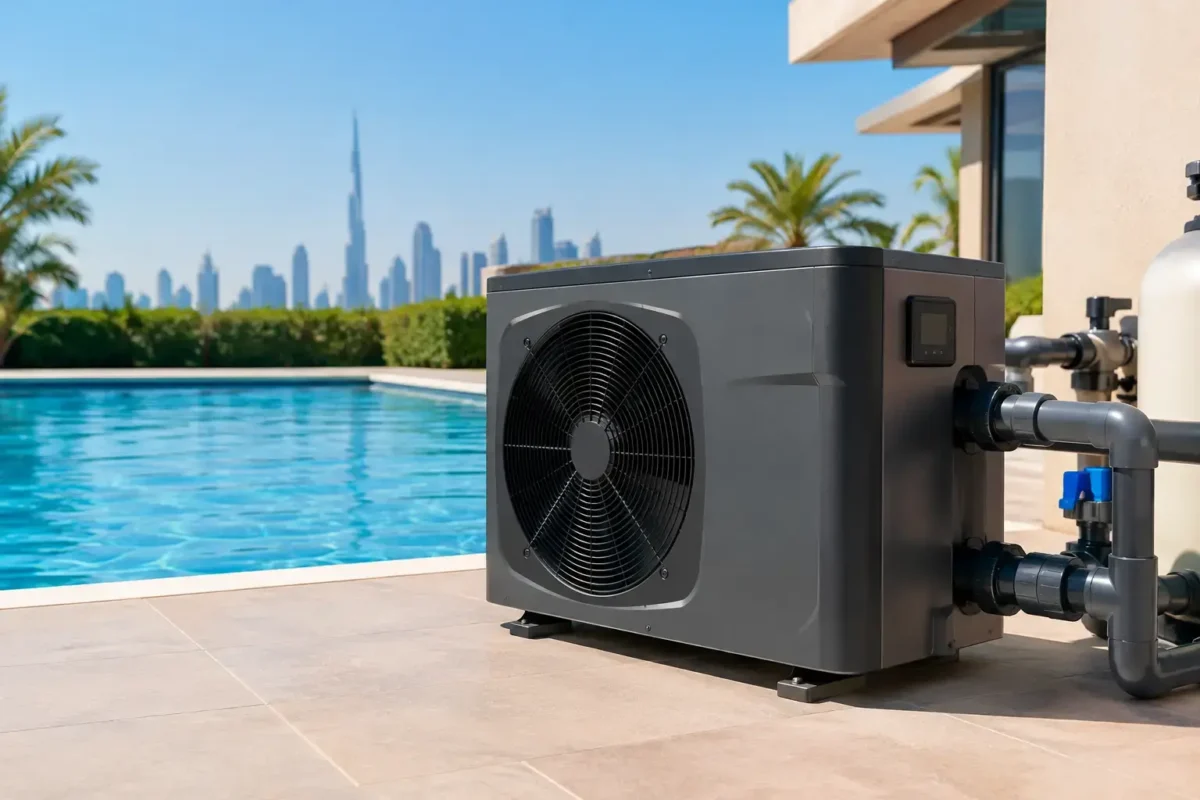
A pool in the UAE is exposed to two very different demands: cool winter evenings and long periods of intense summer heat. An aqua heat cool pump gives property owners control over both. Rather than treating water temperature as a seasonal compromise, it maintains a more comfortable swimming environment across more of the year – provided the system is selected, installed, and maintained to premium standards.
For villas, hotels, residential developments, and leisure facilities, this is not simply an equipment purchase. It is a performance decision that affects guest comfort, energy use, operating reliability, and the long-term value of the pool environment.
What an Aqua Heat Cool Pump Does
A heat-cool pump is designed to heat pool water when conditions are cooler and remove heat when water temperatures rise beyond the desired level. It uses heat-transfer technology rather than generating all heat directly through an electric element. In heating mode, the unit extracts ambient heat from the air and transfers it into the pool water. In cooling mode, the process is reversed to lower water temperature.
This dual capability is particularly valuable in Dubai and across the UAE. A standard pool heater can extend the swimming season during winter, but it cannot address the discomfort of excessively warm water in summer. In exposed pools, high ambient temperatures and direct sunlight can push water temperatures well above the range most swimmers find refreshing.
A properly specified aqua heat cool pump allows the pool owner or operator to set a target water temperature and maintain it with far greater consistency. It supports a refined swimming experience for a private villa while helping hospitality and commercial facilities deliver the dependable water conditions guests expect.
Why Temperature Control Matters in UAE Pools
The ideal pool temperature depends on how the pool is used. A family leisure pool is often kept around 82 to 86 degrees Fahrenheit, while a fitness or lap pool may be preferred slightly cooler. Children’s pools and hydrotherapy applications may require warmer water. There is no universal setting, which is why equipment selection should begin with the property’s actual use case.
In summer, cooling can be as important as heating. Water that remains too warm feels less refreshing, encourages evaporation, and can make chemical management more demanding. Higher water temperatures also create a more favorable environment for algae if circulation, filtration, and disinfection are not managed correctly.
During winter, unheated pools may become underused even at premium residential and hospitality properties. A heat-cool pump helps protect the investment in the pool itself by making the space more usable for longer. For hotels and wellness facilities, that can translate directly into stronger guest satisfaction and a more complete amenity offering.
The pool is only one part of the system
Temperature equipment performs best when the rest of the pool plant room is correctly configured. Adequate circulation flow, an appropriately sized filter, sound pipework, balanced water chemistry, and effective disinfection all influence results. A heat-cool pump cannot compensate for undersized circulation equipment, poor hydraulic design, or a pool that is losing excessive heat overnight.
For this reason, premium installations should be evaluated as complete systems. The right pump capacity matters, but so do the location of the unit, plumbing layout, electrical supply, automation compatibility, and service access.
Choosing the Right Aqua Heat Cool Pump Capacity
Sizing is the most important technical decision. Selecting a unit based on pool volume alone can lead to disappointing results. Volume is a starting point, but a professional specification also considers the pool’s surface area, desired operating temperature, exposure to wind and sun, shading, bather load, operating hours, and whether a pool cover is used.
An undersized unit may run continuously without reaching the target temperature during demanding periods. That creates unnecessary wear, higher operating costs, and frustration for users. An oversized unit can add avoidable capital cost and may cycle too frequently if controls and flow rates are not set correctly.
Commercial pools require an even more detailed assessment. A hotel pool, residential tower amenity, or high-use leisure facility experiences heavier bather loads and more frequent heat loss than a private pool. It may also need redundancy planning so that water temperature remains controlled if one unit requires service.
The best approach is to provide a technical team with accurate dimensions, depth profile, pool type, location, preferred temperatures, and expected usage pattern. This allows capacity to be calculated for the property rather than guessed from a generic chart.
Key features worth specifying
Premium heat-cool pumps vary considerably in build quality and controls. For UAE projects, priority should be given to corrosion-resistant construction, efficient inverter technology, reliable compressors, and components suited to demanding outdoor conditions. Saltwater-compatible models are also essential where salt chlorination is used.
Useful features include intelligent defrost operation for heating performance during cooler periods, quiet operating modes for villas and hospitality settings, digital controls, timer functions, and integration with pool automation. Remote monitoring can be especially valuable for facility managers responsible for multiple pools or large real estate portfolios.
Noise should not be overlooked. Even efficient equipment can become a concern when it is installed beside a bedroom, terrace, restaurant area, or neighboring property boundary. Unit placement, acoustic planning, and correct installation are as important as the manufacturer’s quoted sound level.
Installation Decisions That Protect Performance
A heat-cool pump needs sufficient airflow to operate efficiently. It should be installed in an open, well-ventilated location with the clearances recommended for the specific model. Enclosing a unit too tightly, placing it where hot discharge air is recirculated, or blocking its air intake will reduce efficiency and can affect reliability.
The unit should also be installed on a stable base with proper drainage. Condensation is normal during operation, particularly in heating mode, and must be directed away cleanly. Pipework should be correctly sized and insulated where required, while unions and bypass arrangements should allow the unit to be isolated for servicing without interrupting the entire pool system.
Electrical work must be completed by qualified professionals, with suitable protection and a correctly rated supply. For commercial installations, controls should be coordinated with the circulation schedule and any building management system. Running a heat-cool pump without adequate water flow can trigger faults and place unnecessary strain on the equipment.
At Aquatic Pools and Fountains, product selection can be supported by technical guidance, professional installation, and ongoing maintenance planning. This full-scope approach is particularly valuable when the heat-cool pump must work alongside existing pumps, filtration, water treatment, lighting, and automation equipment.
Operating Costs: Efficiency Depends on Conditions
Heat-cool pumps are widely chosen because they can provide efficient temperature control compared with conventional electric resistance heating. Still, efficiency is not fixed. It changes with ambient temperature, humidity, target water temperature, run time, airflow, and pool heat loss.
Heating water during a mild UAE evening generally requires less energy than maintaining a high temperature during a cold, windy period. Cooling also has a cost, especially when the pool receives uninterrupted sun exposure and the desired water temperature is significantly below ambient conditions.
A quality pool cover is one of the most practical ways to reduce heat loss, evaporation, and operating costs. It can also limit debris entering the water, reducing cleaning demand. For high-end properties, an automatic cover can offer this efficiency benefit without compromising the visual standard of the pool area.
Smart scheduling adds another advantage. Instead of running continuously, a correctly programmed system can maintain target temperatures around actual swimming hours while coordinating with filtration cycles. The right settings will depend on the pool’s thermal behavior, so they should be reviewed after commissioning rather than treated as a one-time adjustment.
Maintenance That Preserves Your Investment
A heat-cool pump is durable equipment, but it is not maintenance-free. Regular inspections help preserve efficiency and identify small issues before they affect comfort or cause an unexpected shutdown. The air coil should remain clear of dust, leaves, landscaping debris, and obstructions. Water flow should be checked, and the unit should be inspected for leaks, unusual noise, vibration, or error messages.
Water chemistry also matters. Poorly balanced water can damage internal components and pool equipment over time. Maintaining correct sanitizer, pH, alkalinity, and hardness levels protects not only the heat-cool pump but also heaters, filters, fittings, and finishes throughout the installation.
For commercial properties, preventive maintenance should be scheduled rather than requested only after a fault occurs. A planned service program supports more predictable operation, protects asset value, and helps facility teams avoid disruption during peak occupancy or high-use periods.
A well-chosen aqua heat cool pump turns a pool from a weather-dependent feature into a consistently inviting part of the property. With accurate sizing, disciplined installation, and professional care, it delivers the temperature control that premium UAE pools deserve.