Categories
Uncategorized

Pool Waterfall Feature Installation Guide

A pool without movement can look polished, but it rarely feels complete. The right pool waterfall feature installation changes that immediately – adding sound, visual depth, and a stronger architectural presence that turns a standard pool into a premium outdoor centerpiece.

For villa owners, developers, hospitality operators, and facility managers, a waterfall is not just a decorative add-on. It affects circulation design, equipment selection, structural planning, and long-term maintenance. When the installation is handled correctly, the result is elegant, durable, and easy to operate. When it is treated as an afterthought, problems show up fast in the form of weak flow, splash loss, noisy pumps, staining, or uneven performance.

Why pool waterfall feature installation deserves proper planning

A waterfall feature changes more than appearance. It introduces a second visual layer to the pool and can soften hard architectural lines with motion and sound. In high-end residential settings, that often means a more refined leisure environment. In hotels, residential towers, and commercial properties, it can strengthen the arrival experience and support a more premium brand image.

There is also a technical side many buyers underestimate. Waterfalls rely on controlled flow rate, correct pipe sizing, suitable pump capacity, and precise installation geometry. The clean sheet effect of a sheer descent, for example, depends on balance and pressure. A natural rock cascade depends on controlled spill points and stable structural support. The desired look determines the engineering approach.

That is why the best results come from planning the feature at the same time as the pool shell, hydraulic layout, and surrounding finishes. Retrofitting is possible, but it usually adds cost and limits some design options.

Choosing the right waterfall style for the property

Not every waterfall fits every pool. The architecture of the property should lead the decision.

Sheer descent and blade waterfalls

These are among the most popular choices for modern pools. They produce a clean, controlled sheet of water that suits contemporary villas, rooftop amenities, and commercial leisure areas with a minimalist finish. They work especially well with tiled feature walls, LED lighting, and geometric pool lines.

The key advantage is precision. The challenge is that precision must be maintained. Uneven leveling, low flow, or poor filtration can disrupt the water sheet and reduce the premium effect.

Rock and lagoon-style cascades

For larger residential landscapes or resort-style developments, a natural cascade can add texture and a more organic look. This style pairs well with freeform pools, planted edges, and settings where the goal is a relaxed luxury atmosphere rather than a sharp architectural statement.

These installations need careful attention to waterproofing, load support, and water return control. What looks natural still requires exact technical execution behind the scenes.

Wall-integrated waterfalls and spillways

This option is ideal when space is limited or when the design calls for a discreet but upscale water feature. A wall-integrated spillway can create movement without dominating the full poolscape. It is often a strong choice for compact villa courtyards, plunge pools, and formal hospitality spaces.

This approach can also be easier to coordinate with existing structures, though access for maintenance should always be considered early.

What determines a successful installation

A premium waterfall depends on equipment quality and installation accuracy in equal measure. One without the other is rarely enough.

Hydraulic design and flow rate

The pump must be sized for the specific feature, not guessed based on the main pool equipment alone. Some waterfalls require a dedicated pump to achieve the right pressure and consistency. Pipe runs, elevation changes, fitting resistance, and feature width all affect performance.

This is where many installations fall short. An underpowered system produces weak flow and inconsistent visual output. An oversized system can create excess splash, noise, and unnecessary energy use. The right balance is what creates a refined final result.

Structural support and waterproofing

If the waterfall is integrated into a wall, raised beam, cladded facade, or rock formation, the supporting structure must be engineered for moisture exposure, movement, and finish durability. In the UAE climate, heat and material expansion can also affect long-term stability.

Waterproofing details matter just as much as the visible finish. A leak behind decorative cladding or inside a raised wall can become expensive quickly. Premium installation means protecting the unseen layers, not just polishing the visible ones.

Finish materials and water behavior

Stone, porcelain, glass mosaic, and textured cladding all create a different visual effect once water runs across them. Some materials highlight a glossy sheet of water. Others break the flow into a softer, more natural pattern.

The choice should match both the design brief and the maintenance expectation. Smooth surfaces are easier to clean and often better for modern waterfalls. Textured finishes can look dramatic but may collect scale or debris more easily.

Pool waterfall feature installation for new builds vs retrofits

New construction offers the best level of freedom. The plumbing, pump room layout, structural reinforcement, and control systems can all be designed around the feature from day one. That usually leads to cleaner aesthetics and fewer compromises.

Retrofit pool waterfall feature installation is still a strong option, especially for property owners upgrading an existing pool to improve value and visual impact. The trade-off is that the installation team must work within the existing shell, deck, and equipment arrangement. In some projects, that may require additional pipe routing, masonry work, or equipment upgrades.

A site review is essential before committing to a retrofit concept. What looks simple in a photo reference may require substantial work in reality.

Equipment selection affects long-term performance

A waterfall is only as reliable as the system behind it. Premium projects should prioritize durable pumps, quality fittings, dependable filtration support, and controls that allow practical operation.

For residential buyers, that may mean setting schedules so the waterfall runs during entertainment hours without increasing wasteful energy use. For hotels and commercial properties, it may mean integrating the feature into broader automation and maintenance protocols.

Water quality should also be part of the discussion. Poor balance can lead to scaling on spill edges, staining on surrounding surfaces, and reduced visual clarity. In a market where presentation standards are high, water treatment and circulation support are not secondary issues.

Cost expectations and what changes the budget

There is no single price for pool waterfall feature installation because design and site conditions vary widely. A compact wall-mounted spillway for a residential pool is very different from a multi-outlet architectural water wall or a custom rock cascade for a resort environment.

Budget usually shifts based on the feature type, the finish material, whether the system needs a dedicated pump, structural work, lighting integration, and access conditions on site. Retrofits often cost more than clients expect because hidden work can include demolition, rerouting, reinforcement, and finish restoration.

The better question is not just what it costs to install, but what it costs to install correctly. A lower upfront price can become expensive if the feature performs poorly, leaks, or requires repeated service interventions.

Why professional installation matters in premium properties

In luxury and commercial environments, the standard is higher. The waterfall must look clean, operate quietly, and hold up under regular use. It also needs to align with the broader design language of the property.

That requires more than access to products. It requires technical judgment, branded equipment knowledge, installation discipline, and ongoing support. A full-scope partner can assess the visual objective, specify suitable components, coordinate the mechanical side, and support maintenance after handover. That is especially valuable when the pool is part of a larger residential development, hospitality asset, or managed facility where downtime is not acceptable.

Aquatic Pools and Fountains works in precisely that space – supplying premium pool and water feature equipment while supporting projects with technical guidance, installation expertise, and service reliability expected in high-value properties.

What to ask before approving the project

Before moving ahead, buyers should ask a few practical questions. Will the waterfall have a dedicated pump or share circulation equipment? How will splash and runoff be controlled? What finish materials are best for the intended water effect? How accessible are the feature components for maintenance? What water treatment measures will protect the visual finish over time?

These questions help separate a decorative concept from a properly engineered installation.

A well-executed waterfall does more than enhance a pool. It gives the entire space a stronger sense of quality, movement, and permanence – and that is exactly what premium aquatic design should deliver.

Categories
Uncategorized

Pool Safety Buoy Ring for Smarter Pool Safety

A pool incident rarely gives you time to think. When a swimmer is struggling, the difference between panic and control often comes down to whether the right rescue equipment is visible, accessible, and ready to use. A pool safety buoy ring is one of the simplest lifesaving tools on any deck, yet it is often treated as an afterthought until a safety inspection, handover, or emergency exposes the gap.

For premium residential pools, hospitality properties, residential towers, and commercial aquatic facilities, that is not a small oversight. Safety equipment needs to match the same standard as the rest of the installation – durable, compliant, easy to identify, and suitable for the environment it serves. A buoy ring that fades quickly, cracks under heat, or is mounted poorly does not support a serious pool safety strategy.

Why a pool safety buoy ring still matters

Modern pools may include advanced circulation systems, elegant finishes, underwater lighting, and automated treatment equipment, but emergency rescue basics remain essential. A buoy ring is not outdated equipment. It is a first-response tool designed to help someone in distress without forcing another person to enter the water immediately.

That matters in both residential and commercial settings. In a private villa, family members or household staff may be the first people on the scene. In a hotel or community facility, security staff, attendants, maintenance personnel, or trained responders may need immediate access before dedicated emergency services arrive. In either case, response speed matters, and equipment visibility matters just as much.

A properly selected pool safety buoy ring gives responders a flotation aid they can throw quickly to a struggling swimmer. It creates distance, reduces direct-contact risk, and can stabilize a person long enough for extraction. In facilities where children, elderly users, or non-swimmers may be present, that practical value is even higher.

What separates a premium pool safety buoy ring from a basic one

Not all buoy rings are built for the same environment. For high-end residential and commercial properties, the decision should not be based on appearance alone or on choosing the lowest-cost option available. Material quality, UV resistance, buoyancy performance, rope configuration, and mounting reliability all affect how useful the ring will be when it is actually needed.

A quality ring should maintain its structure under prolonged sun exposure and poolside heat. This is especially relevant in demanding climates, where intense UV and high temperatures can shorten the service life of poorly manufactured safety products. Color retention also matters. A faded rescue ring is less visible, and reduced visibility weakens its function.

The grab line or attached rope should be secure, strong, and easy to handle with wet hands. If the rope tangles too easily, is too short for the pool area, or shows early wear, the equipment becomes less dependable in a real emergency. Mounting hardware matters too. A ring hidden behind furniture, placed inside a locked room, or attached to weak brackets is not truly available.

Where to place a buoy ring for real emergency use

Placement is where many pool operators get it wrong. A pool safety buoy ring should be immediately visible and reachable from the main pool deck. It should not be installed where decorative features, landscaping, loungers, or service barriers block access. In an emergency, even a few extra seconds of confusion can be costly.

For villa pools, one clearly mounted ring near the primary access point may be sufficient depending on pool size and layout. For larger properties, rooftop pools, hospitality venues, school pools, or community facilities, multiple stations may be necessary. The right number depends on deck length, visibility lines, staffing, and how quickly someone can access rescue equipment from different points around the water.

Mounting height also deserves attention. The ring should be accessible to adults without requiring awkward lifting or bending, and it should be mounted in a way that allows immediate removal. If a site receives visitors unfamiliar with the space, the rescue station should be intuitive enough to identify without explanation.

Compliance, inspections, and operator responsibility

For commercial pools and shared-use residential assets, safety equipment is not just good practice. It is part of responsible facility management. Developers, operators, and facility managers need to think beyond installation day and consider inspection routines, replacement cycles, and readiness standards.

A buoy ring should be included in regular site checks along with ladders, drain covers, signage, lighting, and water treatment controls. Visual inspection is the minimum. Teams should check for cracks, chalking, rope damage, loose brackets, and any sign that the ring has become decorative rather than functional.

This is also where product sourcing matters. Working with a specialized supplier makes it easier to align equipment with the pool type, user profile, and compliance needs of the property. For commercial buyers, consistency across multiple sites can simplify training, procurement, and maintenance planning.

Matching the buoy ring to the pool environment

The right specification depends on the setting. A luxury villa pool may prioritize discreet but elegant mounting, provided visibility and performance are not compromised. A hotel or resort may require more prominent rescue equipment with high-visibility finishes that stand out clearly against the pool deck. A school, club, or residential tower may need equipment that is more tamper-resistant and positioned for broad public access.

Size can also vary. A ring intended for a compact plunge pool may not be ideal for a larger leisure or lap pool. The attached rope length should suit the dimensions of the water body and surrounding deck conditions. If the pool has unusual geometry, overflow edges, deep sections, or adjacent water features, rescue planning should account for those realities rather than relying on a generic setup.

For properties with a broader aquatic environment, including spas, water features, decorative basins, or linked recreational zones, it is worth reviewing whether one safety approach truly covers all use areas. In many cases, it does not.

Aesthetic integration without compromising safety

Premium projects often place a strong emphasis on visual finish, and rightly so. Safety equipment should not make a high-end pool environment look neglected or improvised. At the same time, safety products cannot be hidden to preserve aesthetics. The better approach is to specify equipment and mounting systems that complement the environment while remaining unmistakably functional.

That means using durable, professional-grade accessories, planning the rescue station during the overall layout stage, and avoiding last-minute placement decisions. When safety products are selected as part of the design and operations plan, they look intentional rather than intrusive.

This is especially relevant for luxury residences, hospitality venues, and branded developments where every visible detail contributes to the property’s standard. A well-chosen buoy ring station supports that standard. A cheap, poorly mounted alternative does the opposite.

Why maintenance teams should treat it as active equipment

A pool safety buoy ring is not a decorative compliance item. It is active emergency equipment, and it should be treated that way by maintenance staff and site operators. That includes routine checks, immediate replacement when damage appears, and making sure the ring is never removed from its station without being returned properly.

Teams should also confirm that surrounding access remains clear. Pool decks change over time. Furniture layouts shift, event setups interfere with visibility, and service items get stored where they should not be. A rescue ring that was perfectly positioned at handover may become obstructed months later if no one is reviewing the deck with safety in mind.

For commercial and multi-user sites, staff familiarity matters as much as product quality. People on site should know where the ring is, how to deploy it, and when to use it. The equipment itself is simple. The discipline around it is what makes it effective.

Choosing a supplier that understands pool safety as a system

Safety equipment should not be selected in isolation from the rest of the aquatic installation. The most reliable results come from working with a supplier that understands pool operations, technical standards, and the practical demands of both residential and commercial projects. That is especially valuable when the same project also involves pumps, filtration, lighting, fittings, deck accessories, and maintenance planning.

Aquatic Pools and Fountains supports this kind of integrated approach by supplying premium pool equipment backed by technical guidance and service capability. For buyers who want more than a catalog transaction, that matters. It means the pool safety buoy ring is chosen with the site, the users, and the long-term operating conditions in mind.

If a pool is worth building to a premium standard, it is worth protecting to the same standard. The right rescue equipment does not call attention to itself every day, but when it is needed, nothing about it should feel like an afterthought.

Categories
Uncategorized

Choosing a Robotic Pool Cleaner for Villas

A luxury villa pool should look inviting every day, not only after a maintenance visit. That is exactly why choosing the right robotic pool cleaner for villas matters. In premium residential settings, cleaning equipment is not a minor accessory. It directly affects water clarity, surface protection, operating efficiency, and the overall standard of the pool environment.

In the UAE, villa pools face a demanding mix of heat, dust, fine debris, sunscreen residue, and frequent use. Manual cleaning can handle occasional touch-ups, but it is rarely the most efficient long-term approach for owners who expect consistent results. A robotic unit brings precision, automation, and repeatable performance, which is why it has become a serious consideration for high-end residential pools.

Why a robotic pool cleaner for villas makes sense

Villa pools are often larger, deeper, and more design-led than standard residential pools. Many include overflow edges, custom tiling, tanning ledges, water features, or unusual shapes that collect debris in different ways. A basic suction cleaner may move debris around, but a quality robotic cleaner is built to actively scrub and filter while navigating the pool with more intelligence.

The practical benefit is simple. You reduce manual labor, shorten routine cleaning time, and maintain a better visual standard between scheduled services. For villa owners and property managers, that means less dependence on reactive cleaning and a more polished pool presentation throughout the week.

There is also a technical advantage. Robotic cleaners operate independently from the pool’s main circulation system in many cases, which can reduce strain on filtration equipment. That separation is valuable in premium installations where protecting pumps, filters, and hydraulic balance is part of preserving long-term system performance.

What separates a premium robotic pool cleaner for villas from a basic model

Not every cleaner marketed as automatic is suitable for a villa pool. The difference usually comes down to coverage, build quality, filtration ability, and control systems.

A premium robotic cleaner is designed to clean the floor, walls, and often the waterline with consistency. That matters because the waterline is where oils, dust, and cosmetic residue tend to build up fastest. If a machine only handles the floor, the pool may still appear dirty even after a cleaning cycle.

Filtration quality is another major separator. Fine UAE dust can pass through weaker systems or require frequent intervention. A high-quality robotic cleaner should trap fine particles effectively and make filter access easy. If maintenance is frustrating, owners are less likely to use the machine as often as needed.

Motor strength and traction also matter more than many buyers expect. Smooth tile finishes, sloped floors, and deeper sections can challenge entry-level units. In a villa setting, the cleaner should move confidently across different surfaces without constant repositioning.

Key factors to evaluate before buying

Pool size should be the first checkpoint. A cleaner designed for a small plunge pool will not deliver the same result in a long family pool or a larger leisure pool with feature zones. Cycle time, cable length, battery capacity where applicable, and overall coverage area should all match the actual dimensions of the pool.

Pool shape is just as important. Rectangular pools are simpler for navigation, but many villas feature curves, steps, benches, beach entries, and decorative corners. A model with advanced scanning and route control is usually a better fit for these layouts. Otherwise, you may end up with repeated missed spots.

Surface material should guide your choice as well. Mosaic, ceramic tile, fiberglass, and coated concrete all create different cleaning conditions. Brush type and traction design need to match the surface so the cleaner removes dirt without being too aggressive or losing grip.

Debris type is another practical consideration. If the pool area is exposed to landscaping, windblown dust, or regular leaf fall, the cleaner should handle both fine and larger debris without clogging too quickly. In enclosed or indoor villa pools, the demand may lean more toward fine filtration and waterline cleaning than heavy debris capture.

Finally, think about user convenience. Lift systems, caddy storage, top-access filter baskets, scheduled cleaning modes, and app control are not luxury add-ons for the sake of appearance. In many cases, they determine whether the cleaner becomes part of an efficient routine or ends up unused in a storage room.

Performance matters more than features on paper

It is easy to be impressed by long feature lists, but performance in real conditions is what counts. A robotic cleaner may advertise smart navigation, dual motors, and multiple cleaning cycles, yet still struggle with wall climbing or miss debris along edges.

For villa owners, the best buying decision is usually based on reliability over novelty. A machine that delivers strong day-to-day cleaning with straightforward maintenance is more valuable than one with advanced settings that add complexity without improving results.

This is where product quality and technical guidance make a real difference. Premium properties deserve equipment selected for the actual pool design, not simply the most heavily advertised model. That approach protects both the visual finish of the pool and the owner’s investment over time.

Installation environment in Dubai and the UAE

Pools in Dubai and across the UAE operate under conditions that can shorten the life of lower-grade equipment. Heat exposure, intense UV, airborne sand, and long operating seasons all place pressure on materials and components. For a robotic pool cleaner, durability is not optional.

Cable quality, housing strength, sealing, motor protection, and filter design all influence how well the cleaner performs over time. A low-cost unit may appear attractive initially, but frequent breakdowns, weaker cleaning ability, and shorter service life often make it more expensive in practice.

That is why many premium buyers prefer to source through an experienced equipment partner rather than making a decision based on price alone. The cleaner should suit the local environment, the pool’s technical setup, and the service expectations of a high-value property.

Robotic cleaners versus manual and suction cleaning

Manual vacuuming still has a place, especially for spot cleaning or after heavy debris events. It gives the operator direct control and can be useful for unusual conditions. The drawback is obvious. It takes time, depends on labor availability, and rarely delivers the same consistency when used irregularly.

Suction-side cleaners can be effective for certain pool types, but they rely more heavily on the pool’s circulation system and generally offer less precise scrubbing and filtration than a strong robotic cleaner. For villa pools where finish quality and presentation are priorities, suction cleaning can feel like a compromise.

A robotic cleaner usually provides the best balance of independence, cleaning depth, and routine convenience. That does not mean every villa needs the same model or cleaning schedule. Some pools benefit from daily cycles, while others perform well with several runs per week alongside professional maintenance. It depends on usage, surrounding environment, and owner expectations.

Why expert selection saves money over time

The wrong cleaner can create hidden costs. Poor coverage leads to more manual intervention. Weak filtration allows fine dust to remain in the pool. Inadequate traction can leave algae-prone areas untouched. Frequent repairs or early replacement add further expense.

The right unit, by contrast, supports a cleaner pool with less effort and better asset protection. It can help maintain tile appearance, reduce debris load on the main filtration system, and support a more stable cleaning routine. For luxury villas and managed residential assets, that consistency matters.

Aquatic Pools and Fountains works with clients who expect premium performance, not guesswork. In that type of environment, equipment selection should be approached with the same attention given to pumps, filters, lighting, and water treatment systems. A robotic cleaner is part of the overall pool standard, not a secondary purchase.

Choosing with the full pool system in mind

A robotic cleaner should never be viewed in isolation. The best result comes when it fits into a broader maintenance strategy that includes circulation efficiency, chemical balance, filtration quality, and scheduled technical support.

For example, even the best cleaner will not compensate for poor water chemistry or inadequate turnover. At the same time, excellent hydraulic equipment cannot keep a pool visually pristine if debris is settling on floors, steps, and waterlines every day. The strongest pool environments are built on coordinated systems, not single-product expectations.

For villa owners, developers, and facility teams, the smart move is to choose equipment that reflects the level of the property. A robotic pool cleaner should match the scale, finish, and operational demands of the pool it serves. When selected correctly, it adds efficiency, protects presentation, and supports the premium standard your pool is meant to deliver.

The right cleaner does more than collect debris. It helps keep a villa pool ready for use, ready to impress, and easier to maintain at the level a high-end property deserves.

Categories
Uncategorized

Choosing the Right Underwater Pool LED Light

A pool can look impressive in daylight and still fall flat after sunset. The difference is often the underwater pool LED light system. In premium residential and commercial projects, lighting is not a finishing touch. It is a core part of safety, atmosphere, and long-term operating performance.

For villa owners, developers, hospitality operators, and facility managers, the right lighting choice affects far more than appearance. It shapes how water looks at night, how usable the pool remains, how often maintenance is needed, and how well the installation stands up to heat, chemical exposure, and continuous operation. That is why underwater lighting should be selected with the same care as pumps, filters, and circulation equipment.

Why underwater pool LED light matters

A well-specified underwater pool LED light does two jobs at once. It enhances the visual appeal of the water while also improving visibility inside the pool. In residential settings, this creates a more refined and inviting environment for family use and entertaining. In hospitality and commercial properties, it supports a polished guest experience and helps maintain a premium presentation across evening hours.

LED technology has become the standard for modern aquatic lighting because it offers strong illumination with lower energy consumption than older alternatives. It also gives owners greater flexibility in beam quality, color options, and fixture design. For many clients, the appeal starts with the visual effect. Clear blue tones, dynamic color-changing scenes, and uniform light distribution can transform an ordinary basin into a high-value feature.

The technical benefits matter just as much. Quality LED fixtures are designed for durability, stable performance, and reduced replacement frequency. In pools where access for maintenance is disruptive or costly, that reliability is not a minor advantage. It directly affects operating efficiency.

What to look for in an underwater pool LED light

Not every fixture marketed for pools is suitable for a premium installation. The right product depends on pool size, depth, finish, use pattern, and the level of visual effect expected from the project.

Brightness and beam spread

Brightness should be matched to the pool rather than chosen on specification sheet numbers alone. A compact residential pool may only need a modest number of fixtures if the beam spread is wide and placement is correct. A larger overflow pool, hotel installation, or lap pool usually requires a more structured layout to avoid dark areas and glare.

Beam angle also matters. A narrow beam can highlight architectural lines or water features, while a wider beam creates more even illumination across the swimming area. In many projects, the best result comes from balancing both visual drama and practical visibility.

Build quality and sealing

An underwater fitting operates in a demanding environment. It is exposed to moisture, pool chemicals, temperature variation, and continuous immersion. A premium fixture should have a housing and sealing system built for long service life. Inferior products may look similar at first, but they often fail early because of poor sealing, low-grade materials, or inconsistent manufacturing.

This is one area where buyers should be especially cautious. A lower upfront price can quickly become expensive once water ingress, electrical faults, or repeated replacements start affecting the pool.

Color performance

Some clients want crisp white lighting for a clean and elegant look. Others prefer RGB or color-changing systems for mood setting, event use, or hospitality environments. Both approaches can work well, but the decision should reflect the purpose of the pool.

Warm white can create a softer luxury feel in private villas and spa-style settings. Cool white often emphasizes clarity and modern design lines. RGB systems add versatility, though they also introduce additional control considerations. If the color quality is poor or the programming is inconsistent, the result can feel less premium than expected.

Underwater pool LED light for villas and commercial projects

The same fixture strategy does not suit every property. Residential clients often prioritize elegance, comfort, and discreet integration. Commercial buyers usually need those same qualities plus stronger attention to operating hours, maintenance access, and performance consistency.

In a luxury villa, lighting is often used to elevate the entire outdoor environment. The pool may sit alongside landscaping, deck lighting, and water features, so the underwater scheme should complement the broader design. Smooth, even light with carefully selected color tones usually delivers the best result.

For hotels, residential towers, and commercial facilities, the priorities widen. The installation may run for extended hours and must maintain a uniform appearance night after night. In these cases, fixture durability, system compatibility, and maintenance planning become just as important as aesthetics. A visually attractive product is not enough if it creates service interruptions or uneven performance over time.

Installation quality is as important as the fixture

Even a high-end underwater pool LED light can underperform if the installation is careless. Positioning, wiring, niche compatibility, voltage planning, and control integration all influence the final result. Pools should be lit to avoid shadowed zones, direct glare toward swimmers, and inconsistent color balance.

Retrofitting also requires attention. Replacing old halogen or outdated fixtures with LED options can be a smart upgrade, but compatibility must be checked properly. Housing dimensions, power supply requirements, and sealing details all need to be reviewed before replacement begins.

This is where technical support makes a measurable difference. In premium projects, product supply alone is rarely enough. Proper selection and installation guidance protect the client’s investment and reduce avoidable issues later.

Energy efficiency and long-term value

One of the strongest reasons owners switch to LED lighting is lower energy use. Over time, that matters for villas with frequent evening use and even more for commercial properties with high operating hours. Reduced power consumption supports lower running costs without sacrificing visual impact.

Still, energy savings should not be treated as the only value point. The real advantage is the combination of lower consumption, longer service life, and stronger design performance. When a lighting system looks better and requires fewer interventions, the total ownership experience improves.

That said, expectations should remain realistic. LED fixtures are not maintenance-free, and not all products deliver the lifespan promised in marketing claims. Water chemistry, installation quality, transformer selection, and operating conditions all influence actual performance. A reliable supplier will address these factors honestly instead of overselling simple numbers.

Common mistakes when choosing pool lighting

A frequent mistake is selecting lights based only on price. In underwater applications, low-cost fixtures often create the highest lifetime cost because failures are more disruptive and replacement is more demanding.

Another mistake is under-lighting a large pool or over-lighting a compact one. Too little light reduces safety and visual appeal. Too much light can create harsh reflections and an overly artificial look. The right balance depends on layout, finish material, and intended use.

Control systems are also sometimes overlooked. If a client wants dimming, scene setting, or color-changing effects, the lighting and controls must be chosen together. Adding control expectations later can complicate the installation and limit performance.

Finally, many buyers focus only on the fixture face and not the broader system behind it. Cable integrity, transformers, waterproof connections, and niche quality all matter. Strong lighting performance comes from a complete, correctly specified setup.

Choosing a supplier for underwater pool LED light solutions

For premium pools, buyers should look beyond catalog variety. The right supplier should offer product depth, technical understanding, and support for real project conditions. That includes helping clients select the correct fixture type, verifying compatibility, and supporting installation teams with practical guidance.

This matters whether the project is a private backyard upgrade or a large commercial property. High-performance lighting is not simply about buying a light. It is about choosing a system that fits the design, withstands the environment, and aligns with the expected standard of the property.

Aquatic Pools and Fountains supports this level of requirement by combining quality equipment, broad stock availability, and technical expertise for both residential and commercial aquatic projects. For clients who want lighting that looks exceptional and performs reliably, that combination is essential.

The right finish for the water after dark

An underwater pool LED light should make the pool feel complete, not just illuminated. The best systems deliver clarity, elegance, and dependable operation in equal measure. When the fixture quality is high, the specification is accurate, and the installation is handled professionally, the water carries a stronger presence after dark and the entire property benefits from it.

If you are planning a new pool, upgrading an older system, or specifying lighting for a large-scale development, it is worth treating underwater lighting as a technical and design decision at the same time. That approach usually delivers the result premium properties expect – impressive at night, efficient in operation, and built to last.

Categories
Uncategorized

Choosing a Pool Sand Filter System

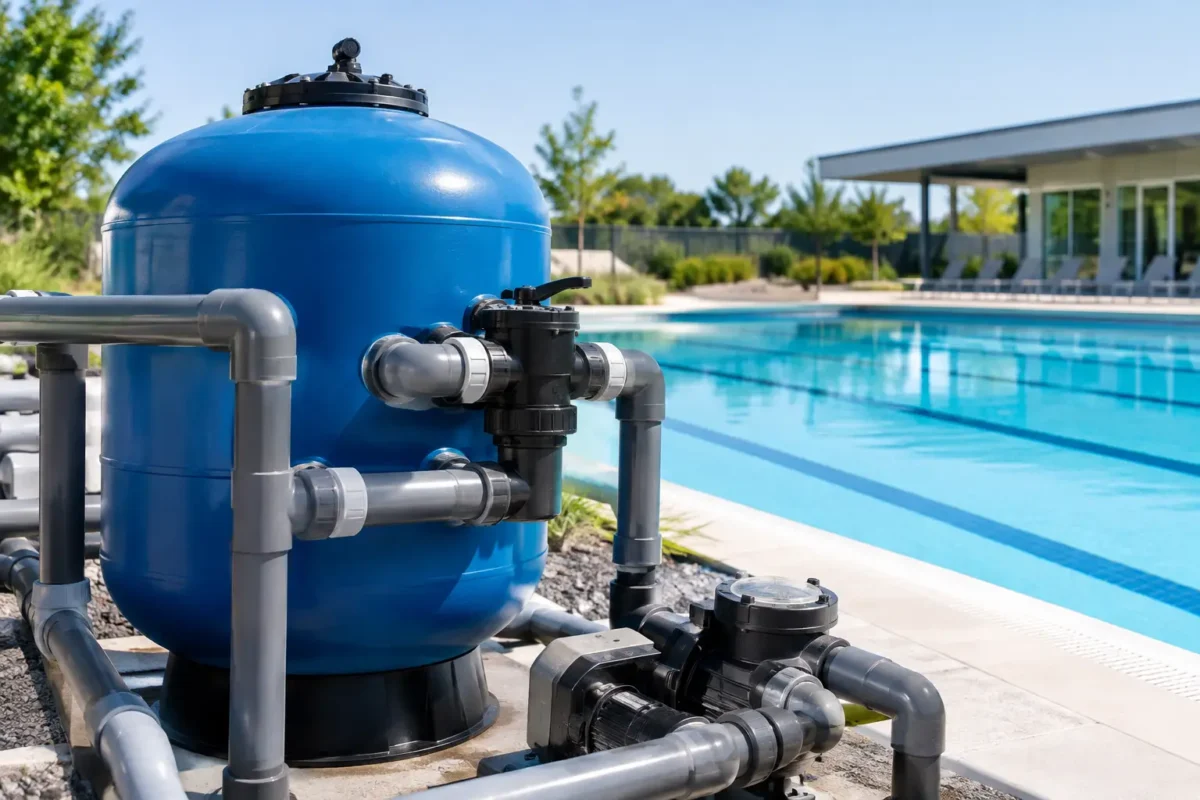
A cloudy pool usually does not start with bad water – it starts with poor filtration. A properly selected pool sand filter system keeps circulation efficient, traps fine debris, supports chemical balance, and protects the appearance and lifespan of the entire pool. For villa owners, hospitality operators, and commercial property managers, that makes filtration a performance decision, not a minor equipment choice.

Why a pool sand filter system remains a strong choice

Sand filtration continues to be one of the most practical and dependable solutions for residential and commercial pools. It is widely specified because it combines simple operation with solid long-term performance. When matched correctly to the pool volume, pump flow, and usage pattern, it delivers consistent water clarity without adding unnecessary complexity to daily operation.

A pool sand filter system works by pushing water through a bed of specially graded filter media. Suspended dirt, dust, oils, and debris are trapped as water passes through the sand, then clean water returns to the pool. Over time, the filter builds a natural layer that can improve capture efficiency, although that same buildup eventually increases pressure and signals the need for backwashing.

For many buyers, the appeal is clear. Sand filters are durable, familiar to maintenance teams, and well suited to demanding climates where pools operate for long seasons. They are also a strong fit for projects where dependable performance and manageable upkeep matter more than overcomplicated equipment specifications.

Where sand filtration performs best

In premium residential pools, sand filters are often chosen for their reliability and straightforward maintenance cycle. A villa owner typically wants stable water quality, clean visual presentation, and equipment that does not require constant intervention. In that setting, a quality sand filter delivers exactly what is needed – practical performance with a long service life when maintained correctly.

In hotels, residential towers, schools, and commercial facilities, the case is just as strong, but for different reasons. Commercial pools deal with heavier bather loads, more frequent contamination, and stricter expectations for water clarity. A properly engineered sand filtration setup can handle these conditions well, provided the vessel size, media grade, valve assembly, and pump are selected as part of a complete hydraulic system.

This is where many projects succeed or fail. The filter itself may be excellent, but if it is undersized, paired with the wrong pump, or installed without attention to flow rate and pipe sizing, performance suffers quickly.

How to choose the right pool sand filter system

The first question is not brand. It is capacity. Filter sizing should reflect the pool volume, expected turnover time, and real usage conditions. A small private plunge pool and a high-traffic hotel pool should never be treated as similar filtration applications, even if they look close in surface area.

A larger filter body generally offers better dirt-holding capacity and longer filtration cycles before backwashing becomes necessary. That can improve efficiency and reduce maintenance interruptions. At the same time, larger is not always automatically better if the pump flow is mismatched or the plant room has space limitations. Good system design is always about balance.

The filter tank material matters as well. High-quality fiberglass and corrosion-resistant constructions are popular because they handle pressure well and stand up to harsh operating conditions. In coastal or high-temperature environments, material durability becomes even more important. Premium installations should always prioritize vessels designed for long-term structural stability, not just entry-level cost.

Valve quality is another detail buyers often underestimate. The multiport valve controls filtration, backwash, rinse, waste, recirculate, and closed functions. If that valve is poorly made or badly fitted, the entire system becomes less reliable. In high-value residential and commercial projects, dependable valve operation is part of protecting the whole pool environment.

Media selection affects results

Not every sand-filled filter performs the same way because media quality varies. The filter media must be graded correctly and installed to the required depth. Poor media can channel, compact improperly, or reduce filtration efficiency. Some projects also consider glass media as an alternative, depending on water quality goals, maintenance strategy, and operator preference.

There is no single answer for every site. Standard silica media remains a proven solution, especially when the system is correctly sized and serviced. Media alternatives may offer advantages in certain cases, but they should be evaluated based on operating conditions, not trends.

Pump and filter must work together

A sand filter cannot compensate for a poorly selected pump. Excessive flow can reduce filtration quality and strain the vessel, while inadequate flow affects turnover and circulation. The right approach is to match the pump curve, filter area, and hydraulic design from the start.

For developers and facility teams, this is a critical point. Buying components separately without system-level review often leads to avoidable issues – short filter cycles, weak circulation, recurring turbidity, and unnecessary service calls. Premium pool performance comes from selecting equipment as a coordinated package.

What buyers should expect from installation

Installation quality directly affects filtration performance. The filter should be positioned for service access, installed on a stable base, connected with proper valve orientation, and commissioned with correct media loading and pressure testing. These details are not cosmetic. They determine whether the system operates cleanly and predictably over time.

In commercial projects, installation standards become even more important because the margin for error is smaller. Higher usage means small inefficiencies appear faster and cost more. A professional team will assess equipment room layout, drainage for backwashing, pipe routing, electrical coordination, and maintenance access before finalizing the setup.

For clients who expect a polished, long-lasting result, filtration should never be treated as an afterthought behind finishes or lighting. Water quality is what people notice first.

Maintenance requirements and real-world trade-offs

One reason the pool sand filter system remains popular is that maintenance is straightforward. Pressure rises as debris collects in the media bed, and backwashing removes that buildup. Periodic rinsing follows, and over longer intervals the media itself may need replacement depending on usage, water condition, and service quality.

That said, straightforward does not mean maintenance-free. If backwashing is ignored, flow drops and filtration suffers. If it is done too often, water is wasted unnecessarily and filtration can become less effective. The right frequency depends on actual pressure readings and operating conditions.

There are also performance trade-offs to understand. Sand filters are highly dependable, but they do not always capture the finest particles as aggressively as some alternative filtration methods. For many residential and commercial pools, that is not a problem when circulation, chemistry, and maintenance are all handled correctly. But in specialty applications with very high clarity demands, additional treatment measures may be worth considering.

This is why experienced technical guidance matters. The best filtration decision depends on the full pool environment, not a single product category.

Signs it is time to upgrade your filter system

Aging filtration equipment tends to show clear warnings. Persistent cloudy water, rising operating pressure, visible wear on the tank or valve, repeated maintenance issues, and inconsistent circulation are all signs that the system may no longer be performing to the required standard. In some properties, the original system was undersized from the beginning, and the problem only becomes obvious as usage increases.

Upgrading can improve more than water clarity. It can support better chemical efficiency, reduce strain on the pump, simplify maintenance, and present a cleaner, more professional pool environment overall. For hospitality and premium residential properties, that has a direct effect on user satisfaction and asset presentation.

Choosing a supplier, not just a product

For high-end pool projects, product quality is only part of the equation. Buyers also need stock availability, technical guidance, correct sizing, and ongoing service support. A filter is not a standalone purchase when the goal is long-term reliability. It is part of a larger operational system that should be selected with precision and backed by capable professionals.

This is especially relevant in markets where residential luxury and commercial performance standards are high. Aquatic Pools and Fountains supports clients with premium filtration equipment, expert specification, installation coordination, and maintenance insight suited to both private and large-scale aquatic environments.

The right filter should make the pool look effortless to own, even though the engineering behind it is anything but. If your water quality, maintenance costs, or equipment reliability are not where they should be, the smartest next step is to review the filtration system with the same standards you apply to every other premium feature on the property.

Categories
Uncategorized

Choosing Swimming Pool Chemicals Suppliers

A pool can look flawless in the morning and turn into a maintenance problem by afternoon if the chemistry is wrong. That is why choosing the right swimming pool chemicals suppliers matters far beyond simple product availability. For villa owners, hospitality operators, developers, and facility managers in Dubai and across the UAE, chemical supply is directly tied to water clarity, swimmer safety, equipment life, and day-to-day operating confidence.

The difference between an average supplier and a dependable one usually shows up after the sale. Anyone can offer chlorine, pH control products, algaecides, and testing solutions. A serious supplier helps you select the correct treatment approach for your pool size, bather load, filtration system, and maintenance schedule. That level of support is especially valuable in high-temperature environments, where water balance can shift quickly and poor chemical management can damage finishes, strain mechanical systems, and create avoidable downtime.

What sets strong swimming pool chemicals suppliers apart

Reliable supply is the first benchmark, but it should never be the only one. Premium projects and professionally managed properties need consistency in both product quality and technical guidance. When chemicals vary in strength, packaging, handling standards, or availability, the result is often uneven treatment performance and unnecessary operational risk.

Strong suppliers maintain broad stock across core treatment categories. That includes sanitizers, shock treatments, pH increasers and reducers, alkalinity control, calcium hardness products, clarifiers, flocculants, algaecides, stain control solutions, and water testing materials. For commercial pools, the requirement may also extend to advanced disinfection support, automated dosing compatibility, and products suited to strict maintenance protocols.

Technical competence is equally important. A supplier serving premium residential and commercial properties should understand how chemicals interact with pumps, filters, heaters, heat-cool systems, circulation design, and disinfection equipment. Water treatment does not operate in isolation. If the chemistry program is not matched to the system design, even high-quality chemicals can be used inefficiently.

Why supplier quality matters in the UAE

Pools in the UAE operate under conditions that demand precision. Heat, evaporation, dust, and heavy seasonal usage can all affect water balance. In luxury villas, the expectation is crystal-clear water with minimal interruption. In hotels, towers, and commercial facilities, the standard is even higher because water quality influences guest experience, safety compliance, and brand reputation.

This is where supplier quality becomes a business decision, not just a purchasing choice. A dependable chemical partner helps reduce emergency corrections, supports routine maintenance, and protects the wider investment in pool infrastructure. Poor-quality chemical sourcing may appear cheaper at the start, but the long-term cost often comes through equipment wear, surface issues, excess product consumption, and time lost to troubleshooting.

For commercial buyers, consistency also affects procurement efficiency. If one supplier can provide chemicals, testing systems, and technical support under one professional standard, operations become more predictable. That matters for developers handing over assets, facility teams managing multiple sites, and hospitality groups working against service-level expectations.

The right supplier does more than deliver products

The most valuable suppliers combine inventory depth with guidance. They do not simply move boxes from warehouse to site. They help clients choose appropriate treatment routines, storage practices, and testing methods. That is particularly useful for buyers who know what they need in broad terms but want expert confirmation before ordering.

For example, a residential client may only need a practical, easy-to-manage chemical program that keeps water balanced without overcomplicating maintenance. A hotel or community pool may need a more structured approach with regular dosing, clearer documentation, and support for higher usage patterns. In both cases, the chemicals may look familiar on paper, but the actual requirements are different.

This is also why working with a full-scope aquatic partner has clear advantages. When the same company understands the pool equipment, circulation setup, testing systems, and maintenance realities, chemical recommendations are typically more accurate. Aquatic Pools and Fountains operates in that space by supporting clients with products, technical guidance, and ongoing service rather than treating chemical supply as an isolated transaction.

How to evaluate swimming pool chemicals suppliers

The best evaluation starts with three practical questions. First, can the supplier provide dependable stock across the full chemical range you need? Second, can they explain which products are right for your specific pool environment? Third, can they support you after purchase if water balance issues arise?

If the answer to any of those questions is unclear, the supplier may not be the right fit for a premium property or professionally managed facility.

Look closely at product breadth. A supplier with limited options may push a narrow treatment approach simply because that is what they carry. A better supplier can recommend based on actual pool requirements, not inventory gaps. That flexibility matters when you are managing different pool sizes, finishes, and user loads across villas, residential towers, or commercial sites.

It is also worth checking how they handle technical communication. Serious suppliers speak clearly about dosing logic, compatibility, testing frequency, and storage standards. They do not rely on vague claims. They should be able to discuss trade-offs as well. For instance, some treatment methods are simpler for routine residential use, while others are more suitable for high-demand commercial settings with tighter operational oversight.

Product quality, handling, and storage standards

Chemical quality is not just about brand reputation. It is also about how products are stored, transported, and presented. Poor handling can compromise effectiveness or create safety issues. That is why established suppliers invest in organized stock management and proper product support.

For buyers, this means asking practical questions about packaging integrity, shelf life, batch consistency, and storage recommendations. In commercial settings, it may also mean checking whether the supplier can support regular replenishment schedules without interruption. Running short on essential treatment chemicals is not a minor inconvenience when guest use, tenant expectations, or operational compliance are involved.

Premium suppliers also understand that chemical selection should protect pool finishes and equipment over time. Overuse of the wrong products, or repeated correction of water that has been poorly managed, can affect tiles, fittings, filters, pumps, and heat exchange components. A quality-led supplier helps avoid those issues by recommending balanced, efficient treatment practices from the start.

Residential versus commercial supply needs

Not every buyer should be sold the same package. That is one of the clearest signs of a supplier that values performance over quick transactions.

Residential pool owners usually want simplicity, reliability, and clear guidance. They want a treatment program that keeps water safe and visually inviting without requiring constant intervention. In many cases, easy access to trusted products and occasional technical advice is the right fit.

Commercial buyers have a more complex brief. Hotels, property managers, developers, and facility teams may need larger volumes, scheduled supply, stronger reporting discipline, and compatibility with automated dosing or advanced disinfection systems. They may also need a supplier that understands handover schedules, service continuity, and the reputational impact of poor water quality.

A premium supplier should be comfortable serving both markets while tailoring the solution to each. That balance is especially important in the UAE, where expectations around luxury presentation and operational reliability are high.

Choosing for long-term value, not short-term price

Price always matters, but chemical procurement should not be reduced to a line-item comparison. Lower upfront pricing can become expensive if it leads to inconsistent treatment, rushed reorders, poor technical advice, or avoidable maintenance issues. The better question is whether the supplier helps preserve water quality and protect the pool system over time.

Long-term value comes from consistent stock, dependable product quality, knowledgeable support, and the ability to respond when conditions change. It also comes from working with a supplier that understands the wider aquatic environment, from circulation and filtration to maintenance planning and user expectations.

For high-end villas, residential developments, hotels, and corporate properties, that kind of supplier relationship supports both presentation and performance. Clean, balanced water is visible to every guest and resident. The quality behind it is not always visible, but it is what keeps the experience premium.

The right chemical supplier should make pool ownership and facility management more controlled, more efficient, and more dependable. When water quality is central to the value of the property, choosing expertise over convenience is usually the smarter move.

Categories
Uncategorized

Silent Pool Pump: What to Look For

A noisy pump can ruin the entire pool experience. In a private villa, it turns a calm outdoor setting into a mechanical zone. In a hotel or residential development, it creates a constant background issue that guests, tenants, and facility teams notice quickly. That is why demand for a silent pool pump continues to grow across premium residential and commercial properties.

The term sounds simple, but not every low-noise pump performs the same way. Quiet operation depends on motor design, hydraulic efficiency, installation quality, and whether the pump is actually matched to the pool system. A premium result comes from getting all of those details right, not just choosing a product labeled as quiet.

What makes a silent pool pump truly quiet

Most pump noise comes from three sources: the motor, water movement, and vibration. A standard single-speed pump often runs at full power whenever it is on, which increases sound levels and wastes energy. A better-engineered silent pool pump reduces noise by controlling motor speed, improving internal flow, and limiting vibration transfer into the surrounding equipment base and pipework.

Variable-speed technology is usually the biggest factor. Instead of operating at one high output all day, the pump can run at lower speeds for normal filtration and increase only when needed for backwashing, water features, or heavy circulation demand. Lower RPM usually means significantly less noise.

Pump housing and impeller design also matter. When water moves efficiently through the wet end, there is less turbulence, less strain on the system, and less operating sound. In premium installations, this difference is immediately noticeable, especially in compact equipment rooms or pool decks close to seating areas.

Why a silent pool pump matters in premium properties

For luxury homes, noise control is part of the overall design standard. Pool equipment should support the environment, not compete with it. When the pool sits near a terrace, garden lounge, bedroom wing, or indoor relaxation area, even moderate pump noise becomes disruptive.

For commercial assets, the issue is broader. Hotels, fitness clubs, residential towers, and corporate facilities need circulation systems that perform reliably without creating complaints. A silent pool pump helps maintain a refined environment while supporting consistent water quality. It also improves flexibility when equipment rooms are located near guest zones, service corridors, or occupied spaces.

There is also an operational advantage. Quieter, modern pumps are often paired with better energy performance and smarter controls. That matters to property owners and operators who want long-term efficiency rather than short-term equipment replacement.

Silent pool pump vs standard pump

The difference is not only about sound. A standard pump may still be suitable for some basic applications, especially where budget matters more than efficiency or where the equipment area is far from occupied spaces. But in high-value residential and commercial settings, that compromise is rarely ideal.

A silent pool pump typically offers quieter daily operation, lower energy consumption, and more precise circulation management. It may also reduce wear on the wider system because it does not run unnecessarily hard at all times. The trade-off is upfront cost. Premium low-noise pumps, especially variable-speed models from established global brands, cost more than entry-level units.

That said, buying solely on purchase price often leads to a poor result. A lower-cost pump that is too loud, oversized, or inefficient can create higher running costs and earlier replacement pressure. In many cases, the better financial decision is the pump that performs correctly for years with less disruption.

How to choose the right silent pool pump

The first step is not the pump itself. It is understanding the pool system. Flow requirement, filtration setup, piping layout, pool volume, water features, and hours of operation all affect pump selection. A pump that is ideal for a compact residential pool may be completely wrong for a large overflow pool or a commercial facility with multiple hydraulic demands.

Match the pump to the pool size and hydraulic design

Oversizing is a common mistake. Many buyers assume a more powerful pump is automatically better, but excess power can increase noise, create unnecessary pressure, and reduce overall efficiency. The right pump should deliver the required flow rate without stressing the plumbing network.

Undersizing has its own problems. Weak circulation affects filtration quality, chemical distribution, and water clarity. The goal is balanced performance, not maximum output.

Prioritize variable-speed performance

If quiet operation is a priority, variable-speed models deserve serious attention. They allow the pump to run slower for everyday filtration, which is where most pools spend most of their time. This can dramatically reduce operational sound while improving efficiency.

For villa owners, that means a more peaceful pool environment. For facility managers and hospitality operators, it means better control over daily schedules, energy use, and guest comfort.

Consider the installation environment

Even the best silent pool pump can sound louder than expected if the installation is poor. Hard surfaces, enclosed echo-prone spaces, unstable pump bases, and poorly supported pipes can all amplify vibration and noise. In practice, the pump and the installation need to be treated as one package.

This is especially important in premium projects where equipment may be positioned close to occupied areas. Professional installation with proper alignment, anti-vibration measures, and system balancing makes a visible difference in both sound and service life.

Look at durability, not just specifications

Quiet performance on day one is not enough. The pump should maintain stable operation over time in demanding weather and operating conditions. In the UAE, heat, dust, and long operating hours place real demands on pool equipment. Material quality, motor protection, seal integrity, and service support all matter.

This is where established suppliers and recognized brands add value. Product selection should be backed by technical guidance, spare parts access, and maintenance support, not just a catalog description.

Common reasons a pool pump is louder than expected

Sometimes the issue is not the pump model at all. A system can become noisy because of air leaks, clogged baskets, restricted suction lines, worn bearings, poor mounting, or cavitation caused by incorrect hydraulic design. If a pump suddenly becomes louder, that is usually a warning sign rather than a cosmetic issue.

Commercial operators should pay close attention here. Ignoring noise changes can lead to system stress, circulation problems, and preventable downtime. For homeowners, early inspection can avoid larger repair costs later.

A quiet pump that becomes noisy needs diagnosis, not guesswork. Replacing parts without understanding the cause often wastes time and budget.

Is a silent pool pump worth the investment?

In most premium applications, yes. The value is not limited to comfort. A silent pool pump supports better energy management, improved operating control, and a more refined environment. For villas, that protects the lifestyle quality of the space. For developers and commercial operators, it supports asset value and user satisfaction.

The return depends on the project. In a small secondary pool set far from living areas, the difference may feel less critical. In a luxury residence, hotel, spa, or high-end residential tower, it becomes much more important. That is why pump selection should follow the use case, not a generic rule.

Why expert selection matters

Pool equipment works best when every component is selected as part of a complete system. Pumps, filters, heaters, disinfection systems, valves, and control settings all affect each other. Choosing a silent pool pump in isolation can still produce a disappointing result if the rest of the hydraulic setup is not aligned.

For clients investing in premium aquatic environments, technical support is not an extra. It is part of the product value. Aquatic Pools and Fountains supports residential and commercial buyers with equipment supply, installation guidance, and maintenance expertise so the result is not only quieter, but also more reliable and durable.

The right pump should disappear into the background. That is the standard worth aiming for – strong circulation, efficient performance, and an environment that feels calm from the first hour of operation to the years that follow.

Categories
Uncategorized

How to Build a Pool Equipment Cover

A pool pad can be the one detail that disrupts an otherwise polished outdoor space. Even high-end pumps, filters, and heaters can look exposed when they sit in full view beside a villa wall, garden edge, or service yard. If you are researching how to build a pool equipment cover, the goal is not simply to hide the system. It is to protect critical components from direct sun, blowing dust, and visual clutter without restricting airflow, service access, or equipment performance.

That balance matters more than many property owners expect. In Dubai and across the UAE, pool systems operate in demanding conditions. Heat, fine dust, moisture, and heavy seasonal use all put pressure on equipment. A poorly designed cover can trap heat, complicate maintenance, and shorten the life of premium components. A properly built cover does the opposite. It improves the look of the installation while supporting durability, safety, and serviceability.

What a pool equipment cover should actually do

Before selecting materials or dimensions, define the function. A quality cover should screen the equipment visually, reduce direct weather exposure, and still leave enough ventilation for pumps, filters, and electrical systems to operate safely. It should also open easily for inspection, cleaning, repairs, and future replacement of parts.

This is where many DIY builds go wrong. They are treated like decorative boxes, when in reality they are small technical enclosures. Pool pumps generate heat. Filters require access for backwashing, cartridge cleaning, or media servicing. Salt systems, chemical feeders, and automation panels all need clear working space. If the cover interferes with any of that, the finished result may look elegant for a month and become frustrating for years.

Start with measurements and service clearance

The first step in how to build a pool equipment cover is measuring more than the footprint of the equipment pad. You need the total operating envelope, not just the visible machine sizes. Measure the full width, depth, and height of every component, including exposed pipework, valves, unions, electrical conduits, and control boxes.

Then add service clearance. In most cases, at least 24 to 36 inches around key access points makes sense, though some systems may need more depending on the filter type and the way the pad was installed. A compact cover may look neat on paper, but if a technician cannot remove a pump lid or open a filter clamp comfortably, the design is too tight.

Also account for future upgrades. A property that uses a simple circulation setup today may add a heat pump, UV system, dosing unit, or automation panel later. Leaving room now is usually less expensive than rebuilding the enclosure later.

Choose a design that fits the property

For most residential and commercial settings, three cover styles work best. A slatted screen enclosure is the most popular because it allows airflow naturally and suits modern architecture. A hinged cabinet-style surround offers a cleaner, more enclosed appearance, but it must be vented properly. A pergola-style structure can work well for larger equipment areas where appearance matters as much as function.

The right option depends on visibility, site conditions, and maintenance frequency. If the equipment sits near guest-facing areas, a more refined screen design may be worth the added cost. If the pad is in a service yard, a practical louvered structure may be the better investment. Premium properties usually benefit from matching the cover finish to nearby fencing, cladding, or landscape materials so it feels integrated rather than added on.

Best materials for a durable result

Material choice will determine whether the cover still looks sharp after a few summers. In demanding climates, moisture-resistant and UV-stable materials are essential. Powder-coated aluminum is one of the strongest choices because it resists rust, handles heat well, and gives a premium finish. Marine-grade composite boards are another smart option for projects that want the appearance of wood without the maintenance burden.

Treated timber can be used, but it requires more upkeep and careful sealing. If the installation is near chemical storage or splash zones, lower-grade wood may age quickly. PVC panels and low-cost plastic solutions are usually less suitable for premium settings because they can discolor, warp, or look lightweight over time.

Fasteners matter too. Use stainless steel hardware where possible, especially in humid or chemical-adjacent environments. A high-quality structure built with poor screws and brackets will not age like a premium installation.

How to build a pool equipment cover step by step

Once the layout and materials are defined, construction is straightforward if you stay disciplined about clearance and ventilation. Start by marking the perimeter around the equipment pad. Check that the enclosure line does not block walkways, drain paths, or access to valves and electrical isolation points.

Set your posts or frame supports on stable footing. In some projects that means anchoring directly to a concrete slab. In others, especially where aesthetics are a priority, a separate framed surround may sit just outside the pad. Keep the structure level and square from the start. Small framing errors can make doors bind and panels sit unevenly.

Build the frame with enough rigidity to support removable panels or hinged doors. Avoid making all sides fixed. At least one side should open fully, and on larger setups two-sided access is often the smarter choice. A service technician should be able to reach the pump basket, filter, control panel, and shut-off points without dismantling half the enclosure.

Install side panels with ventilation gaps or louvers. This is one of the most critical details. The cover should shield the equipment from direct sun and dust exposure, but trapped heat is a real risk. Slatted spacing, raised base gaps, and upper vent openings all help maintain airflow. If the enclosure includes a solid roof, ventilation becomes even more important.

For the top, choose either a slatted cover, a lightweight solid panel with ventilation allowance, or a partial overhead shade design. A full sealed roof is rarely the best answer around working pool equipment. In many cases, filtered shade is enough to reduce direct heat load without turning the enclosure into a hot box.

Finish the build with hinges, handles, and secure latches that resist corrosion. If children or unauthorized staff may be nearby, lockable access is worth considering. The enclosure should look refined, but it should also support site safety and controlled access.

Ventilation, drainage, and noise control

A premium cover performs best when it solves more than one problem. Ventilation is non-negotiable, but drainage deserves equal attention. Water should never collect under or around the enclosure. Leave the base open enough for runoff, and do not create a low point where leaks or washdown water can sit against equipment bases.

Noise control is another consideration, especially in villas, hotels, and shared residential developments. A cover can soften the visual impact of the pool pad, but it may also reflect sound if the materials are too hard and enclosed. Slatted or partially open designs typically perform better than tight box enclosures. If sound is a major concern, it is worth planning the panel orientation and spacing carefully rather than simply wrapping the equipment on all sides.

Common mistakes to avoid

The most expensive mistake is building the cover too small. The second is ignoring airflow. After that, most failures come from weak materials, poor hardware, and no maintenance access. A cover should never force technicians to remove panels every time they service the system.

Another common issue is designing purely for appearance and forgetting equipment replacement. Pumps, filters, and heaters do not last forever. If a future unit cannot be removed without cutting the structure apart, the enclosure has not been planned properly.

Electrical safety also matters. Keep the cover clear of any electrical requirements for panels, disconnects, and service space. If there is any uncertainty, a qualified technician should review the layout before construction begins.

When a custom solution is the better choice

Some pool pads are simple enough for a straightforward site-built cover. Others are not. Large filtration systems, multiple pumps, chemical dosing units, commercial-grade control panels, or narrow equipment yards often need a more technical approach. In those cases, custom fabrication is usually the better investment because it protects both the equipment and the long-term serviceability of the installation.

This is especially true for premium residential projects and commercial properties where appearance, durability, and operational reliability must align. A well-designed enclosure should feel like part of the property, not an afterthought built to hide a problem. For owners who want that standard, working with experienced pool equipment specialists can prevent costly compromises. Aquatic Pools and Fountains supports clients who need that level of technical and visual coordination across modern pool installations.

A good cover is not the one that disappears your equipment from view. It is the one that protects the system, preserves access, and still looks right five years from now.

Categories
Uncategorized

Swimming Pool Accessories List That Matters

A strong swimming pool accessories list is not just a shopping exercise. It is the difference between a pool that looks impressive for a month and one that performs beautifully for years in demanding UAE conditions. For villa owners, developers, and facility managers, the right accessories protect water quality, improve safety, reduce maintenance stress, and elevate the overall finish of the space.

In premium residential and commercial projects, accessories should never be treated as add-ons. They are part of the system. A luxury pool with weak circulation, poor lighting, or unreliable cleaning equipment quickly loses its appeal. A well-selected accessory package, on the other hand, supports cleaner water, lower operational disruption, and a more refined user experience.

A swimming pool accessories list should start with circulation

The first category to prioritize is circulation support. Even the most elegant pool depends on proper water movement to stay clear, hygienic, and chemically balanced. Pumps and filters do the heavy work, but the surrounding accessories determine how effectively the system operates day after day.

This includes fittings such as main drains, return inlets, skimmers, suction points, valves, and strainers. These parts are not always visible once the pool is complete, but they have a direct impact on performance and serviceability. Poor-quality fittings can lead to flow restrictions, leaks, or recurring maintenance issues. In high-end villas and commercial pools, that trade-off rarely makes financial sense.

The better approach is to specify durable, corrosion-resistant accessories designed for the pool size, hydraulic demand, and usage pattern. A private plunge pool and a hotel overflow pool require very different support components. That is where technical guidance matters.

Cleaning accessories that reduce long-term effort

Cleaning equipment is often the first thing property owners think about, and for good reason. Debris, dust, sunscreen residue, and shifting environmental conditions can quickly affect water appearance. In the UAE, outdoor pools are especially exposed to airborne dust and heavy sun, which means cleaning accessories should be selected with realistic operating conditions in mind.

A practical setup usually includes leaf nets, brushes, telescopic poles, vacuum heads, flexible vacuum hoses, and pool cleaning baskets. For larger properties or facilities with higher user traffic, automatic pool cleaners can save significant labor time while improving consistency.

There is a clear trade-off here. Manual cleaning tools are cost-effective and dependable, but they rely on regular staff attention. Automatic systems reduce manual workload, yet they must be chosen carefully based on pool shape, finish, and debris load. A robotic cleaner that works well in a compact residential pool may not be the right answer for a large commercial basin.

Waterline cleaning tools and surface skimming accessories also deserve attention. These details help maintain a polished finish, which matters in pools designed as visual focal points. When guests or residents notice cloudy edges or floating debris, the perception of quality changes immediately.

Safety products belong on every swimming pool accessories list

Safety is not a secondary category. It is a core requirement for homes with children, hospitality environments, residential towers, schools, and public-use facilities. A complete swimming pool accessories list should include products that support accident prevention as well as emergency response.

Essential safety accessories may include pool ladders and handrails with secure anchoring, anti-slip grating, safety ropes, life rings, rescue hooks, first-aid supports, and depth markers. In some settings, pool covers and safety barriers are equally important. For family villas, these can provide peace of mind. For commercial environments, they can support compliance and risk management.

The right safety package depends on who uses the pool and how often. A decorative residential pool with occasional use may need a simpler setup than a community or hospitality pool with constant traffic. Still, cutting corners on safety hardware is a false economy. Reliable materials, stable installation, and proper placement matter far more than choosing the lowest price point.

Lighting and visual accessories shape the experience

Lighting changes how a pool feels after sunset. It also affects usability, perceived luxury, and safety around the basin. In many premium properties, underwater lighting is one of the most visible accessories because it transforms the pool from a daytime feature into an evening centerpiece.

LED underwater lights are the standard choice for most modern installations because they offer long service life, lower energy consumption, and better visual consistency. Depending on the project, owners may choose warm white for a sophisticated look or programmable color systems for a more dramatic effect. The best option depends on the property style. Not every project benefits from color-changing effects. In refined hospitality or villa settings, restraint often looks more expensive.

Beyond underwater fixtures, surrounding lighting accessories can include deck lights, step lights, junction boxes, niches, and control systems. The quality of these supporting components matters just as much as the visible fixtures. Poorly selected electrical accessories can affect reliability and maintenance access.

Water quality accessories protect both users and equipment

Clear water is not the same as balanced water. A pool may look clean while still carrying chemical instability that affects comfort, equipment life, and sanitation performance. That is why water treatment accessories are critical for serious pool ownership.

This category includes chemical feeders, dosing pumps, chlorinators, salt chlorination systems, UV systems, ozone units, and water testing kits or digital testing devices. In premium installations, automated dosing and monitoring are often the smarter investment because they improve consistency and reduce reliance on guesswork.

There is no single solution for every pool. A private villa may prefer a low-maintenance disinfection setup that simplifies day-to-day care. A commercial pool may need more advanced monitoring, tighter control, and stronger treatment support due to bather load and regulatory expectations. The key is choosing accessories that fit the actual operating environment, not a generic package.

Balanced water also protects pool finishes, lights, pumps, filters, and metal components. Over time, the cost of poor water management is almost always higher than the cost of proper testing and dosing equipment.

Comfort and convenience accessories add value

Some accessories do not directly affect water circulation or sanitation, yet they make the pool significantly more enjoyable and practical to use. These comfort-driven additions are often what separate a basic installation from a premium one.

Common examples include heat pumps, heat-cool pumps, pool covers, shower units, starting blocks for training pools, lane accessories, floating loungers, and storage solutions for maintenance tools. In the UAE climate, temperature control can still be relevant. Some pools become too warm during peak summer, while others need heating during cooler months or for specific wellness applications.

Pool covers are especially useful because they support multiple goals at once. They can help reduce evaporation, limit debris entry, improve safety in some cases, and reduce chemical consumption. The right cover depends on whether the priority is heat retention, protection, or safety.

Finishing accessories define the professional standard

The final category is often overlooked until late in the project – finishing accessories. These include grating, drain covers, access panels, return covers, overflow components, anchors, escutcheons, and trim details that complete the visible and hidden parts of the installation.

For developers and high-end property owners, these details matter. They influence not only appearance but also maintenance practicality and system longevity. Cheap finishing accessories may discolor, crack, or loosen under sun exposure and chemical contact. In a premium setting, that decline is visible quickly.

Professionally selected finishing components create a cleaner overall presentation and support easier servicing in the future. They also help ensure that the pool looks cohesive with surrounding hardscape, water features, and architectural elements.

Choosing the right accessories for your pool type

Not every pool needs the same list. A residential overflow pool, a rooftop pool, a school training pool, and a hotel leisure pool all have different priorities. Usage level, exposure conditions, maintenance capacity, and design intent should guide selection.

For private villas, the focus is often on elegance, ease of maintenance, and family safety. For hospitality and commercial projects, durability, water quality control, heavy-duty cleaning support, and reliable replacement availability become more important. Developers also need accessories that maintain appearance over time and support efficient long-term facility management.

This is why working with a supplier that understands both products and technical execution is valuable. Aquatic Pools and Fountains supports projects with a broad accessory range, recognized brands, and practical guidance on what truly fits the installation rather than what simply fills a catalog.

A better pool starts with better decisions behind the scenes. If you are building, upgrading, or managing a pool, choose accessories with the same care you give to the finish, shape, and visual design. The results show up every day in cleaner water, safer use, easier upkeep, and a pool that continues to reflect the standard of the property.

Categories
Uncategorized

Pool Accessories List for Premium Pools

A strong pool accessories list is not about adding more products. It is about selecting the right equipment to protect water quality, improve safety, reduce maintenance pressure, and preserve the finish of a premium pool over time. For villa owners, developers, hospitality operators, and facility managers, the difference between a pool that looks impressive for a season and one that performs year after year usually comes down to the accessories behind the surface.

In high-value residential and commercial settings, accessories are not secondary purchases. They are part of the operating system of the pool. The right combination supports cleaner water, more stable circulation, lower downtime, better swimmer comfort, and a sharper visual result. The wrong combination creates recurring service issues, uneven performance, and unnecessary replacement costs.

What should be on a pool accessories list?

The most effective pool accessories list includes the categories that directly affect day-to-day operation: cleaning tools, water treatment support, safety products, lighting, circulation fittings, heating and cooling support, and practical surround equipment. Which items matter most depends on the size of the pool, whether the property is residential or commercial, and how often the pool is used.

A private villa pool may prioritize elegant lighting, easy cleaning access, and child safety. A hotel or residential tower is more likely to require durable commercial-grade fittings, stronger sanitation control, reliable testing systems, and accessories that can withstand heavy use. That is why specification matters. Premium pools need accessories matched to the project, not a generic shopping cart.

Core cleaning accessories that protect performance

Clean water starts with circulation and filtration, but visible cleanliness depends on accessories that handle the daily burden. Leaf skimmers, wall brushes, vacuum heads, telescopic poles, and flexible hoses remain essential even on highly automated systems. They help remove surface debris, prevent algae buildup on pool walls, and support routine maintenance before small issues turn into water clarity problems.

For larger pools or properties with landscaping, manual tools alone may not be enough. Automatic pool cleaners and suction or pressure-based cleaning accessories can reduce labor and improve consistency. The trade-off is cost and compatibility. Not every cleaner suits every pool finish, hydraulic setup, or debris profile. A pool surrounded by palms and fine dust needs different cleaning support than an indoor lap pool with controlled conditions.

Premium operators usually benefit from choosing durable, commercial-quality cleaning accessories rather than low-cost replacements. Lower-grade tools tend to fail at connection points, wear faster under UV exposure, and create recurring purchasing cycles that add up quickly.

Water treatment and testing accessories

If there is one category that should never be treated as optional, it is water treatment support. Test kits, digital water testing systems, chemical feeders, dosing equipment, and disinfection accessories all contribute to stable water balance. Without them, even a well-designed pool can develop sanitation issues, eye irritation complaints, scaling, corrosion, or cloudy water.

A basic residential setup may only need dependable manual testing and standard chemical handling accessories. A more advanced pool, especially in hospitality or commercial use, often benefits from automated dosing and more precise monitoring. The reason is simple: bather load changes water demand quickly, and manual correction is rarely as consistent as controlled dosing.

There is also a visual and financial angle. Poor water balance can damage tile lines, stainless steel components, pumps, heaters, and decorative finishes. In premium environments, repair costs and reputational costs are both higher. Water testing accessories are not just maintenance tools. They are asset protection tools.

Safety accessories for residential and commercial pools

Safety products deserve a fixed place on any serious pool accessories list. This includes life rings, rescue hooks, depth markers, anti-slip accessories, handrails, ladders, safety signage, and in some settings, pool covers or child-protection barriers. The exact mix depends on the property type and applicable standards.

For family homes, the priority is often preventing accidental access and supporting safe entry and exit. For hotels, clubs, schools, and managed communities, visibility, compliance, and emergency readiness become even more important. A polished pool area should never overlook safety basics in favor of appearance.

The best safety accessories are those that combine durability with clear functionality. Corrosion resistance matters in harsh climate conditions. So does installation quality. A premium handrail or ladder that is poorly fitted becomes a liability instead of an advantage.

Lighting accessories that shape the pool environment

Lighting changes how a pool performs after sunset, but it also affects safety, mood, and perceived value. Underwater lights, niche fittings, transformers, controllers, and color-programmable systems all play a role in the finished result. In luxury homes and commercial properties, lighting is often one of the most visible indicators of quality.

That said, the best lighting choices are not always the most dramatic ones. Some projects call for clean white illumination that enhances water clarity and architectural lines. Others benefit from programmable color effects for entertainment or hospitality settings. It depends on the purpose of the space and the surrounding design language.

LED systems are the standard choice for most modern projects because they offer energy efficiency, long life, and better control. But performance still depends on proper housing, waterproof integrity, and electrical compatibility. Premium aesthetics require premium technical execution.

Circulation, fittings, and hidden accessories

Many of the most important pool accessories are the least visible. Inlet fittings, main drains, skimmers, vacuum points, grating, valves, nozzles, and connection hardware all influence water movement and maintenance efficiency. If these components are underspecified, even the best pumps and filters may not deliver the expected result.

This is especially relevant for commercial pools and large residential installations where circulation dead spots can lead to poor chemical distribution and debris accumulation. Decorative pools and fountain-integrated designs also demand precise fittings to preserve both performance and appearance.

For buyers focused on long-term reliability, material quality matters here. UV resistance, chemical resistance, pressure tolerance, and compatibility with the overall system should take priority over short-term savings. Hidden accessories are often where future maintenance costs begin.

Comfort accessories that improve the user experience

A premium pool should feel as good as it looks. Heat pumps, heat-cool systems, water features, return fittings designed for better flow comfort, and selected surround accessories all shape the user experience. In warm climates, temperature control is not only about heating. Cooling can be just as valuable for comfort during peak summer periods.

This is where project goals matter. A private plunge pool, a rooftop leisure pool, and a hospitality pool deck will not have the same comfort priorities. Some clients want year-round swimming usability. Others want visual elegance and a controlled water environment that supports guest satisfaction.

Accessories in this category should be chosen with the operating profile in mind. Overspending on features that will rarely be used makes little sense. Underspecifying them for a high-expectation property can be just as costly.

How to build the right pool accessories list for your property

The right approach is to build the list around function first, then refine it around finish and brand level. Start with the essentials that affect water quality, circulation, cleaning, and safety. Then evaluate lighting, comfort systems, and aesthetic upgrades based on how the pool will actually be used.

For residential projects, this often means balancing elegance with simplicity. Homeowners usually want dependable equipment that does not complicate maintenance. For commercial buyers and developers, the conversation is different. Durability, standardization, serviceability, and stock availability often matter as much as visual appeal.

Working with a supplier that understands both equipment and technical execution makes the process more efficient. Accessories are rarely standalone decisions. They interact with the pool shell, hydraulic design, filtration setup, electrical planning, and maintenance strategy. That is why experienced guidance adds value long before installation begins.

Aquatic Pools and Fountains serves this need by combining premium product availability with technical support for both residential and commercial projects, which is often what separates a well-equipped pool from one that constantly needs correction.

Why premium buyers should avoid generic accessory selection

A generic pool accessories list may look complete on paper, but it often ignores the realities of climate, usage intensity, finish quality, and maintenance expectations. Premium pools require precision. The accessories should suit the project scale, align with the system design, and support a long operating life.

This is particularly true in demanding environments where heat, dust, heavy occupancy, or design complexity place more pressure on the equipment. Choosing stronger components at the start usually saves time, protects appearance, and reduces service disruption later.

The best accessory plan is not the longest one. It is the one that makes the entire pool system cleaner, safer, more efficient, and easier to maintain without compromising the design standard of the property.

If you are reviewing options for a new installation or upgrading an existing pool, start with the accessories that carry the most operational weight. When those choices are right, the water looks better, the space performs better, and the investment holds its value far more effectively.