A luxury pool should feel inviting, not uncertain. For villa owners, developers, hotels, and facility managers, choosing the best pool safety equipment is not a small add-on decision – it is part of protecting people, preserving property standards, and meeting the expectations that come with a premium aquatic environment.
The right safety setup depends on who uses the pool, how often it is accessed, and whether the site is residential, hospitality-based, or commercial. A private family pool has different risks than a rooftop amenity deck or a hotel leisure area. That is why the strongest results come from combining physical barriers, active alerts, visibility, and rescue readiness rather than relying on a single product.
What makes the best pool safety equipment
The best pool safety equipment does two jobs at once. First, it reduces the chance of unauthorized access, slips, falls, or delayed emergency response. Second, it fits the operational standard of the property without compromising appearance, durability, or user experience.
For high-end residential and commercial projects, performance matters just as much as presentation. Equipment should withstand sun exposure, humidity, chemical environments, and daily use. It should also integrate cleanly into the pool design, especially in villas, hospitality settings, and branded developments where visual quality is part of the investment.
This is where specification matters. A basic off-the-shelf safety item may look acceptable at installation, but if it corrodes, loosens, fades, or becomes unreliable, it creates a maintenance issue and a safety risk. Premium environments require equipment selected for long-term service, not short-term convenience.
1. Pool fences and self-closing gates
A fence remains one of the most effective layers of protection, especially for homes with children and shared-use properties. It creates a physical barrier that prevents unsupervised access and helps define the pool as a controlled area rather than an open backyard feature.
The best installations use durable materials, secure latching systems, and self-closing gates that return to a locked position after every use. For premium properties, the choice often comes down to balancing transparency, strength, and corrosion resistance. Glass can deliver a refined visual result, while metal systems can offer a strong structural solution if properly specified for poolside conditions.
Not every site needs the same fence height, gate configuration, or panel design. A family villa may prioritize child restriction, while a residential tower or hospitality property may need access control that works with foot traffic patterns and staff supervision.
2. Pool safety covers
A properly fitted safety cover does far more than keep debris out. It creates a protective barrier over the water when the pool is not in use, which is particularly valuable for seasonal use, private residences, and properties that want an added layer of security during off-hours.
The distinction between a basic cover and a true safety cover is important. A standard cover may help with cleanliness, but it is not necessarily designed to prevent accidental entry or support weight in a critical moment. A safety cover should be engineered for protection, secure anchoring, and reliable tension across the pool opening.
For premium installations, automated systems are often the preferred choice because they improve ease of use. If a safety measure is difficult to operate, it is less likely to be used consistently. Manual options can still be effective, but convenience and discipline matter.
3. Pool alarms
Pool alarms add an active warning layer that barriers alone cannot provide. They are especially useful in residential settings, guest properties, and facilities where there may be moments of reduced supervision.
There are different types, including gate alarms, door alarms, surface wave alarms, and subsurface detection systems. Each serves a different purpose. A door alarm helps if the main concern is direct access from the home to the pool area. A water-entry alarm responds when the water surface is disturbed. A gate alarm alerts staff or residents when access points are opened.
The trade-off is that alarms work best as part of a system, not as a replacement for barriers or supervision. They also need proper calibration and routine testing. False alarms create frustration, while poor sensitivity can create dangerous gaps.
4. Non-slip pool deck surfaces
Many pool incidents happen outside the water, not in it. Wet tile, polished stone, and smooth coping can become hazardous very quickly, particularly in high-traffic environments such as hotels, clubs, and apartment amenities.
Non-slip surfacing is one of the most practical safety investments because it protects all users, regardless of age or swimming ability. The right material should maintain slip resistance without becoming rough, visually heavy, or difficult to clean. In premium developments, this often means selecting finishes that preserve the architectural look while delivering dependable traction.
This is also an area where maintenance affects safety. Even a well-specified deck can become slippery if oils, sunscreen residue, algae, or scale buildup are not addressed consistently.
5. Pool depth markers and safety signage
Clear communication is part of serious risk control. Depth markers, no-diving signs, emergency instructions, and pool rule signage help reduce misuse and support faster response in a problem situation.
In commercial and shared-use spaces, this is often a basic compliance expectation. In residential properties, owners sometimes overlook signage because they want a cleaner visual finish. That is understandable, but discreet, well-designed signage is far better than leaving guests to make assumptions.
The best signage is visible, durable, and positioned where decisions happen – near entries, along deck edges, and at transition points between shallow and deep water. It should remain legible despite sun, water, and chemicals.
6. Rescue equipment
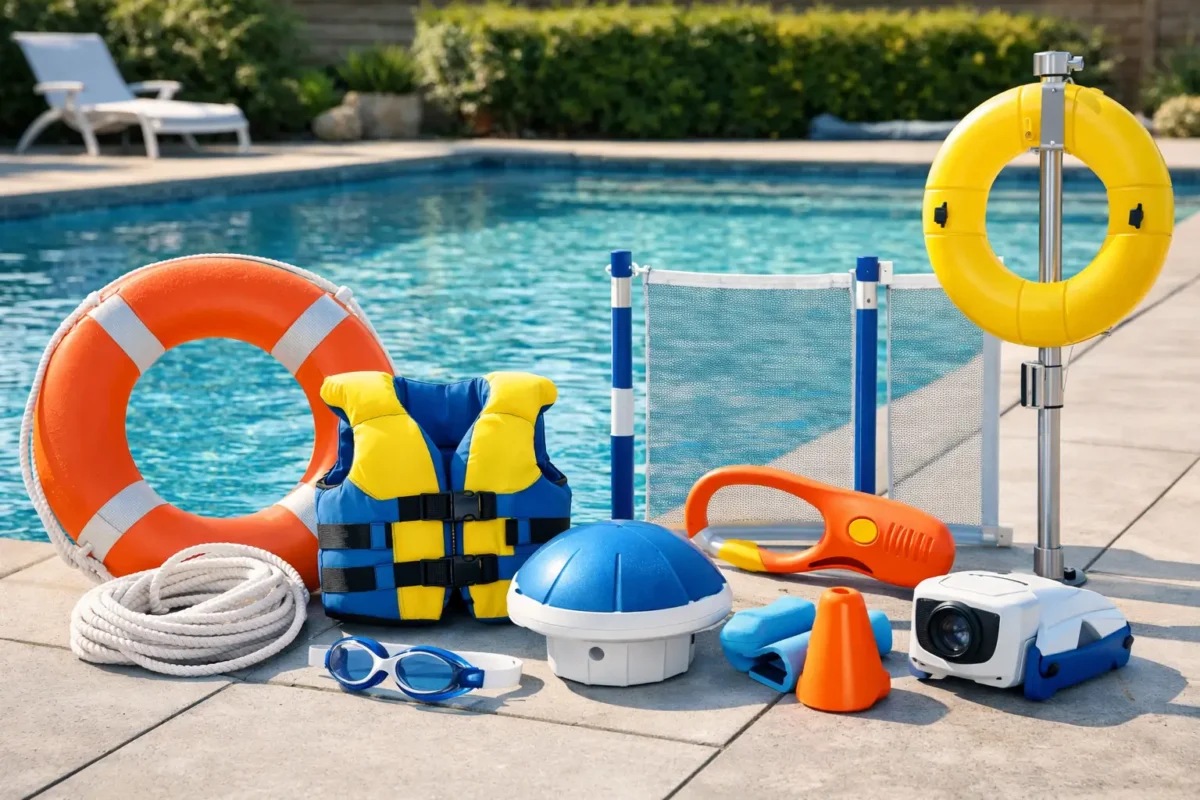
Every pool should have immediate-access rescue tools. Life rings, reaching poles, throw lines, and first-aid storage are not optional in professionally managed environments, and they are a smart investment for private pools as well.
What matters most is visibility and placement. Rescue gear stored in a locked room or hidden inside a plant area may satisfy a checklist but fails in a real emergency. Equipment should be easy to identify, protected from damage, and accessible within seconds.
For larger pools or commercial operations, the rescue station should be planned as part of the layout, not added after construction. That approach improves both appearance and response readiness.
7. Underwater and perimeter lighting
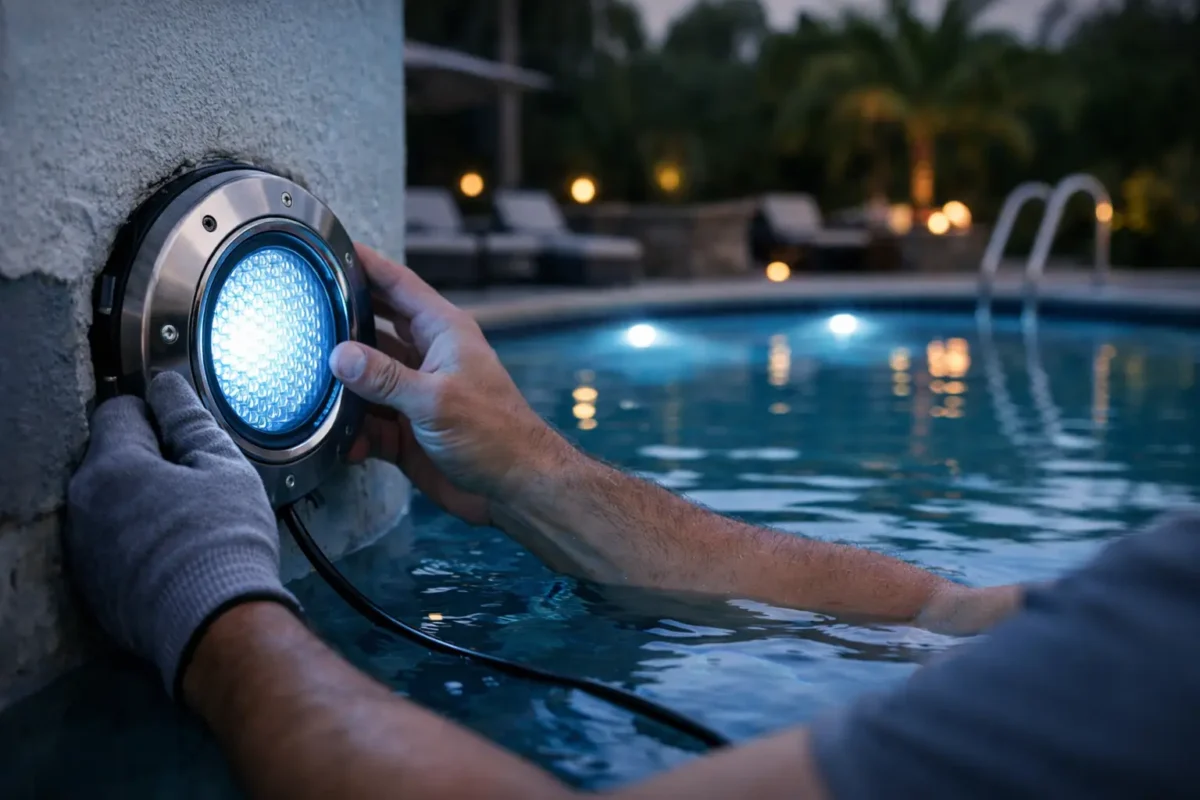
Good lighting is often treated as an aesthetic feature first and a safety feature second. In reality, it is both. Proper underwater and surrounding illumination improves visibility, helps users judge depth and edges, and allows staff or residents to monitor the pool area more effectively after dark.
Poor lighting creates avoidable risk. Steps disappear, deck transitions become harder to read, and surface movement is less visible. For luxury properties that operate during evenings or host regular events, lighting quality is a direct safety factor.
The best systems are designed for uniform coverage, dependable electrical performance, and long service life. Glare should also be considered. Overly harsh fixtures can reduce visibility instead of improving it.
8. Safety ladders, rails, and grab points
Safe pool entry and exit are essential for children, older adults, and any guest with limited mobility or reduced confidence in the water. Well-placed ladders, handrails, and grab points support controlled movement and reduce the chance of slips or panic at the edge.
Material quality matters here because these are high-contact components exposed to water, chemicals, and repeated use. Inferior metal finishes can degrade, loosen, or stain the surrounding deck. Premium-grade components are worth the investment because they support both safety and long-term appearance.
This is one of the clearest examples of where residential and commercial needs may differ. A compact villa pool may need minimal rail integration, while a hospitality or rehabilitation-focused pool may require more deliberate access support.
9. Drain covers and suction safety devices
Circulation safety is less visible than fencing or alarms, but it is critical. Properly designed drain covers and suction safety devices help reduce entrapment risk and support safer hydraulic performance.
This category should never be treated casually. The correct specification depends on the pool design, pump system, flow rate, and local code requirements. In older pools, this is often one of the first areas worth reviewing during renovation or equipment upgrades.
A visually impressive pool still needs technically sound safety engineering behind the scenes. That is especially true for commercial properties where heavy usage places greater demand on the entire circulation system.
10. Water testing and chemical control systems
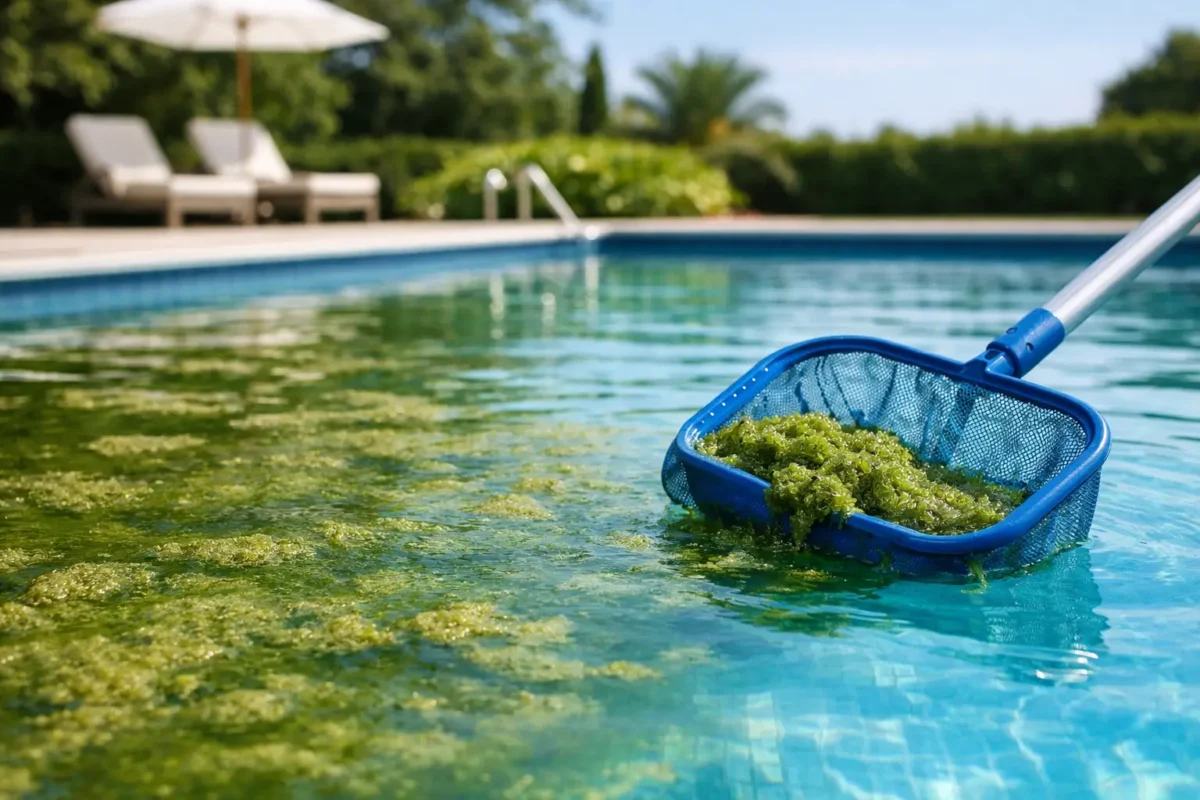
Water quality is a safety issue, not only a maintenance concern. Poor chemical balance can lead to skin irritation, eye discomfort, unsafe water clarity, and sanitation problems. If you cannot see clearly into the water, response time in an emergency is immediately compromised.
Reliable testing equipment and properly managed dosing systems help maintain safe swimming conditions with greater consistency. For commercial sites and high-value residential properties, automated monitoring can be especially beneficial because it reduces human error and supports stable operation.
The right setup depends on pool size, bather load, and maintenance frequency. Manual testing may be enough for some private pools, but many properties benefit from a more controlled, system-based approach.
Choosing the best pool safety equipment for your property
There is no universal package that fits every pool. The best pool safety equipment for a private villa may center on fences, alarms, covers, and child-focused access control. For a hotel or residential tower, the priority may shift toward deck safety, signage, rescue readiness, lighting, and water quality management. Large commercial or institutional environments usually require a broader, more technical combination of measures.
What matters is selecting equipment as part of a complete safety strategy. Products should match the pool design, the user profile, the operating schedule, and the maintenance capability of the property. Premium installations deserve more than minimum compliance. They deserve equipment that performs reliably, looks appropriate to the setting, and supports long-term confidence.
For owners and operators who value durability, presentation, and technical precision, safety should be specified with the same care as pumps, filters, finishes, and lighting. The best result is a pool that remains elegant, functional, and ready for use with no compromise where protection matters most.