Aquatic

Categories
Uncategorized

Silent Pool Pump: What to Look For

A noisy pump can ruin the entire pool experience. In a private villa, it turns a calm outdoor setting into a mechanical zone. In a hotel or residential development, it creates a constant background issue that guests, tenants, and facility teams notice quickly. That is why demand for a silent pool pump continues to grow across premium residential and commercial properties.

The term sounds simple, but not every low-noise pump performs the same way. Quiet operation depends on motor design, hydraulic efficiency, installation quality, and whether the pump is actually matched to the pool system. A premium result comes from getting all of those details right, not just choosing a product labeled as quiet.

What makes a silent pool pump truly quiet

Most pump noise comes from three sources: the motor, water movement, and vibration. A standard single-speed pump often runs at full power whenever it is on, which increases sound levels and wastes energy. A better-engineered silent pool pump reduces noise by controlling motor speed, improving internal flow, and limiting vibration transfer into the surrounding equipment base and pipework.

Variable-speed technology is usually the biggest factor. Instead of operating at one high output all day, the pump can run at lower speeds for normal filtration and increase only when needed for backwashing, water features, or heavy circulation demand. Lower RPM usually means significantly less noise.

Pump housing and impeller design also matter. When water moves efficiently through the wet end, there is less turbulence, less strain on the system, and less operating sound. In premium installations, this difference is immediately noticeable, especially in compact equipment rooms or pool decks close to seating areas.

Why a silent pool pump matters in premium properties

For luxury homes, noise control is part of the overall design standard. Pool equipment should support the environment, not compete with it. When the pool sits near a terrace, garden lounge, bedroom wing, or indoor relaxation area, even moderate pump noise becomes disruptive.

For commercial assets, the issue is broader. Hotels, fitness clubs, residential towers, and corporate facilities need circulation systems that perform reliably without creating complaints. A silent pool pump helps maintain a refined environment while supporting consistent water quality. It also improves flexibility when equipment rooms are located near guest zones, service corridors, or occupied spaces.

There is also an operational advantage. Quieter, modern pumps are often paired with better energy performance and smarter controls. That matters to property owners and operators who want long-term efficiency rather than short-term equipment replacement.

Silent pool pump vs standard pump

The difference is not only about sound. A standard pump may still be suitable for some basic applications, especially where budget matters more than efficiency or where the equipment area is far from occupied spaces. But in high-value residential and commercial settings, that compromise is rarely ideal.

A silent pool pump typically offers quieter daily operation, lower energy consumption, and more precise circulation management. It may also reduce wear on the wider system because it does not run unnecessarily hard at all times. The trade-off is upfront cost. Premium low-noise pumps, especially variable-speed models from established global brands, cost more than entry-level units.

That said, buying solely on purchase price often leads to a poor result. A lower-cost pump that is too loud, oversized, or inefficient can create higher running costs and earlier replacement pressure. In many cases, the better financial decision is the pump that performs correctly for years with less disruption.

How to choose the right silent pool pump

The first step is not the pump itself. It is understanding the pool system. Flow requirement, filtration setup, piping layout, pool volume, water features, and hours of operation all affect pump selection. A pump that is ideal for a compact residential pool may be completely wrong for a large overflow pool or a commercial facility with multiple hydraulic demands.

Match the pump to the pool size and hydraulic design

Oversizing is a common mistake. Many buyers assume a more powerful pump is automatically better, but excess power can increase noise, create unnecessary pressure, and reduce overall efficiency. The right pump should deliver the required flow rate without stressing the plumbing network.

Undersizing has its own problems. Weak circulation affects filtration quality, chemical distribution, and water clarity. The goal is balanced performance, not maximum output.

Prioritize variable-speed performance

If quiet operation is a priority, variable-speed models deserve serious attention. They allow the pump to run slower for everyday filtration, which is where most pools spend most of their time. This can dramatically reduce operational sound while improving efficiency.

For villa owners, that means a more peaceful pool environment. For facility managers and hospitality operators, it means better control over daily schedules, energy use, and guest comfort.

Consider the installation environment

Even the best silent pool pump can sound louder than expected if the installation is poor. Hard surfaces, enclosed echo-prone spaces, unstable pump bases, and poorly supported pipes can all amplify vibration and noise. In practice, the pump and the installation need to be treated as one package.

This is especially important in premium projects where equipment may be positioned close to occupied areas. Professional installation with proper alignment, anti-vibration measures, and system balancing makes a visible difference in both sound and service life.

Look at durability, not just specifications

Quiet performance on day one is not enough. The pump should maintain stable operation over time in demanding weather and operating conditions. In the UAE, heat, dust, and long operating hours place real demands on pool equipment. Material quality, motor protection, seal integrity, and service support all matter.

This is where established suppliers and recognized brands add value. Product selection should be backed by technical guidance, spare parts access, and maintenance support, not just a catalog description.

Common reasons a pool pump is louder than expected

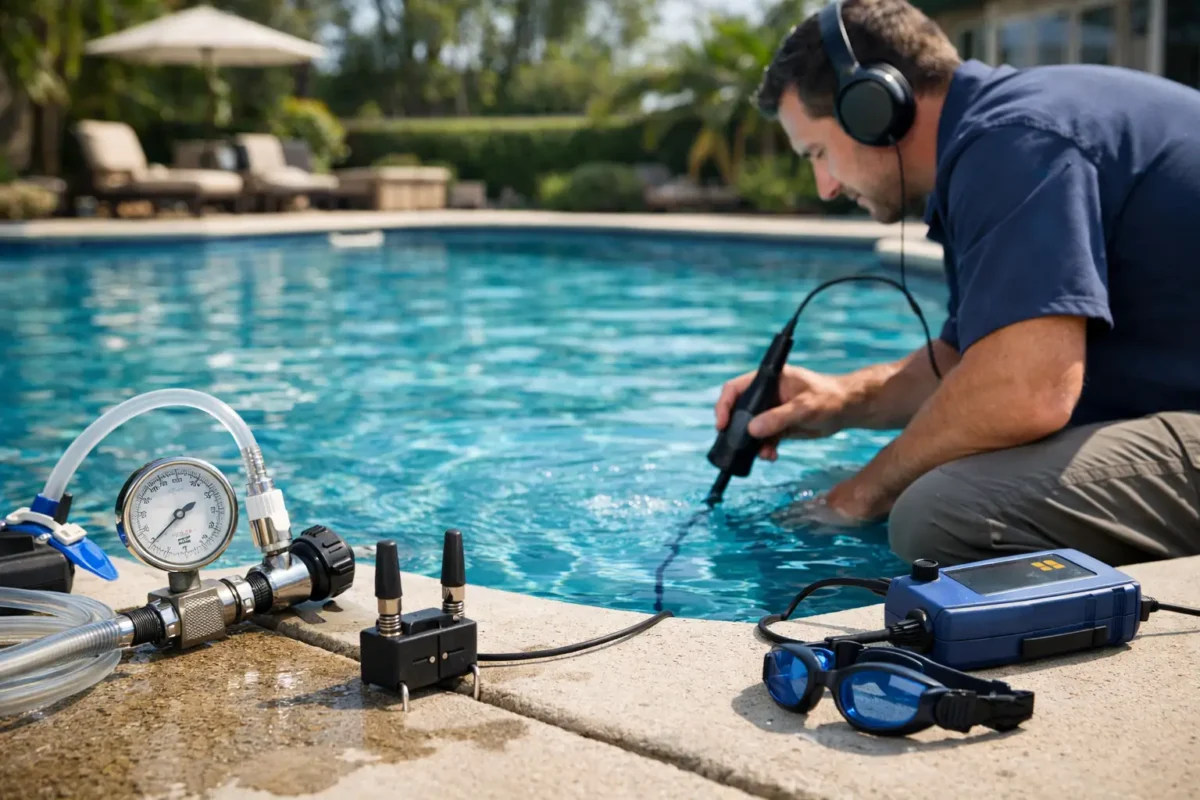
Sometimes the issue is not the pump model at all. A system can become noisy because of air leaks, clogged baskets, restricted suction lines, worn bearings, poor mounting, or cavitation caused by incorrect hydraulic design. If a pump suddenly becomes louder, that is usually a warning sign rather than a cosmetic issue.

Commercial operators should pay close attention here. Ignoring noise changes can lead to system stress, circulation problems, and preventable downtime. For homeowners, early inspection can avoid larger repair costs later.

A quiet pump that becomes noisy needs diagnosis, not guesswork. Replacing parts without understanding the cause often wastes time and budget.

Is a silent pool pump worth the investment?

In most premium applications, yes. The value is not limited to comfort. A silent pool pump supports better energy management, improved operating control, and a more refined environment. For villas, that protects the lifestyle quality of the space. For developers and commercial operators, it supports asset value and user satisfaction.

The return depends on the project. In a small secondary pool set far from living areas, the difference may feel less critical. In a luxury residence, hotel, spa, or high-end residential tower, it becomes much more important. That is why pump selection should follow the use case, not a generic rule.

Why expert selection matters

Pool equipment works best when every component is selected as part of a complete system. Pumps, filters, heaters, disinfection systems, valves, and control settings all affect each other. Choosing a silent pool pump in isolation can still produce a disappointing result if the rest of the hydraulic setup is not aligned.

For clients investing in premium aquatic environments, technical support is not an extra. It is part of the product value. Aquatic Pools and Fountains supports residential and commercial buyers with equipment supply, installation guidance, and maintenance expertise so the result is not only quieter, but also more reliable and durable.

The right pump should disappear into the background. That is the standard worth aiming for – strong circulation, efficient performance, and an environment that feels calm from the first hour of operation to the years that follow.

Categories
Uncategorized

How to Build a Pool Equipment Cover

A pool pad can be the one detail that disrupts an otherwise polished outdoor space. Even high-end pumps, filters, and heaters can look exposed when they sit in full view beside a villa wall, garden edge, or service yard. If you are researching how to build a pool equipment cover, the goal is not simply to hide the system. It is to protect critical components from direct sun, blowing dust, and visual clutter without restricting airflow, service access, or equipment performance.

That balance matters more than many property owners expect. In Dubai and across the UAE, pool systems operate in demanding conditions. Heat, fine dust, moisture, and heavy seasonal use all put pressure on equipment. A poorly designed cover can trap heat, complicate maintenance, and shorten the life of premium components. A properly built cover does the opposite. It improves the look of the installation while supporting durability, safety, and serviceability.

What a pool equipment cover should actually do

Before selecting materials or dimensions, define the function. A quality cover should screen the equipment visually, reduce direct weather exposure, and still leave enough ventilation for pumps, filters, and electrical systems to operate safely. It should also open easily for inspection, cleaning, repairs, and future replacement of parts.

This is where many DIY builds go wrong. They are treated like decorative boxes, when in reality they are small technical enclosures. Pool pumps generate heat. Filters require access for backwashing, cartridge cleaning, or media servicing. Salt systems, chemical feeders, and automation panels all need clear working space. If the cover interferes with any of that, the finished result may look elegant for a month and become frustrating for years.

Start with measurements and service clearance

The first step in how to build a pool equipment cover is measuring more than the footprint of the equipment pad. You need the total operating envelope, not just the visible machine sizes. Measure the full width, depth, and height of every component, including exposed pipework, valves, unions, electrical conduits, and control boxes.

Then add service clearance. In most cases, at least 24 to 36 inches around key access points makes sense, though some systems may need more depending on the filter type and the way the pad was installed. A compact cover may look neat on paper, but if a technician cannot remove a pump lid or open a filter clamp comfortably, the design is too tight.

Also account for future upgrades. A property that uses a simple circulation setup today may add a heat pump, UV system, dosing unit, or automation panel later. Leaving room now is usually less expensive than rebuilding the enclosure later.

Choose a design that fits the property

For most residential and commercial settings, three cover styles work best. A slatted screen enclosure is the most popular because it allows airflow naturally and suits modern architecture. A hinged cabinet-style surround offers a cleaner, more enclosed appearance, but it must be vented properly. A pergola-style structure can work well for larger equipment areas where appearance matters as much as function.

The right option depends on visibility, site conditions, and maintenance frequency. If the equipment sits near guest-facing areas, a more refined screen design may be worth the added cost. If the pad is in a service yard, a practical louvered structure may be the better investment. Premium properties usually benefit from matching the cover finish to nearby fencing, cladding, or landscape materials so it feels integrated rather than added on.

Best materials for a durable result

Material choice will determine whether the cover still looks sharp after a few summers. In demanding climates, moisture-resistant and UV-stable materials are essential. Powder-coated aluminum is one of the strongest choices because it resists rust, handles heat well, and gives a premium finish. Marine-grade composite boards are another smart option for projects that want the appearance of wood without the maintenance burden.

Treated timber can be used, but it requires more upkeep and careful sealing. If the installation is near chemical storage or splash zones, lower-grade wood may age quickly. PVC panels and low-cost plastic solutions are usually less suitable for premium settings because they can discolor, warp, or look lightweight over time.

Fasteners matter too. Use stainless steel hardware where possible, especially in humid or chemical-adjacent environments. A high-quality structure built with poor screws and brackets will not age like a premium installation.

How to build a pool equipment cover step by step

Once the layout and materials are defined, construction is straightforward if you stay disciplined about clearance and ventilation. Start by marking the perimeter around the equipment pad. Check that the enclosure line does not block walkways, drain paths, or access to valves and electrical isolation points.

Set your posts or frame supports on stable footing. In some projects that means anchoring directly to a concrete slab. In others, especially where aesthetics are a priority, a separate framed surround may sit just outside the pad. Keep the structure level and square from the start. Small framing errors can make doors bind and panels sit unevenly.

Build the frame with enough rigidity to support removable panels or hinged doors. Avoid making all sides fixed. At least one side should open fully, and on larger setups two-sided access is often the smarter choice. A service technician should be able to reach the pump basket, filter, control panel, and shut-off points without dismantling half the enclosure.

Install side panels with ventilation gaps or louvers. This is one of the most critical details. The cover should shield the equipment from direct sun and dust exposure, but trapped heat is a real risk. Slatted spacing, raised base gaps, and upper vent openings all help maintain airflow. If the enclosure includes a solid roof, ventilation becomes even more important.

For the top, choose either a slatted cover, a lightweight solid panel with ventilation allowance, or a partial overhead shade design. A full sealed roof is rarely the best answer around working pool equipment. In many cases, filtered shade is enough to reduce direct heat load without turning the enclosure into a hot box.

Finish the build with hinges, handles, and secure latches that resist corrosion. If children or unauthorized staff may be nearby, lockable access is worth considering. The enclosure should look refined, but it should also support site safety and controlled access.

Ventilation, drainage, and noise control

A premium cover performs best when it solves more than one problem. Ventilation is non-negotiable, but drainage deserves equal attention. Water should never collect under or around the enclosure. Leave the base open enough for runoff, and do not create a low point where leaks or washdown water can sit against equipment bases.

Noise control is another consideration, especially in villas, hotels, and shared residential developments. A cover can soften the visual impact of the pool pad, but it may also reflect sound if the materials are too hard and enclosed. Slatted or partially open designs typically perform better than tight box enclosures. If sound is a major concern, it is worth planning the panel orientation and spacing carefully rather than simply wrapping the equipment on all sides.

Common mistakes to avoid

The most expensive mistake is building the cover too small. The second is ignoring airflow. After that, most failures come from weak materials, poor hardware, and no maintenance access. A cover should never force technicians to remove panels every time they service the system.

Another common issue is designing purely for appearance and forgetting equipment replacement. Pumps, filters, and heaters do not last forever. If a future unit cannot be removed without cutting the structure apart, the enclosure has not been planned properly.

Electrical safety also matters. Keep the cover clear of any electrical requirements for panels, disconnects, and service space. If there is any uncertainty, a qualified technician should review the layout before construction begins.

When a custom solution is the better choice

Some pool pads are simple enough for a straightforward site-built cover. Others are not. Large filtration systems, multiple pumps, chemical dosing units, commercial-grade control panels, or narrow equipment yards often need a more technical approach. In those cases, custom fabrication is usually the better investment because it protects both the equipment and the long-term serviceability of the installation.

This is especially true for premium residential projects and commercial properties where appearance, durability, and operational reliability must align. A well-designed enclosure should feel like part of the property, not an afterthought built to hide a problem. For owners who want that standard, working with experienced pool equipment specialists can prevent costly compromises. Aquatic Pools and Fountains supports clients who need that level of technical and visual coordination across modern pool installations.

A good cover is not the one that disappears your equipment from view. It is the one that protects the system, preserves access, and still looks right five years from now.

Categories
Uncategorized

Swimming Pool Accessories List That Matters

A strong swimming pool accessories list is not just a shopping exercise. It is the difference between a pool that looks impressive for a month and one that performs beautifully for years in demanding UAE conditions. For villa owners, developers, and facility managers, the right accessories protect water quality, improve safety, reduce maintenance stress, and elevate the overall finish of the space.

In premium residential and commercial projects, accessories should never be treated as add-ons. They are part of the system. A luxury pool with weak circulation, poor lighting, or unreliable cleaning equipment quickly loses its appeal. A well-selected accessory package, on the other hand, supports cleaner water, lower operational disruption, and a more refined user experience.

A swimming pool accessories list should start with circulation

The first category to prioritize is circulation support. Even the most elegant pool depends on proper water movement to stay clear, hygienic, and chemically balanced. Pumps and filters do the heavy work, but the surrounding accessories determine how effectively the system operates day after day.

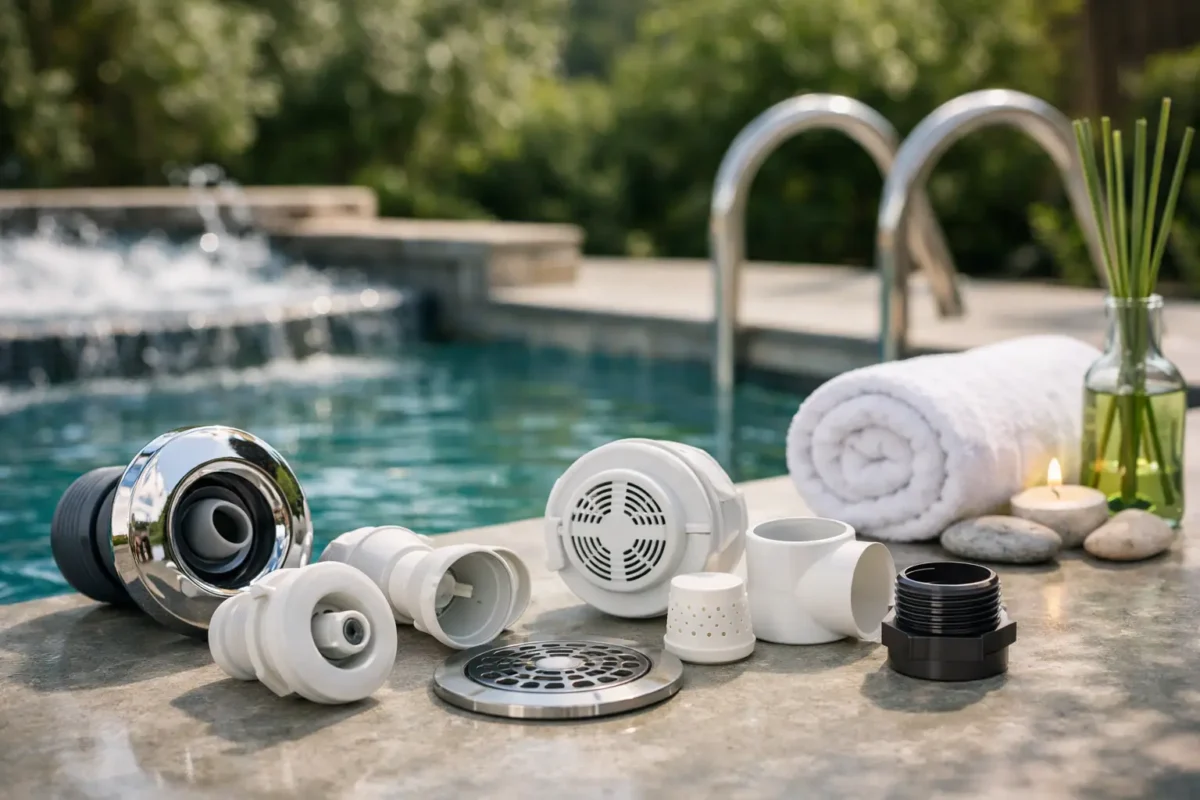
This includes fittings such as main drains, return inlets, skimmers, suction points, valves, and strainers. These parts are not always visible once the pool is complete, but they have a direct impact on performance and serviceability. Poor-quality fittings can lead to flow restrictions, leaks, or recurring maintenance issues. In high-end villas and commercial pools, that trade-off rarely makes financial sense.

The better approach is to specify durable, corrosion-resistant accessories designed for the pool size, hydraulic demand, and usage pattern. A private plunge pool and a hotel overflow pool require very different support components. That is where technical guidance matters.

Cleaning accessories that reduce long-term effort

Cleaning equipment is often the first thing property owners think about, and for good reason. Debris, dust, sunscreen residue, and shifting environmental conditions can quickly affect water appearance. In the UAE, outdoor pools are especially exposed to airborne dust and heavy sun, which means cleaning accessories should be selected with realistic operating conditions in mind.

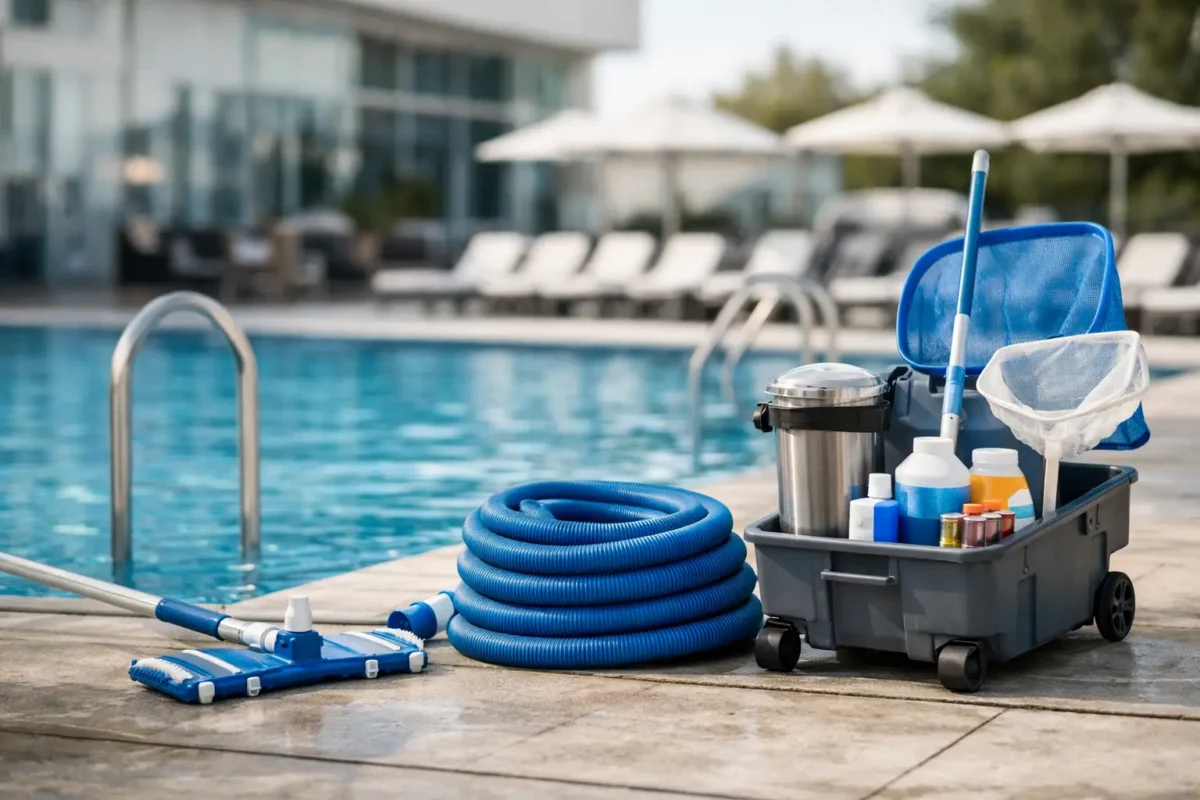
A practical setup usually includes leaf nets, brushes, telescopic poles, vacuum heads, flexible vacuum hoses, and pool cleaning baskets. For larger properties or facilities with higher user traffic, automatic pool cleaners can save significant labor time while improving consistency.

There is a clear trade-off here. Manual cleaning tools are cost-effective and dependable, but they rely on regular staff attention. Automatic systems reduce manual workload, yet they must be chosen carefully based on pool shape, finish, and debris load. A robotic cleaner that works well in a compact residential pool may not be the right answer for a large commercial basin.

Waterline cleaning tools and surface skimming accessories also deserve attention. These details help maintain a polished finish, which matters in pools designed as visual focal points. When guests or residents notice cloudy edges or floating debris, the perception of quality changes immediately.

Safety products belong on every swimming pool accessories list

Safety is not a secondary category. It is a core requirement for homes with children, hospitality environments, residential towers, schools, and public-use facilities. A complete swimming pool accessories list should include products that support accident prevention as well as emergency response.

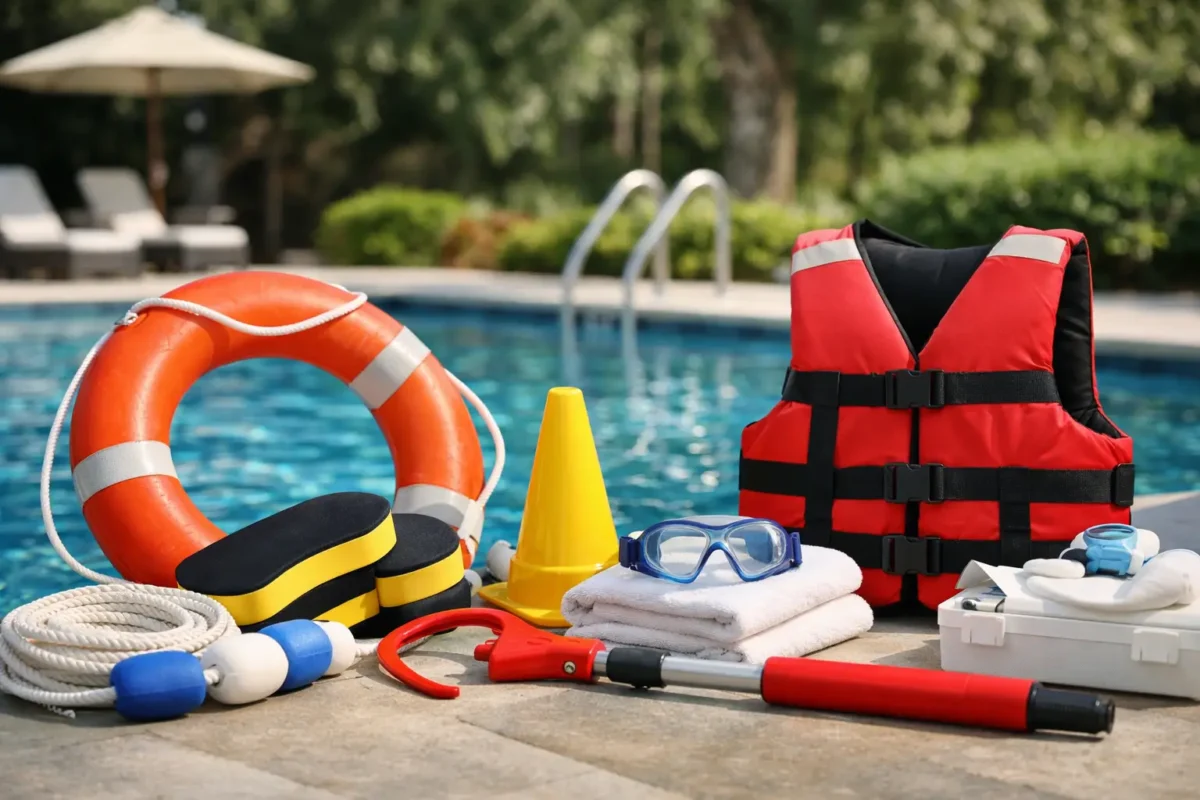
Essential safety accessories may include pool ladders and handrails with secure anchoring, anti-slip grating, safety ropes, life rings, rescue hooks, first-aid supports, and depth markers. In some settings, pool covers and safety barriers are equally important. For family villas, these can provide peace of mind. For commercial environments, they can support compliance and risk management.

The right safety package depends on who uses the pool and how often. A decorative residential pool with occasional use may need a simpler setup than a community or hospitality pool with constant traffic. Still, cutting corners on safety hardware is a false economy. Reliable materials, stable installation, and proper placement matter far more than choosing the lowest price point.

Lighting and visual accessories shape the experience

Lighting changes how a pool feels after sunset. It also affects usability, perceived luxury, and safety around the basin. In many premium properties, underwater lighting is one of the most visible accessories because it transforms the pool from a daytime feature into an evening centerpiece.

LED underwater lights are the standard choice for most modern installations because they offer long service life, lower energy consumption, and better visual consistency. Depending on the project, owners may choose warm white for a sophisticated look or programmable color systems for a more dramatic effect. The best option depends on the property style. Not every project benefits from color-changing effects. In refined hospitality or villa settings, restraint often looks more expensive.

Beyond underwater fixtures, surrounding lighting accessories can include deck lights, step lights, junction boxes, niches, and control systems. The quality of these supporting components matters just as much as the visible fixtures. Poorly selected electrical accessories can affect reliability and maintenance access.

Water quality accessories protect both users and equipment

Clear water is not the same as balanced water. A pool may look clean while still carrying chemical instability that affects comfort, equipment life, and sanitation performance. That is why water treatment accessories are critical for serious pool ownership.

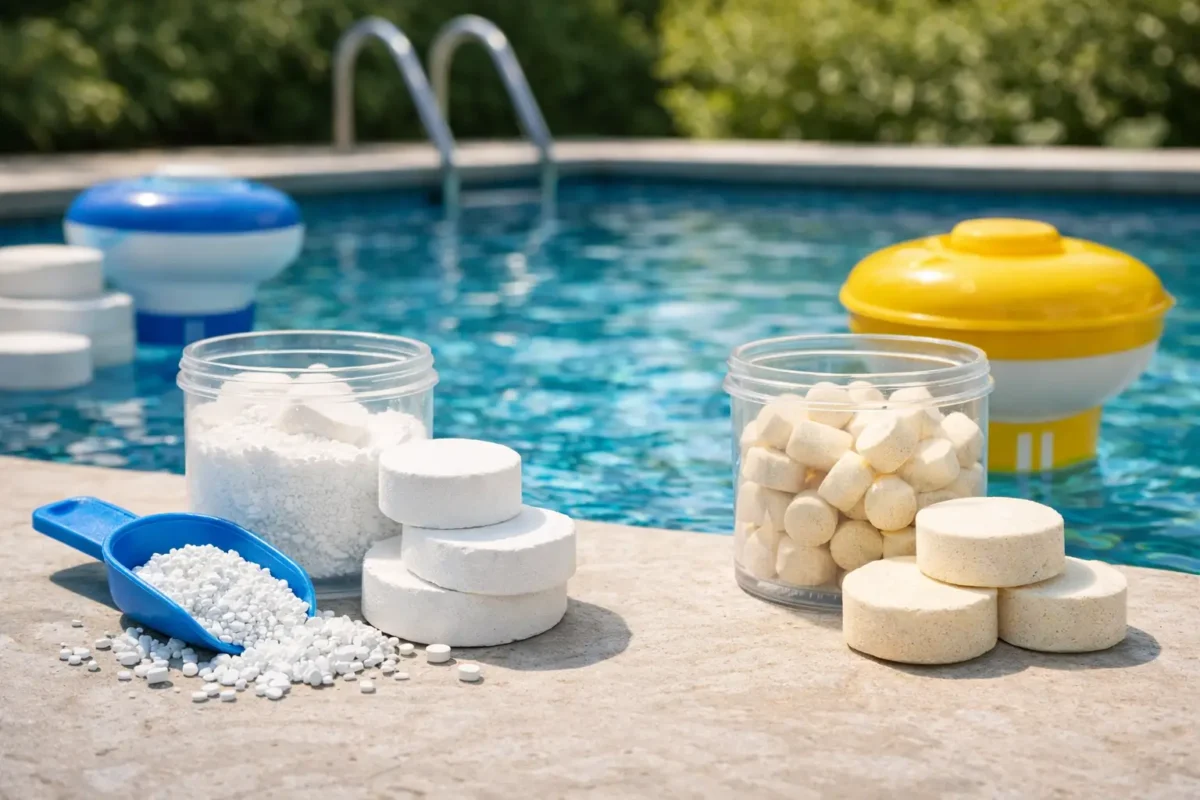
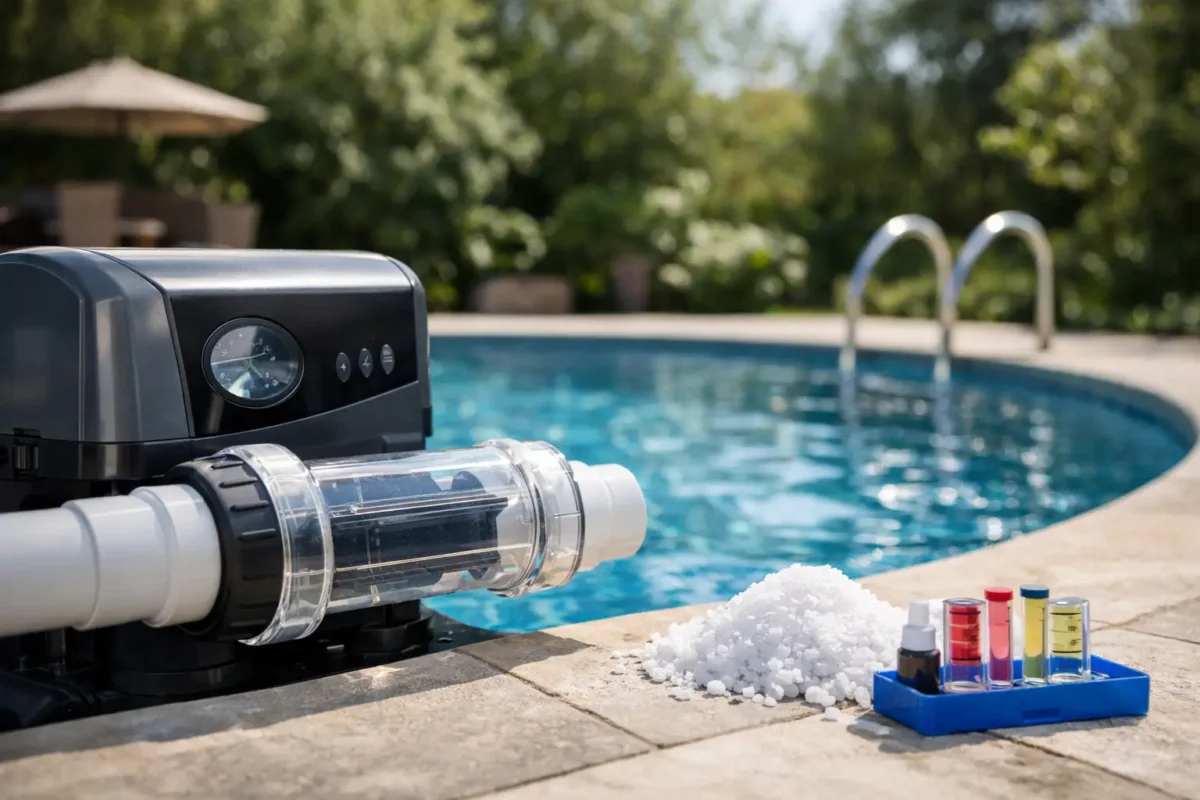
This category includes chemical feeders, dosing pumps, chlorinators, salt chlorination systems, UV systems, ozone units, and water testing kits or digital testing devices. In premium installations, automated dosing and monitoring are often the smarter investment because they improve consistency and reduce reliance on guesswork.

There is no single solution for every pool. A private villa may prefer a low-maintenance disinfection setup that simplifies day-to-day care. A commercial pool may need more advanced monitoring, tighter control, and stronger treatment support due to bather load and regulatory expectations. The key is choosing accessories that fit the actual operating environment, not a generic package.

Balanced water also protects pool finishes, lights, pumps, filters, and metal components. Over time, the cost of poor water management is almost always higher than the cost of proper testing and dosing equipment.

Comfort and convenience accessories add value

Some accessories do not directly affect water circulation or sanitation, yet they make the pool significantly more enjoyable and practical to use. These comfort-driven additions are often what separate a basic installation from a premium one.

Common examples include heat pumps, heat-cool pumps, pool covers, shower units, starting blocks for training pools, lane accessories, floating loungers, and storage solutions for maintenance tools. In the UAE climate, temperature control can still be relevant. Some pools become too warm during peak summer, while others need heating during cooler months or for specific wellness applications.

Pool covers are especially useful because they support multiple goals at once. They can help reduce evaporation, limit debris entry, improve safety in some cases, and reduce chemical consumption. The right cover depends on whether the priority is heat retention, protection, or safety.

Finishing accessories define the professional standard

The final category is often overlooked until late in the project – finishing accessories. These include grating, drain covers, access panels, return covers, overflow components, anchors, escutcheons, and trim details that complete the visible and hidden parts of the installation.

For developers and high-end property owners, these details matter. They influence not only appearance but also maintenance practicality and system longevity. Cheap finishing accessories may discolor, crack, or loosen under sun exposure and chemical contact. In a premium setting, that decline is visible quickly.

Professionally selected finishing components create a cleaner overall presentation and support easier servicing in the future. They also help ensure that the pool looks cohesive with surrounding hardscape, water features, and architectural elements.

Choosing the right accessories for your pool type

Not every pool needs the same list. A residential overflow pool, a rooftop pool, a school training pool, and a hotel leisure pool all have different priorities. Usage level, exposure conditions, maintenance capacity, and design intent should guide selection.

For private villas, the focus is often on elegance, ease of maintenance, and family safety. For hospitality and commercial projects, durability, water quality control, heavy-duty cleaning support, and reliable replacement availability become more important. Developers also need accessories that maintain appearance over time and support efficient long-term facility management.

This is why working with a supplier that understands both products and technical execution is valuable. Aquatic Pools and Fountains supports projects with a broad accessory range, recognized brands, and practical guidance on what truly fits the installation rather than what simply fills a catalog.

A better pool starts with better decisions behind the scenes. If you are building, upgrading, or managing a pool, choose accessories with the same care you give to the finish, shape, and visual design. The results show up every day in cleaner water, safer use, easier upkeep, and a pool that continues to reflect the standard of the property.

Categories
Uncategorized

Pool Accessories List for Premium Pools

A strong pool accessories list is not about adding more products. It is about selecting the right equipment to protect water quality, improve safety, reduce maintenance pressure, and preserve the finish of a premium pool over time. For villa owners, developers, hospitality operators, and facility managers, the difference between a pool that looks impressive for a season and one that performs year after year usually comes down to the accessories behind the surface.

In high-value residential and commercial settings, accessories are not secondary purchases. They are part of the operating system of the pool. The right combination supports cleaner water, more stable circulation, lower downtime, better swimmer comfort, and a sharper visual result. The wrong combination creates recurring service issues, uneven performance, and unnecessary replacement costs.

What should be on a pool accessories list?

The most effective pool accessories list includes the categories that directly affect day-to-day operation: cleaning tools, water treatment support, safety products, lighting, circulation fittings, heating and cooling support, and practical surround equipment. Which items matter most depends on the size of the pool, whether the property is residential or commercial, and how often the pool is used.

A private villa pool may prioritize elegant lighting, easy cleaning access, and child safety. A hotel or residential tower is more likely to require durable commercial-grade fittings, stronger sanitation control, reliable testing systems, and accessories that can withstand heavy use. That is why specification matters. Premium pools need accessories matched to the project, not a generic shopping cart.

Core cleaning accessories that protect performance

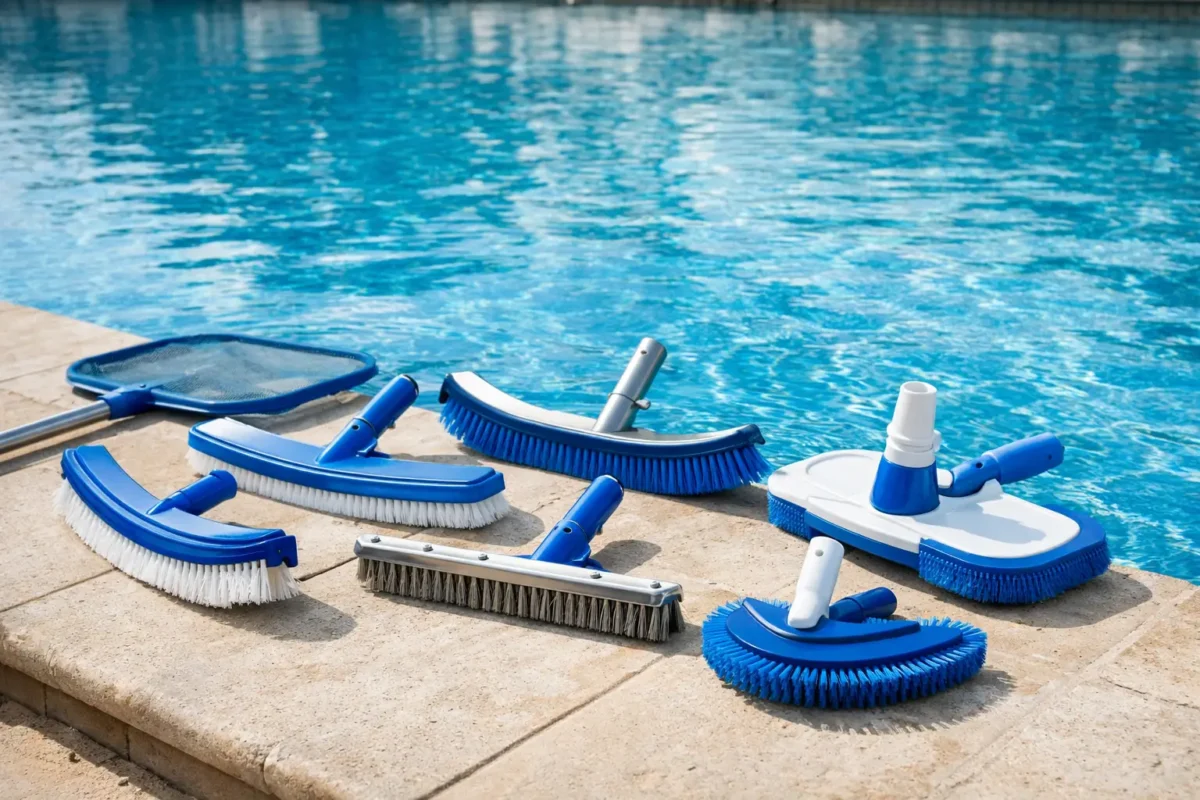
Clean water starts with circulation and filtration, but visible cleanliness depends on accessories that handle the daily burden. Leaf skimmers, wall brushes, vacuum heads, telescopic poles, and flexible hoses remain essential even on highly automated systems. They help remove surface debris, prevent algae buildup on pool walls, and support routine maintenance before small issues turn into water clarity problems.

For larger pools or properties with landscaping, manual tools alone may not be enough. Automatic pool cleaners and suction or pressure-based cleaning accessories can reduce labor and improve consistency. The trade-off is cost and compatibility. Not every cleaner suits every pool finish, hydraulic setup, or debris profile. A pool surrounded by palms and fine dust needs different cleaning support than an indoor lap pool with controlled conditions.

Premium operators usually benefit from choosing durable, commercial-quality cleaning accessories rather than low-cost replacements. Lower-grade tools tend to fail at connection points, wear faster under UV exposure, and create recurring purchasing cycles that add up quickly.

Water treatment and testing accessories

If there is one category that should never be treated as optional, it is water treatment support. Test kits, digital water testing systems, chemical feeders, dosing equipment, and disinfection accessories all contribute to stable water balance. Without them, even a well-designed pool can develop sanitation issues, eye irritation complaints, scaling, corrosion, or cloudy water.

A basic residential setup may only need dependable manual testing and standard chemical handling accessories. A more advanced pool, especially in hospitality or commercial use, often benefits from automated dosing and more precise monitoring. The reason is simple: bather load changes water demand quickly, and manual correction is rarely as consistent as controlled dosing.

There is also a visual and financial angle. Poor water balance can damage tile lines, stainless steel components, pumps, heaters, and decorative finishes. In premium environments, repair costs and reputational costs are both higher. Water testing accessories are not just maintenance tools. They are asset protection tools.

Safety accessories for residential and commercial pools

Safety products deserve a fixed place on any serious pool accessories list. This includes life rings, rescue hooks, depth markers, anti-slip accessories, handrails, ladders, safety signage, and in some settings, pool covers or child-protection barriers. The exact mix depends on the property type and applicable standards.

For family homes, the priority is often preventing accidental access and supporting safe entry and exit. For hotels, clubs, schools, and managed communities, visibility, compliance, and emergency readiness become even more important. A polished pool area should never overlook safety basics in favor of appearance.

The best safety accessories are those that combine durability with clear functionality. Corrosion resistance matters in harsh climate conditions. So does installation quality. A premium handrail or ladder that is poorly fitted becomes a liability instead of an advantage.

Lighting accessories that shape the pool environment

Lighting changes how a pool performs after sunset, but it also affects safety, mood, and perceived value. Underwater lights, niche fittings, transformers, controllers, and color-programmable systems all play a role in the finished result. In luxury homes and commercial properties, lighting is often one of the most visible indicators of quality.

That said, the best lighting choices are not always the most dramatic ones. Some projects call for clean white illumination that enhances water clarity and architectural lines. Others benefit from programmable color effects for entertainment or hospitality settings. It depends on the purpose of the space and the surrounding design language.

LED systems are the standard choice for most modern projects because they offer energy efficiency, long life, and better control. But performance still depends on proper housing, waterproof integrity, and electrical compatibility. Premium aesthetics require premium technical execution.

Circulation, fittings, and hidden accessories

Many of the most important pool accessories are the least visible. Inlet fittings, main drains, skimmers, vacuum points, grating, valves, nozzles, and connection hardware all influence water movement and maintenance efficiency. If these components are underspecified, even the best pumps and filters may not deliver the expected result.

This is especially relevant for commercial pools and large residential installations where circulation dead spots can lead to poor chemical distribution and debris accumulation. Decorative pools and fountain-integrated designs also demand precise fittings to preserve both performance and appearance.

For buyers focused on long-term reliability, material quality matters here. UV resistance, chemical resistance, pressure tolerance, and compatibility with the overall system should take priority over short-term savings. Hidden accessories are often where future maintenance costs begin.

Comfort accessories that improve the user experience

A premium pool should feel as good as it looks. Heat pumps, heat-cool systems, water features, return fittings designed for better flow comfort, and selected surround accessories all shape the user experience. In warm climates, temperature control is not only about heating. Cooling can be just as valuable for comfort during peak summer periods.

This is where project goals matter. A private plunge pool, a rooftop leisure pool, and a hospitality pool deck will not have the same comfort priorities. Some clients want year-round swimming usability. Others want visual elegance and a controlled water environment that supports guest satisfaction.

Accessories in this category should be chosen with the operating profile in mind. Overspending on features that will rarely be used makes little sense. Underspecifying them for a high-expectation property can be just as costly.

How to build the right pool accessories list for your property

The right approach is to build the list around function first, then refine it around finish and brand level. Start with the essentials that affect water quality, circulation, cleaning, and safety. Then evaluate lighting, comfort systems, and aesthetic upgrades based on how the pool will actually be used.

For residential projects, this often means balancing elegance with simplicity. Homeowners usually want dependable equipment that does not complicate maintenance. For commercial buyers and developers, the conversation is different. Durability, standardization, serviceability, and stock availability often matter as much as visual appeal.

Working with a supplier that understands both equipment and technical execution makes the process more efficient. Accessories are rarely standalone decisions. They interact with the pool shell, hydraulic design, filtration setup, electrical planning, and maintenance strategy. That is why experienced guidance adds value long before installation begins.

Aquatic Pools and Fountains serves this need by combining premium product availability with technical support for both residential and commercial projects, which is often what separates a well-equipped pool from one that constantly needs correction.

Why premium buyers should avoid generic accessory selection

A generic pool accessories list may look complete on paper, but it often ignores the realities of climate, usage intensity, finish quality, and maintenance expectations. Premium pools require precision. The accessories should suit the project scale, align with the system design, and support a long operating life.

This is particularly true in demanding environments where heat, dust, heavy occupancy, or design complexity place more pressure on the equipment. Choosing stronger components at the start usually saves time, protects appearance, and reduces service disruption later.

The best accessory plan is not the longest one. It is the one that makes the entire pool system cleaner, safer, more efficient, and easier to maintain without compromising the design standard of the property.

If you are reviewing options for a new installation or upgrading an existing pool, start with the accessories that carry the most operational weight. When those choices are right, the water looks better, the space performs better, and the investment holds its value far more effectively.

Categories
Uncategorized

Swimming Pool Equipment and Accessories

A pool that looks impressive on day one but struggles with circulation, water quality, or maintenance by month six is not a premium asset. The difference usually comes down to one thing – choosing the right swimming pool equipment and accessories from the start, with the technical standards to match the project.

For property owners, developers, and facility teams in Dubai and across the UAE, that choice affects more than appearance. It shapes operating cost, water clarity, user safety, service intervals, and the long-term value of the installation. Whether the project is a private villa pool, a hospitality feature, or a commercial aquatic facility, the equipment behind the finish is what defines performance.

Why swimming pool equipment and accessories matter

A well-designed pool system is an integrated environment, not a collection of separate products. Pumps, filters, fittings, disinfection systems, lighting, cleaning tools, and control components all have to work together under real operating conditions. If one part is undersized, poorly specified, or incompatible, the entire system can feel the impact.

This is especially true in high-expectation properties where visual quality and reliability are equally important. Clear water, balanced chemistry, efficient circulation, elegant lighting, and safe access do not happen by accident. They come from proper selection, quality materials, and technical oversight during installation and maintenance.

There is also a practical side that experienced buyers understand. Premium equipment usually costs more at the point of purchase, but lower-grade components can lead to higher replacement frequency, inconsistent performance, and more service disruption. In many cases, the better investment is the one that reduces operational friction over time.

The core equipment every pool depends on

The pump and filtration system form the working heart of any pool. A properly matched pump supports effective water movement, while the filter removes suspended particles that affect clarity and hygiene. If the pump is too weak, circulation suffers. If it is too aggressive for the design, efficiency and system balance can be compromised. The right specification depends on pool size, bather load, hydraulic design, and intended usage.

Disinfection systems are equally critical. Chlorination remains common, but many premium installations now require more advanced water treatment support, including dosing systems and water testing solutions that provide better control. The right approach depends on the environment, usage intensity, and the standard of water quality expected by the client or operator.

Heat-cool pumps have also become increasingly relevant for properties that want greater seasonal flexibility and year-round comfort. In a villa setting, they help maintain a more enjoyable swimming experience. In hospitality and commercial environments, they support guest satisfaction and operational consistency. The key is selecting a unit with the right capacity and efficiency profile for the project.

Underwater lighting is often treated as a decorative detail, but it serves both function and atmosphere. Well-planned lighting improves nighttime visibility, enhances the architectural character of the pool, and strengthens the overall landscape presentation. For luxury properties, the finish matters, but so does durability, ingress protection, and integration with the pool’s electrical design.

Choosing accessories that improve performance and appearance

Accessories are not secondary when the goal is a complete, polished aquatic environment. They influence usability, maintenance efficiency, safety, and the visual quality of the finished space.

Fittings, drains, inlets, skimmers, ladders, handrails, and grating all play a role in how the pool functions and how refined it looks in use. High-quality accessories create a cleaner finish and are better suited to demanding environments, particularly in commercial and high-value residential settings. Inferior pieces may seem acceptable at first, but visible wear, corrosion, or reduced performance tends to appear quickly.

Cleaning accessories are another category where quality pays off. Manual tools, maintenance equipment, and supporting cleaning products help protect the condition of the pool between service intervals. For larger properties or facilities with heavier usage, dependable cleaning systems are not optional – they are part of keeping the asset presentation-ready.

Safety accessories deserve the same level of attention. This includes lifesaving equipment, anti-slip considerations, depth markers where required, and products that support safer movement in and around the pool area. In family residences, hospitality spaces, and shared facilities, safety must be built into the specification rather than added as an afterthought.

Swimming pool equipment and accessories for different project types

Not every pool needs the same specification. A private villa pool may prioritize quiet operation, elegant lighting, efficient circulation, and easy-to-manage maintenance systems. In that setting, the owner often wants strong performance without visible complexity.

A hotel or hospitality project has different demands. The system must handle regular use, maintain consistent water quality, support a premium guest experience, and allow for reliable servicing without disrupting operations. Commercial properties often need more durable components and a more structured maintenance strategy from the outset.

Residential towers, real estate developments, and corporate properties bring another set of priorities. Here, procurement teams and facility managers are often balancing lifecycle cost, brand image, service reliability, and compliance requirements. The best specification is rarely the cheapest line item. It is the one that performs consistently and remains supported over time.

That is why product selection should always reflect the operational reality of the site. One-size-fits-all recommendations usually create problems later.

What to look for in a premium supplier

For serious buyers, inventory breadth matters, but it is not enough on its own. The real value comes from working with a supplier that understands system design, installation conditions, maintenance demands, and compatibility across product categories.

Strong stock availability reduces delays and helps keep projects moving. Access to established global brands supports confidence in quality and long-term performance. Technical guidance is just as important, especially when the buyer needs help choosing between product options, adapting a system to site conditions, or planning upgrades for an existing pool.

Installation and after-sales support should also be part of the conversation. Even high-quality products can underperform if they are installed incorrectly or maintained inconsistently. A capable partner brings more than supply. It provides technical continuity from specification to operation.

For clients in the UAE seeking high-end aquatic environments, this full-scope model is often the smarter route. It reduces coordination issues, shortens decision cycles, and supports a better result across both aesthetics and technical performance. That is why many discerning clients choose a specialist such as Aquatic Pools and Fountains for both product supply and expert support.

Common mistakes when selecting pool equipment

One of the most common mistakes is choosing equipment based only on upfront cost. Lower pricing can be attractive during procurement, but the long-term impact may include greater maintenance frequency, shorter service life, and weaker overall system performance.

Another issue is mismatched sizing. Oversized and undersized equipment can both create inefficiencies. Pumps, filters, heating systems, and dosing solutions should all be selected in relation to the full hydraulic and operational profile of the pool.

Some buyers also underestimate the importance of accessory quality. In luxury and commercial projects, small details become highly visible over time. A poorly chosen ladder, fitting, light, or drain cover can affect both function and finish.

Finally, many projects suffer when product sourcing is disconnected from technical service. If the supplier does not understand installation realities or ongoing maintenance needs, the burden shifts to the client later.

A better standard for long-term pool performance

The best pool environments are built on more than attractive design. They rely on equipment and accessories that are selected with precision, installed professionally, and supported throughout the life of the asset. That applies whether the goal is a private luxury retreat or a high-traffic commercial facility.

When swimming pool equipment and accessories are chosen with care, the result is clear water, dependable operation, stronger safety, and a more elegant overall environment. For buyers who value durability, technical confidence, and premium presentation, the right decision is not simply to buy products – it is to invest in a complete standard of performance that will continue to show its value long after installation.

Categories
Uncategorized

Swimming Pool Chemicals: Types, Benefits, and Best Practices

A clean and secure swimming experience is guaranteed by a well-kept pool. To stop bacteria from growing, algae from growing, and skin irritation from occurring, the right chemical balance is essential. We go over the various kinds of pool chemicals, their advantages, and the best ways to maintain your pool in top shape in this extensive guide.

Types of Swimming Pool Chemicals and Their Uses

·       Chlorine & Bromine

You’ve likely seen the bromine tablets, chlorine tablets, or even liquid chlorine drifting by. HTH Granular Calcium Hypochlorite brought to you byAquatic Pools & Fountains is the tried-and-true disinfectants for eliminating bacteria, viruses and algae. Use it regularly to keep your chlorine at 1–3 ppm, bromine at 3–5 ppm. It does a solid job of keeping that annoying algae growth in check and ensuring your water stays crystal clear.

·       pH Balancers & Adjusters

Your pool’s sweet spot for pH is between 7.2 and 7.6, which you can control with pH increasers and reducers. No one wants itchy eyes or irritated skin after a swim, so, it’s best to do a pH test at least once a week and adjust as necessary. In addition, balanced pH levels go a long way toward preventing the rusting of your pool equipment.

·       Algaecides

Now, when it comes to algae, you want to have some Copper-Based Algaecides or Non-Foaming Algaecides on hand. They’re like your pool’s secret weapon against that green stuff. Best to use them weekly or whenever you start seeing any algae pop up. That way, you can keep the water nice and clean and avoid those slippery spots that can be a real hazard.

·       Shock Treatments (Oxidizers)

Then there are Shock Treatments, like Non-Chlorine Shock and Cal Hypo Shock. These products are fantastic for zapping away bacteria, organic gunk, and those pesky chlorine smells. You should be using HTH Granular Calcium Hypochlorite brought to you byAquatic Pools & Fountains, weekly or after a big pool party, a rainstorm, or if there’s any other contamination. They really help in bringing back that crystal-clear water and keeping everything sanitized.

·       Water Balancers

Let’s not forget about Water Balancers! You’ll want to use things like Alkalinity Increasers and Not to be overlooked are water balancers! You should utilize products such as calcium hardness increasers and alkalinity increasers. They are essential for maintaining the balance of your calcium and total alkalinity levels. If your water test shows something’s off, just add these to prevent scaling or corrosion.

·       Specialty Chemicals

Specialty Chemicals are another area to consider. Things like Pool Clarifiers, Flocculants, and Stain & Scale Removers can help out. They make the water clearer, tackle metal stains, and stop scale from building up. If your pool water looks cloudy or you notice any metal stains, it’s time to bring these into play. They’ll boost filter efficiency and give you that lovely, clear water we all want.

·       Salt Pool Chemicals

If you own a saltwater pool, some saltwater chlorine generators and pool salt should be in your arsenal. These products help generate chlorine naturally, which is pretty neat. Keeping up with them means you’ll maintain the right levels of salt and chlorine, leading to water that feels softer and doesn’t irritate your skin as much.

How to Use Swimming Pool Chemicals Safely

Using swimming pool chemicals is super important for both safety and getting the best results.  As with anything, always check the manufacturer’s specifications and guidelines before proceeding. And remember to test your water weekly with a good pool test kit. When you’re adding chemicals, do it in the right order, this helps avoid any nasty reactions. Store those chemicals in a cool, dry place, and don’t skip the gloves and goggles. Do not mix the chemicals directly instead, think about using a floating dispenser or an automatic chlorinator to spread things out evenly.

Best Time to Use Swimming Pool Chemicals

Early morning or late evening is ideal time for using swimming pool chemicals this way, the sun won’t break down those chemicals too quickly. After a heavy rain you’ll need to adjust your chemicals to keep everything balanced. And if a bunch of swimmers just jumped in, you might need to sanitize again. Seasonal changes mean you should also tweak things when you’re opening or closing the pool.

Choosing the Right Swimming Pool Chemical Suppliers

Finding a good supplier for your pool chemicals is a must. You want someone with a solid reputation and positive reviews. Check that their products meet safety standards, and make sure they’ve got a wide variety of quality chemicals. Good customer support is also key—sometimes you just need a little guidance on how to use stuff properly.

Common Mistakes to Avoid When Using Pool Chemicals: how to use Swimming Pool Chemicals

There are certainly common mistakes you’ll want to avoid in pool maintenance. Excessive or insufficient use of chemicals might cause bacterial accumulation or skin irritation. Regular water testing is crucial to keep that water chemistry balanced. Never mix chemicals that don’t get along or toss them straight into the water without diluting them first. This could cause all sorts of staining or damage. After adding those chemicals, give the pool walls and floors a good brush to help spread them out. Store those chemicals properly to avoid accidents and keep them effective.

Swimming Pool Chemical Benefits: Why Proper Maintenance Matters

By eliminating dangerous microorganisms, maintaining your pool with the proper chemicals is essential to keeping swimmers safe. It’ll also help keep algae at bay, extend the life of your pool equipment, make the water nice and clear, and ultimately save you money on big maintenance issues down the line.

Final Thoughts

It all boils down to which time to use these chemical sets, employing those chemicals properly, and maintaining their balance to keep your pool safe and clean. You can keep your pool in excellent condition all year long by understanding the many kinds of pool chemicals, their functions, and when to use them. Effective pool upkeep depends on locating reliable providers for your chemicals, whether you own or operate a pool.

Stick to these tips, and you’ll be enjoying a fresh and clean swimming experience while making sure your pool lasts. Happy swimming!

Categories
swimming pool tiles Uncategorized

Which Type Of Tile Is Best For A Swimming Pool?

While selecting the tile for your pool, you must consider various things, such as: safety, water resistance, and durability level, and its aesthetic appeal. Here, there are a few common and proper varieties of pool tiles that are:

Glass Tiles: Due to their elegance and reflecting nature, no other type can compare to these at first place. Although they come in a number of colors, blue shades are mostly used because it makes your pool look luxurious. Since these glass tiles are not porous, these resist fading and moisture along with stains. These glass tiles would give an underwater classy shimmering colorous effect to the pool. Their cost is much more than that of any other type of tile.
• Ceramic and Porcelain Tiles: Ceramic and porcelain tiles are most commonly used for the interior walls and borders. The best material to use both inside and outside is porcelain because it is very strong, resistant to water, and clamped into harsh temperatures. As ceramic and porcelain tiles are available in every design, from simple to complex, they can be more reasonably priced and durable. Additionally, they don’t slide so make the space around the pool area much safer too.

• Mosaic Tiles: Mosaic tiles are small pieces of glass or ceramic that, when arranged, create artistic patterns. It widely serves to create intricate patterns, borders, and even logos for pools. It has gained high popularity due to its adaptability and lovely color shade. Mosaic tiles not only give the pool a creative touch but also aid in smoothing up the surfaces, especially the corners and curves.

• Natural Stone Tiles: Earthy, natural-looking tiles for your pool are slate, limestone, and travertine. They genuinely fit in well with the surroundings, hence why they are often used as pool coping or decking. Pool use is safe because they are non-slip and extremely robust. Although they take in more water compared to other varieties of tile, they must be sealed to prevent staining.

Selecting Tile for the Pool

There are so many factors to take into account when you make your decision in tiles for your pool.

•Durability: The tiles must be able to withstand being submerged into water repeatedly, chlorine and temperature changes. To put it bluntly, of all materials, glass and porcelain are the toughest.
•Luxurious look: Glass and mosaics can give you a very elegant and luxurious look. Natural stone tiles are best for an earthy, rugged, and more organic look.
•Maintenance: For easy cleaning, use tile sets that require very minimal upkeep. In contrast to natural stone, glass typically calls for less upkeep because it is nonporous.
• Slip Resistance: Slip-resistant tiles should cover the coping at the pool and decking to avoid accidents. Textured natural stone and porcelain are excellent options.

In the final run, the type of swimming pool tile to be chosen depends on your budget, style that you want, and the level of time and effort you are willing to put into its upkeep. Porcelain is very strong and fairly priced, glass tile gives a lavish and modern appearance, and natural stone tile gives a more organic look. To be able to go home with the best tiles designed for your pool design, always ask for an expert’s opinion.

Categories
Uncategorized

Essential Swimming Pool Accessories to Enhance Your Poolside Experience

Installing a swimming pool takes your outdoor living area to a whole new level of enjoyment. But the pool structure itself is just the start. The various pool accessories you select are key for creating an exceptional poolside oasis tailored exactly to your needs and preferences.

From critical background equipment to convenient add-ons and upgraded features, having the right components makes all the difference in both function and ambiance. We reveal the top accessories worth investing in for enhancing your experience of your home swimming pool.

Necessary Equipment

Every pool requires certain mechanical equipment in order to run properly, efficiently and safely. Skimping on such fundamental accessories can lead to lackluster performance, higher costs, and safety issues down the road.

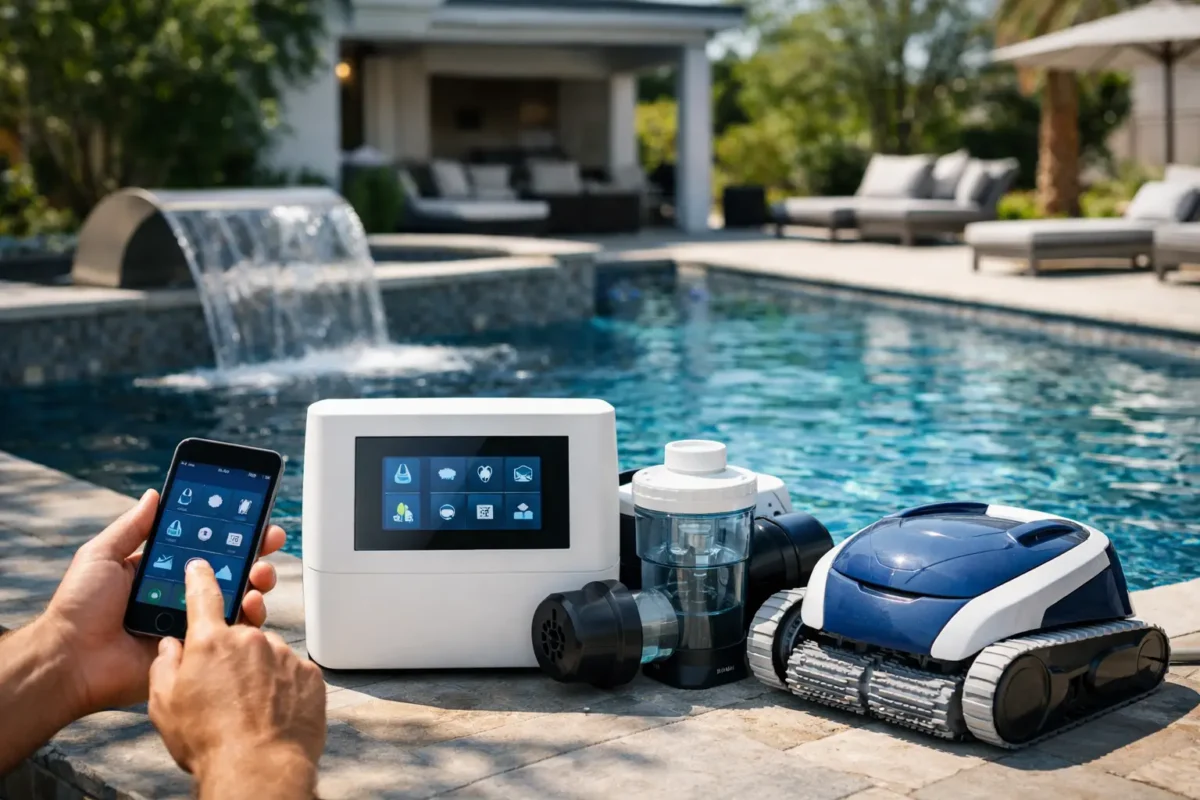
Pumps: Pool pumps provide the essential circulation required to filter all that water through the sanitation system. Choosing the properly sized, energy-efficient pump model ensures smooth flowing function without overworking the motor.

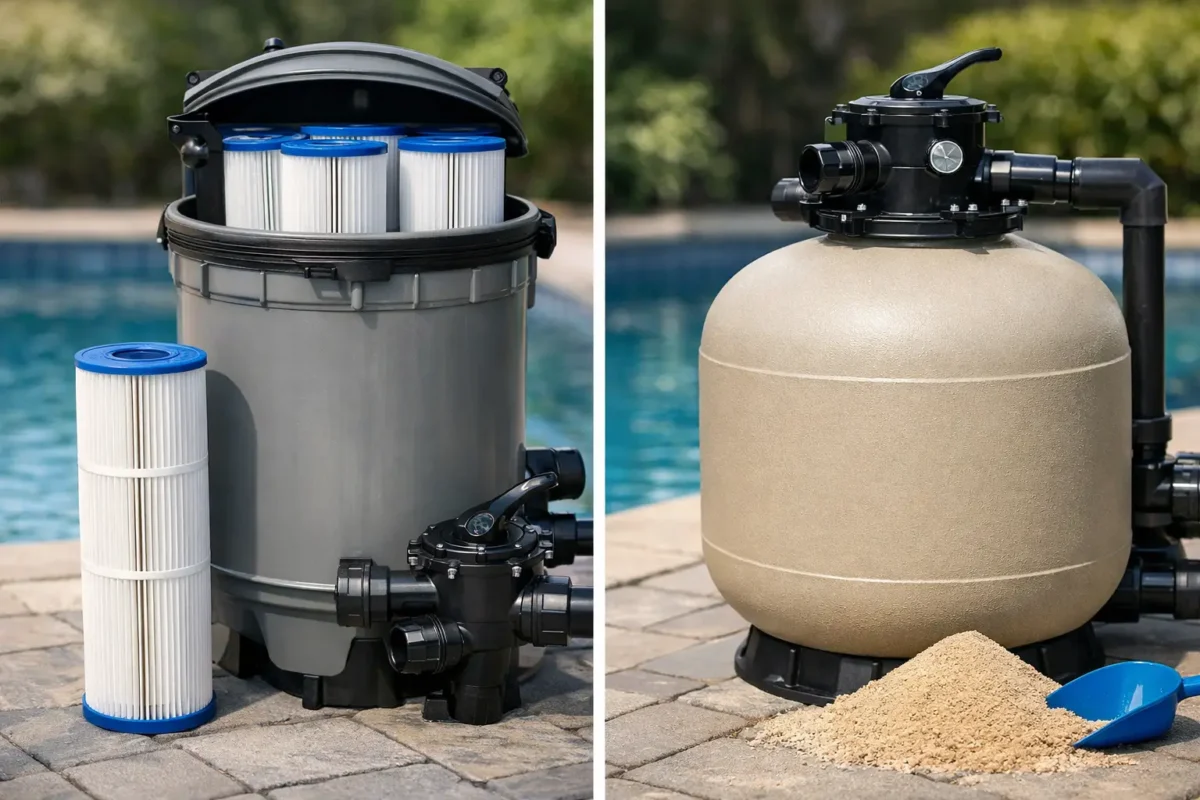
Filters: Effective filtration is what keeps those pool waters clean, clear and inviting. Multiple filter types exist—sand, cartridge and DE filters being some of the most popular options. Each has their own pros and cons to weigh according to your pool setup and local conditions.

Cleaning Tools: Even the most robust filtration system needs some manual assistance from time to time. Investing in a few key pool cleaning accessories like leaf skimmers, brushes, vacuum heads and the necessary hoses makes regular maintenance much more manageable.

Enhanced Features

Once you have the basic equipment established, the fun really starts with accessorizing your poolscape! Optional accessories range from functional to purely aesthetic, allowing you to upgrade the overall environment.

Pool Lights: Underwater LED light fixtures amp up safety for evening swims while also infusing your pool with brilliant decorative color effects. Programmable lighting options let you tailor colors and sequences to suit any mood or occasion.

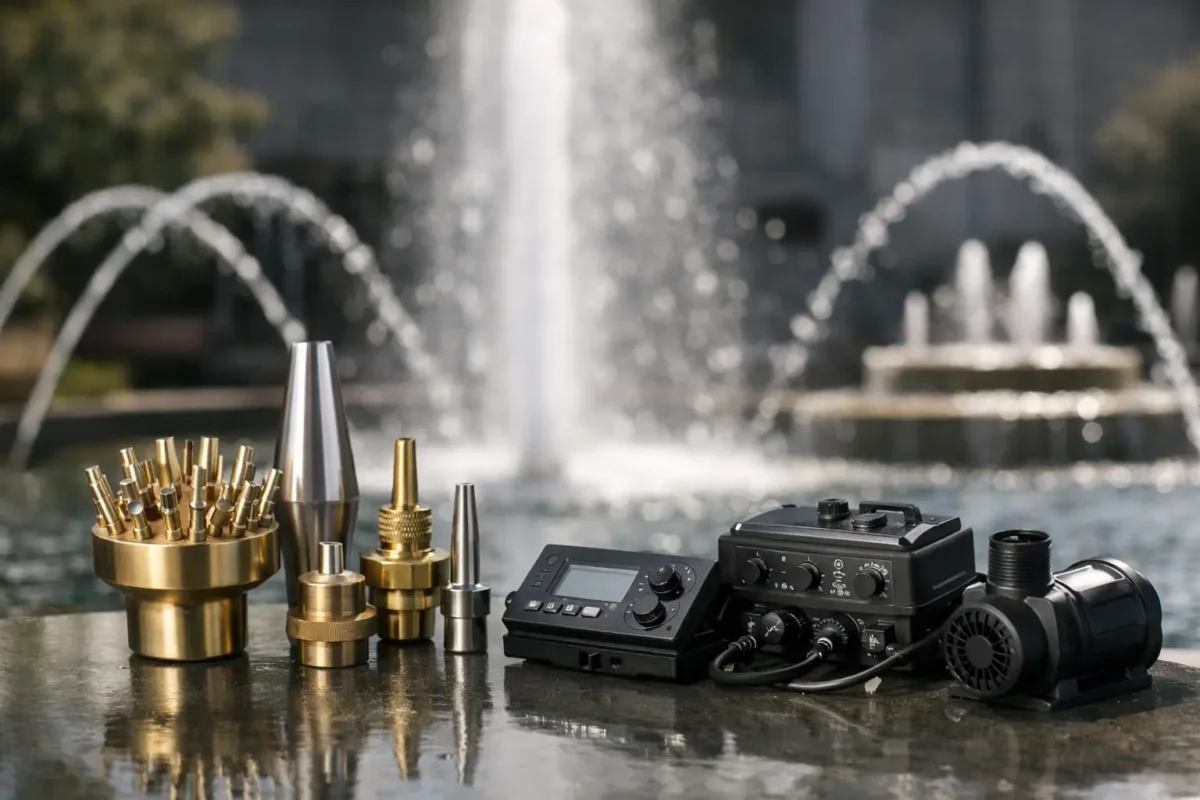
Pool Fittings: Truly customize your personal oasis by incorporating exciting water features powered by pumps. Choose from laminar jets, bubblers, waterfalls, spillways, fountains and more! Position and angle fittings to complement the contours of your pool.

Heating and Cooling Pumps: Don’t let mother nature limit your pool season! Heating and cooling pumps make it comfortable to take a dip beyond peak summer months so you can enjoy swimming nearly year-round depending on your climate.

Pool Safety Products: As a responsible pool owner, incorporating various safety-oriented accessories brings peace of mind. Gates, covers, alarms, disable switches, life rings, hook poles and more safeguard guests of all ages vulnerable around pool areas when unattended even briefly.

By incorporating must-have mechanical equipment along with special upgraded features into your poolscape, you maximize both function and fun! Reach out anytime to discuss tailoring robust packages of swimming pool accessories personalized to match your exact wishes.

Categories
Uncategorized

How Do Robotic Pool Cleaners Improve Pool Water Quality?

How Do Robotic Pool Cleaners Improve Pool Water Quality?

Maintaining clean and clear pool water is crucial for a safe and enjoyable swimming experience. Traditional methods of pool cleaning can be labor-intensive and less efficient. This is where robotic pool cleaners come in. These advanced devices offer a hands-free approach to pool maintenance and provide numerous benefits, including improving pool water quality significantly.

These pool cleaners can be programmed to operate on a consistent cleaning schedule, ensuring the pool remains clean and the water quality stays high. They are a must-have for any pool owner looking for a convenient and effective way to maintain their pool. Here, we’ll explore how these pool cleaners enhance pool water quality and why they are a must-have for any pool owner.

Robotic pool cleaners

Comprehensive Cleaning

The pool cleaners are designed to provide thorough cleaning of your pool. With advanced technology, these cleaners move methodically across the pool floor, walls, and even waterlines, scrubbing and vacuuming debris and contaminants along the way. In this way, their scrubbing brushes effectively remove dirt, algae, and biofilms from surfaces.  It helps to make your pool cleaner as well as clearer. 

Further, these cleaners use intelligent navigation systems to ensure no spot is left untouched. They can detect and avoid obstacles, ensuring a seamless cleaning experience. Additionally, many pool cleaners come with features such as programmable cleaning cycles and remote control operation for maximum convenience and customization.

Efficient Filtration

One of the most significant ways these pool cleaners improve pool water quality is through efficient filtration. These devices have built-in filters that trap particles and debris as they clean, keeping the water free from contaminants. Here, by capturing these unwanted materials, these pool cleaners reduce the strain on your pool’s main filtration system, allowing it to operate more efficiently and effectively. 

Moreover, many models offer adjustable filter cartridges or fine-mesh filters to cater to different types of debris, ensuring optimal filtration performance. So, this level of precision maintains water clarity and extends the lifespan of your pool’s equipment by reducing wear and tear.

Reduced Chemical Usage

Robotic pool cleaners‘ ability to remove debris and contaminants from your pool helps maintain balanced water chemistry. So, you don’t need to use chemicals such as chlorine and algaecides decrease. As a benefit, it reduces skin and eye irritation caused by excessive chemical exposure. 

Lower chemical usage is beneficial for the environment as well as for swimmers’ health. By efficiently removing organic matter and other pollutants, these cleaners contribute to the natural balance of your pool’s water. This, in turn, promotes a healthier aquatic ecosystem. Besides, it reduces the potential risks associated with over-chemicalization, such as corrosion of pool equipment and degradation of pool liners.

Consistent Cleaning Schedule

These pool cleaners can be programmed to operate on a consistent cleaning schedule. In this way, it ensures that your pool remains clean and the water quality remains high. By regularly removing debris and contaminants, these cleaners prevent the buildup of algae and bacteria that can cloud the water and affect its quality. 

Also, consistent cleaning helps maintain a healthy balance of chemicals, keeping your pool safe for swimming. Besides, many robotic cleaners offer customizable scheduling options. So,  you can set cleaning times based on your pool usage and preferences. As a benefit, this automated approach saves you time and effort. It also ensures that your pool stays inviting and ready for use whenever you desire.

Improved Circulation

As robotic pool cleaners move around your pool, they help improve water circulation. By circulating water throughout the pool, these cleaners distribute chemicals evenly and prevent stagnant areas where debris and algae can accumulate. As a result, this improved circulation promotes better water quality and helps maintain a balanced, healthy pool environment.

Ease of Maintenance

One of the key benefits of using a robotic cleaner is the ease of maintenance it provides. These devices operate independently. So, you can have sufficient time to enjoy your pool rather than spend it cleaning. Most robotic cleaners come with easy-to-clean filters and debris bags, making maintenance a breeze. By keeping the pool water consistently clean, these devices minimize the need for extensive maintenance and repairs.

Energy Efficiency

Robotic cleaners are significantly more energy efficient compared to other automatic pool cleaners, such as those powered by hydraulic filtration pumps or booster pumps. According to a 2010 study conducted by PG&E, published in 2012, robotic cleaners use just 197 kWh per year, costing around $59, while filtration and booster pumps can use up to 2,989 kWh annually, costing approximately $897. 

Robotic cleaners operate independently from a low-voltage power source, which eliminates the need for increasing pump speed during cleaning cycles. This allows pool filtration to operate at lower flow rates for longer periods, resulting in substantial energy savings. By replacing hydraulic cleaners powered by booster pumps, robotic cleaners eliminate the booster pump’s energy use, contributing to even greater energy efficiency.

Quiet Operation

Many robotic pool cleaners operate quietly. So, you don’t need to face the disruptive noise. This feature is especially appreciated during parties or gatherings, where a loud cleaning system can interrupt conversations and detract from the overall experience.

Long-Term Cost Savings

Although robotic cleaners may have a higher initial cost compared to traditional cleaning methods, they offer long-term cost savings. By improving water quality and reducing the need for chemicals, maintenance, and repairs, these devices can pay for themselves over time. Additionally, their energy efficiency helps keep operational costs low.

Advanced Technology

Robotic cleaners incorporate the latest technology, including smart navigation, multiple cleaning modes, and advanced filtration systems. These features help the devices to clean more effectively and efficiently, ensuring that your pool water remains crystal clear.

Closing Notes

Robotic pool cleaners offer a superior solution for maintaining pool water quality. Their comprehensive cleaning, efficient filtration, reduced chemical usage, and consistent cleaning schedules contribute to a healthier and more enjoyable swimming environment. Additionally, their ease of maintenance, energy efficiency, and quiet operation make them a valuable investment for any pool owner.

If you’re looking to improve the quality of your pool water and enjoy the benefits of a clean and safe swimming experience, consider investing in a robotic cleaner. These advanced devices offer long-term cost savings and contribute to a cleaner, greener environment. 

Do you want to buy a high-quality robotic cleaner to enhance your pool maintenance routine and elevate your swimming experience? Then choose Aquatic Pools and Fountains L.L.C.

Categories
Uncategorized

Must-Have Swimming Pool Accessories in Dubai

When the summer season approaches, it is time to unleash the swimming gear and explore fun in your swimming pool. There are several essential swimming pool accessories including swimming pool lights, swimming pool heaters, swimming pool umbrellas, and a lot of other related accessories available in the market. Choosing the best quality swimming pool accessories will make your pool experience more enjoyable and safer. The following are some of the necessary accessories from famous brands like Astral Pools to enhance the fun and safety of your swimming pool in the summer season.

Pool Heater

A pool heater can be used to enhance the water temperature in your swimming pool which allows a comfortable swimming experience in all seasons. Pool heaters normally use either gas, electric, or solar energy as a source of heat and they are adjustable for your desired temperature range. Make use of quality pool heaters for an enjoyable swimming experience worry-free of any weather conditions.

Heat Cool Pumps

The Heat Cool Pumps are the most energy-efficient heaters that can be installed in your swimming pool in Dubai. It will use a lesser amount of electricity than an electric heater and extract heat from the air and transfer it to your pool water which raises the temperature. Therefore, in a city like Dubai where you receive a consistently warm climate, a heat cool pump will be an ideal energy-efficient option for your pool.

Life Jackets

If you are a beginner or not a confident swimmer, you should wear a life jacket to ensure safety. Also, the life jacket is a necessary safety accessory for your children who are learning to swim. Life jackets can provide extra buoyancy and they are capable of preventing accidents in water.

Kickboards

Kickboards are also an important swimming pool accessory for learners who need to enhance their kick technique. Also, it is an efficient way to facilitate different varieties of your swim workout routine.

Pool Noodles

Pool noodles can add fun to your swimming pool experience in the summer season, they can be used for different purposes including floating, swimming, and more.

Swim Fins

To enhance the swimming technique, swim fins are a necessary choice that provides extra propulsion and makes you swim faster in an efficient way.

Improve Your Pool Experience with Essential Accessories

Apart from the above-mentioned swimming pool accessories, there are certain other necessary add-ons that you need to consider while installing your swimming pool including;

Swimming Pool Lights

Pool stores offer swimming pool lights including underwater lights to enhance the overall aesthetics and safety of your pool. These lights are important during night time to ensure better visibility and reduce the risk of accidents.

Pool Pumps

Pool Pumps from popular brands like Astral Pools can ensure proper water circulation which maintains the water quality by removing debris and contaminants from your swimming pool. The modern pool pumps come with diverse features including water energy-saving features that ensure sustainability.

Swimming Pool Umbrella

During the summer season, it is important to use a swimming pool umbrella that creates shades from intense sunlight. Swimming pool umbrellas are adjustable and removable, allowing flexibility in sun protection.

In conclusion, adding these pool accessories will make your swimming pool experience during summer more fun. Therefore, invest in these essential swimming pool accessories and stay protected from the hazards caused by the sun.

Aquatic Pools and Fountains has all the necessary pool accessories and products required for your swimming pool. Finding the best swimming pool accessories suppliers is not a daunting task now. Reach out to us and shop for the best quality swimming pool products.