Aquatic

Categories
Uncategorized

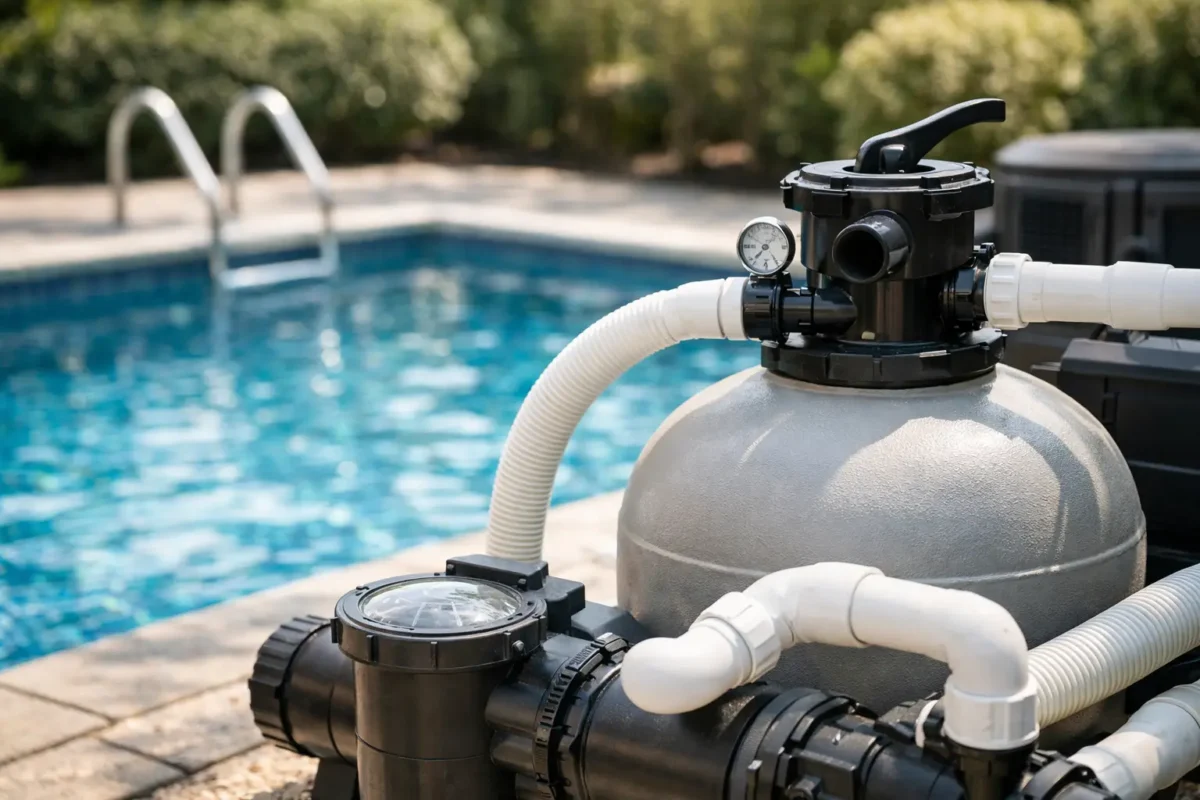
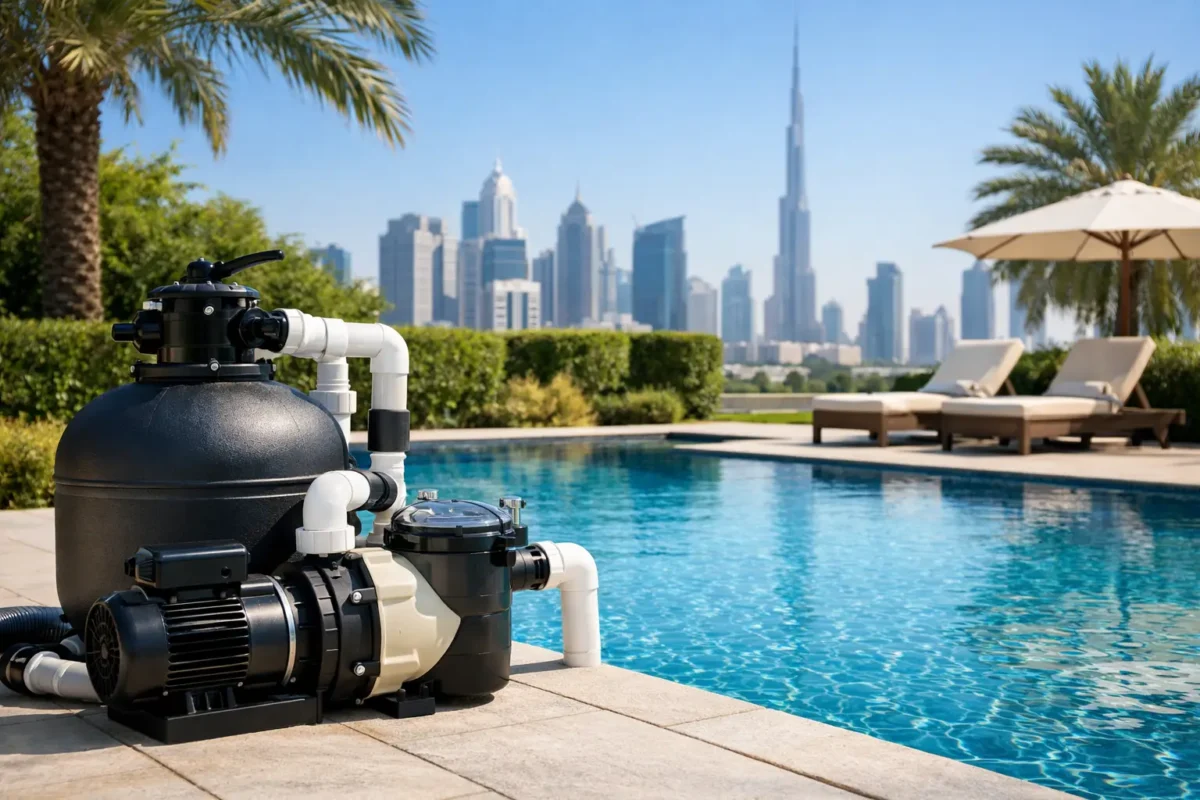
Variable Speed Pool Pump Review Guide

A variable speed pool pump review matters most when the old pump is too loud, power bills keep climbing, or pool circulation never feels quite right. For villa pools, hotel facilities, and commercial water features, the pump is not a background detail. It affects water clarity, operating cost, equipment life, and the daily experience of the space.

In premium pool environments, fixed-speed pumps often do one thing well – they run at full power whether the pool needs it or not. Variable speed models are built differently. They let you match motor speed to actual demand, which is where the real value begins. The right unit can lower energy use, reduce noise dramatically, and support more precise system performance across filtration, heating, water features, and sanitation.

Variable speed pool pump review: what makes it worth buying

The biggest advantage is energy efficiency. A variable speed pump can run longer at lower RPM while using far less electricity than a single-speed model. That is not just a technical claim. In properties where pumps operate daily for long hours, the cost difference becomes noticeable over time.

The second advantage is control. Instead of forcing maximum flow all day, you can schedule lower speeds for filtration, medium speeds for heating or cleaning, and higher speeds only when needed for waterfalls, spa jets, or backwashing. This flexibility is especially useful in larger pools or multi-function aquatic systems where one operating mode rarely fits everything.

Noise reduction is another major reason buyers upgrade. A quality variable speed pump operating at low or medium speed is substantially quieter than a conventional pump. For luxury villas, rooftop pools, hospitality spaces, and residential towers, this matters. Equipment should support the environment, not dominate it.

There is also a longer-term equipment benefit. Lower operating speeds can reduce strain on filters, pipework, heaters, and fittings. That does not eliminate maintenance needs, but it can contribute to a more balanced system when the pump is sized and programmed correctly.

What this variable speed pool pump review looks for

Not every variable speed pump deserves a premium label. A strong review focuses on five practical areas: motor quality, control options, hydraulic performance, build durability, and service support.

Motor quality comes first because that is where efficiency and reliability begin. A well-engineered motor should deliver stable performance across speed ranges without overheating or becoming erratic under continuous use. In hot climates, this matters even more. A pump that performs well in theory but struggles under high ambient temperatures is not the right investment.

Control options are often overlooked until the system is installed. Some pumps offer simple onboard programming. Others integrate with automation panels, timers, and smart pool controls. For residential buyers, ease of use is essential. For facility managers and commercial operators, precise scheduling and compatibility with broader plant systems are often more important than consumer-style app features.

Hydraulic performance is where marketing claims need careful reading. High horsepower does not always mean better circulation. A premium variable speed pump should deliver efficient flow across different operational demands, not just look impressive on a specification sheet. If the pump is mismatched to pipe size, filter type, or pool volume, performance will suffer.

Build durability is equally important. Materials, seal quality, housing design, and corrosion resistance all matter in demanding pool environments. Chlorinated systems, saline pools, and decorative water features place different stresses on equipment. A pump should be selected for the actual application, not just the catalog category.

Service support can decide whether a good product stays a good investment. Spare parts availability, technical backup, and installation quality all affect long-term satisfaction. This is one reason many serious buyers prefer working with a technical supplier rather than purchasing on price alone.

Where variable speed pumps perform best

For private villa pools, variable speed pumps are usually an easy upgrade case. Owners want quieter operation, lower utility costs, and cleaner water without constant manual adjustment. In this setting, the pump earns its value through comfort as much as performance.

For hospitality and commercial properties, the case is slightly different. The savings can be larger because operating hours are longer, but the system demands are also more complex. A commercial pool may need dependable turnover rates, coordination with heating systems, and consistent water quality under heavy use. Here, the pump must be part of a properly engineered equipment package.

Decorative fountains and mixed-use aquatic installations can also benefit, although the decision depends on the design intent. If the feature requires one fixed visual effect at a constant flow rate, the gains may be more limited. If usage patterns change by time of day or operating schedule, variable speed control becomes more valuable.

Common trade-offs buyers should understand

The most obvious trade-off is upfront cost. A variable speed pump typically costs more than a single-speed model. If the pool is very small, used infrequently, or already has minimal run hours, the payback period may be longer. That does not make the upgrade a poor choice, but it does mean the financial case varies by property.

Programming is another factor. A variable speed pump only performs as well as its setup. If speeds are poorly configured, you may not get the expected savings or circulation quality. This is where professional commissioning becomes valuable. A premium product still needs proper calibration.

There is also the issue of oversizing. Many buyers assume more power is safer. In practice, an oversized pump can create inefficiency, noise at higher settings, and unnecessary stress on the system. The goal is not to buy the biggest pump. It is to buy the right pump for the hydraulic conditions of the pool.

How to judge pump quality before you buy

Start with the application. Is the pump for a residential pool, a commercial facility, a spa circuit, or a fountain feature? Then look at flow requirements, pipe layout, filter size, and any connected equipment such as heaters, chlorinators, cleaners, or water features.

Next, consider how the pool is actually used. A family pool with quiet daily filtration needs a different operating profile than a hotel pool with long run times and heavier bather load. This is where a technical review becomes more valuable than a generic product ranking.

Pay attention to user interface quality. Controls should be clear, dependable, and practical for the people who will use them. A complicated panel may impress at first glance but become frustrating in day-to-day operation.

Then look at brand support and supplier capability. Premium equipment deserves proper installation, startup, and after-sales support. Aquatic Pools and Fountains works with buyers who need more than a box delivered to site. For luxury and commercial projects, that technical layer is often what protects the investment.

Variable speed pool pump review for UAE-style operating demands

In high-temperature environments, pools often run for long periods and equipment rooms can become challenging spaces. That means cooling, motor durability, and stable performance are not side notes. They are part of the buying decision.

For buyers managing villas, towers, hotels, and larger real estate assets, efficiency should be considered alongside reliability. A lower energy bill is valuable, but not if service interruptions or weak circulation create water quality issues. The best variable speed pump is the one that balances both.

This is why premium buyers tend to favor proven models from established manufacturers rather than choosing on price alone. A pump should support the broader goal: clear water, quiet operation, dependable circulation, and a polished ownership experience.

Final verdict

A strong variable speed pool pump is rarely the cheapest option, but it is often the smartest one for properties that prioritize performance, efficiency, and long-term value. When selected correctly, it delivers quieter operation, better control, and measurable savings without compromising water quality.

If you are comparing options, focus less on headline horsepower and more on proper sizing, control quality, and technical support. The right pump should fit the system, the property, and the standard of finish you expect. That is where a good purchase becomes a lasting upgrade.

Categories
Uncategorized

What Causes Pool Algae Growth?

A pool can look perfectly balanced one week and turn dull, cloudy, or green far faster than most owners expect. If you are asking what causes pool algae growth, the short answer is this: algae takes hold when water chemistry, circulation, cleaning, and environmental conditions fall out of control long enough for microscopic spores to multiply.

In premium residential and commercial pools, algae is rarely caused by one issue alone. More often, it develops from a combination of weak sanitizer levels, poor filtration, dead spots in circulation, heavy debris, warm water, and delayed maintenance. Once those factors overlap, algae moves quickly from a minor water quality issue to a visible problem that affects appearance, swimmer comfort, and system performance.

What causes pool algae growth in the first place?

Algae spores are always present in the environment. They enter pools through wind, rain, dust, landscaping debris, swimwear, and even pool accessories. On their own, those spores do not automatically create a bloom. The real problem starts when the pool gives them what they need to reproduce.

That environment usually includes low or inconsistent sanitizer, phosphates or organic contamination, sunlight, and areas where water does not circulate effectively. In a hot climate, the process becomes more aggressive. Warm water speeds biological activity, which means a pool in Dubai or anywhere in the UAE can develop algae faster than a pool in a milder region if maintenance is not precise.

This is why premium pool care is not just about adding chlorine when the water looks off. It requires a controlled approach to filtration, dosing, brushing, testing, and equipment performance.

Low sanitizer is the most common trigger

The most direct answer to what causes pool algae growth is inadequate sanitation. Chlorine or other disinfectants must remain within the proper range at all times, not only after a problem appears. If free chlorine drops too low, algae can begin colonizing surfaces and suspended particles before the water shows obvious signs of change.

This often happens after heavy pool use, rain, extreme heat, or a delay in chemical dosing. In some cases, owners believe sanitizer is present because test strips show some chlorine, but the water is still poorly protected due to imbalanced pH or high stabilizer levels. In other words, chlorine may be in the pool without working efficiently.

Commercial and hospitality pools are especially vulnerable if bather load is high and chemical demand is not matched properly. Residential pools can face the same issue after parties, landscaping work, or periods when the property is unoccupied.

Poor circulation creates algae-friendly dead zones

Even with good chemistry on paper, algae can still form where water movement is weak. Circulation matters because sanitizer must be distributed evenly throughout the pool. If water stagnates in corners, steps, tanning ledges, skimmer blind spots, or behind fittings, algae can begin attaching to surfaces in those areas first.

This is a common issue in larger pools, custom-shaped pools, overflow systems, and pools with design features that look elegant but require more thoughtful hydraulic performance. Undersized pumps, dirty filters, blocked returns, or limited run times all reduce circulation quality.

A high-end pool should not only look refined. It should operate with hydraulic efficiency. When circulation is engineered correctly, the system supports cleaner water, more stable chemistry, and fewer algae incidents.

Filtration problems allow contamination to build up

A pool filter does not kill algae, but it plays a central role in preventing the conditions that help algae thrive. Filters remove suspended debris and fine contaminants that would otherwise feed water quality problems. When the filter is dirty, undersized, damaged, or not run long enough, the pool carries a higher organic load.

That matters because algae does not need dramatic neglect to grow. It only needs a favorable opening. Poor filtration gives it one.

Sand filters with channeling, cartridges overdue for cleaning, and media systems that have not been serviced properly all reduce clarity and increase strain on sanitation. Facility managers sometimes focus on chemical correction while overlooking the fact that the filtration system itself is underperforming. In many cases, both issues need to be addressed together.

Water imbalance makes sanitizer less effective

Many pool owners think algae appears because there is “not enough chlorine.” Sometimes that is true, but chemistry is more nuanced than that. pH, total alkalinity, calcium hardness, cyanuric acid, and total dissolved solids all affect how the water behaves and how efficiently sanitizer performs.

If pH rises too high, chlorine becomes less active. If stabilizer levels are excessive, chlorine can become less responsive. If testing is infrequent or inconsistent, these imbalances can develop gradually until algae gains momentum.

This is one reason professional water testing systems and disciplined maintenance schedules matter in premium environments. Elegant pool design and world-class equipment still depend on chemical precision. Without that precision, the water becomes harder to control and more expensive to recover.

Debris, dust, and organics feed the problem

Leaves, pollen, dust, insects, sunscreen residue, body oils, and landscaping runoff all place a demand on the pool. In outdoor pools, especially in areas with wind and construction dust, this load can rise quickly. Every bit of contamination consumes sanitizer and adds nutrients that support algae growth.

If baskets are not emptied, surfaces are not brushed, and vacuuming is delayed, organics settle into corners and along the floor. Those areas become ideal starting points for algae, particularly mustard or green algae.

This is where regular physical cleaning is just as important as chemical treatment. A visually clean pool is not always a biologically clean pool, but a poorly brushed and debris-filled pool almost always becomes harder to sanitize properly.

Sunlight and heat speed up algae growth

Sunlight does not create algae on its own, but it accelerates the conditions that allow algae to spread. UV exposure can reduce chlorine strength, particularly in outdoor pools that are not stabilized correctly. Add high temperatures to the equation, and sanitizer is consumed faster while algae activity increases.

That is why algae problems often intensify in summer or during periods of extreme heat. Pools with shallow areas, decorative water features, or long hours of direct sun may require tighter monitoring than owners expect. The same applies to fountains and water displays where circulation patterns are different from standard swimming pools.

In hot climates, prevention must be proactive. Waiting for visible green water is already too late.

Inadequate brushing and surface cleaning

Algae does not always start in the water column. It often begins as a thin film on walls, steps, grout lines, ladders, and shaded surfaces. If those areas are not brushed regularly, algae can anchor itself and resist normal sanitizer levels.

This is especially relevant for textured finishes, tile lines, and decorative details where contamination can cling more easily. Pool owners who rely only on automatic circulation and chemical dosing may miss the mechanical cleaning needed to break up early growth.

Brushing is not a minor maintenance task. It is part of the control strategy. Once algae forms a protective layer on a surface, treatment becomes more demanding and chemical consumption rises.

Equipment issues can quietly create the right conditions

A failing pump, inaccurate dosing system, blocked suction line, damaged skimmer, worn filter components, or malfunctioning chlorinator can all contribute to algae growth without creating an immediate dramatic failure. The pool may appear to be operating normally while performance drops in ways that affect water quality every day.

That is why technical inspection matters. Reliable pool care is not just about products. It is about confirming that pumps, filters, disinfection systems, and testing tools are working as intended. For luxury properties and commercial facilities, overlooked equipment inefficiencies often become expensive water recovery problems later.

How to prevent algae before it becomes expensive

The best prevention strategy combines four things: stable sanitizer, balanced chemistry, strong circulation, and routine cleaning. Remove one of those pillars, and algae risk rises. Remove two, and the issue can escalate quickly.

For residential pools, that means scheduled testing, proper chemical dosing, brushing, skimmer cleaning, and filter maintenance. For commercial pools, the same principles apply at a higher standard, with tighter monitoring, stronger operational discipline, and professional oversight.

It also helps to think beyond symptom treatment. If algae keeps returning, the question is not only what product to add. The real question is what underlying condition is allowing regrowth – weak hydraulics, poor filtration, inconsistent testing, nutrient load, or neglected surfaces.

For clients who expect dependable water quality, visual excellence, and long-term system performance, working with a technically capable partner makes a measurable difference. Aquatic Pools and Fountains supports that standard with premium equipment, maintenance expertise, and the level of control required for demanding pool environments.

When algae shows up, it is usually a warning that the pool system needs more than a quick chemical correction – it needs attention to the details that keep great water consistently clear.

Categories
Uncategorized

Music Fountain Design for Premium Spaces

A well-executed music fountain changes how a space is experienced the moment the show begins. Water rises on cue, lighting shifts with precision, and sound gives the installation rhythm and presence. For luxury villas, hospitality venues, commercial developments, and public-facing properties, this is not just a decorative feature. It is a high-visibility asset that shapes first impressions, strengthens identity, and gives people a reason to stop, watch, and remember the setting.

In premium projects, the difference between a striking fountain and a disappointing one is rarely the idea itself. It comes down to engineering, equipment quality, programming accuracy, and long-term service support. A music fountain must do more than look impressive on opening day. It needs to perform consistently in demanding conditions, maintain visual clarity, and operate safely and efficiently over time.

What makes a music fountain work

A music fountain combines three systems into one coordinated performance – water movement, lighting control, and audio synchronization. The water effects are produced through pumps, nozzles, valves, and piping layouts designed to create specific patterns, heights, and textures. Lighting is layered into the fountain to highlight movement, define timing, and maintain visual impact after dark. Audio and control software then connect these elements so that each sequence responds to musical timing with accuracy.

That sounds straightforward, but the execution is highly technical. Water does not behave the same way in every environment. Wind exposure, basin dimensions, pump sizing, nozzle placement, and water quality all affect the final result. A design that looks impressive in a concept sketch may perform poorly if the hydraulic calculations and control logic are not developed correctly.

This is why serious fountain projects require more than product supply alone. They need technical planning, suitable equipment selection, and experienced installation teams that understand both aesthetics and system performance.

Why premium properties invest in music fountain features

For many property owners and developers, the appeal begins with visual prestige. A music fountain creates motion, sound, and light in a way that static landscape elements cannot. It turns an entrance plaza, courtyard, hotel frontage, or villa garden into a destination point.

There is also a practical commercial argument. In hospitality and commercial real estate, memorable environments support brand value. Guests photograph them. Visitors gather around them. Developers use them to reinforce a premium positioning. In residential settings, they elevate the atmosphere of the property and create a more tailored outdoor experience.

That said, not every site needs a large choreographed show fountain. In some cases, a more compact synchronized fountain delivers stronger results because it matches the scale and use of the property. The best decision is usually not the biggest option. It is the one that suits the location, audience, and operating expectations.

Music fountain design starts with the site

Before selecting jets, lights, or controllers, the project needs a clear site assessment. This is where many costly mistakes are avoided. The available footprint, viewing angles, ambient noise, drainage, electrical access, and surrounding architecture all influence the design.

A hotel entrance may require a fountain that performs beautifully from multiple arrival points without overpowering guest movement. A private villa may prioritize elegance, sound balance, and controlled spray patterns that do not affect adjacent finishes or seating areas. A commercial plaza may need a stronger visual program that holds attention across a larger open space.

Wind is one of the most underestimated factors. In exposed areas, very tall jet effects may lose shape, drift beyond the basin, or create unnecessary water loss. In these settings, designers often need to balance ambition with operational reality. Lower-profile effects, programmable variation, and wind-responsive controls can preserve the visual experience while protecting efficiency.

Core equipment behind a reliable music fountain

The visual performance of a fountain depends on hardware that can hold its accuracy over years of use. Pumps must be sized for pressure, flow, and sequence demands. Nozzles must be selected for the exact effect required, whether that is a vertical jet, fan pattern, mist effect, or dynamic burst. Underwater lighting must deliver strong output, dependable sealing, and consistent color performance.

Control systems are equally important. The choreography of a music fountain relies on well-integrated automation that can manage timing, speed variation, lighting scenes, and playback transitions without lag or instability. Poor controls create flat performances and recurring maintenance issues. Strong controls allow the installation to run repeatable shows while still giving operators flexibility to update sequences.

Water treatment should never be treated as an afterthought. Clean, balanced water protects equipment, preserves nozzle clarity, and keeps the display visually refined. In premium installations, filtration, disinfection, and water testing systems directly support appearance and service life.

The balance between aesthetics and maintenance

A fountain that is spectacular in theory but difficult to maintain quickly becomes a liability. This is especially true in hospitality, multi-property developments, and high-traffic commercial locations where downtime is visible and costly.

Good design considers service access from the beginning. Pump rooms, valve assemblies, lighting connections, and control panels should be positioned for practical maintenance. Basin finishes should be selected not only for appearance, but also for cleanability and durability. If a fountain requires excessive shutdown time for routine servicing, the owner will feel that burden very quickly.

There is always a trade-off between complexity and operational simplicity. More advanced show effects can create a stronger impression, but they also increase the number of moving parts, programming layers, and maintenance points. That does not mean complexity should be avoided. It means the design should match the operator’s capacity, budget, and performance priorities.

Where lighting and sound create the difference

Many fountain installations have water movement, but far fewer deliver a polished sensory experience. Lighting and sound are often what separate a basic feature from a premium one.

Lighting should not simply make the water visible. It should shape the show. Beam angles, color sequencing, brightness levels, and fixture placement all affect how cleanly the choreography reads at night. Harsh or poorly positioned lighting can flatten the display. Well-planned underwater lighting adds depth, contrast, and definition.

Audio also requires careful planning. The sound system must suit the environment, audience distance, and surrounding uses. A residential setting may call for controlled coverage and a more refined listening experience. A public or hospitality setting may need broader projection and stronger integration with the show program. Volume alone is not the answer. Clarity and balance matter more.

Why installation quality matters as much as product quality

Even world-class components can underperform if installation standards are weak. A music fountain depends on exact alignment, proper cable protection, hydraulic accuracy, waterproofing integrity, and reliable commissioning. The final tuning stage is particularly important because it adjusts the system from technical completion to actual performance quality.

Commissioning is where sequences are refined, pressure is balanced, lighting scenes are calibrated, and synchronization is tested under real conditions. It is also where practical issues are often identified, such as splash behavior, timing corrections, or visibility adjustments. Skipping this stage or treating it as routine usually leads to disappointing results.

For that reason, many clients prefer a full-scope partner rather than separate product suppliers and contractors. When design support, equipment sourcing, installation, and maintenance are coordinated, the project is far easier to control from both a quality and accountability standpoint.

Choosing a music fountain partner

Selecting a supplier or project partner for a fountain installation should go beyond catalogs and visuals. Clients should look for technical depth, product availability, proven installation capability, and after-sales support. These systems are not static ornaments. They are performance-based installations that require dependable service.

A strong partner will help define the right scale of project, recommend suitable branded equipment, and identify risks before they become expensive site problems. They will also understand the demands of premium residential and commercial environments, where finish quality, reliability, and presentation standards are high.

This is where companies such as Aquatic Pools and Fountains add real value. When a client needs more than hardware – when they need guidance, engineering support, installation precision, and ongoing maintenance – the quality of the partner becomes part of the final product.

Is a music fountain the right fit for every project?

Not always, and that is worth stating clearly. Some spaces benefit more from a quieter architectural fountain, a reflection feature, or a simpler illuminated display. If the site cannot support audio properly, if maintenance resources are limited, or if the visual context calls for restraint, a less complex feature may be the smarter investment.

But when the location, audience, and design ambition align, a music fountain can deliver exceptional value. It brings movement to architecture, adds identity to a property, and creates a premium visual experience that static elements rarely achieve.

The right fountain should feel effortless to the viewer even though it is highly engineered behind the scenes. That is the standard worth aiming for – not just a showpiece, but a dependable performance feature built to match the quality of the property around it.

Categories
Uncategorized

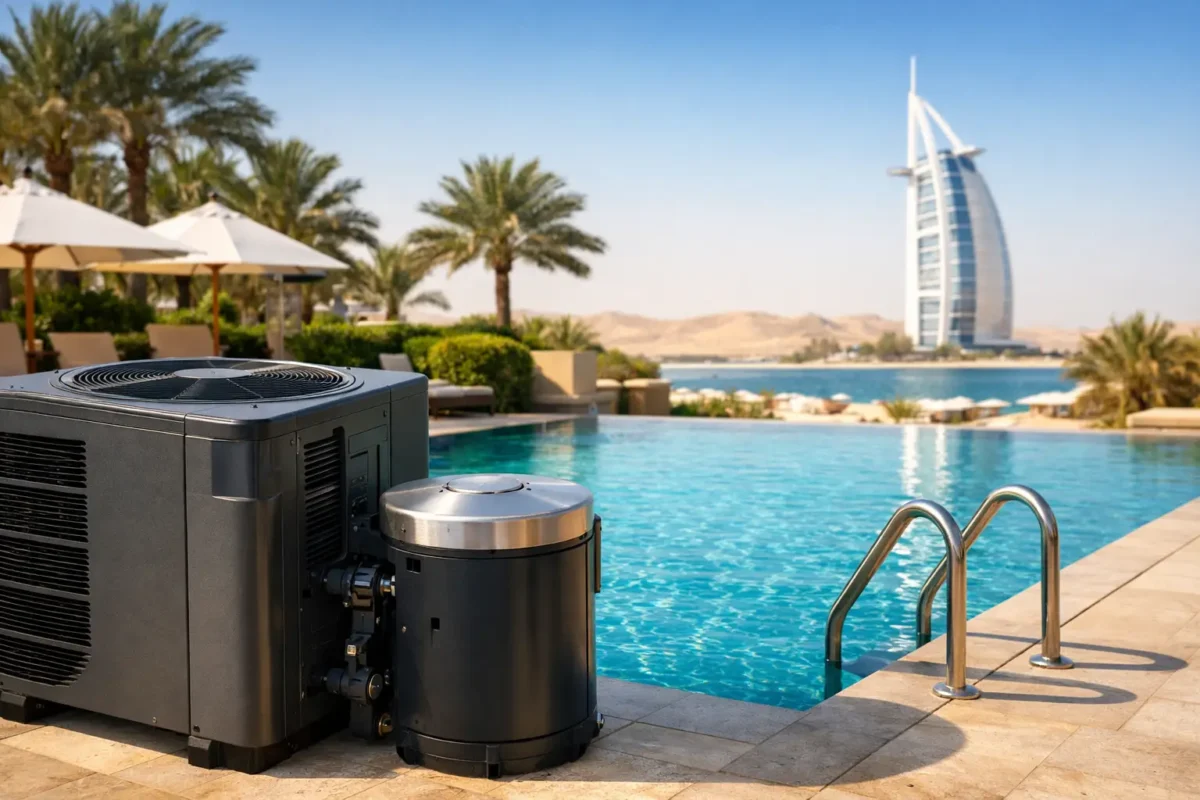
Pool Heater vs Heat Pump: Which Fits Best?

The wrong pool heating system usually reveals itself at the worst time – when guests are expected, occupancy is high, or a villa owner wants perfect water temperature without delay. That is why the pool heater vs heat pump decision deserves more than a quick price comparison. For premium residential and commercial pools, the right choice affects comfort, operating cost, maintenance planning, and long-term reliability.

In the UAE, that decision is rarely one-size-fits-all. A private villa pool in Dubai has different usage patterns than a hotel pool, a residential tower amenity deck, or a therapy pool with stricter temperature demands. The best result comes from matching heating technology to the property, the expected usage schedule, and the owner’s standards for performance.

Pool heater vs heat pump: the core difference

A conventional pool heater generates heat directly, usually through gas or electric resistance, and raises water temperature quickly. A heat pump works differently. It transfers heat from the surrounding air into the pool water, which makes it far more energy-efficient in the right conditions but slower to respond.

That distinction matters. If your priority is rapid heating on demand, a heater has a clear advantage. If your priority is lower long-term energy consumption for regular temperature maintenance, a heat pump is often the stronger investment.

Neither option is universally better. The right system depends on how the pool is used, how often it needs to be heated, and how much value you place on speed versus efficiency.

When a pool heater makes more sense

A pool heater is built for performance first. It can raise pool temperature fast, which is valuable when the pool is not heated continuously or when temperature needs to be adjusted with little notice. This is especially relevant for hospitality settings, event-driven properties, and owners who use the pool selectively rather than every day.

For example, a luxury villa owner may only want the pool heated on weekends or for evening entertaining. In that case, waiting for gradual temperature recovery may not be acceptable. A heater gives immediate control and faster results.

The same applies to some commercial environments. Therapy pools, training pools, and hospitality pools with strict guest expectations may need dependable heating regardless of outside air conditions. Where temperature precision and rapid recovery are priorities, a heater remains a practical solution.

The trade-off is operating cost. Direct heating is effective, but it generally consumes more energy than a heat pump over time. If the system runs frequently, those costs become more noticeable. That is why a heater often suits intermittent use better than continuous use.

When a heat pump is the better investment

A heat pump is designed for efficiency and steady performance. Instead of producing heat directly, it captures ambient heat and transfers it into the water. In warm climates, this can deliver excellent efficiency and significantly lower running costs compared with traditional heating methods.

For many UAE properties, this is a compelling advantage. Pools that are used consistently and kept within a target temperature range often benefit from the economics of a heat pump. Residential compounds, hotel leisure pools, and wellness-focused properties frequently prefer this approach because it supports comfort without excessive energy spend.

A heat pump is especially effective when pool heating is part of a routine operating plan rather than an occasional demand. If the goal is to maintain pleasant water temperature across a season, not create a rapid temperature jump in a few hours, the technology aligns very well with that requirement.

The main compromise is speed. A heat pump does not deliver the same immediate rise in temperature as a conventional heater. It performs best when allowed to work consistently and efficiently over time.

Cost is not just the purchase price

Many buyers start with equipment cost, but premium pool planning requires a broader view. The true comparison includes initial supply, installation requirements, electrical or fuel infrastructure, operating expense, maintenance expectations, and equipment lifespan.

A heater may have a different entry cost depending on the model and energy source, but the larger issue is usually what it costs to run. If the pool is heated often, a system with higher energy consumption can become expensive over the years.

A heat pump can offer stronger lifecycle value because of lower operating costs, particularly in climates where ambient conditions support efficient performance. For developers, facility managers, and commercial operators, that longer-term efficiency can have a meaningful effect on operating budgets.

This is why premium buyers should avoid choosing strictly on sticker price. The better question is what the system will cost over five or ten years while delivering the expected level of comfort.

Performance in UAE conditions

The UAE climate changes the conversation in an important way. Heat pumps generally perform well in warmer environments because they rely on extracting heat from the air. That makes them attractive for many properties in Dubai and across the region, where ambient temperatures support efficient operation for much of the year.

Still, application matters. If a pool must be heated quickly for occasional use, the climate advantage does not erase the response-time difference. A heat pump may be efficient, but it is not the ideal answer for every demand profile.

There is also the question of scale. Larger pools, high-bather-load pools, and pools exposed to wind or nighttime heat loss may need a carefully sized system to perform properly. Undersized equipment creates disappointment regardless of technology. Proper specification is what protects both comfort and operating efficiency.

Pool heater vs heat pump for villas, hotels, and commercial sites

For villas, the right answer often depends on lifestyle. If the owner wants quick heating for selective use, a heater may suit expectations better. If the pool is part of a daily wellness routine or family use pattern, a heat pump often delivers better long-term value.

For hotels and hospitality properties, the calculation becomes more operational. Guest satisfaction depends on dependable water temperature, but energy management matters as well. In many cases, a heat pump is attractive for baseline efficiency, especially for pools heated regularly. Where rapid recovery is critical, some operators still favor heater-based systems or a more specialized configuration.

For commercial and multi-residential developments, consistency, durability, and cost control tend to drive the decision. Facility teams usually need equipment that can maintain performance over time without excessive operating expense. That often makes heat pumps a strong candidate, provided the system is engineered correctly for the pool size and usage pattern.

Installation and maintenance considerations

High-quality equipment performs best when the installation is planned properly. That includes hydraulic integration, electrical requirements, ventilation considerations where relevant, control compatibility, and accurate sizing. Premium properties should treat heating equipment as part of the total pool system, not as an isolated add-on.

Maintenance also deserves attention. Heaters and heat pumps each have service needs, and those needs should be factored into procurement decisions. Commercial operators, in particular, benefit from working with a supplier that can support technical selection, installation, and after-sales service rather than simply delivering a unit.

That is where an experienced partner adds value. Aquatic Pools and Fountains supports clients with both product expertise and technical execution, which is essential when specifying heating solutions for luxury residential and demanding commercial environments.

Which option is right for you?

If speed is your top priority, a pool heater is often the better fit. It gives faster temperature rise and stronger on-demand performance, which is ideal for intermittent use or applications with strict timing requirements.

If efficiency and ongoing operating economy matter more, a heat pump is usually the stronger choice. It rewards consistent use patterns and can deliver excellent long-term value in the right climate.

For many premium properties, the answer comes down to usage behavior. How often is the pool heated? How quickly must it reach target temperature? Is the property owner focused on immediate performance, reduced energy costs, or a balance of both? Those are the questions that lead to the right specification.

The smartest pool heating decision is not about choosing the trendier option. It is about selecting a system that matches the property, the performance expectation, and the standard of experience you want every swimmer to feel the moment they step into the water.

Categories
Uncategorized

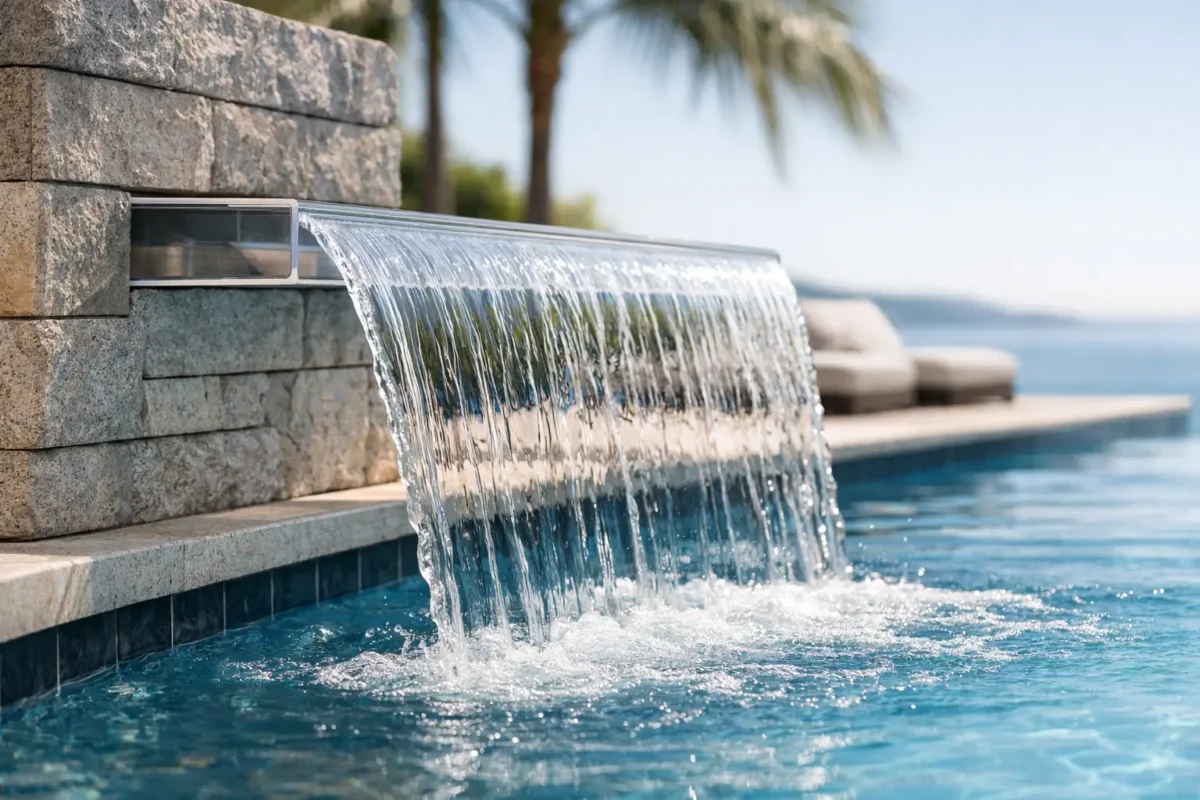
Curtain Waterfall for Pools and Fountains

A curtain waterfall changes the entire feel of a pool or fountain the moment water begins to fall in one clean, continuous sheet. For luxury villas, hospitality spaces, residential towers, and commercial landscapes, it is not just a decorative detail. It is a statement feature that adds motion, sound, visual depth, and a more refined finish to the overall aquatic design.

In premium projects, details matter. The wrong water feature can look dated, create splash issues, or demand more maintenance than expected. A well-specified curtain waterfall does the opposite. It delivers a controlled, elegant water effect while supporting the architectural language of the space, whether the project is modern, minimal, bold, or resort-inspired.

What a curtain waterfall adds to a project

A curtain waterfall is designed to release water in a smooth, even veil rather than in broken streams or irregular spill patterns. That visual consistency is what gives it its premium appeal. In a pool, it can create a dramatic edge feature or a striking wall installation. In fountains, it can become the main attraction or complement lighting, stone, tile, and structural finishes.

The effect is both aesthetic and sensory. Visually, it introduces movement without cluttering the design. Acoustically, it can soften surrounding noise and create a more private, relaxing atmosphere. In high-end residential settings, that often means a more immersive outdoor living experience. In hospitality and commercial properties, it means stronger visual impact and a more polished guest environment.

Not every project needs the same waterfall profile. The height of the drop, the width of the blade, the pump sizing, and the catch basin or receiving surface all shape the final result. A narrow indoor feature for a lobby wall requires a different technical approach than a broad outdoor curtain waterfall integrated into a large swimming pool.

Where a curtain waterfall works best

This feature is highly versatile, but it performs best when it is matched carefully to the surrounding architecture and hydraulic system. In villa pools, it is often installed on feature walls, raised bond beams, or custom cladded structures where the water sheet becomes a focal point from both the pool and seating area. The clean line of falling water pairs especially well with contemporary materials like porcelain, natural stone, textured concrete, and glass mosaic finishes.

For hotels and residential developments, a curtain waterfall can help define arrival spaces, podium amenities, spa environments, and landscaped recreation areas. In these settings, visual effect must be balanced with durability and service access. A feature that looks impressive on opening day but becomes difficult to maintain is not a premium solution.

Indoor applications also deserve attention. In enclosed spaces, sound levels, humidity, overspray, and lighting become more critical. The same feature that performs beautifully outdoors may need different flow calibration and basin detailing indoors. That is why product selection and installation quality matter as much as design intent.

Design decisions that affect performance

A curtain waterfall looks simple, but achieving a smooth water sheet requires precision. The water blade or weir must be manufactured to tight standards so the flow remains even across the full width. Any inconsistency in the lip, internal chamber, or supply pressure can interrupt the effect and turn a clean curtain into uneven strands.

Pump selection is equally important. Undersized pumps often create weak flow or inconsistent pressure. Oversized systems can produce excessive splash, noise, and water loss. The right setup depends on the width of the waterfall, installation height, pipe routing, and the desired visual intensity. Some clients want a soft, elegant veil. Others prefer a heavier, more dramatic sheet of water. Both are achievable, but the hydraulic design must match the goal.

Material choice also affects long-term results. Stainless steel components are popular for their clean finish and durability, especially in modern projects. In chemically treated pool environments or exposed exterior settings, corrosion resistance should never be treated as optional. If the feature is being integrated into a chlorinated or saline system, every component needs to be selected with that environment in mind.

Lighting can elevate the feature further, particularly in evening settings. Integrated LED lighting can transform a curtain waterfall into a standout nighttime element, but only when the installation is properly sealed, correctly aligned, and supported by reliable electrical planning. The visual result should feel precise, not improvised.

Curtain waterfall integration with pools and fountains

For swimming pools, integration should begin early in the design process. Retrofitting is possible, but it usually brings more structural, hydraulic, and finishing constraints. When planned from the start, the waterfall can be aligned with coping details, pool balance systems, circulation planning, and surrounding hardscape. The result is cleaner and more efficient.

In fountain applications, the curtain waterfall often works best as part of a coordinated composition. It may be paired with underwater lights, laminar jets, nozzles, bubbling effects, or reflective surfaces. The key is restraint. A premium fountain does not need every effect at once. It needs the right combination of effects, each performing exactly as intended.

There is also a practical side to this decision. A visually ambitious feature with poor service access can become expensive to operate and frustrating to maintain. Access panels, isolation valves, filtration support, and pump room planning should never be left as afterthoughts. Sophisticated water features still need sensible engineering behind them.

Common challenges and how to avoid them

The most common problems with a curtain waterfall are uneven flow, splash outside the intended zone, pump mismatch, and scale buildup along the blade. None of these issues are unusual, but they are easier to prevent than to correct later.

Uneven flow usually points to poor product quality, installation misalignment, or unstable water delivery. Splash problems often come from excessive drop height, wind exposure, or an incorrect receiving surface. In the UAE, wind and evaporation are practical concerns, especially for exposed outdoor installations. This does not mean a curtain waterfall is the wrong choice. It means the feature needs to be designed for the site rather than copied from a concept image.

Water quality management also plays a direct role. Mineral deposits, debris, and chemical imbalance can affect both appearance and performance. If the blade opening begins to clog or scale forms along visible edges, the water sheet loses its sharp, elegant finish. Regular inspection and correct water treatment protect the feature and reduce long-term service issues.

Why professional installation matters

A premium water feature is only as good as its execution. Even high-quality waterfall blades and branded hydraulic components can underperform if pipework is poorly configured, levels are off, or structural tolerances are ignored. This is why experienced technical support matters from product selection through final commissioning.

For developers, facility teams, and private owners, working with a supplier that understands both equipment and installation reduces risk. It also shortens the path between design intent and real-world performance. Aquatic Pools and Fountains supports this process with high-quality water feature equipment, technical guidance, installation expertise, and maintenance support tailored to demanding residential and commercial environments.

That combination matters because a curtain waterfall is not purchased for appearance alone. It is expected to operate reliably, look sharp over time, and complement the value of the wider property.

Choosing the right curtain waterfall for your space

The right specification starts with a few practical questions. How wide should the water sheet be? How visible is the feature from key viewing angles? Is the goal a calm background effect or a bold architectural statement? Will it operate daily, seasonally, or as part of a programmed fountain sequence?

Budget matters too, but premium buyers usually benefit more from value-based decisions than lowest-cost sourcing. A cheaper unit that creates maintenance issues, inconsistent flow, or premature corrosion is rarely cost-effective. For villas and luxury developments, the finish quality and reliability of the feature need to match the standard of the property itself.

It also helps to think beyond the waterfall in isolation. The surrounding pool equipment, filtration support, lighting design, control systems, and access planning should all work together. When those pieces are aligned, the feature feels effortless. When they are not, even a visually attractive installation can become operationally difficult.

A curtain waterfall is at its best when it looks clean, performs quietly and consistently, and feels fully integrated into the architecture. If that is the result you want, the specification should be treated with the same care as the rest of the project.

Categories
Uncategorized

Energy Efficient Pool Systems That Last

Running a pool in the UAE is not a small utility line item. Between long swim seasons, high ambient temperatures, and the need to keep water clean, clear, and comfortable, energy use adds up quickly. That is exactly why energy efficient pool systems have moved from a nice upgrade to a smart specification for villas, hospitality projects, residential developments, and commercial facilities.

For premium properties, efficiency is not only about reducing monthly costs. It is also about protecting equipment life, maintaining stable water quality, and choosing systems that perform well under demanding conditions. The right setup creates a pool that looks refined, operates quietly, and works with less waste across every major component.

What energy efficient pool systems actually include

A high-performing pool does not become efficient because of one product alone. It happens when pumps, filtration, heating or cooling, lighting, disinfection, and controls are selected as a complete operating system. If one component is oversized, outdated, or poorly matched, the entire installation can consume more power than necessary.

In practical terms, energy efficient pool systems usually begin with circulation. A modern variable-speed pump can dramatically reduce electricity use compared with a traditional single-speed model because it can run at lower speeds for longer periods rather than pushing maximum output all day. That matters because pool pumps are often one of the biggest ongoing energy consumers in any aquatic installation.

Filtration also plays a major role. Efficient filters reduce hydraulic resistance, support better water clarity, and help pumps operate with less strain. Pair that with correctly sized pipework, quality fittings, and well-planned circulation, and the system works with the property rather than against it.

Then there is temperature control. In the UAE, many pools require cooling during the hottest months, while some indoor or premium outdoor pools may also need controlled heating in winter. Heat-cool pumps are often a more efficient choice than older heating methods because they transfer heat rather than generating it in a more wasteful way.

Why the UAE market demands a smarter approach

Dubai and the wider UAE place different demands on pool equipment than cooler climates. Long operating hours, high evaporation, elevated dust levels, and constant exposure to heat all increase the workload on pumps, filters, and sanitation systems. An energy-saving claim that sounds good on paper may not deliver much in real-world local conditions if the system is not engineered properly.

This is where specification matters. A villa pool has very different operating patterns from a hotel pool, and a rooftop feature pool is not the same as a large community installation. Commercial projects often require stronger turnover performance, tighter water-quality control, and longer daily runtime. Residential clients may prioritize low noise, elegant integration, and reliable comfort with minimal intervention.

The best energy efficient pool systems are built around actual usage, bather load, design intent, and maintenance expectations. That is the difference between buying equipment and building a dependable solution.

The components that make the biggest difference

Variable-speed pumps

If there is one upgrade that consistently changes operating cost, it is the pump. Variable-speed technology allows flow rates to be adjusted throughout the day based on the pool’s real needs. Lower speeds use significantly less power, and they also reduce wear on equipment, decrease noise, and support steadier filtration.

The trade-off is upfront cost. A premium variable-speed pump costs more than a basic model. But on properties with frequent pool use, the long-term savings and quieter performance usually justify the investment.

High-efficiency filtration

A quality filtration system supports both efficiency and water appearance. When filters are properly matched to the pool size and circulation rate, they capture contaminants effectively without forcing the pump to work harder than necessary. This improves clarity and can reduce stress across the system.

The right choice depends on the project. Some sites prioritize easy maintenance access. Others need stronger performance for heavy bather loads. The key is avoiding undersized or mismatched filtration that creates chronic pressure problems and rising utility costs.

Heat-cool pumps

Temperature management can become one of the largest operating expenses in premium pool environments. Heat-cool pumps offer a strong balance of performance and control, especially for clients who want usable water temperatures across more of the year.

They are not identical in performance across all conditions, though. Equipment quality, installation method, ambient temperature, and ventilation all affect efficiency. A properly selected unit will outperform a cheaper alternative that was never sized correctly for the site.

LED lighting and smarter controls

Pool lighting is a smaller energy category than pumping or temperature control, but it still matters, especially in high-end properties where visual presentation is part of the experience. LED pool lights consume less power, last longer, and offer cleaner illumination than older technologies.

Add automated controls and timers, and the system becomes even more efficient. Pumps can run at different speeds for different tasks, lighting can follow schedules, and water treatment can be better coordinated with circulation. Automation does not replace good maintenance, but it does reduce waste caused by inconsistent operation.

Advanced disinfection systems

Efficient pool operation is not only electrical. Chemical efficiency matters too. Well-designed disinfection systems, including modern dosing and water testing solutions, help maintain stable water quality without overcorrection. That means better swimmer comfort, less chemical fluctuation, and less strain on surfaces and equipment.

For commercial and hospitality properties, precise water treatment is especially valuable. It protects the guest experience while supporting more consistent compliance and maintenance standards.

Design mistakes that raise costs over time

Many pools consume too much energy because of decisions made at the design or procurement stage. Oversized pumps are a common example. Bigger is not automatically better. A pump that is too powerful for the hydraulic design can waste electricity, create unnecessary noise, and reduce system balance.

Poor pipe sizing is another issue. Restrictive pipework increases resistance, which forces the pump to work harder. Low-grade fittings, weak valves, and poorly planned equipment placement also reduce efficiency over time.

Another frequent problem is fragmented sourcing. When equipment is selected from multiple places without technical coordination, compatibility issues are more likely. The result can be higher installation complexity, weaker performance, and more difficult maintenance later.

That is why experienced technical guidance matters. For premium residential and commercial projects, system efficiency should be considered from the beginning, not added as an afterthought after the build is complete.

Residential vs. commercial priorities

Homeowners often focus first on monthly savings, quiet operation, and ease of use. Those are valid priorities, particularly for luxury villas where the pool is part of a polished outdoor environment. In these cases, compact equipment layouts, discreet controls, and dependable automation often matter as much as raw performance numbers.

Commercial buyers and facility managers usually work from a broader performance framework. They need long-term reliability, parts availability, consistent water quality, and systems that can handle extended operating hours. Energy efficiency is still essential, but it has to come with serviceability and operational resilience.

This is where a premium supplier and service partner adds value. The goal is not simply to sell a pump, filter, or heat-cool unit. It is to specify components that work together, are supported by proper stock and technical knowledge, and can be maintained professionally over time.

Why maintenance is part of efficiency

Even the best equipment will lose efficiency if maintenance is neglected. Dirty filters, unbalanced water chemistry, blocked baskets, scale buildup, and worn seals all push systems to work harder. Energy use rises while performance falls.

Routine servicing protects the original value of the installation. It also helps identify issues early, before they become expensive failures. For high-end residential pools and heavily used commercial facilities, preventive maintenance is one of the simplest ways to protect both operating cost and water quality.

Aquatic Pools and Fountains works with clients who expect more than basic supply. They want premium equipment, technical confidence, and support that keeps the system performing to the standard the property deserves.

Choosing the right energy efficient pool systems

The right specification depends on the pool’s size, usage pattern, design features, and operational goals. A decorative residential pool may benefit most from low-noise circulation, LED lighting, and compact automation. A hotel or residential tower may need stronger filtration, advanced dosing, and heat-cool performance that can handle constant demand.

What matters most is choosing equipment with a long view. Lower operating cost is valuable, but so are durability, service access, brand quality, and the ability to maintain elegant performance year after year. Cheap equipment can reduce purchase price and still cost far more over the life of the installation.

A well-specified pool should look exceptional, feel comfortable, and operate with discipline in the background. When energy efficiency is built into the system from the start, the result is not only lower utility consumption. It is a smarter, more refined aquatic environment that performs like a premium asset should.

Categories
Uncategorized

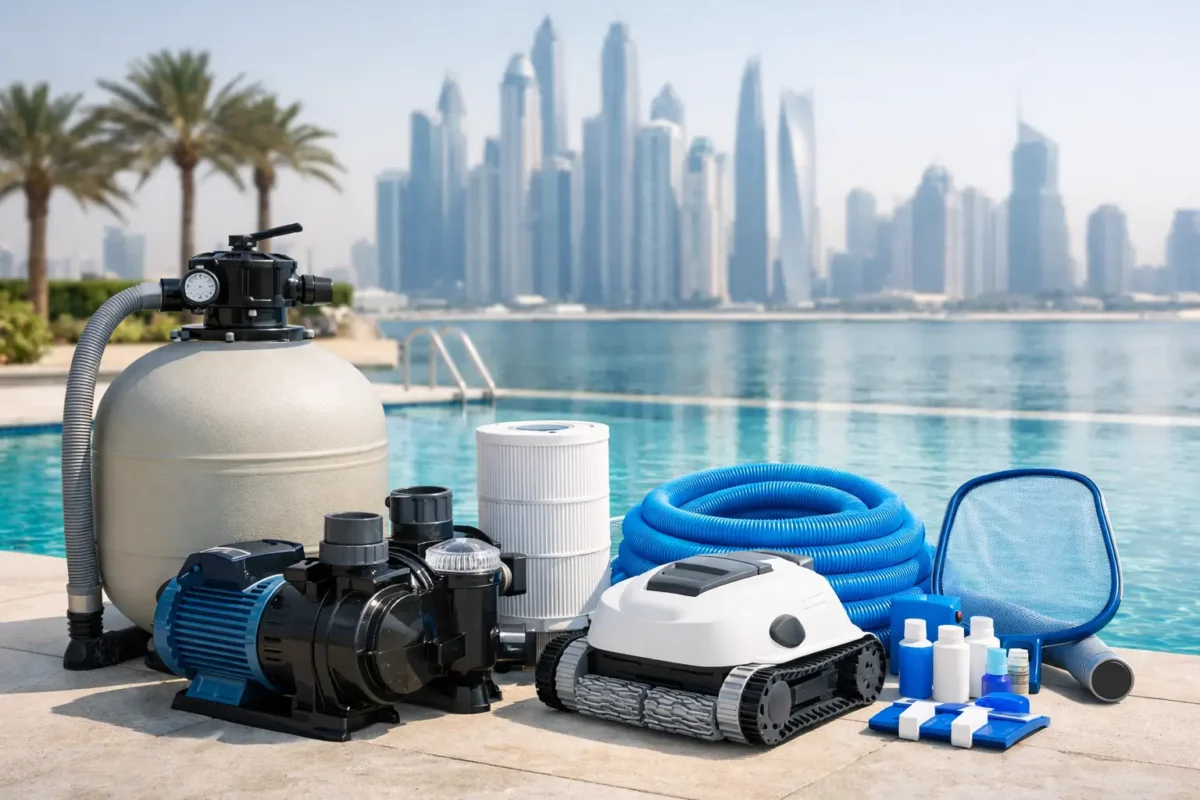
Pool Cleaning for Premium UAE Properties

A pool can look impressive from a distance and still be developing problems below the surface. Cloudy water, scale on the tile line, clogged filters, and poor sanitizer balance rarely happen all at once. More often, they build gradually until the water loses clarity, equipment works harder, and the overall finish no longer matches the standard of the property. That is why pool cleaning is not a cosmetic task. It is a core part of protecting performance, appearance, and long-term asset value.

For villa owners, hospitality operators, and facility managers in the UAE, expectations are high. Water must remain clear, inviting, and safe in demanding heat, frequent use, and dusty outdoor conditions. A premium pool environment depends on more than occasional skimming. It requires a disciplined cleaning program, the right equipment, and technical oversight that keeps every part of the system working as it should.

Why pool cleaning matters beyond appearance

Clean water is the visible result, but the real value of pool cleaning is operational. When debris stays in the pool, it strains circulation. When filters are overloaded, pumps work harder than necessary. When chemistry drifts, surfaces stain, fittings deteriorate, and swimmer comfort declines. In commercial settings, these issues can affect guest satisfaction and maintenance budgets at the same time.

There is also a clear difference between a pool that is merely usable and one that reflects premium standards. High-end residential and commercial properties are judged by presentation. Water clarity, clean finishes, balanced circulation, and stain-free surfaces all contribute to that impression. If the pool is part of a luxury villa, residential tower, hotel, or clubhouse, maintenance quality becomes part of the property brand.

The core elements of effective pool cleaning

Professional cleaning is a combination of surface care, water treatment, and equipment management. Focusing on only one area creates gaps. Skimming leaves behind chemistry issues. Chemical dosing without brushing allows algae and scale to develop. Vacuuming without checking filtration only addresses symptoms.

A complete approach usually starts with removal of floating debris, followed by brushing walls, steps, corners, and the waterline. Vacuuming or automated cleaning then removes settled particles from the floor. After that, basket clearing, filter inspection, circulation checks, and water testing confirm whether the system is supporting clean conditions or quietly working against them.

For premium installations, details matter. Overflow pools, decorative features, attached spas, water features, and custom lighting niches all introduce maintenance requirements that standard routines may miss. The right cleaning plan must match the design and usage of the pool, not just its size.

Water chemistry is part of pool cleaning

Many property owners think of cleaning as physical removal of dirt and leaves, but chemistry control is inseparable from the process. Water can appear acceptable and still be unbalanced. Poor pH control reduces sanitizer efficiency. High calcium levels contribute to scaling. Low sanitizer levels encourage algae and bacteria growth. Excess stabilizer or dissolved solids can also reduce water quality over time.

In the UAE climate, this becomes even more important. Heat, evaporation, dust, and heavy sunlight place constant pressure on balance. Pools that receive frequent top-ups or high bather loads need closer monitoring, especially in commercial and hospitality settings. Reliable testing and correct dosing protect both swimmers and equipment, while helping preserve tile, grout, metal components, and internal system parts.

Filtration and circulation decide the real result

A pool cannot stay clean if water is not moving properly. Circulation carries debris to baskets and filters, distributes chemicals, and prevents stagnant zones where algae can start. If return flow is weak, the pump is underperforming, or the filter is clogged, the pool may never achieve stable clarity no matter how often it is brushed.

This is where many maintenance problems become expensive. A neglected filter or blocked basket seems minor at first, but over time it can shorten pump life, reduce efficiency, and create repeat water quality issues. Strong pool cleaning programs always include filter care, basket cleaning, and inspection of pumps, valves, and other key components.

Common pool cleaning problems in UAE properties

The local environment creates specific challenges. Windblown dust and sand settle quickly and can make pool floors look dirty even after recent service. Intense sun accelerates sanitizer loss and increases water temperature, which can encourage algae if chemistry slips. Hard water conditions may lead to scale formation on tiles, fittings, and inside equipment.

There is also the issue of usage pattern. A private villa pool may face heavy weekend demand and quieter weekdays. A hotel or residential complex may have steady daily use and tighter appearance standards. These are not the same maintenance conditions, so they should not be treated with the same schedule.

Pools with water features, in-floor systems, heat-cool pumps, or advanced disinfection setups need cleaning teams that understand how these systems interact. Cleaning without technical awareness can lead to poor settings, wasted chemicals, or avoidable wear on expensive equipment.

How often should pool cleaning be done?

It depends on the pool type, surrounding environment, and service expectations. For many outdoor pools in the UAE, regular weekly service is the minimum for maintaining stable conditions. High-use commercial pools, hospitality environments, and heavily landscaped properties may require more frequent attention.

A luxury residential pool may look calm and simple, but if it is exposed to dust, direct sun, and warm temperatures, chemistry and debris can shift quickly. On the other hand, an indoor pool may collect less debris but still require close monitoring for water balance, filtration, and hygiene.

The right answer is not just frequency. It is consistency. A planned maintenance schedule with documented checks is far more effective than reactive cleaning after water quality has already declined.

Choosing the right equipment for better pool cleaning

Results depend heavily on the equipment behind the service. High-quality pumps, filters, testing systems, cleaning tools, and disinfection equipment make maintenance more accurate and more efficient. Inferior components often create recurring problems that get blamed on cleaning when the real issue is system performance.

For example, a well-matched filtration system improves clarity and reduces pressure on chemicals. Reliable water testing supports precise dosing rather than guesswork. Proper suction tools, brushes, and vacuum systems improve cleaning speed without damaging finishes. In larger commercial settings, equipment selection is even more important because downtime and inconsistency have immediate operational consequences.

This is why many property owners and facility teams prefer a partner that can supply products, provide technical guidance, and support ongoing maintenance in one place. When the service team understands the installed equipment, diagnosis is faster and standards are easier to maintain.

Professional pool cleaning vs in-house maintenance

There are cases where in-house teams can manage basic routines, especially for simple residential setups. Skimming, checking baskets, and monitoring obvious changes in water appearance are useful day-to-day actions. But premium pools and commercial installations usually require more than routine surface care.

Professional pool cleaning brings consistency, technical judgment, and access to the right materials and replacement parts. It also reduces the risk of overcorrecting chemistry, missing early equipment issues, or allowing hidden buildup to become a larger repair. For developers, hospitality operators, and high-end homeowners, that reliability matters. The goal is not just to keep the pool open. It is to keep it performing to a premium standard without interruption.

At Aquatic Pools and Fountains, this standard is built around quality equipment, skilled technical support, and maintenance practices suited to both luxury residential and demanding commercial environments.

What to expect from a premium pool cleaning partner

A strong service provider should do more than remove debris and leave. The real value comes from structured maintenance, accurate testing, equipment awareness, and the ability to recommend corrective action before issues become visible failures. That includes understanding pumps, filters, lighting, disinfection systems, fittings, and surface conditions as part of one operating environment.

Responsiveness also matters. Property managers and homeowners do not want delays when clarity drops, equipment performance changes, or a pool is being prepared for guests, tenants, or a handover. A capable partner combines stock availability, technical expertise, and service reliability so maintenance remains efficient and predictable.

In premium properties, pool cleaning is not a background task. It is part of protecting aesthetics, safety, and investment value. When the water is clear, surfaces are clean, and the system is running correctly, the entire space feels finished. That is the standard worth maintaining year-round.

Categories
Uncategorized

Choosing the Right Fountain Pump

A fountain that looks flawless in a design drawing can still disappoint on site if the fountain pump is undersized, poorly matched, or built for the wrong operating conditions. In premium residential and commercial settings, the pump is not a background component. It is the working core of the water feature, shaping visual impact, operating stability, and long-term maintenance demands.

For villa owners, developers, hospitality operators, and facility managers, this matters more than most people expect. A strong fountain design depends on more than nozzles and lighting. The wrong pump can lead to weak spray height, uneven patterns, excessive noise, unnecessary energy use, and premature wear. The right selection supports clean performance, refined presentation, and dependable daily operation.

Why the fountain pump matters so much

Every fountain is judged by what people see and hear. The water pattern must be consistent, the pressure must remain stable, and the system should run with minimal disruption. That places the fountain pump at the center of both aesthetics and performance.

A properly selected pump maintains the flow rate and pressure needed for the intended effect, whether the feature is designed as a gentle decorative accent in a private courtyard or a bold centerpiece for a hotel entrance. It also affects how the entire system behaves over time. Better pump matching means less strain on fittings, reduced vibration, and a more predictable maintenance schedule.

In the UAE, operating conditions add another layer of importance. Heat, dust, water quality variation, and continuous runtime can all put pressure on equipment. Premium installations need equipment that is selected not only for visual output but also for environmental durability and service life.

How to choose a fountain pump correctly

The first step is not selecting a brand or a motor size. It is understanding the fountain itself. The size of the basin, the height and shape of the spray, the number of nozzles, the pipe layout, and the desired visual effect all influence pump requirements.

Flow rate and head are the two core performance figures. Flow rate determines how much water the pump moves, while head reflects the resistance the pump must overcome to deliver that water through pipework and up to the nozzle. Many fountain performance problems come from focusing on one and ignoring the other. A pump may move plenty of water but still fail to create the correct display if the pressure is insufficient.

This is where technical matching becomes essential. A low decorative plume in a residential feature requires a very different approach than a multi-jet architectural fountain in a commercial development. The pump should be selected based on the actual hydraulic demand of the system, not on a rough guess or a generic replacement recommendation.

Surface pump or submersible pump?

This depends on the design and service priorities of the installation. Submersible pumps are often preferred for compact decorative fountains because they save space and can simplify installation. They are a practical option when the pump is intended to remain hidden within the water feature itself.

Surface pumps are more common in larger or more technically demanding systems where easier maintenance access, higher capacity, or centralized equipment control is required. In commercial environments, this can be a major advantage. Service teams can inspect and maintain the equipment without draining the feature or disrupting surrounding finishes.

Neither option is automatically better. The right choice depends on scale, access, operating hours, and maintenance planning.

What premium buyers should look for

A fountain pump should never be judged by purchase price alone. In high-visibility properties, the real cost comes from inconsistency, downtime, and early replacement. Premium buyers are better served by looking at material quality, performance stability, and service support.

Construction quality matters. Pumps used in decorative water features should be built with durable components suited to continuous operation and changing site conditions. Corrosion resistance, motor reliability, seal quality, and heat tolerance all affect long-term value. For projects in demanding climates, these details are not optional.

Noise control is another factor that deserves attention. In luxury villas, hospitality spaces, and executive commercial settings, excessive pump noise can undermine the elegance of the feature. Properly specified equipment, installed with the right hydraulic balance, helps maintain the refined experience clients expect.

Energy efficiency also plays a practical role. Some fountains run only for selected periods, while others operate for extended daily schedules. In larger developments or multi-feature properties, pump efficiency has a direct effect on operating cost. The right solution balances visual ambition with responsible energy use.

Common sizing mistakes and their impact

One of the most common issues is oversimplifying the application. People often assume that a larger pump guarantees a better display. In practice, an oversized unit can create instability, waste energy, and place unnecessary stress on the system. It may also force constant adjustment just to keep the visual effect under control.

Undersizing is equally problematic. A fountain may appear acceptable when first switched on, but once real operating conditions come into play, the spray pattern can weaken, become uneven, or fail to achieve the intended height. This is especially frustrating in statement installations where visual precision matters.

Another mistake is ignoring the interaction between the pump and the nozzle set. Nozzles are performance components, not decorative add-ons. The fountain pump and nozzle configuration must be selected together so the final effect is intentional rather than approximate.

Installation quality is part of pump performance

Even a high-grade pump can underperform if the installation is poorly executed. Pipe sizing, valve selection, suction conditions, electrical setup, and control integration all influence how the system performs in real use.

Professional installation protects both the equipment and the investment around it. In premium properties, fountain systems are often integrated into paving, landscaping, lighting, and architectural elements. A technical error does not just affect water movement. It can affect finishes, safety, maintenance access, and the presentation of the entire feature.

For this reason, experienced buyers usually prefer a supplier that can support specification, product selection, installation guidance, and ongoing maintenance rather than simply supplying equipment from stock. A pump is one component, but it works best when treated as part of a complete system.

Fountain pump maintenance and service planning

A well-selected fountain pump should deliver dependable performance, but no pump benefits from neglect. Regular inspection helps preserve output, protect internal components, and reduce the likelihood of service interruption.

Maintenance needs depend on the system design and water conditions. Debris buildup, blocked intakes, fluctuating water levels, worn seals, and electrical issues can all reduce performance over time. In commercial and hospitality settings, where appearance must remain consistent, preventive maintenance is usually more cost-effective than reactive repair.

This is especially relevant for properties with year-round presentation standards. A decorative fountain at a residential tower, resort, or retail destination is part of the overall brand impression. If the water feature is weak, noisy, or out of balance, visitors notice immediately.

When replacement makes more sense than repair

Not every pump problem should lead straight to replacement, but there are cases where upgrading is the better decision. If a pump is repeatedly failing, operating inefficiently, or no longer aligned with the fountain’s hydraulic requirements, continued repair may only extend the problem.

Replacement can also make sense when the visual design has changed. If nozzles, lighting effects, or water patterns have been upgraded, the original pump may no longer be the right fit. Matching the equipment to the new performance target protects the quality of the final result.

Choosing a supplier, not just a product

For residential and commercial buyers investing in premium water features, product availability is only part of the equation. Technical confidence matters just as much. The best outcomes come from working with specialists who understand pump curves, fountain hydraulics, installation demands, and long-term service realities.

Aquatic Pools and Fountains supports clients with a broad range of premium fountain equipment, technical guidance, installation support, and maintenance expertise for projects that demand both elegance and reliability. That matters when the expectation is not merely that the fountain runs, but that it performs beautifully day after day.

A fountain pump should be selected with the same care as any visible design element, because its impact is visible in every spray line, every reflected light effect, and every hour of uninterrupted operation. If the goal is a fountain that looks polished, performs consistently, and holds its standard over time, the right pump choice is where that result begins.

Categories
Uncategorized

Pool Chemicals That Keep Water Balanced

Crystal-clear water is never an accident. In a hot climate, a pool can shift from balanced to problematic faster than many owners expect, especially when high temperatures, direct sun, heavy use, and dust all work against water quality. That is why pool chemicals are not a minor maintenance detail. They are the foundation of safe swimming, equipment protection, and the polished appearance expected from premium residential and commercial pools.

For villa owners, developers, hospitality operators, and facility managers, chemical treatment is not just about keeping water blue. It is about protecting the full investment – tile finishes, pumps, filters, heaters, fittings, and automated systems. Poor balance can lead to cloudy water, scale buildup, corrosion, eye irritation, unpleasant odor, and avoidable wear across the entire installation. Well-managed chemistry does the opposite. It supports clean, comfortable water and helps every component perform as intended.

Why pool chemicals matter more than most owners realize

A swimming pool is a controlled water environment, but it is never static. Swimmers introduce oils, sunscreen, and contaminants. Wind carries in dust and debris. Heat accelerates chemical loss. If disinfection drops or balance shifts, problems begin quickly.

The right pool chemicals maintain three priorities at once. First, they sanitize the water by controlling bacteria, algae, and organic contaminants. Second, they stabilize balance so the water stays comfortable and does not damage surfaces or equipment. Third, they preserve visual quality, which matters just as much in luxury villas, residential towers, hotels, and high-visibility commercial properties.

This is where professional oversight makes a difference. Chemical treatment is not about adding products by routine alone. It is about understanding how one reading affects the next, and how the pool’s design, load, and environment change the treatment plan.

The core pool chemicals every pool depends on

Disinfectants are the first category most people think about, and for good reason. Chlorine remains the most widely used sanitizer because it is effective, dependable, and suitable for many pool types. Used correctly, it destroys harmful contaminants and supports healthy water conditions. However, chlorine levels that are too low reduce protection, while excessive dosing can irritate swimmers and waste product. The right target depends on usage, temperature, and the broader water balance.

pH control is just as critical. If pH rises too high, chlorine becomes less effective and scale can begin to form. If it falls too low, the water can become aggressive, which may affect metal components, grout, and finishes. This is why pH increasers and reducers play a central role in chemical management. They are not optional corrections. They are part of routine control.

Alkalinity products support pH stability. When total alkalinity is out of range, pH tends to swing unpredictably, making the pool harder to manage and more expensive to correct. Calcium hardness also deserves close attention. Water with low calcium can become corrosive, while high calcium contributes to scaling, especially in warmer conditions.

Then there are specialty treatments. Algaecides help prevent or control algae growth, particularly in outdoor pools exposed to sun and dust. Clarifiers and flocculants improve water clarity by helping fine particles collect for easier filtration or removal. Shock treatments are used when the water needs a stronger oxidizing action to break down waste and restore freshness. These products are useful, but only when applied in the right context. More chemical is not automatically better.

Water balance is not one number

Many pool owners ask for the ideal chlorine level, or the right pH target, as if one figure alone defines healthy water. In practice, balance is a relationship between several readings. Chlorine, pH, alkalinity, calcium hardness, stabilizer levels, temperature, and bather load all influence each other.

That is why testing matters as much as dosing. Reliable water testing systems allow technicians and operators to make accurate adjustments instead of guesses. A pool may look clean and still be chemically unstable. On the other hand, a temporary visual issue may not require aggressive treatment if the underlying chemistry remains sound.

For premium pools, especially those integrated into luxury landscapes or commercial amenities, this precision matters. Balanced water protects the finish, supports comfort, and reduces avoidable maintenance disruptions. It also helps extend the working life of pumps, filters, heaters, chlorinators, and disinfection systems.

Residential and commercial pools need different chemical strategies

Not every pool should be treated the same way. A private villa pool used by a family has very different demands than a hotel pool, a residential tower amenity, or a corporate leisure space. Usage frequency, water volume, exposure, and circulation patterns all shape the chemical program.

Residential owners often prioritize comfort, appearance, and ease of maintenance. They typically benefit from a simple, tightly managed treatment plan supported by dependable testing and periodic technical review. The goal is clean water without overcomplicating day-to-day care.

Commercial and hospitality environments require a more disciplined approach. Higher bather loads, longer operating hours, and stricter performance expectations mean water conditions can change fast. In these settings, pool chemicals must work alongside filtration, dosing systems, and regular service schedules. A reactive approach is rarely enough. Consistency is what protects both the user experience and the asset itself.

Climate changes the chemical equation

In the UAE, environmental conditions put extra pressure on pool water. Strong sunlight accelerates sanitizer depletion. Heat can encourage algae growth and increase chemical demand. Dust and debris add contamination and affect clarity. Decorative features, overflow systems, and premium finishes may also require closer monitoring to maintain their intended appearance.

This is one reason why off-the-shelf advice does not always translate well across regions. A treatment plan suited to a mild climate may underperform in a hotter, more demanding environment. Product quality also matters. Lower-grade chemicals may appear cost-effective at first, but inconsistent strength or poor formulation often leads to uneven results, more corrections, and unnecessary strain on the system.

For property owners and managers responsible for premium installations, it makes better sense to source quality-assured chemicals and support them with technical guidance. That is how water stays consistently clear, safe, and aligned with the standards expected in upscale residential and commercial settings.

Common problems pool chemicals help prevent

Cloudy water is one of the most common complaints, but it rarely comes from one cause alone. It may result from poor filtration, weak sanitizer levels, imbalanced pH, suspended particles, or heavy swimmer load. Chemical correction works best when paired with a proper system check.

Algae is another frequent issue, particularly in warm, sun-exposed pools. Green, yellow, or black algae can take hold quickly when sanitizer levels are not maintained or circulation is inadequate. In these cases, treatment may involve shock dosing, algaecide, brushing, and filtration support rather than a single-product fix.

Scaling and surface deposits often point to high calcium hardness or elevated pH. Corrosion can signal the opposite problem – water that is too aggressive. Eye irritation, strong chemical smell, and swimmer discomfort are also commonly misunderstood. These issues do not always mean there is too much chlorine. Often, they indicate imbalance or the presence of chloramines, which require proper oxidation and correction.

Choosing pool chemicals with a long-term view

The best buying decision is not always the cheapest container on the shelf. Professional buyers and quality-focused homeowners usually look at the full picture: product consistency, compatibility with equipment, storage requirements, technical support, and availability when replenishment is needed.

That is particularly important for larger properties and managed facilities. Running short on a critical treatment chemical or using the wrong formulation can create downtime, service disruption, and reputational issues. A reliable supplier adds value by helping clients choose the right products for the system, the pool size, and the operating conditions.

Aquatic Pools and Fountains supports this approach by combining quality product supply with technical knowledge, maintenance understanding, and a premium standard suited to both elegant private pools and demanding commercial projects.

When professional support makes the difference

Some pools are straightforward to manage. Others include heating systems, advanced disinfection, high-end finishes, water features, or variable usage patterns that make chemistry more complex. In these cases, guessing with pool chemicals can become expensive.

Professional support helps owners avoid two common mistakes: under-treating the water and over-correcting every issue. Both create instability. Skilled technicians look at the pool as a complete operating system, where chemical treatment, circulation, filtration, and equipment condition all need to work together.

For developers, hospitality operators, and facility managers, that level of support is not a luxury. It is part of responsible asset management. For homeowners, it offers peace of mind and a better ownership experience.

A well-maintained pool always shows its quality before anyone asks about it. The water looks cleaner, feels better, and places less stress on every system behind the scenes. With the right pool chemicals, chosen carefully and managed properly, that standard becomes easier to maintain day after day.

Categories
Uncategorized

How to Select Pool Filter the Right Way

A pool that looks impressive on day one can become a maintenance problem very quickly if the filtration system is undersized, mismatched, or chosen on price alone. If you are deciding how to select pool filter equipment for a villa, hotel, residential tower, or commercial property, the right choice comes down to more than brand preference. It starts with water volume, bather load, operating hours, and the performance standard you expect over time.

For premium residential and commercial pools, the filter is not a background component. It is one of the core systems that determines water clarity, chemical efficiency, equipment lifespan, and the overall user experience. A well-selected filter keeps circulation stable, reduces stress on the pump, and supports cleaner, more polished water with less operational disruption.

How to Select Pool Filter Based on Pool Type

The first mistake many buyers make is treating all pools the same. A private villa pool used by a family has very different filtration demands from a hotel pool, competition pool, rooftop amenity pool, or high-traffic community facility. The correct filter must match the real operating environment, not just the pool’s dimensions on paper.

For a residential pool, priorities usually include quiet performance, easy maintenance, reliable water clarity, and equipment that fits neatly into a compact plant room. For hospitality and commercial settings, the focus shifts toward heavier bather loads, more frequent circulation cycles, stronger debris handling, and serviceability under continuous use.

This is why filter selection should begin with application. The same tank size or media type that performs well in a low-use backyard pool may struggle in a commercial setting where oils, sunscreen, fine particles, and daily turnover rates place far greater demands on the system.

Start With Flow Rate and Turnover Time

If you want to know how to select pool filter systems correctly, start with hydraulics. The filter must be sized to handle the required flow rate without forcing the system to operate under unnecessary pressure. That means looking at the pool volume, desired turnover time, and the pump’s actual performance curve rather than choosing a filter by visual size alone.

Turnover time refers to how long it takes for the full volume of pool water to pass through the filtration system. Residential pools often allow more flexibility, while commercial pools typically require stricter circulation targets based on local operating standards and usage patterns. A filter that is too small may technically function, but it will often create higher pressure, shorter cleaning cycles, and more wear across the equipment set.

Oversizing can also be smart when done intentionally. A larger filter generally offers better dirt-holding capacity and lower operating pressure, which can improve efficiency and reduce maintenance frequency. The trade-off is a higher upfront cost and, in some cases, a larger installation footprint. In premium projects, that trade-off is often worth it because the long-term performance is more stable.

Choosing Between Sand, Cartridge, and DE Filters

Most pool filter decisions come down to three main types: sand, cartridge, and diatomaceous earth, often called DE. Each has strengths, and the right option depends on water quality goals, maintenance preferences, and how intensively the pool will be used.

Sand filters remain a popular choice because they are dependable, straightforward, and well suited to a wide range of residential and commercial pools. They are especially practical where durability, simple backwashing, and proven operation matter most. For larger properties and service-managed facilities, sand filtration often provides an excellent balance of performance and ease of operation.

Cartridge filters can offer finer filtration than standard sand systems and usually do not require backwashing, which helps conserve water. That can be attractive for certain residential installations. However, they require manual cartridge cleaning and replacement, so they are not always the best fit for high-use commercial sites where maintenance teams need faster service routines.

DE filters are known for very fine particle removal and can produce exceptional water clarity. They are often considered where visual finish is a top priority. The trade-off is that they are generally more maintenance-intensive and may not be the preferred choice for every operator or every regulatory environment.

For many premium pools in the UAE climate, sand filters with the correct media grade, proper sizing, and professional setup remain a strong solution because they combine resilience, consistent throughput, and manageable servicing.

Filter Media Matters More Than Many Buyers Expect

The filter tank is only part of the equation. The media inside it has a direct impact on how effectively particles are captured and how often the filter needs cleaning. Standard silica sand is widely used and performs well when the system is sized correctly and maintained properly. Glass media is another option that some buyers consider for improved filtration efficiency and lower channeling risk.

Media choice should not be made in isolation. It needs to be compatible with the filter design, operating pressure, and expected maintenance schedule. A premium installation benefits from matching the vessel, media, and hydraulic design as one system. That is where technical guidance becomes valuable, especially on high-end projects where water quality expectations are non-negotiable.

Consider Installation Space and Service Access

A filter may look ideal on a specification sheet and still be the wrong choice if it does not suit the plant room. Access for installation, backwashing, valve operation, media replacement, and routine servicing all matter. In compact equipment rooms, vertical clearance and pipe layout can limit your options more than expected.

This becomes especially important in villas with tight service areas or in commercial developments where multiple systems share the same back-of-house space. Choosing a filter without considering maintenance access can create avoidable service delays and higher labor costs later.

At Aquatic Pools and Fountains, this is one of the areas where professional equipment planning makes a measurable difference. The best filter is not only the one that performs well on paper, but the one that can be installed cleanly, serviced efficiently, and supported over the long term.

Match the Filter to Water Conditions and Usage

Not all water challenges come from debris. Fine dust, body oils, cosmetics, sunscreen, landscaping contamination, and heavy swimmer loads all affect filtration performance. In hot climates and luxury outdoor environments, pools may also deal with more frequent dust exposure and higher evaporation-related chemical fluctuations.

That means selecting a pool filter should reflect actual water conditions, not just generic assumptions. A lightly used plunge pool has a different profile from an infinity pool at a high-end villa, and both differ significantly from a hotel or wellness facility with continuous traffic.

If your goal is polished, crystal-clear water with fewer interruptions, a properly sized filtration system with the right media and valve setup is essential. In many cases, spending more on the correct specification at the start reduces service complications and operating costs later.

What to Look for in Build Quality

In premium projects, build quality should be evaluated carefully. The filter tank material, corrosion resistance, pressure rating, valve construction, internal laterals, and manufacturer reputation all matter. Lower-grade components may reduce initial cost, but they often show their weakness under heat, pressure fluctuations, and repeated service cycles.

For residential buyers, this can mean premature wear and more maintenance calls. For commercial operators, it can mean downtime, guest complaints, and higher replacement costs. A high-quality filter should be designed for durability, stable hydraulic performance, and dependable operation over years, not just one season.

This is why experienced buyers often prioritize globally trusted brands and properly supported products over the cheapest available option. Long-term value comes from performance consistency, spare parts availability, and technical support as much as from the filter itself.

How to Select Pool Filter Without Overbuying or Undersizing

The smartest filter choice usually sits between two mistakes: buying too small to save money or buying purely by maximum size without considering the full system. The right specification balances pool volume, pump output, usage intensity, maintenance resources, and space constraints.

If the pool is residential and designed for elegance, quiet operation and low-maintenance performance may be the deciding factors. If the pool is commercial, reliability under load and service practicality often carry more weight. In both cases, the filter should be part of a coordinated equipment package rather than a standalone purchase.

A filter does not work alone. Its performance depends on how it integrates with the pump, valves, pipe sizing, water treatment system, and the overall circulation design. When these elements are aligned, water quality improves and operations become more predictable.

The best approach is to treat filter selection as a technical decision with visible results. Clear water, efficient circulation, and dependable maintenance do not happen by accident. They come from choosing equipment that fits the project precisely, performs under real conditions, and supports the standard of pool experience you want to maintain. When you select with that level of care, the filter stops being just another component and becomes part of the property’s long-term value.