Aquatic

Categories
Uncategorized

9 Deck Jet Water Feature Ideas That Impress

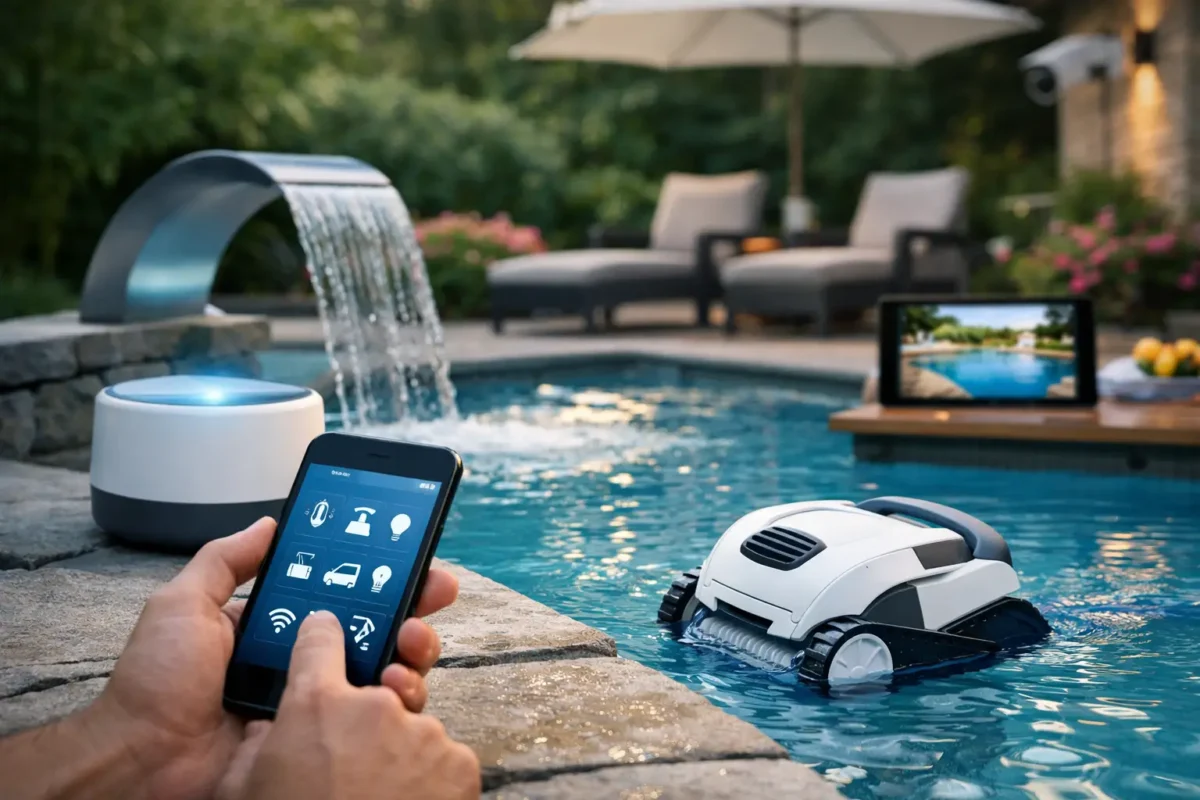
A pool can look complete on paper and still feel flat in person. The difference is often movement. The right deck jet water feature ideas add motion, sound, lighting, and a stronger sense of luxury without overcrowding the poolscape. For villas, hospitality properties, and premium developments, deck jets can turn a standard perimeter into a more refined and memorable aquatic environment.

Why deck jets work so well in premium pool design

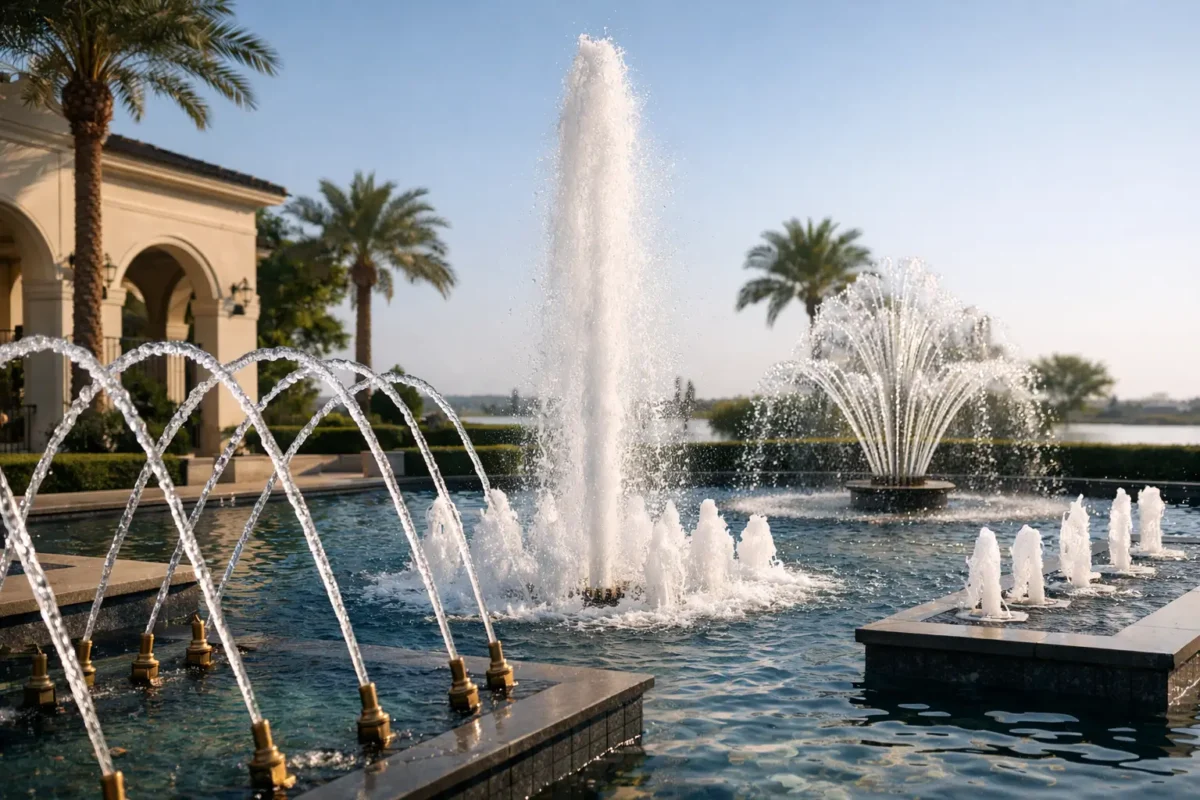
Deck jets are popular because they deliver a clean visual effect with relatively little visual bulk. Water arcs from the deck or surrounding hardscape into the pool, creating a dynamic feature that feels elegant rather than heavy. Unlike large fountain structures, deck jets preserve open sightlines, which matters in modern residential projects and commercial spaces where architectural clarity is part of the design.

They also perform well across different project types. In a private villa, deck jets can create a resort-style atmosphere without overwhelming the space. In hotels, residential towers, and commercial leisure areas, they add a premium finish that guests immediately notice. When paired with quality pumps, controls, and lighting, the result is not just decorative – it is engineered for consistency, durability, and long-term visual impact.

1. Symmetrical deck jets along one pool edge

One of the most reliable deck jet water feature ideas is a straight, evenly spaced row along a single long edge of the pool. This layout creates order, rhythm, and a strong architectural line. It works especially well with rectangular pools, lap pools, and minimalist villa designs where symmetry supports the overall concept.

The main advantage is control. A single-edge installation is easier to balance hydraulically and often more cost-efficient than a full perimeter layout. It also gives the feature a strong focal direction, which can help frame a seating area, sun shelf, or outdoor lounge.

2. Cross-pool arcs for a more dramatic visual effect

If the goal is greater impact, deck jets can be installed on one side with longer arcs reaching deeper across the pool. This creates a more theatrical look and adds a stronger sense of movement, especially in the evening when lighting is integrated.

This option demands more precision. Arc height, pressure consistency, and wind exposure matter much more when the water stream is longer. In open outdoor settings, especially in warm and breezy climates, these installations need careful engineering to avoid overspray and uneven performance.

3. Deck jets framing a shallow lounging area

A shallow shelf or tanning ledge is one of the best places to use deck jets. The water movement activates an area that may otherwise feel static, and the lower depth enhances the visual effect of water entering the surface.

This is a strong choice for family villas and hospitality projects where the shallow zone is already a visual centerpiece. The streams can be kept lower and softer for a more relaxed atmosphere, or designed with LED illumination for a sharper night presentation. The trade-off is that splash control becomes more important in areas where people sit close to the waterline.

4. Corner deck jets for a clean modern finish

Not every installation needs a long row of nozzles. In some projects, four deck jets placed near the corners of the pool create enough movement to elevate the design without making the feature dominant. This approach suits compact pools, geometric layouts, and properties where restraint is part of the luxury language.

Corner placements can also support better visual balance. Instead of concentrating activity in one section, they define the pool perimeter more subtly. For clients who want premium detailing without a highly animated water effect, this is often the right middle ground.

5. Illuminated deck jets for night use

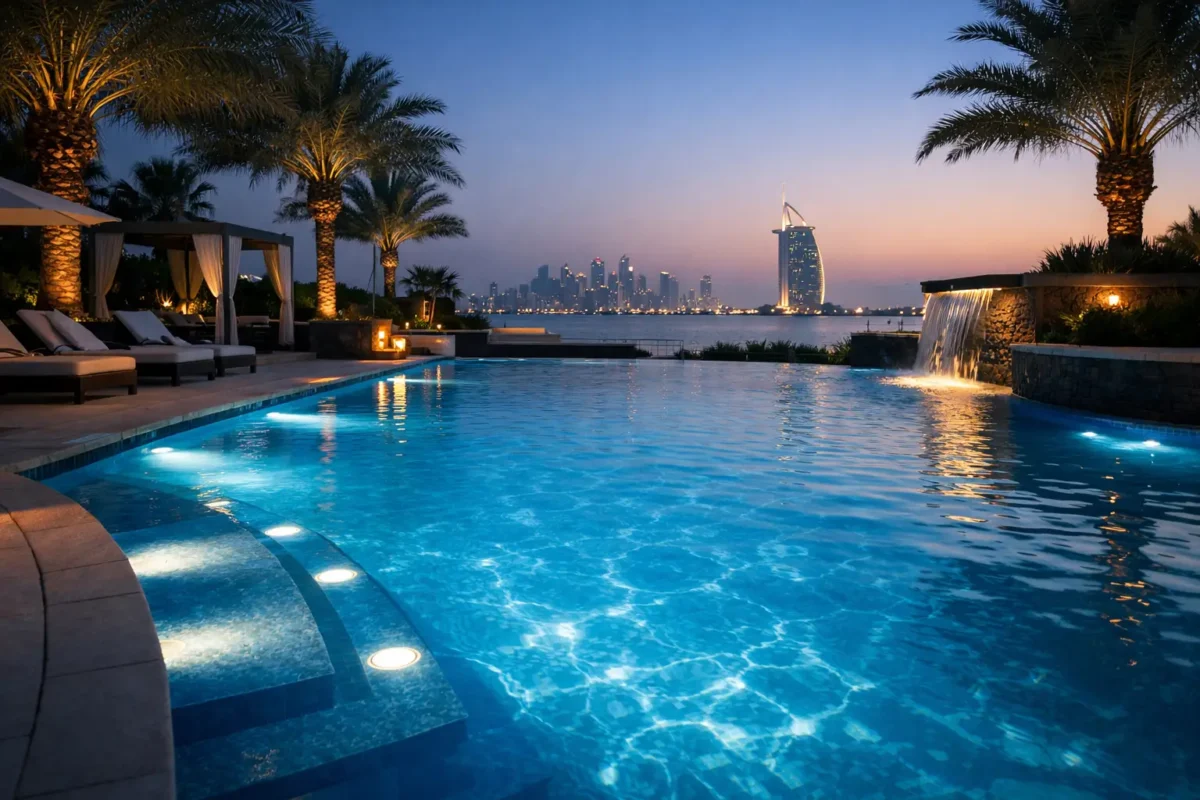
Lighting changes how deck jets are perceived. During the day, the appeal comes from shape and motion. At night, illuminated streams introduce color, definition, and a stronger sense of occasion. This is one of the most effective deck jet water feature ideas for hotels, entertainment areas, and upscale residences designed for evening use.

White light keeps the result crisp and sophisticated. Color-changing LEDs can work as well, but only when they are used with discipline. In luxury projects, too much color variation can cheapen the visual language. A controlled lighting scheme usually delivers a more premium result and aligns better with contemporary architecture.

6. Deck jets paired with overflow or infinity details

For higher-end projects, deck jets can be integrated with other water effects rather than treated as a standalone feature. One of the strongest combinations is deck jets with an overflow edge or infinity visual line. The contrast between arcing water and a calm vanishing edge creates depth and layered movement.

This combination needs technical coordination from the start. Hydraulic load, circulation planning, and catchment behavior all need to be considered together. When done correctly, the installation feels deliberate and high-value. When added late in the design process, it can create operational compromises.

7. Entry-side deck jets that define arrival

In large villas and hospitality settings, deck jets are not limited to the main swimming zone. They can be used near arrival edges, entry bridges, or pool approaches to create a stronger first impression. This gives the water feature a role in the broader landscape composition, not just the pool interior.

This idea works best where the pool is visible from the main approach or entertaining area. It helps establish the property’s standard immediately. The key is proportion. If the entry feature is too aggressive, it competes with the architecture instead of supporting it.

8. Deck jets integrated with a linear hardscape concept

Modern projects often depend on disciplined lines and material consistency. In that setting, deck jets should feel built into the hardscape rather than added on top of it. Narrow slot details, concealed fittings, and flush finishes help maintain a clean appearance when the feature is off.

This is where product quality matters. Inferior fittings or poor installation can disrupt the finish, stain surrounding materials, or create alignment issues that become obvious very quickly. Premium projects require deck jet systems that match the same standard as the rest of the pool equipment and surrounding finishes.

9. Programmable deck jets for commercial impact

For commercial buyers, static beauty is not always enough. Hotels, mixed-use developments, and entertainment-focused properties may benefit from programmable deck jets that allow different sequences, heights, or lighting scenes. This creates a more interactive visual identity and supports the brand experience of the property itself.

That said, programmable features are not automatically the better choice. They involve more controls, more commissioning, and more maintenance attention. In a luxury private residence, a simpler fixed-arc system may provide a cleaner and more dependable result. The right answer depends on how the space will be used and who will operate it long term.

What matters technically before choosing a design

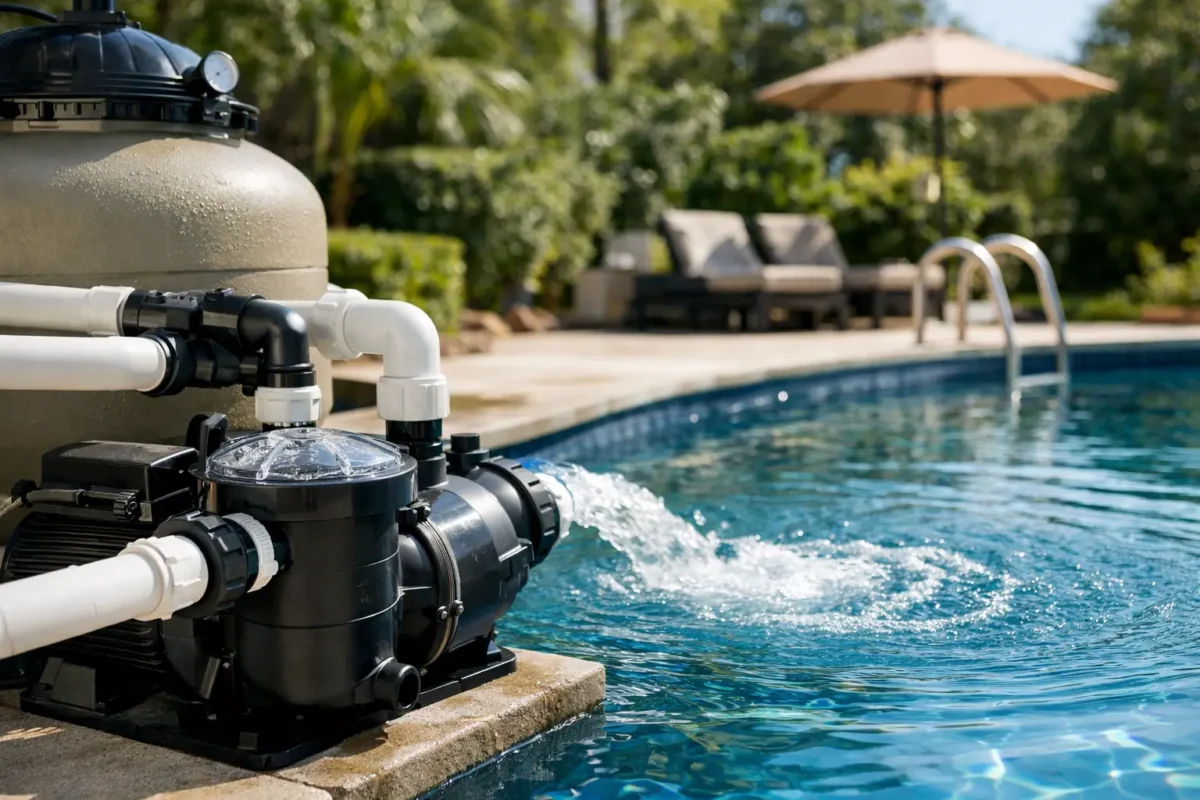
Strong aesthetics do not compensate for weak performance. Before selecting among deck jet water feature ideas, it is essential to assess pump capacity, pipe sizing, nozzle quality, pressure consistency, and the effect of wind on the site. A beautiful rendering can fail quickly if the hydraulic system is under-specified.

Material durability is just as important. In high-temperature environments and demanding outdoor conditions, fittings, lighting components, and surrounding deck finishes need to withstand continuous exposure without compromising appearance or function. This is especially relevant for luxury developments and commercial assets where downtime reflects directly on the property.

Noise is another factor that deserves attention. Some clients want a soft decorative sound. Others prefer a quieter pool environment with only a visual effect. Arc height, landing point, and water volume all influence the acoustic result. That means the best design is not always the biggest one.

Choosing the right deck jet concept for your property

A villa owner may prioritize elegance, family usability, and low-maintenance performance. A hotel operator may focus more on guest impression, nighttime presentation, and durable day-to-day operation. A developer may need a solution that balances standout design with lifecycle value across multiple units or shared amenities.

That is why specification should be guided by both design intent and technical reality. The best outcomes come from selecting equipment, layout, and controls as one coordinated system. Aquatic Pools and Fountains supports this process with premium aquatic products, technical guidance, installation expertise, and maintenance support for residential and commercial projects that require a higher standard.

Deck jets are at their best when they feel intentional. Not louder, not more complicated – just better placed, better engineered, and better matched to the property. When that happens, the feature does more than decorate the pool. It gives the entire space a stronger sense of finish.

Categories
Uncategorized

When Replace Pool Filter Media

Cloudy water that keeps coming back after chemical balancing is usually not a chemistry problem alone. It is often the first practical clue in deciding when replace pool filter media becomes necessary. For villa pools, hotel facilities, and high-use commercial systems, waiting too long can reduce water quality, increase operating pressure, and place avoidable strain on pumps and circulation equipment.

Pool filter media is not designed to perform at the same level forever. Over time, it becomes compacted, worn, contaminated, or less efficient at trapping fine particles. That decline can be gradual, which is why many owners postpone replacement until performance becomes noticeably poor. In premium aquatic environments, that approach is costly. Water appearance suffers first, then energy efficiency, then the service life of connected equipment.

When replace pool filter media depends on the filter type

The right replacement schedule depends on the media inside the filter and how heavily the pool is used. A residential villa pool with disciplined maintenance will age media differently than a hospitality pool, community facility, or real estate asset with frequent daily traffic.

Sand media usually lasts around 3 to 5 years under normal operating conditions. In some well-maintained systems it can stretch longer, but that is not always a sign of good value. Older sand often becomes rounded and less effective, which means filtration quality drops before the media appears fully spent.

Glass media generally offers a longer service life, often around 5 to 8 years. It is valued for improved filtration performance and lower likelihood of channeling compared with lower-grade sand. Even so, glass is not maintenance-free. Oils, scale, and debris buildup can still reduce efficiency over time.

Cartridge filters follow a different pattern because the cartridge itself is the media. Most cartridges need replacement every 1 to 3 years, depending on water balance, cleaning frequency, bather load, and environmental debris. A cartridge that has been cleaned repeatedly but no longer restores flow is no longer delivering premium filtration.

Diatomaceous earth grids and media also require closer monitoring. The DE powder is replenished regularly, but the internal grids or elements wear out and typically need replacement every few years depending on operating conditions. Tears, clogging, or loss of structural integrity affect filtration quality quickly.

The operational signs that replacement is overdue

A filter rarely fails without warning. In most cases, the system gives several clear signals before media replacement becomes urgent.

One of the most common signs is reduced water clarity even when sanitizer levels and pH are within range. If the water looks dull, hazy, or slow to recover after use, the filter may no longer be capturing fine suspended material effectively.

Another sign is rising filter pressure after backwashing or cleaning. A pressure increase is normal as debris accumulates, but if pressure remains elevated or returns too quickly, the media may be compacted, fouled, or channeling. That means water is no longer moving through the media bed as intended.

Shorter cleaning cycles are also a warning. If your team is backwashing more often than before, or if cartridge cleaning delivers only brief improvement, the media has likely lost its working capacity. Frequent maintenance without lasting performance is a strong indicator that replacement is more economical than continued labor.

You may also notice uneven circulation, poor vacuum performance, or debris returning to the pool. These symptoms do not always point to media alone, since valves, pump sizing, and internal filter components can also contribute. Still, media condition should be one of the first technical checks.

Why pool conditions in the UAE can shorten media life

Replacement timing is never based on the calendar alone. Local operating conditions matter, and in demanding climates they matter a great deal.

Pools exposed to fine dust, high temperatures, sunscreen residue, landscaping debris, and heavy year-round use place more stress on filter media than lightly used seasonal pools. In these conditions, media can foul faster and lose efficiency earlier than the standard replacement window suggests.

Commercial and hospitality settings also create more wear because the filtration system runs longer, handles higher bather loads, and must maintain a more consistent visual standard. A luxury pool that looks acceptable at a private home may still fall below the expected standard for a hotel, residential tower, or showcase property.

This is why experienced service planning focuses on performance benchmarks, not just age. Media that technically still functions may still be underperforming relative to the appearance, hygiene, and reliability standards expected in premium aquatic environments.

When cleaning is enough and when replacement is smarter

Not every filtration problem means the media must be replaced immediately. Sometimes a deep clean, correct backwash procedure, or chemical treatment for oils and scale can restore acceptable performance.

That said, there is a clear point where continued cleaning becomes a false economy. If the system returns to poor pressure or weak filtration soon after service, the media is no longer delivering dependable results. The cost of repeated labor, excess water use, chemical adjustment, and pump strain can exceed the cost of timely replacement.

For cartridge systems, visible wear is especially important. Cracked end caps, frayed pleats, flattened fabric, and permanent staining all indicate the cartridge is near the end of its service life. For sand and glass filters, clumping, channeling, calcification, and hardened media beds are stronger indicators than appearance alone.

A technical inspection is the fastest way to separate a maintenance issue from a replacement issue. That matters for property owners and facility managers who need accurate decisions, not guesswork.

How delayed replacement affects the rest of the system

Filter media is often treated as a small consumable decision, but the impact is much broader. Poor media condition can increase head pressure, force pumps to work harder, and reduce overall circulation efficiency. Over time, that can influence energy use, maintenance frequency, and wear on connected equipment.

It also affects chemical performance. When fine contaminants remain in circulation, sanitizers work harder and water balance becomes less stable. You may see recurring cloudiness, increased chlorine demand, and inconsistent water quality even when the chemical dosing plan appears correct.

In high-value residential and commercial properties, appearance matters as much as mechanics. A pool or fountain with flat, dull, or visibly imperfect water does not support a premium environment. Clean water should look polished, not just pass a basic test reading.

A practical replacement approach for owners and facility teams

The best replacement strategy is proactive rather than reactive. Keep a service record of installation dates, pressure readings, backwash frequency, and any decline in water clarity. Those details reveal trends long before complete performance failure.

If the pool is residential and lightly used, an annual inspection may be enough to determine whether the media still meets operating standards. For commercial pools, hospitality assets, and heavily used community systems, inspections should be more frequent and tied to actual load and performance expectations.

It is also worth reviewing whether the existing media type still suits the application. In some systems, upgrading from standard sand to higher-grade glass media can improve filtration quality and reduce long-term maintenance demands. The right choice depends on filter design, operating volume, and the level of finish expected from the water.

Aquatic Pools and Fountains supports this kind of decision with both equipment supply and technical guidance, which is especially valuable for clients managing premium pools where reliability and presentation cannot be compromised.

The right time is before performance becomes visible

If you are asking when replace pool filter media, the best answer is usually earlier than most owners expect. Replacement should happen when the media no longer supports clean, efficient, and stable operation at the standard your property demands, not only when the problem becomes obvious to guests or residents.

Clear water is not just the result of chemicals. It depends on strong hydraulic performance, correct filtration, and media that still does its job with precision. Replacing filter media at the right time protects water quality, preserves equipment, and keeps the entire aquatic space operating the way a premium installation should.

Categories
Uncategorized

Pool Chemical Storage Guide for Safer Pools

A warped chlorine bucket, faded labels, and a damp plant room are usually the first signs of a bigger problem. Poor chemical storage does not just shorten product life – it creates safety risks, weakens water treatment, and can lead to costly damage in residential and commercial pool environments. This pool chemical storage guide is built for property owners, facility managers, and developers who want cleaner operations, better product performance, and a higher standard of safety.

In premium pool settings, chemical storage should never be treated as an afterthought. Whether you manage a private villa pool in extreme summer heat or a commercial facility with routine maintenance schedules, the storage area has a direct effect on water quality, equipment reliability, and staff safety. Good storage protects your investment before the chemical ever reaches the water.

Why a pool chemical storage guide matters

Pool chemicals are engineered for performance, but only when they are stored under the right conditions. Heat, moisture, poor ventilation, and cross-contamination can all reduce effectiveness. In some cases, improper storage can create dangerous reactions, especially when oxidizers, acids, and other treatment products are kept too close together.

This matters even more in the UAE climate. High temperatures can accelerate product degradation, while enclosed service rooms can trap humidity and fumes. A storage area that looks acceptable during cooler months may become a liability in peak summer. For luxury residential projects and commercial sites alike, a professional storage setup supports consistent treatment results and reduces avoidable waste.

The right storage environment for pool chemicals

The best storage area is cool, dry, clean, and well ventilated. That sounds straightforward, but in practice it requires planning. Pool chemicals should be kept out of direct sunlight and away from heat sources such as pumps, heaters, or unventilated machinery rooms. They should also be protected from water intrusion, including washdown overspray, leaks, and condensation.

A dedicated chemical room or enclosed storage cabinet is often the strongest option, provided it is designed for chemical use. The space should stay dry year-round and allow air circulation so fumes do not build up. Flooring should be stable and easy to clean, and shelves should be corrosion-resistant rather than basic metal that can deteriorate over time.

It also helps to think beyond the room itself. If chemicals are stored next to cleaning agents, landscaping products, fuel, or general maintenance supplies, the risk profile changes immediately. Premium pool care depends on separation, not convenience.

Temperature and humidity control

Most pool chemicals perform best when stored in moderate conditions. Excessive heat can reduce shelf life and affect packaging integrity. Humidity is equally problematic because many dry chemicals absorb moisture from the air, leading to clumping, reduced potency, or unstable handling conditions.

If the storage space tends to run hot, ventilation improvements or relocation may be necessary. Air conditioning is not always required, but heat buildup should not be ignored. For high-value residential and commercial properties, controlled storage conditions are a practical way to protect both safety and product cost.

Separate chemicals by type, not by container size

One of the most common storage mistakes is organizing products by available shelf space rather than compatibility. Chlorine products, acids, algaecides, balancing chemicals, and specialty treatments should not simply be stacked wherever they fit. They need separation based on how they behave.

Chlorine and other oxidizers should be stored away from acids and from any combustible or organic materials. Acids should remain isolated in their own area, ideally with secondary containment that helps manage spills. Liquid products should not be placed above dry chemicals, where leaks could contaminate containers below.

Even sealed containers should be treated carefully. Caps loosen, packaging degrades, and handling errors happen. A well-organized room assumes that failures are possible and reduces the chance that one issue becomes a serious incident.

Never mix old and new stock casually

Partially used containers should remain clearly labeled and tightly closed. They should not be combined with fresh product unless the manufacturer specifically allows it. Mixing residual material from one container into another can contaminate the entire batch. That can affect dosing accuracy, reduce treatment effectiveness, and create unnecessary hazards for maintenance staff.

A first-in, first-out approach is the better standard. Older stock should be used before newer deliveries, as long as the product remains within its recommended storage life and shows no signs of damage.

Labeling, containment, and access control

Clear labeling is non-negotiable. Every product should remain in its original container with the manufacturer label intact and readable. Transferring chemicals into unlabeled or repurposed containers creates obvious safety and compliance risks. It also increases the chance of dosing errors, especially in properties where multiple team members or contractors access the storage area.

Secondary containment adds another layer of protection. Spill trays, bunded shelves, or dedicated containment zones help prevent leaks from spreading across the room or reaching incompatible products. In commercial settings, this is especially important because higher stock volume increases exposure if something goes wrong.

Access should also be controlled. Chemical storage is not a general utility space. Children, tenants, untrained staff, and casual visitors should never have unrestricted access. For villas, this may mean a lockable cabinet or secure service room. For hotels, towers, and larger facilities, it means controlled entry and clear operating procedures.

A practical pool chemical storage guide for daily operations

The strongest storage setup is the one your team can maintain consistently. That means the room should support good habits rather than rely on memory alone. Shelves should be logically arranged, products should be easy to identify, and safety equipment should be immediately visible.

Routine inspections make a measurable difference. Containers should be checked for swelling, cracks, rust, leaks, and fading labels. If a bucket looks distorted or a liquid container appears pressurized, it should be isolated and assessed promptly. Ignoring early warning signs is where small handling issues turn into operational risk.

Cleanliness matters as well. Chemical dust, residue, and random tools on the floor all increase the chance of cross-contamination. A premium facility should treat the chemical room with the same discipline applied to filtration equipment or plant infrastructure. That standard protects both appearance and performance.

What to keep nearby

A chemical storage area should have the basics needed for safe handling, including personal protective equipment suited to the products in use, spill response materials appropriate for the site, and current product instructions or safety documentation. Emergency eyewash access may also be necessary depending on the facility type and chemical range.

The exact setup depends on the property. A private pool with limited stock will not mirror a commercial operations room. Still, the principle is the same – prepare for normal handling and for the possibility that something spills, leaks, or is used incorrectly.

Common mistakes that compromise safety and product quality

The most frequent issue is storing chemicals in pump rooms simply because space is available. These rooms often run hot, damp, and crowded, which makes them a poor long-term choice. Another mistake is leaving containers open after use, even briefly. Moisture and contamination can enter quickly, especially in humid climates.

Buying in bulk without a proper storage plan is another costly habit. Bulk purchasing can improve efficiency, but only if the site has the capacity to store products safely and rotate stock properly. Otherwise, the result is aging inventory, degraded materials, and unnecessary replacement cost.

There is also a tendency to assume that all pool chemicals can be managed the same way. They cannot. Some products are relatively stable, while others require much tighter control. That is why a one-size-fits-all storage room rarely performs at a premium level.

When professional guidance makes the difference

For larger homes, hospitality venues, residential developments, and commercial properties, chemical storage should be reviewed as part of the full pool infrastructure, not as a side issue. The layout of the plant room, ventilation, dosing systems, stock volume, and maintenance routines all affect what safe storage looks like in practice.

This is where technical support adds real value. A specialized partner can assess whether the current storage setup matches the chemical program, identify risks before they become failures, and recommend a more durable configuration. Aquatic Pools and Fountains supports clients with both premium product supply and the technical guidance needed to maintain safer, more efficient pool environments.

A well-run pool does not start at the waterline. It starts in the spaces behind the scenes, where chemicals are stored, handled, and protected with the same level of care as every other critical system. If your storage area is hot, crowded, or inconsistent, improving it is one of the smartest upgrades you can make.

Categories
Uncategorized

Pool Drain Cover Requirements Explained

A pool can look flawless on the surface and still carry a serious safety risk below the waterline. That is why pool drain cover requirements deserve close attention from villa owners, developers, facility managers, and hospitality operators alike. The right drain cover is not a finishing accessory. It is a core safety component that affects swimmer protection, code compliance, hydraulic performance, and the long-term reliability of the entire circulation system.

Why pool drain cover requirements matter

Drain covers are designed to prevent body, limb, hair, and mechanical entrapment at suction outlets. When a drain cover is damaged, improperly sized, missing, or installed on a system it was not rated for, the risk changes immediately from a maintenance issue to a life-safety issue. For premium residential and commercial pools, this is not an area where approximation is acceptable.

There is also a performance side to the issue. A properly selected cover supports the designed flow rate of the pool system, helps maintain circulation efficiency, and reduces the chance of failures caused by stress, cracking, or debris loading. In high-end installations, aesthetics matter, but safety certification and hydraulic compatibility come first.

The core standard behind drain cover compliance

In the U.S. market, pool drain cover requirements are closely tied to anti-entrapment safety standards developed for suction outlet fittings and related systems. Most professionals evaluate drain covers based on whether they are tested and rated for the intended application, including flow capacity, sump configuration, and installation environment.

That means a drain cover should never be chosen simply because it matches the shape or diameter of an older part. Two covers may look nearly identical while having very different ratings. The approved use depends on factors such as wall or floor placement, single or multiple drain configuration, operating flow, and the specific body or sump it is designed to fit.

For commercial properties, the review process is typically stricter because operator liability is higher and inspection standards are more demanding. For luxury homes, the same discipline is still wise. A private pool may have fewer users, but the consequences of a noncompliant drain are no less serious.

What a compliant drain cover usually needs to include

A compliant drain cover is typically identified by clear manufacturer markings and technical documentation. This usually includes the model reference, flow rating, life span or replacement interval, installation instructions, and the sump or frame compatibility details. If that information is missing or no longer legible, the cover should be treated with caution.

Material quality also matters. Pool drain covers operate in a harsh environment with chemical exposure, UV stress, temperature variation, and constant hydraulic load. Inferior plastic becomes brittle. Fasteners corrode. Mounting points weaken. In premium pools and demanding commercial environments, durability is part of compliance because a cover that fails early becomes a safety hazard regardless of how it was rated on day one.

Anti-entrapment design is another requirement that cannot be overlooked. Modern drain covers are shaped to minimize concentrated suction and discourage blockage by the body or hair. Older flat or poorly vented designs may not meet current expectations, even if they were common in previous installations.

Sizing and flow rating are where mistakes happen

One of the most common problems in the field is treating drain cover replacement as a simple dimensions exercise. It is not enough to measure the visible grate and order a similar size. The flow rating of the cover must match or exceed the system demand under the actual installation conditions.

If the pump and piping configuration can move more water than the cover is rated to handle, the system is unsafe. If the cover is installed on the wrong sump depth or body type, the tested performance may no longer apply. If a single outlet is being used where a split suction design was intended, the risk profile changes again.

This is why serious projects require hydraulic review rather than visual matching. For a villa pool, this may involve verifying the suction line layout, pump output, and original drain body dimensions. For hotels, towers, and commercial leisure facilities, it usually means a broader inspection of the circulation system, bather load expectations, and maintenance history.

Floor drains, wall drains, and unblockable outlets

Not all suction outlets are governed by the same practical considerations. Floor drains are often the first focus because they are more likely to create direct body contact scenarios. Wall drains may be used in some designs and can reduce certain risks depending on their configuration. Large unblockable outlets are another category and may be treated differently because their size changes the entrapment potential.

Still, no category should be assumed safe by default. The actual requirement depends on design details, placement, and certification. A large outlet installed incorrectly can still create problems. A wall fitting with the wrong cover can still be noncompliant. Good engineering always wins over assumptions.

Replacement timing is not optional

Drain covers are not permanent components. Manufacturers typically assign a service life, and that replacement timeline matters. UV exposure, pool chemicals, thermal cycling, and physical wear gradually degrade the part even when no damage is obvious. Hairline cracks, warped surfaces, missing screws, and loose seating are all warning signs that replacement should happen immediately.

Many property owners focus on pumps, lights, and tiles because those are more visible. Yet a drain cover past its rated life is a much more urgent issue than many cosmetic defects. In high-value properties, preventive replacement is the smart position. It protects swimmers, reduces liability, and avoids the cost of emergency shutdowns or corrective work later.

Installation quality affects compliance

Even the best drain cover can become unsafe if it is installed incorrectly. Fastener type, torque, sump condition, frame integrity, and cover orientation all matter. If the original drain body is cracked, stripped, or incompatible with the new cover, simply tightening the screws and walking away is not a proper solution.

Retrofit work deserves particular care. Older pools may have drain sumps that do not align with current replacement options, and forced substitutions can create hidden risk. In these cases, a more complete outlet assembly upgrade may be the right answer rather than trying to preserve outdated hardware.

For commercial operators and developers, documentation is part of good practice. Keeping records of model numbers, installation dates, and replacement schedules makes future inspections much easier and supports a more controlled maintenance strategy.

Residential and commercial expectations are not identical

The principle is the same across all projects: protect bathers and match the cover to the system. The practical standard, however, often becomes more demanding in commercial environments. Hotels, shared residential amenities, schools, wellness facilities, and public-use pools usually face tighter scrutiny because usage volume is higher and operator responsibility is broader.

Luxury residential pools still benefit from that same level of discipline. Premium property owners are investing in performance, finish quality, and long-term asset value. A drain cover chosen without technical verification does not align with that standard. The best results come from treating every pool as a professional installation, not a simple backyard fixture.

What buyers should ask before approving a drain cover

Before purchasing or replacing a drain cover, the right questions can prevent expensive mistakes. Ask whether the cover is rated for the required flow, whether it matches the exact sump or body, whether it is approved for wall or floor use as needed, and what its service life is. Also confirm whether the existing system uses single or multiple suction outlets and whether any broader anti-entrapment measures should be reviewed at the same time.

This is where experienced technical support makes a clear difference. Aquatic Pools and Fountains works with premium aquatic installations where safety, finish quality, and durability all need to perform together. On serious projects, product supply alone is not enough. The better approach is combining the right component with proper technical review, installation standards, and ongoing maintenance planning.

A better standard for every pool

Pool drain cover requirements are ultimately about respecting the fact that small components can carry major consequences. A drain cover should be correctly rated, properly installed, regularly inspected, and replaced before age or damage compromises safety. That applies whether the project is a private villa retreat or a high-traffic commercial facility.

If there is any uncertainty about a drain cover’s rating, age, fit, or condition, that uncertainty should be resolved before the pool returns to service. In premium aquatic environments, the right standard is simple: every visible detail should look exceptional, and every hidden safety component should perform exactly as intended.

Categories
Uncategorized

Choosing the Right Pool Disinfection System

Cloudy water, strong chemical odor, and inconsistent sanitizer levels usually point to the same issue – the wrong pool disinfection system for the pool’s size, usage, and operating conditions. In premium residential and commercial environments, disinfection is not a background detail. It directly affects water clarity, swimmer comfort, equipment life, and the standard your property presents every day.

A high-performing pool should look polished, feel balanced, and stay reliable under regular use. That only happens when the disinfection method is selected with the same care as the pumps, filters, lighting, and finishes. For villa pools, hospitality settings, residential towers, and commercial facilities, the right system is less about following trends and more about matching the technology to the project.

What a pool disinfection system actually does

A pool disinfection system controls bacteria, algae, and organic contaminants in the water. It works alongside circulation and filtration, not in place of them. Filtration removes suspended debris and particles, while disinfection manages the invisible contaminants that affect hygiene and water quality.

This distinction matters. Even a premium filter and strong hydraulic design cannot compensate for poor sanitizer control. If disinfection is inconsistent, water quality drops quickly, especially in warm climates and high-use pools. In regions like Dubai and the wider UAE, heat, sunlight, dust, and frequent bathing loads place extra pressure on every pool system, which makes accurate disinfection even more critical.

Main types of pool disinfection system options

There is no single best choice for every pool. The right answer depends on pool volume, user load, maintenance expectations, operating budget, and whether the project is residential or commercial.

Chlorine dosing systems

Chlorine remains the benchmark for pool sanitation because it is proven, effective, and suitable for a wide range of applications. Automated dosing systems improve results significantly by feeding sanitizer in controlled amounts rather than relying on manual addition.

For many residential pools, automatic chlorine dosing offers a practical balance of performance and control. For commercial pools, it is often the most dependable baseline because it supports compliance, handles heavier swimmer loads, and can be integrated with monitoring systems.

The trade-off is that chlorine levels must be managed carefully. Too little sanitizer leads to water quality problems. Too much can affect comfort, surfaces, and equipment over time. In premium projects, automation is what turns chlorine from a basic chemical solution into a reliable treatment strategy.

Salt chlorination systems

Salt chlorination systems generate chlorine from salt in the pool water, giving owners a more refined operating experience than manual chlorination. Many clients prefer this option because the water often feels gentler and day-to-day chemical handling is reduced.

For luxury villas and private pools, salt systems are a popular choice when owners want convenience and a more comfortable swimming environment. They can also reduce the peaks and dips associated with manual sanitizer dosing.

Still, salt systems are not maintenance-free. Cells require inspection and cleaning, water balance remains essential, and some materials need to be selected with corrosion resistance in mind. In coastal or exposed environments, that detail becomes even more important.

UV pool disinfection system setups

A UV pool disinfection system exposes circulating water to ultraviolet light, helping neutralize microorganisms and reduce chloramine formation. This can improve air quality and swimmer comfort, which is especially valuable in indoor pools or enclosed leisure areas.

UV is best understood as a secondary treatment rather than a complete replacement for residual sanitizer. It improves water quality, but most pools still need chlorine or another approved sanitizer in the water itself. For hospitality, wellness, and high-end residential projects where user experience matters, UV can be an excellent upgrade.

Ozone systems

Ozone is a powerful oxidizer that helps break down contaminants efficiently and can improve water clarity. It is often selected for premium installations where water appearance and reduced chemical byproducts are priorities.

Like UV, ozone is usually part of a broader treatment design rather than a standalone answer. It performs well when integrated correctly, but it requires proper engineering, compatible components, and a clear understanding of the operating environment. In the right project, it adds real value. In the wrong one, it adds complexity without proportional benefit.

How to choose the right pool disinfection system

The starting point is always the pool itself. A private villa pool used by one family has very different needs from a hotel pool, a residential tower amenity deck, or a commercial training facility. Water volume, bather load, operating hours, and exposure to sunlight all influence the correct specification.

Maintenance expectations matter just as much. Some owners are comfortable with routine checks and system care. Others want a setup that minimizes manual intervention and keeps performance steady with professional servicing. A sophisticated system can deliver excellent results, but only if it is supported correctly.

Material compatibility should not be overlooked. Disinfection choices affect pipework, fittings, heat exchangers, pool finishes, and surrounding equipment. A premium installation should be designed as one complete system, not as isolated products selected one by one.

Budget should be viewed in terms of lifecycle value, not only purchase price. A lower-cost system may appear attractive initially, but if it leads to unstable water chemistry, higher maintenance, faster wear, or guest complaints, it becomes expensive very quickly. The stronger investment is usually the one that supports lasting performance with fewer operational issues.

Why automation matters in modern pool disinfection system design

Manual testing and dosing can work in small pools, but consistency is difficult to maintain. Automated controllers monitor water parameters and adjust chemical feed with far greater accuracy. This protects water quality, reduces waste, and supports a more professional standard of operation.

For commercial facilities and high-value residential properties, automation is no longer a luxury feature. It is part of responsible pool management. Stable dosing helps preserve finishes, supports swimmer comfort, and reduces the risk of sudden water quality problems during peak use.

This is where technical guidance makes a measurable difference. The most effective setup is not simply a product from a leading brand. It is the correct controller, feeder, sensors, and support equipment configured for the exact demands of the pool.

Common mistakes that lead to poor disinfection performance

Many disinfection issues are not caused by the sanitizer itself. They come from undersized equipment, poor circulation, inaccurate dosing, neglected calibration, or a mismatch between system capacity and actual pool use. Even a high-end disinfection unit will struggle if the surrounding infrastructure is weak.

Another common mistake is choosing based on trend rather than application. A homeowner may request UV because it sounds advanced, while the pool really needs better dosing control and stronger filtration. A commercial buyer may focus on low upfront cost and later face higher chemical consumption, more downtime, and repeated service calls.

Premium results depend on correct specification from the start. That includes hydraulic design, filtration efficiency, testing accuracy, and a maintenance plan that keeps the system performing as intended.

Pool disinfection system solutions for residential and commercial projects

Residential pools often benefit from clean, automated solutions that reduce manual work while protecting comfort and aesthetics. Salt chlorination, automated chemical dosing, and selected UV support can all perform well when tailored to the pool’s structure and usage pattern.

Commercial pools need a more rigorous approach. Hotels, residential communities, sports facilities, and corporate properties require systems that can sustain heavier demand, support compliance standards, and deliver dependable water quality every day. In these environments, durability, monitoring, and serviceability are just as important as disinfection strength.

That is why many clients prefer working with a full-scope technical partner rather than sourcing equipment in pieces. Product quality matters, but so do installation standards, compatibility checks, commissioning, and ongoing support. Aquatic Pools and Fountains delivers this level of coordination for projects that cannot afford compromise.

The value of expert specification

A well-chosen pool disinfection system protects far more than water. It protects the appearance of the pool, the comfort of the user, the reliability of the plant room, and the long-term value of the property. For premium developments and private residences alike, this is not an area for guesswork.

The right system should fit the project, not force the project to adapt to the equipment. When disinfection is selected with technical precision and supported by professional installation and maintenance, the result is simple – cleaner water, stronger performance, and a pool that reflects the standard the property was built to deliver.

If you are planning a new pool or upgrading an existing one, the smartest next step is to choose a solution that matches your water quality goals as closely as it matches your design ambitions.

Categories
Uncategorized

Choosing the Right Pool Fitting Accessories

A premium pool can look flawless on the surface and still underperform if the smaller components behind it are poorly selected. That is why pool fitting accessories deserve far more attention than they usually get. These details control water movement, support safety, protect equipment, and shape the finished appearance of the pool far more than many property owners expect.

For villa owners, developers, and facility teams, the difference is rarely about adding more accessories. It is about choosing the right fittings for the pool design, hydraulic demands, finish quality, and long-term maintenance plan. In high-end residential and commercial projects, that decision has a direct impact on durability, visual consistency, and service reliability.

Why pool fitting accessories matter more than they seem

Pool fitting accessories sit at the point where design meets operation. Inlets, outlets, drains, skimmers, vacuum points, return fittings, and related connection components are not decorative extras. They help determine circulation efficiency, water clarity, cleaning effectiveness, and user safety.

A well-designed pool system depends on balance. If the main pump and filter are high quality but the fittings are undersized, incorrectly placed, or made from inferior materials, the whole system can suffer. Water may circulate unevenly. Dead zones can develop. Cleaning becomes less effective. Wear on core equipment can increase over time.

This is especially relevant in the UAE, where pools often operate under demanding conditions. Heat, heavy usage, chemical exposure, and long operating hours all put pressure on the system. In that environment, accessory quality is not a minor specification. It is part of the foundation of a dependable installation.

The core types of pool fitting accessories

When clients ask for pool fitting accessories, they are often referring to a broad category rather than one product line. In practice, these accessories include several functional groups, each serving a distinct role in performance and finish quality.

Return inlets and suction fittings

Return inlets direct filtered water back into the pool and help create effective circulation patterns. Their placement matters. In a compact residential pool, fewer well-positioned returns may be enough. In a larger overflow pool or a commercial installation, the circulation strategy is more complex and requires closer hydraulic planning.

Suction fittings, including vacuum points and wall suction components, support cleaning and water movement. These must be selected with safety and flow requirements in mind. In the wrong configuration, they can reduce efficiency or create service complications later.

Main drains, grates, and skimmers

Main drains contribute to circulation and help remove heavier debris from the lower section of the pool. Their covers and grates must meet performance and safety expectations while also resisting corrosion and chemical wear.

Skimmers are equally important in pools that do not use overflow systems. A premium skimmer should do more than collect floating debris. It should fit cleanly into the pool structure, maintain reliable operation, and support straightforward maintenance access for service teams.

Eyeballs, nozzles, and directional fittings

These smaller accessories often make a major difference. Adjustable directional fittings help control water flow patterns and improve circulation in problem areas. They are particularly useful where pool geometry creates corners or sections with weaker movement.

This is where expert specification matters. Two pools of similar size may require different nozzle arrangements depending on shape, bather load, and surrounding equipment design.

Connection fittings and finishing components

Unions, adapters, wall fittings, flanges, and sealing components are less visible but equally important. Poor-quality connection fittings can lead to leaks, service disruption, or premature replacement. In luxury installations, finishing components also need to match the visual standard of the project. Clean lines, proper alignment, and material consistency all contribute to a better result.

What to look for when selecting pool fitting accessories

The right choice depends on more than catalog availability. High-performing accessories should be evaluated against material quality, compatibility, hydraulic design, and installation standards.

Material is the first checkpoint. Components used in swimming pools must withstand water treatment chemicals, sun exposure, temperature variation, and regular operation without cracking, fading, or degrading. High-grade plastics and corrosion-resistant materials are often the standard, but not every product performs at the same level.

Compatibility comes next. Accessories should work properly with the selected filtration system, pump capacity, pipe dimensions, and pool construction method. A fitting that works well in one system may be a poor match in another. This is where experienced technical guidance saves time and cost.

The finish also matters. In premium residential and commercial settings, accessories must complement the pool interior rather than interrupt it. Visible fittings should feel integrated, not improvised. White, stainless, and specialty finishes each have their place, but the right choice depends on the pool style and operational environment.

Residential vs commercial requirements

Not all pool fitting accessories should be chosen by the same standard. A private villa pool and a hospitality pool face very different demands.

In residential projects, owners often prioritize appearance alongside performance. They want fittings that disappear into the design, support efficient circulation, and require minimal maintenance. Quiet operation, elegant finish quality, and a clean visual outcome usually carry significant weight.

In commercial projects, durability and serviceability become even more critical. Hotels, residential towers, fitness facilities, and shared amenities need accessories that can handle heavier usage and frequent maintenance cycles. Access for inspection, consistency in water turnover, and compliance with broader safety requirements are more important in these environments.

There is overlap, of course. Many luxury residential buyers now expect commercial-grade reliability, while premium hospitality spaces demand residential-level aesthetics. That is why specification should always be project-specific rather than based on simple category assumptions.

Common mistakes that create long-term problems

The most expensive mistake is usually not the product cost. It is choosing accessories that are technically unsuitable and then paying for correction later.

One common issue is treating fittings as interchangeable. They are not. Small dimensional differences, flow characteristics, or material limitations can affect installation and long-term performance.

Another issue is underestimating placement. Even a high-quality return inlet or skimmer can perform poorly if installed in the wrong position. This can lead to circulation gaps, debris buildup, and extra strain on cleaning systems.

The third mistake is buying for initial price rather than lifecycle value. Lower-cost accessories may seem attractive during procurement, especially on large projects. But if they discolor, become brittle, leak, or require early replacement, the real cost rises quickly. For premium pools, reliability is usually the more economical decision.

Why professional specification makes the difference

Pool fitting accessories are best selected as part of the full hydraulic and construction plan, not as an afterthought. That approach reduces installation conflicts, improves performance, and supports cleaner finishing on site.

An experienced supplier looks beyond the product itself. They assess pool type, structural details, usage patterns, finish materials, and system requirements before recommending a fitting package. That level of planning is particularly valuable in custom projects, overflow systems, spa integrations, and larger commercial developments where accessory coordination affects several trades at once.

This is where a full-scope partner adds real value. Aquatic Pools and Fountains supports clients not only with product availability, but also with technical guidance, branded equipment options, and installation-focused recommendations that suit both luxury residential and demanding commercial environments.

A better standard for pool fitting accessories

The best pool fitting accessories do not call attention to themselves. They simply perform, year after year, while preserving the appearance and operating quality of the pool. That takes the right material, the right design, and the right specification from the start.

For property owners and project teams aiming for a premium result, accessories should be chosen with the same care given to pumps, filters, lighting, and surface finishes. Small components shape big outcomes. When they are selected correctly, the pool looks better, runs better, and stays easier to maintain over the long term.

If you are planning a new pool, upgrading an existing system, or sourcing for a large-scale development, the smartest move is to treat fittings as performance-critical infrastructure. That is how refined aquatic spaces keep their standard long after handover.

Categories
Uncategorized

Pool Skimmer Basket Replacement Guide

A cracked skimmer basket can cause more trouble than most pool owners expect. What looks like a simple plastic part is actually the first line of defense between leaves, debris, and your circulation system. When pool skimmer basket replacement is delayed, the result can be reduced water flow, higher strain on the pump, and avoidable wear on premium pool equipment.

For villa pools, hospitality properties, and commercial facilities, this is not a minor maintenance detail. A properly fitted skimmer basket helps protect performance, preserve water clarity, and support the long-term reliability of the entire filtration setup. In high-use environments, especially where presentation and uptime matter, replacing the basket at the right time is the practical choice.

Why pool skimmer basket replacement matters

The skimmer basket collects leaves, insects, and floating debris before they move deeper into the filtration system. When it is intact and correctly sized, it reduces the load on the pump strainer and filter. When it is broken, warped, or missing, debris can bypass the basket and create problems farther down the line.

That can mean clogged pump baskets, restricted suction, and unnecessary pressure on expensive system components. In some cases, a damaged basket also affects how efficiently the skimmer draws surface debris, which leaves the pool looking less polished even when the rest of the equipment is operating normally.

For premium residential pools and commercial installations, appearance and mechanical efficiency go hand in hand. A small replacement done on time often prevents a larger service issue later.

Signs you need a new skimmer basket

Not every basket needs replacement at the first sign of wear, but there are clear indicators that it is time to change it. Cracks along the sidewalls or base are the most obvious problem. Once the basket structure opens up, debris starts slipping through.

A basket that has become brittle from sun exposure or pool chemicals is another warning sign. If the plastic feels weak, flakes at the edges, or has lost its shape, replacement is the safer option. Warping matters because even small changes in shape can affect fit and allow debris to pass around the sides.

You may also notice the basket sitting too low, too high, or loosely inside the skimmer housing. That usually points to the wrong size or a basket that has deformed over time. If debris regularly ends up in the pump basket despite routine cleaning, the skimmer basket should be checked closely.

Pool skimmer basket replacement is not one-size-fits-all

One of the most common mistakes is assuming any basket with a similar diameter will work. It usually will not. Skimmer baskets vary by top diameter, bottom diameter, height, handle design, taper, and brand compatibility. Even when two models appear close, a poor fit can reduce skimming efficiency or interfere with the lid closing properly.

This is especially relevant for high-end pools and technically specified commercial systems, where equipment selections are often based on brand standards and exact dimensions. The right replacement should match the skimmer body precisely, not approximately.

If the original basket model is unknown, measurement becomes essential. The top outside diameter, bottom diameter, and full height should all be checked. Handle clearance also matters. In some skimmer designs, a handle that is too tall can obstruct the cover, while a low-profile handle may make routine cleaning less convenient.

How to choose the right replacement basket

A quality replacement basket should offer more than basic fit. The plastic needs to be durable enough to handle sun exposure, chemical contact, and regular removal for cleaning. For residential pools with light debris loads, a standard heavy-duty basket may be sufficient. For commercial pools, landscaped villa pools, or properties near trees, a stronger basket with consistent structural rigidity is the better choice.

The pattern of the openings matters too. If the perforations are too wide, smaller debris can pass through. If they are too restrictive, water flow may be reduced when the basket begins to fill. Good basket design balances debris capture with smooth circulation.

It also helps to choose equipment backed by a supplier that understands compatibility, not just general category matching. For property managers and procurement teams, technical accuracy is worth more than trial and error. A reliable supplier can identify the correct replacement quickly and reduce the risk of ordering a basket that looks right but performs poorly.

The replacement process

Pool skimmer basket replacement is straightforward, but it should still be done carefully. Start by switching off the pump. This is the right approach for both safety and system protection. Then remove the skimmer lid and lift out the existing basket.

If the basket is packed with debris, empty it before comparing dimensions. Check the old basket for any manufacturer markings, part numbers, or molded identifiers. If those details are visible, matching becomes easier. If not, use measurements rather than visual guesswork.

Before placing the new basket into the skimmer, inspect the housing itself. Sometimes the problem is not only the basket. A damaged skimmer throat, debris buildup around the seat, or a warped lid area can affect fit and function. Once the new basket is seated correctly, restore the lid and restart the system.

After startup, observe water movement at the skimmer. Surface draw should look steady and consistent. If the basket lifts, rattles, or seems unstable, it may not be the correct specification.

Common issues after replacement

If a new basket does not seem to solve the problem, there are a few likely causes. The first is incorrect sizing. A basket can appear close enough while still allowing bypass around the edges. The second is a circulation issue elsewhere, such as low water level, suction blockage, or pump-side obstruction.

In some pools, excessive debris load is the real issue. A correctly sized basket still needs regular emptying to maintain performance. This is particularly true during landscaping work, dusty weather, or seasonal leaf fall. In these conditions, replacement alone will not restore skimming unless cleaning frequency is also adjusted.

There is also the question of material quality. Lower-grade plastic baskets may fit initially but deform quickly in harsh outdoor conditions. For pools exposed to intense heat and strong sunlight, better materials typically justify the investment.

Residential and commercial needs are different

For a private villa pool, convenience and appearance are usually the top priorities. Owners want dependable equipment that supports clean water and a refined outdoor environment without constant intervention. In that setting, a durable, properly matched skimmer basket contributes directly to a cleaner-looking pool and smoother day-to-day maintenance.

For hotels, residential towers, clubs, and other commercial properties, the stakes are higher. There is greater bather load, stricter maintenance schedules, and less room for downtime. A missing or damaged basket can create avoidable stress on pumps and filters, and that can escalate service costs quickly. Commercial operators are usually better served by sourcing replacement parts from an equipment partner that can support both product supply and technical advice.

This is where a specialist supplier such as Aquatic Pools and Fountains adds real value. For clients managing premium aquatic environments, accurate parts selection and reliable product availability are part of protecting the broader investment.

When replacement is better than cleaning or repair

Some owners try to extend the life of a basket with temporary fixes, but repair is rarely the right answer once cracking begins. Adhesives and patch solutions do not usually hold up under constant water exposure, chemical contact, and repeated handling. Even if the basket looks usable, weak points tend to reopen.

Cleaning remains essential, but it is not a substitute for replacement when the basket has lost structural integrity. A basket should be replaced when it no longer performs as a dependable barrier. In most cases, the cost is modest compared to the potential impact on the pump and filtration system.

A small component with a direct effect on performance

Pool systems depend on details being right. The skimmer basket is one of those details that is easy to overlook until flow drops, debris accumulates, or equipment begins to work harder than it should. Pool skimmer basket replacement is a simple step, but it protects circulation, supports cleaner water, and helps maintain the premium standard your pool was designed to deliver.

If your basket is cracked, loose, brittle, or simply the wrong fit, replacing it now is a smarter move than waiting for a larger equipment issue to follow.

Categories
Uncategorized

10 Best Pool Safety Equipment Options

A luxury pool should feel inviting, not uncertain. For villa owners, developers, hotels, and facility managers, choosing the best pool safety equipment is not a small add-on decision – it is part of protecting people, preserving property standards, and meeting the expectations that come with a premium aquatic environment.

The right safety setup depends on who uses the pool, how often it is accessed, and whether the site is residential, hospitality-based, or commercial. A private family pool has different risks than a rooftop amenity deck or a hotel leisure area. That is why the strongest results come from combining physical barriers, active alerts, visibility, and rescue readiness rather than relying on a single product.

What makes the best pool safety equipment

The best pool safety equipment does two jobs at once. First, it reduces the chance of unauthorized access, slips, falls, or delayed emergency response. Second, it fits the operational standard of the property without compromising appearance, durability, or user experience.

For high-end residential and commercial projects, performance matters just as much as presentation. Equipment should withstand sun exposure, humidity, chemical environments, and daily use. It should also integrate cleanly into the pool design, especially in villas, hospitality settings, and branded developments where visual quality is part of the investment.

This is where specification matters. A basic off-the-shelf safety item may look acceptable at installation, but if it corrodes, loosens, fades, or becomes unreliable, it creates a maintenance issue and a safety risk. Premium environments require equipment selected for long-term service, not short-term convenience.

1. Pool fences and self-closing gates

A fence remains one of the most effective layers of protection, especially for homes with children and shared-use properties. It creates a physical barrier that prevents unsupervised access and helps define the pool as a controlled area rather than an open backyard feature.

The best installations use durable materials, secure latching systems, and self-closing gates that return to a locked position after every use. For premium properties, the choice often comes down to balancing transparency, strength, and corrosion resistance. Glass can deliver a refined visual result, while metal systems can offer a strong structural solution if properly specified for poolside conditions.

Not every site needs the same fence height, gate configuration, or panel design. A family villa may prioritize child restriction, while a residential tower or hospitality property may need access control that works with foot traffic patterns and staff supervision.

2. Pool safety covers

A properly fitted safety cover does far more than keep debris out. It creates a protective barrier over the water when the pool is not in use, which is particularly valuable for seasonal use, private residences, and properties that want an added layer of security during off-hours.

The distinction between a basic cover and a true safety cover is important. A standard cover may help with cleanliness, but it is not necessarily designed to prevent accidental entry or support weight in a critical moment. A safety cover should be engineered for protection, secure anchoring, and reliable tension across the pool opening.

For premium installations, automated systems are often the preferred choice because they improve ease of use. If a safety measure is difficult to operate, it is less likely to be used consistently. Manual options can still be effective, but convenience and discipline matter.

3. Pool alarms

Pool alarms add an active warning layer that barriers alone cannot provide. They are especially useful in residential settings, guest properties, and facilities where there may be moments of reduced supervision.

There are different types, including gate alarms, door alarms, surface wave alarms, and subsurface detection systems. Each serves a different purpose. A door alarm helps if the main concern is direct access from the home to the pool area. A water-entry alarm responds when the water surface is disturbed. A gate alarm alerts staff or residents when access points are opened.

The trade-off is that alarms work best as part of a system, not as a replacement for barriers or supervision. They also need proper calibration and routine testing. False alarms create frustration, while poor sensitivity can create dangerous gaps.

4. Non-slip pool deck surfaces

Many pool incidents happen outside the water, not in it. Wet tile, polished stone, and smooth coping can become hazardous very quickly, particularly in high-traffic environments such as hotels, clubs, and apartment amenities.

Non-slip surfacing is one of the most practical safety investments because it protects all users, regardless of age or swimming ability. The right material should maintain slip resistance without becoming rough, visually heavy, or difficult to clean. In premium developments, this often means selecting finishes that preserve the architectural look while delivering dependable traction.

This is also an area where maintenance affects safety. Even a well-specified deck can become slippery if oils, sunscreen residue, algae, or scale buildup are not addressed consistently.

5. Pool depth markers and safety signage

Clear communication is part of serious risk control. Depth markers, no-diving signs, emergency instructions, and pool rule signage help reduce misuse and support faster response in a problem situation.

In commercial and shared-use spaces, this is often a basic compliance expectation. In residential properties, owners sometimes overlook signage because they want a cleaner visual finish. That is understandable, but discreet, well-designed signage is far better than leaving guests to make assumptions.

The best signage is visible, durable, and positioned where decisions happen – near entries, along deck edges, and at transition points between shallow and deep water. It should remain legible despite sun, water, and chemicals.

6. Rescue equipment

Every pool should have immediate-access rescue tools. Life rings, reaching poles, throw lines, and first-aid storage are not optional in professionally managed environments, and they are a smart investment for private pools as well.

What matters most is visibility and placement. Rescue gear stored in a locked room or hidden inside a plant area may satisfy a checklist but fails in a real emergency. Equipment should be easy to identify, protected from damage, and accessible within seconds.

For larger pools or commercial operations, the rescue station should be planned as part of the layout, not added after construction. That approach improves both appearance and response readiness.

7. Underwater and perimeter lighting

Good lighting is often treated as an aesthetic feature first and a safety feature second. In reality, it is both. Proper underwater and surrounding illumination improves visibility, helps users judge depth and edges, and allows staff or residents to monitor the pool area more effectively after dark.

Poor lighting creates avoidable risk. Steps disappear, deck transitions become harder to read, and surface movement is less visible. For luxury properties that operate during evenings or host regular events, lighting quality is a direct safety factor.

The best systems are designed for uniform coverage, dependable electrical performance, and long service life. Glare should also be considered. Overly harsh fixtures can reduce visibility instead of improving it.

8. Safety ladders, rails, and grab points

Safe pool entry and exit are essential for children, older adults, and any guest with limited mobility or reduced confidence in the water. Well-placed ladders, handrails, and grab points support controlled movement and reduce the chance of slips or panic at the edge.

Material quality matters here because these are high-contact components exposed to water, chemicals, and repeated use. Inferior metal finishes can degrade, loosen, or stain the surrounding deck. Premium-grade components are worth the investment because they support both safety and long-term appearance.

This is one of the clearest examples of where residential and commercial needs may differ. A compact villa pool may need minimal rail integration, while a hospitality or rehabilitation-focused pool may require more deliberate access support.

9. Drain covers and suction safety devices

Circulation safety is less visible than fencing or alarms, but it is critical. Properly designed drain covers and suction safety devices help reduce entrapment risk and support safer hydraulic performance.

This category should never be treated casually. The correct specification depends on the pool design, pump system, flow rate, and local code requirements. In older pools, this is often one of the first areas worth reviewing during renovation or equipment upgrades.

A visually impressive pool still needs technically sound safety engineering behind the scenes. That is especially true for commercial properties where heavy usage places greater demand on the entire circulation system.

10. Water testing and chemical control systems

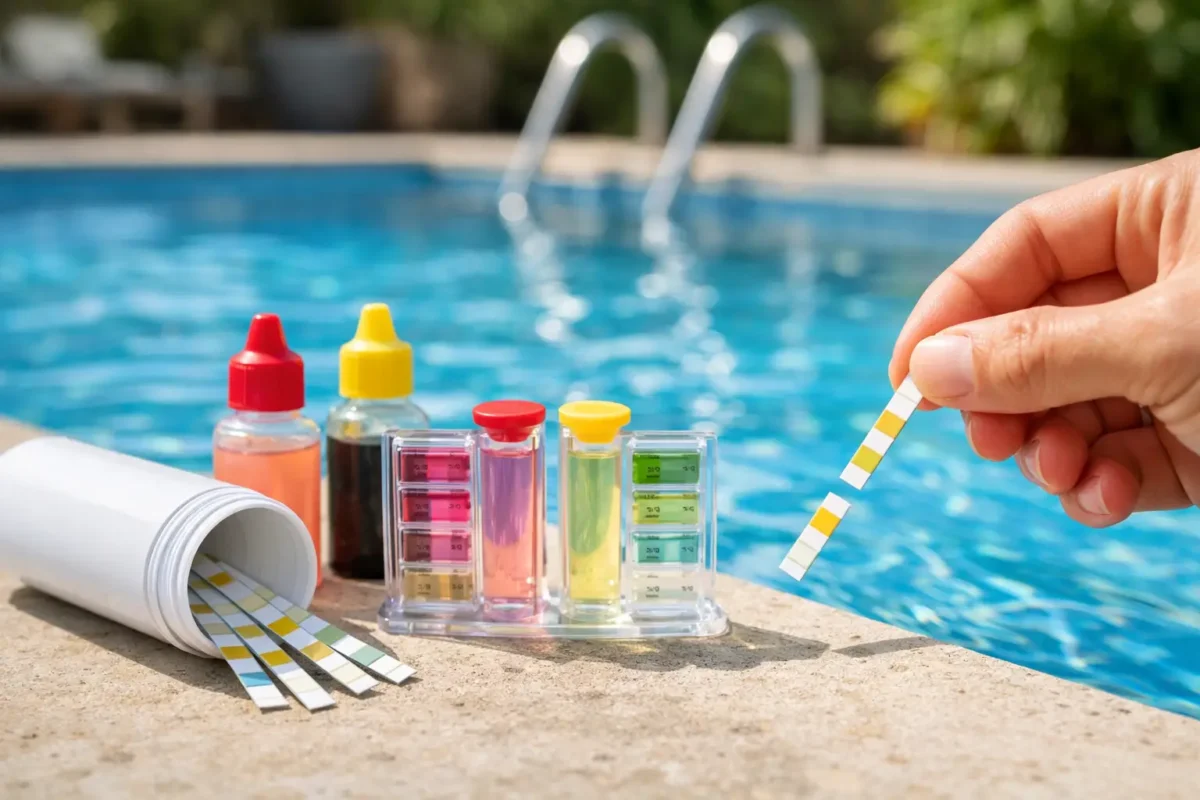
Water quality is a safety issue, not only a maintenance concern. Poor chemical balance can lead to skin irritation, eye discomfort, unsafe water clarity, and sanitation problems. If you cannot see clearly into the water, response time in an emergency is immediately compromised.

Reliable testing equipment and properly managed dosing systems help maintain safe swimming conditions with greater consistency. For commercial sites and high-value residential properties, automated monitoring can be especially beneficial because it reduces human error and supports stable operation.

The right setup depends on pool size, bather load, and maintenance frequency. Manual testing may be enough for some private pools, but many properties benefit from a more controlled, system-based approach.

Choosing the best pool safety equipment for your property

There is no universal package that fits every pool. The best pool safety equipment for a private villa may center on fences, alarms, covers, and child-focused access control. For a hotel or residential tower, the priority may shift toward deck safety, signage, rescue readiness, lighting, and water quality management. Large commercial or institutional environments usually require a broader, more technical combination of measures.

What matters is selecting equipment as part of a complete safety strategy. Products should match the pool design, the user profile, the operating schedule, and the maintenance capability of the property. Premium installations deserve more than minimum compliance. They deserve equipment that performs reliably, looks appropriate to the setting, and supports long-term confidence.

For owners and operators who value durability, presentation, and technical precision, safety should be specified with the same care as pumps, filters, finishes, and lighting. The best result is a pool that remains elegant, functional, and ready for use with no compromise where protection matters most.

Categories
Uncategorized

How to Install Pool Lights Correctly

A pool that looks impressive in daylight can feel unfinished after sunset if the lighting is poorly planned or incorrectly installed. If you are researching how to install pool lights, the real priority is not just appearance – it is safety, waterproof integrity, electrical compliance, and long-term performance.

For villa pools, hospitality projects, and commercial properties, lighting has a direct impact on ambiance, visibility, and asset value. The right installation creates a refined visual finish and dependable operation. A rushed installation can lead to water ingress, fixture failure, cable damage, and serious electrical risk.

How to install pool lights starts with the right plan

Before any fixture is placed into a niche or any cable is pulled through conduit, you need to confirm the type of pool light being installed. That usually means choosing between low-voltage LED lights, which are now the preferred option for most premium pools, and older halogen systems, which consume more power and require more frequent maintenance.

LED pool lights are the standard for modern residential and commercial projects because they offer longer life, lower energy use, and better color control. They also produce a cleaner architectural effect when properly positioned. That said, even the best fixture will underperform if the niche placement, transformer sizing, or sealing details are wrong.

The planning stage should cover fixture quantity, beam spread, wall placement, cable route, conduit condition, transformer location, and switching method. In a compact residential pool, fewer well-positioned lights often create a better effect than too many fixtures. In larger commercial pools, symmetry, brightness levels, and maintenance access become more important.

Choose fixtures rated for the pool environment

Not every outdoor light belongs in a pool. The fixture must be specifically rated for underwater use and compatible with the pool structure, whether that is concrete, tiled, fiberglass, or vinyl-lined construction. Nicheless lights, standard niche-mounted lights, and surface-mounted options each have different installation requirements.

Material quality matters. A premium installation should use corrosion-resistant housings, reliable gaskets, UV-stable cable insulation, and trusted electrical components. In hot climates, including the UAE, heat exposure and water chemistry place additional stress on equipment, so durability should never be treated as a minor detail.

This is also the point where compatibility needs to be checked. The light voltage must match the transformer output, the niche size must match the fixture body, and the cable length must be sufficient to reach the junction point without splicing in an improper location. A professional installer verifies all of this before work begins, not after the wall is sealed.

Prepare the niche, conduit, and power source

If this is a new-build pool, the installation is more straightforward because the niches and conduits can be built into the structure at the correct stage. In retrofit projects, the work depends heavily on the existing setup. Sometimes the old niche and conduit can be reused. Sometimes they cannot, especially if there is water intrusion, cable deterioration, or noncompliant electrical work already in place.

The niche must be securely fitted and aligned so the finished light sits flush and clean against the wall. Conduit routing should allow the cable to run continuously from the fixture to the junction box or transformer area. That path needs to remain watertight and free from sharp bends that can damage the cable or make future servicing difficult.

At the power side, the system should include the correct transformer for low-voltage lights and appropriate protection devices as required by local code. Grounding, bonding, and residual-current protection are not optional details. They are part of a safe pool lighting system.

How to install pool lights without compromising safety

The biggest mistake in pool lighting installation is treating it like ordinary landscape lighting. It is not. Water and electricity demand a much stricter standard, and installation should only proceed with the circuit fully isolated and the correct electrical design confirmed.

Once the niche and conduit are ready, the light cable is pulled through to the junction or transformer location. This should be done carefully to avoid abrasions to the cable jacket. If the fixture is designed with excess service cable, that slack is usually coiled behind the light inside the niche so the fixture can be brought to deck level later for maintenance.

The sealing points must be handled precisely. Gaskets, face rings, conduit seals, and fixture housing components all need to be fitted exactly as specified by the manufacturer. Over-tightening can distort seals. Under-tightening can allow water ingress. Both lead to avoidable failures.

After the fixture is seated, the electrical connection at the dry-side termination point should be completed according to the product specification and local electrical regulations. For premium projects, this is where disciplined workmanship separates a clean, reliable installation from one that becomes a maintenance issue six months later.

Test before final handover

A pool light should never be considered installed simply because it turns on. Proper testing includes electrical verification, waterproof integrity, fixture stability, and visual performance in the water.

Start by confirming voltage at the fixture and checking that the transformer and switching system operate correctly. Then inspect for any sign of moisture where it does not belong. If the niche, conduit, or fixture body has a sealing problem, it is better to identify it immediately than after the pool is fully in use.

Visual testing is just as important. At night, the beam spread should look balanced, without harsh glare toward seating areas or dead zones inside the pool. In hospitality and high-end residential settings, lighting is part of the design language. A technically correct installation still needs to look elegant.

New installation vs. retrofit work

If you are installing lights in a newly constructed pool, you have more control over layout and infrastructure. The conduits, niches, cable paths, and control systems can all be planned in advance. That usually results in a better finish and lower long-term maintenance costs.

Retrofitting an older pool is more complex. Existing niches may be outdated, cable routes may be restricted, and the previous transformer may not be compatible with modern LED fixtures. In some projects, a nicheless LED retrofit is the most efficient option. In others, a full upgrade is the better long-term investment.

This is where experience matters. A quick replacement may seem cost-effective, but if it leaves old electrical weaknesses in place, it can become the more expensive choice over time. High-value properties benefit from a full technical assessment before any retrofit begins.

Common mistakes that shorten pool light life

Poor product selection is one of the most common issues. Low-grade fixtures often fail early, especially in demanding environments where heat, chemicals, and operating hours are high. Another frequent problem is incorrect transformer sizing, which can reduce light performance or damage the fixture.

Improper sealing is equally serious. A small weakness in the gasket or conduit connection can lead to water intrusion, corrosion, and repeated service calls. Cable handling is another overlooked point. If the insulation is damaged during installation, the system may work initially and still fail prematurely.

There is also the issue of placement. Lights installed at the wrong height or facing the wrong direction can create glare, uneven illumination, or an underwhelming nighttime effect. Good pool lighting is both technical and architectural.

When professional installation is the right decision

Property owners often ask whether pool lights can be installed as a DIY project. In most cases, especially for in-ground pools and premium finished environments, professional installation is the right choice. The work combines underwater fixture integration, code-sensitive electrical connections, waterproofing, and final visual alignment.

For luxury villas, apartment amenities, hotels, and commercial pools, the standard should be higher than basic functionality. The expectation is safe operation, polished aesthetics, reliable components, and service support when needed. That is exactly why many clients prefer to work with experienced specialists such as Aquatic Pools and Fountains for both supply and installation guidance.

The value is not just in fitting the light. It is in selecting the correct fixture, matching the electrical system, protecting the pool finish, and delivering an installation that performs season after season.

Final considerations before you proceed

If you want to know how to install pool lights the right way, think beyond the fixture itself. Focus on voltage compatibility, waterproof sealing, proper placement, and the quality of the supporting electrical work. A pool light is a visual feature, but its success depends on technical discipline behind the wall.

When the installation is planned with care and executed to a premium standard, the result is immediate. The water looks more inviting, the architecture feels more complete, and the pool becomes usable and impressive long after sunset. That is the difference between adding lights and installing them properly.

Categories
Uncategorized

Pool Circulation Pump Review for Smart Buyers

A pool that looks impressive at first glance can still underperform if the pump is poorly matched. That is why a serious pool circulation pump review should never focus on horsepower alone. For villa owners, developers, and facility teams, the right pump determines water clarity, chemical balance, energy use, and how reliably the entire system performs under daily demand.

In premium residential and commercial settings, the pump is not a background component. It is the working core of circulation. When it is undersized, oversized, noisy, or inefficient, every part of the pool system feels the strain. Filtration becomes inconsistent, sanitization becomes harder to control, and operating costs rise faster than most buyers expect.

What a pool circulation pump review should actually measure

Many buyers begin with brand recognition or price, which is understandable, but neither tells the full story. A proper review starts with flow requirements. The pump must move enough water to support the pool volume, turnover target, filtration design, and hydraulic layout without wasting energy.

That means performance should be judged under real operating conditions, not just by the highest number on a product sheet. Pipe length, bends, valves, water features, heaters, chlorination equipment, and elevation changes all affect head pressure. A pump that looks strong on paper may deliver disappointing real-world circulation if the system is more complex than expected.

Noise is another factor often ignored until installation is complete. In luxury villas, rooftop pools, spa environments, and hospitality settings, a loud pump quickly becomes a quality issue. A quieter pump motor and a better-engineered housing can make a noticeable difference in guest comfort and day-to-day livability.

Durability matters just as much. In the UAE climate, heat, dust, heavy use, and long operating hours can expose weaknesses quickly. High-grade materials, strong seals, corrosion resistance, and dependable motor construction are not premium extras. They are practical requirements for long service life.

Pool circulation pump review: single-speed vs variable-speed

If the goal is basic circulation at the lowest upfront cost, a single-speed pump may seem attractive. It is simpler, familiar, and often sufficient for smaller or less demanding systems. The trade-off is efficiency. It runs at one fixed output, whether the pool needs full power or not.

Variable-speed pumps are stronger contenders for buyers focused on operating cost, control, and system refinement. They allow the pump to run at lower speeds for routine filtration and higher speeds only when needed for backwashing, water features, or peak circulation demand. That usually means lower power consumption, quieter operation, and more precise performance over time.

For larger villas, apartment amenities, hotels, and commercial pools, variable-speed models often justify the higher purchase price. The savings do not come from marketing claims. They come from matching pump output to actual use instead of forcing the system to run at full intensity all day.

Still, it depends on the project. A compact pool with a simple hydraulic design may not need advanced speed control. A high-visibility property with multiple circulation zones, decorative features, or long daily run times usually benefits from that flexibility.

How to judge pump sizing without guessing

Oversizing is one of the most common buying mistakes. Some buyers assume a larger pump means cleaner water and stronger performance. In reality, an oversized pump can create excessive flow, increase noise, place stress on filters and fittings, and waste electricity every day.

Undersizing brings a different problem. The pool may struggle to maintain water clarity, especially in hot weather or high-use conditions. Dead spots can develop, debris removal becomes less effective, and sanitizing systems may not perform as intended.

The right approach is to size the pump around the full hydraulic system. Pool volume is only the starting point. You also need to consider filter capacity, desired turnover rate, piping layout, suction and return design, and any extra equipment connected to circulation.

This is where technical support matters. A premium pump is only as effective as the system design behind it. Buyers who rely on generic sizing charts often end up correcting the decision later through higher bills, poor circulation, or early equipment wear.

Key performance areas that separate a premium pump from an average one

A strong pump review should look beyond the label and examine how the unit behaves over time. Motor efficiency is one of the clearest indicators of long-term value. Better motors hold performance more consistently and consume less power under normal operation.

Impeller and wet-end design also deserve attention. Efficient hydraulic design improves water movement while reducing turbulence and unnecessary load. That can support better circulation with less strain on the motor.

Build quality is equally important. A pump intended for premium installations should have a durable housing, dependable lid sealing, and service-friendly construction. Maintenance access should be straightforward, especially for commercial properties where downtime affects users and operations.

Another useful benchmark is integration. Modern pool systems often include heaters, chlorinators, automation panels, and decorative water features. A pump that works well within a broader equipment setup offers better long-term value than one that performs in isolation but creates compatibility issues later.

What matters most for villa owners

For private residences, the best pump is usually the one that disappears into daily life. It should run quietly, support clear water with minimal disruption, and avoid driving up utility costs. Buyers in this segment often care about elegance as much as equipment performance, so sound levels, footprint, and clean installation matter.

Reliability is especially important in seasonal or second-home properties. If a villa pool is not monitored every day, the circulation system must remain stable without constant adjustment. A well-selected pump helps maintain water quality more predictably and reduces the risk of avoidable service issues.

The right choice also depends on how the pool is used. A family pool with moderate use has different demands than an overflow pool with integrated spa jets and decorative features. A premium review takes those differences seriously rather than recommending one pump type for every home.

What commercial buyers should prioritize

Hotels, residential towers, wellness facilities, and developers usually evaluate pumps differently. Here, consistency and serviceability carry more weight. A pump may run for long hours under heavier hydraulic demand, and any interruption can affect multiple users, compliance standards, and maintenance schedules.

Commercial buyers should pay close attention to duty cycle, spare parts availability, maintenance access, and the practical reputation of the manufacturer. Energy efficiency matters too, especially when pools operate year-round and utility savings compound across multiple assets.

This is where a trusted technical supplier becomes essential. Procurement teams do not just need a pump. They need assurance that the equipment fits the application, performs as specified, and can be supported after installation. That is often the difference between a sound capital purchase and a recurring operational headache.

Common mistakes buyers make in a pool circulation pump review

The first mistake is comparing pumps only by horsepower. Two pumps with the same horsepower can behave very differently depending on hydraulic design, efficiency, and system resistance.

The second is ignoring lifecycle cost. A lower upfront price may look attractive, but if the pump is noisy, inefficient, or prone to service issues, it rarely stays cheaper for long.

The third is treating the pump as a standalone product. In reality, it is part of a complete circulation package that includes filter performance, pipe design, sanitization equipment, and control systems. Strong results come from compatibility, not from one component in isolation.

A final mistake is buying without technical evaluation. This is especially risky in premium or commercial environments, where the margin for error is smaller and the expectations are much higher.

Our view on the best buying approach

The strongest pool circulation pump review is one that connects performance to the actual project. For some pools, that means a high-quality single-speed unit with dependable construction and straightforward maintenance. For many modern residential and commercial installations, a variable-speed model offers a better balance of efficiency, noise control, and operational precision.

Buyers who prioritize water quality, durability, and long-term value should look past headline specs and focus on proper sizing, proven build quality, and technical support. That approach protects both the visual standard of the pool and the financial efficiency of the system behind it.

At Aquatic Pools and Fountains, that standard matters because a pump is never just a pump in a premium installation. It is a performance decision that affects the entire aquatic environment. Choose with that level of care, and the result is not only cleaner water, but a pool that feels easier to own, operate, and trust every day.