Aquatic

Categories
Uncategorized

Why Pool pH Keeps Rising and How to Stop It

A pool can look perfectly clear in the morning and still have a pH problem developing beneath the surface. If you are asking why pool pH keeps rising, the answer is rarely that the pool simply needs more acid. Repeatedly lowering pH without identifying the source can create a costly maintenance cycle, affect swimmer comfort, and gradually put premium finishes, equipment, and water chemistry out of balance.

For villas, hospitality properties, residential towers, and commercial facilities, stable water chemistry protects far more than appearance. It supports effective disinfection, helps preserve tile, grout, plaster, heaters, pumps, and dosing equipment, and keeps the water inviting for every user. The right solution begins with understanding what is pushing the pH upward.

Why Pool pH Keeps Rising

A pH reading measures how acidic or alkaline pool water is. Most pools perform best with pH maintained between 7.2 and 7.6. Once it climbs above that range, chlorine becomes less effective, scale formation becomes more likely, and water may feel less comfortable on the skin and eyes.

The most common reason for rising pH is carbon dioxide leaving the water. This process, known as outgassing, is natural. When dissolved carbon dioxide escapes into the air, the water becomes more alkaline and pH rises. In an active pool environment, several conditions can speed up that process.

Aeration and water movement

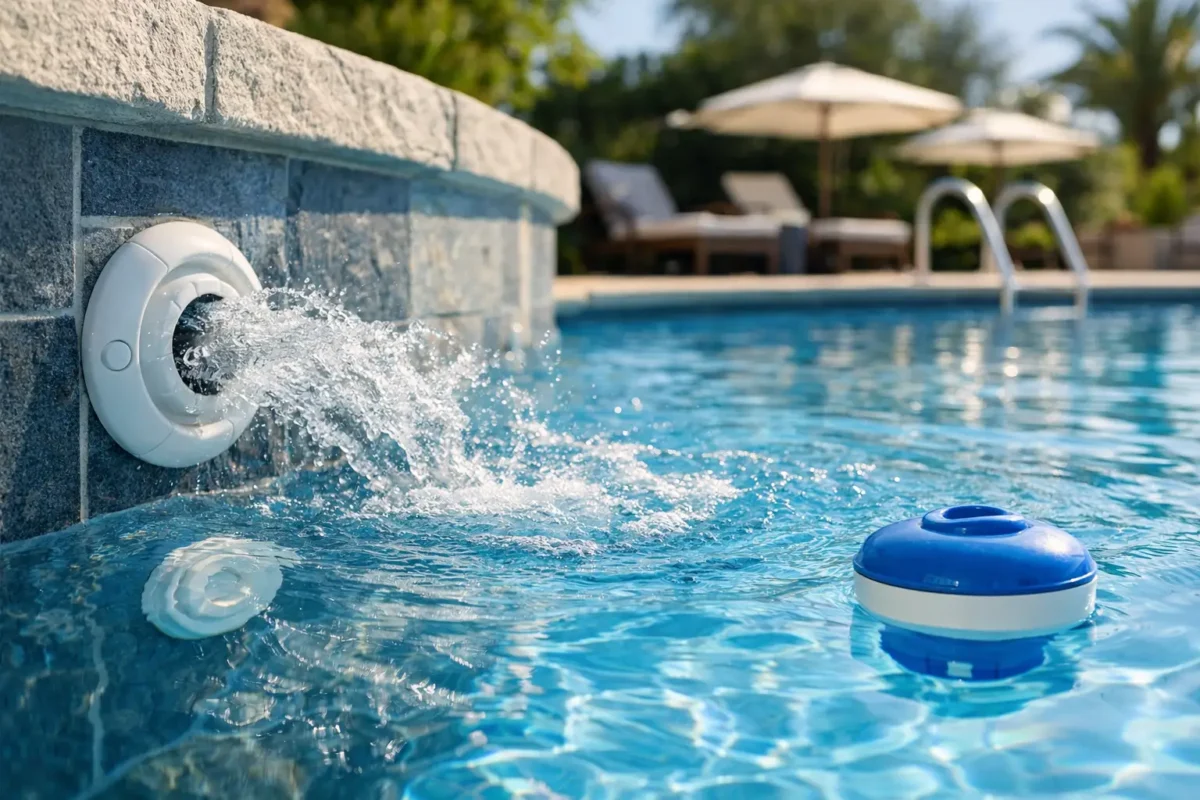
Water features are a defining element in many premium UAE pool installations, but they can also influence chemistry. Spillover spas, deck jets, waterfalls, fountains, bubblers, infinity edges, and strong return jets all increase contact between water and air. The more turbulence there is, the faster carbon dioxide can leave the water.

This does not mean an elegant water feature is a problem or should be switched off permanently. It means the pool should be designed and maintained with its operating conditions in mind. A hotel pool with an infinity edge running for long hours will need a different chemical-management approach than a quiet residential pool with limited circulation.

Total alkalinity is too high

Total alkalinity, often called TA, is one of the most important factors behind persistent pH rise. It acts as a buffer, helping prevent sudden pH changes. However, when alkalinity is excessively high, it provides more dissolved carbonate material for carbon dioxide to outgas from the water. The result is a recurring upward pH drift.

Many pool owners add acid, bring the pH down briefly, then find it high again a day or two later. In these cases, the underlying alkalinity has often not been adjusted correctly. For many pools, a total alkalinity range around 80 to 120 ppm is appropriate, although the ideal target depends on the sanitizer system, surface type, calcium level, and equipment configuration. Saltwater pools frequently benefit from a lower, carefully controlled alkalinity target.

Salt chlorine generators naturally raise pH

Salt chlorine generators are popular because they provide consistent sanitation and reduce the need for manual chlorine additions. They also tend to raise pH as part of normal operation. The generation process produces tiny hydrogen bubbles, which aerate the water and encourage carbon dioxide to escape.

A gradual pH increase in a saltwater pool is therefore expected. The goal is not to eliminate it entirely, but to manage it efficiently. Correct total alkalinity, properly sized equipment, accurate testing, and a dependable acid-dosing strategy can significantly reduce manual intervention.

Fill water and evaporation in hot climates

In Dubai and across the UAE, high temperatures and evaporation place added demands on pool balance. Evaporation does not remove minerals. As water evaporates, calcium, alkalinity, salt, and other dissolved materials remain behind and become more concentrated. Replacing that water with fresh fill water may introduce additional alkalinity or calcium, depending on the local supply.

This is why a pool can develop rising pH, scale at the waterline, or cloudy water even when the regular treatment routine has not changed. High bather loads, frequent top-ups, and intense circulation periods can amplify the issue in commercial settings.

New plaster, grout, or cement-based finishes

Newly finished or recently renovated pools may experience elevated pH for weeks or months. Fresh plaster, cementitious grout, and certain render finishes release alkaline compounds as they cure. This is normal during the early life of the surface, but it requires attentive testing and controlled correction.

Aggressive chemical treatment is not the answer. New surfaces need a disciplined start-up procedure that considers pH, alkalinity, calcium hardness, sanitizer level, and brushing requirements. Poor start-up practices can leave lasting marks, scale, or surface discoloration on an otherwise high-quality installation.

The Hidden Cost of High pH

When pH rises too far, chlorine loses a portion of its sanitizing efficiency. That can lead operators to add more chlorine than necessary, increasing chemical consumption without addressing the real balance problem. It can also allow algae risk to rise, particularly in warm water and high-use pools.

High pH also increases the risk of calcium scale. White deposits may appear on tile lines, fittings, heaters, salt cells, and water features. Over time, scale can restrict circulation pathways, reduce heat-transfer efficiency, and create unnecessary service costs. On a luxury pool or a prominent fountain installation, it can quickly affect the clean, refined finish owners expect.

Water balance should be viewed as a complete system, not a single reading. A technically sound assessment considers pH alongside total alkalinity, calcium hardness, cyanuric acid, temperature, total dissolved solids, and sanitizer levels. The relationship among these factors determines whether water is likely to be corrosive, balanced, or scale-forming.

How to Stop pH From Climbing Repeatedly

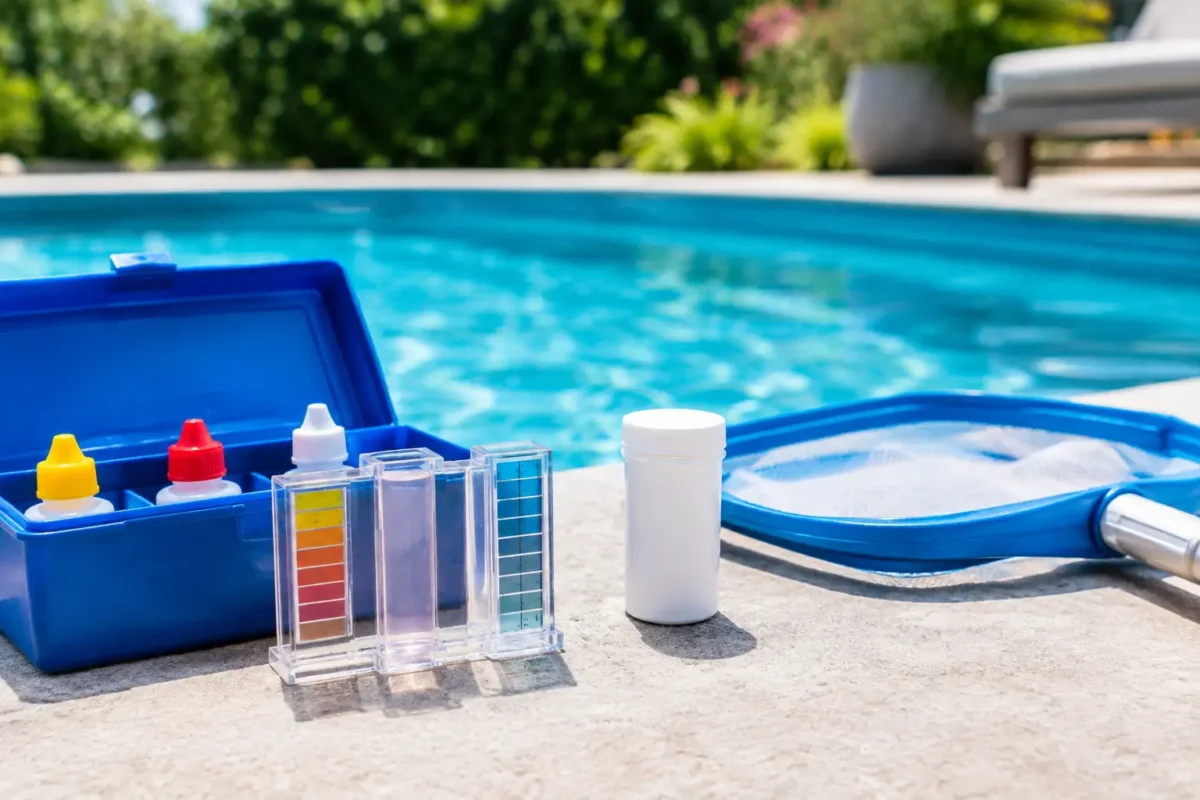
The most reliable approach is to correct the cause of the rise, then establish a routine that matches the pool’s design and use. Start by testing with a dependable, properly calibrated testing system. Test strips can provide a quick indication, but a quality drop-test kit, photometer, or automated controller offers better precision for premium residential and commercial pools.

First, verify the pH reading and test total alkalinity before adding any corrective chemical. If alkalinity is high, reduce it gradually under professional guidance. This normally involves controlled acid treatment combined with circulation and, in some cases, purposeful aeration to bring pH back into the operating range while lowering alkalinity over time. Adding a large amount of acid at once can create an unstable swing and may damage finishes or equipment.

Next, inspect the pool’s operating conditions. Check whether fountains, spillovers, jets, or air blowers are running longer than necessary. These features may be essential to the visual design, especially at hospitality and luxury residential sites, but their schedules can often be optimized. Running decorative features only during selected presentation hours may reduce pH drift while maintaining the intended visual impact.

For saltwater pools, inspect the generator output, salt concentration, cell condition, and controller settings. A scaled or poorly maintained cell can affect system performance. The correct answer may be a lower alkalinity target, a revised production schedule, or automated pH control rather than frequent manual dosing.

Finally, test fill water periodically. If source water is high in alkalinity or calcium, every top-up changes the chemistry. A professional service team can recommend whether controlled dilution, treatment adjustments, or equipment upgrades are appropriate for the property.

When Automated pH Control Makes Sense

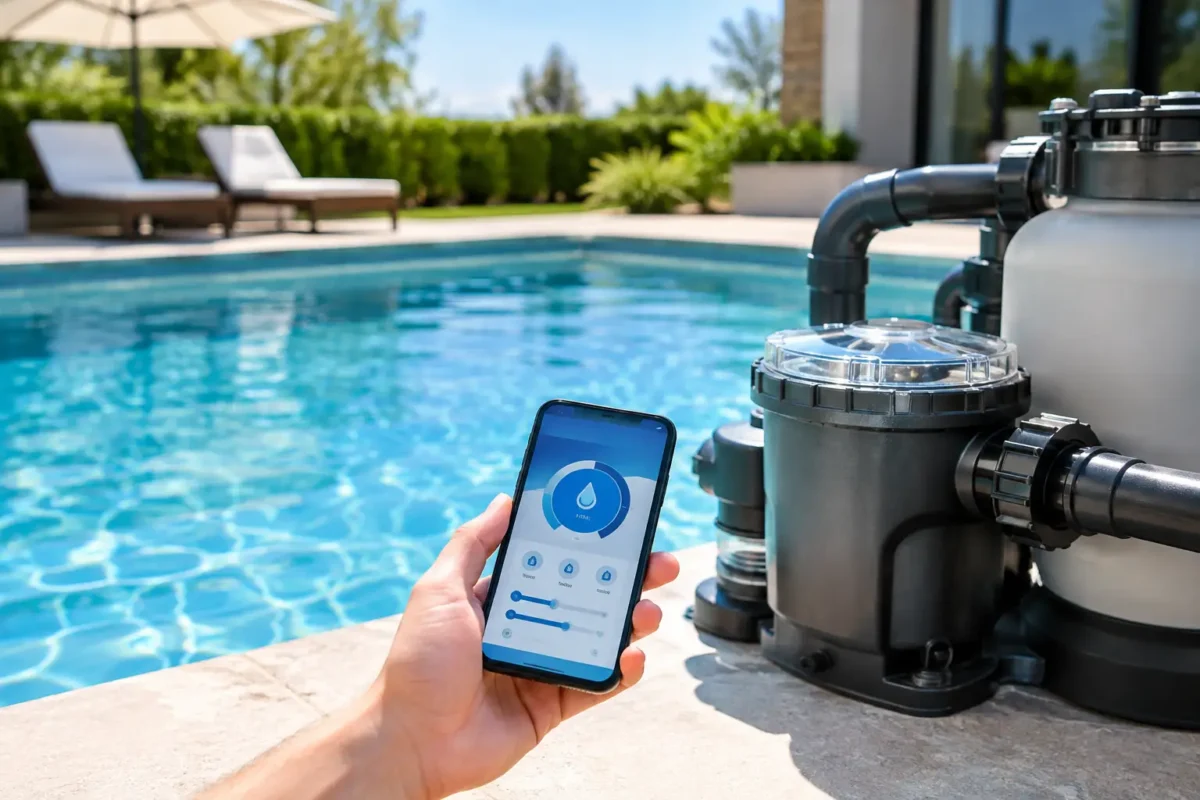
For a busy villa, a large residential development, hotel, health club, or commercial aquatic facility, manual testing alone may not offer the consistency required. Automated monitoring and dosing systems continuously measure water conditions and add the required correction in small, controlled quantities. This is particularly valuable where water features, salt chlorination, heat-cool pumps, or high bather loads create frequent chemical changes.

Automation has a clear trade-off: it requires quality equipment, professional installation, regular calibration, and routine inspection. However, when selected correctly, it can reduce chemical waste, protect high-value equipment, improve consistency, and give facility teams stronger control over water quality.

Aquatic Pools and Fountains supports premium pool environments with water-testing systems, disinfection equipment, chemical solutions, and technical service tailored to the installation. For properties where pH rises repeatedly, a full water-balance review is often more valuable than another round of temporary chemical correction.

A stable pool is not achieved by chasing one number on a test kit. It comes from matching the chemistry, circulation, equipment, water features, and maintenance schedule to the way the pool is actually used. Once the reason behind the pH rise is identified, the right adjustments can keep the water clear, comfortable, and ready to perform at the standard your property demands.

Categories
Uncategorized

Pool Lighting Design Guide for Premium Pools

A pool can look perfectly finished in daylight and feel unfinished after sunset. The difference is rarely the pool tile or landscaping alone. It is the lighting plan. This pool lighting design guide is built for villa owners, hospitality teams, developers, and facility managers who want an aquatic environment that remains safe, elegant, and visually controlled after dark.

For premium installations, pool lighting is not a final accessory decision. Fixture selection, placement, wiring routes, controls, water features, and maintenance access should be considered early in the project. The right system brings out the depth of the water, defines the pool’s architecture, supports safe circulation, and adds value to the entire outdoor setting.

Start With the Pool’s Purpose After Dark

The most effective lighting scheme begins with a simple question: how will the pool area be used at night? A private villa pool intended for quiet family use requires a different result from a hotel pool deck hosting guests, events, and late-evening dining.

For residential pools, the priority is usually calm, glare-free illumination that makes the water inviting without flooding the garden with brightness. Commercial pools need more consistent visibility across larger water surfaces, walkways, steps, and access points. In both cases, lighting should reveal the pool’s form rather than compete with it.

Consider the complete nighttime view. Look from the main living room, terrace, garden seating area, arrival drive, and upper floors. A light that appears attractive from inside the water may create uncomfortable glare from a nearby lounge or dining space. This is why a lighting layout should be reviewed from multiple viewing angles before installation begins.

Choose the Right Pool Light Technology

LED pool lights are the preferred choice for most modern projects because they provide long service life, low energy use, and excellent color control. They are available in white-light and RGB or RGBW versions, allowing the atmosphere to shift from refined everyday illumination to a more expressive setting for an event.

Warm white lighting can complement beige stone, timber decking, and soft landscape planting. Cool white may suit contemporary architecture, blue or gray finishes, and crisp waterline tile. Neither is automatically better. The pool interior finish strongly affects the final appearance: a white or light-colored surface reflects more light, while dark mosaic, deep blue tile, and black finishes absorb more light and often require a more deliberate fixture layout.

Color-changing systems should be selected with restraint. They offer flexibility for hospitality venues and entertaining spaces, but the best premium designs do not rely on constantly changing colors. A clean white scene is often the most elegant default, with programmable color scenes reserved for celebrations, branded events, or seasonal use.

Quality matters beyond appearance. Specify purpose-built underwater fixtures with durable housings, reliable seals, correctly rated niches, and compatible low-voltage transformers or drivers. In Dubai and across the UAE, equipment must also withstand heat, humidity, pool chemicals, and the demanding duty cycles of commercial facilities.

Pool Lighting Design Guide: Plan the Layout First

A common mistake is placing lights symmetrically without considering sightlines. Symmetry can work well, but it is not the same as good design. The fixture layout should create an even wash of light through the water while directing the source away from principal viewing areas.

For a rectangular pool, lights are often positioned along one long wall so they shine across the pool rather than directly toward the house, terrace, or seating area. This reduces glare and lets the water surface carry the reflected light. If the main viewing location is on one side of the pool, placing fixtures on the opposite wall is usually the stronger choice.

Freeform pools, L-shaped pools, and pools with tanning ledges need a more tailored approach. Curves may require additional fixtures to prevent dark pockets, while deep ends need adequate coverage without making shallow lounging zones excessively bright. The objective is visual continuity, not a grid of visible points of light.

Depth also changes the result. A deep pool naturally appears darker, particularly with a dark interior finish. Instead of simply choosing brighter fixtures, assess beam spread, fixture position, and the reflective qualities of the selected finish. Excessive output can create hot spots and make the water feel harsh rather than luxurious.

Steps, ledges, and entry points

Steps and shallow ledges deserve dedicated attention because they are the points where users enter, exit, and change depth. A separate low-level light or carefully aimed fixture can make step edges legible without producing glare at eye level. This is particularly valuable for children, older users, hotel guests, and evening gatherings.

Do not depend on a single main pool light to illuminate every safety feature. Integrated spa benches, sun shelves, beach entries, handrails, and transition zones should each be evaluated in the design phase. A pool that looks dramatic but leaves its entry points unclear is not a successful installation.

Water features need their own lighting strategy

Bubblers, deck jets, cascades, waterfalls, and fountains can become signature visual elements after dark, but they should not be lit as an afterthought. A waterfall may benefit from a fixture aimed across its falling sheet of water, while bubblers often look best when lit from below with compact, focused fittings.

The trade-off is maintenance and visibility. Lighting every feature can create visual clutter, especially in smaller villa pools. Select the elements that deserve emphasis and allow the rest of the composition to remain quiet. For commercial and hospitality spaces, feature lighting can also be programmed as a separate zone, allowing operators to adjust the setting for daily operation, events, or cleaning.

Coordinate Pool, Landscape, and Architectural Light

Underwater lighting is only one layer of the nighttime environment. Landscape uplights, path lights, wall sconces, and terrace lighting all influence how the pool reads after sunset. If every element is bright, the water loses depth and the space can feel more like a parking area than a retreat.

Keep the pool as the visual focal point, then use surrounding light to define circulation and architectural edges. Soft pathway lighting improves safety around wet surfaces. Controlled planting lights add depth beyond the pool perimeter. Gentle illumination on a feature wall or pergola can frame the water without shining directly into it.

Avoid placing powerful landscape fixtures where they reflect sharply on the water surface or expose the faces of people in the pool. Likewise, avoid excessive downlighting over the pool. Reflections and ripples are part of the experience, but uncontrolled glare is not.

Specify Safe Electrical Systems and Accessible Service Points

Pool lighting is a specialized electrical installation. The system should be designed and installed in accordance with applicable local regulations, using appropriately rated equipment, low-voltage supply where required, correct earthing and bonding practices, protected cable routes, and accessible junction or service points.

For property owners and project managers, the practical requirement is clear: never choose lighting based on appearance alone. Confirm that fixtures, transformers, controllers, niches, conduits, and cables are compatible as a complete system. Mixing components without technical verification can affect performance, warranty support, and future maintenance.

Service access is especially important for large villas, rooftop pools, hotels, and high-occupancy residential properties. Drivers and control equipment should be located where qualified technicians can inspect them without disrupting finished landscaping, ceilings, or pool coping. A well-designed system should make replacement and troubleshooting straightforward years after handover.

Use Controls That Suit Daily Operation

The controls should match the people operating the pool. A private homeowner may prefer a simple wall switch, remote control, or mobile app with a few reliable scenes. A hotel or facility manager may require centralized timers, zone control, automation integration, and preset schedules that align with operating hours.

At a minimum, separate the pool lights from landscape and feature lights. This gives the owner more freedom to create the right balance without running every fixture at once. Dimming capability is valuable where compatible, particularly for dining terraces and event spaces where the preferred light level changes during the evening.

Choose controls that remain intuitive. A sophisticated system has limited value if staff cannot confidently select a standard operating scene or identify a fault. Clear labeling, documented settings, and professional commissioning protect the investment from the first night of operation.

Avoid the Design Decisions That Age Poorly

Overlighting is the most frequent issue in premium pool environments. More fixtures and higher output do not automatically create a better result. They often increase glare, reveal every imperfection in the finish, and flatten the atmosphere that owners hoped to create.

Another avoidable error is selecting lights late, after the shell, coping, and electrical routes are complete. Late decisions can limit placement options and force compromises in conduit routing, niche locations, or service access. Coordinate the pool contractor, electrical contractor, landscape designer, and lighting specialist early.

Finally, plan for the real environment. Water chemistry, frequent operation, coastal conditions, heat, and cleaning routines all affect equipment life. Premium fixtures and correct installation cost more upfront, but they reduce disruption, protect visual quality, and support dependable operation over time.

A well-lit pool should feel effortless to use and impressive to look at. When the design is shaped around architecture, safety, water finish, and long-term serviceability, the result is more than a brighter pool – it is an outdoor asset that continues to perform with distinction after sunset.

Categories
Uncategorized

Pool Filter vs Cartridge: Which Fits Your Pool?

A pool that looks polished in the morning and turns hazy by afternoon has a filtration problem, not simply a chemical problem. The phrase pool filter vs cartridge can be confusing because a cartridge is itself a type of pool filter. In most purchasing discussions, the real choice is between a sand filter and a cartridge filter, with diatomaceous earth (DE) filtration occasionally considered for specialist applications.

For villa pools, hospitality facilities, residential developments, and commercial properties, this decision affects water clarity, operating costs, plant-room space, maintenance routines, and the long-term presentation of the entire aquatic environment. A premium pool finish deserves filtration equipment selected for its real operating demands, not only its initial price.

Pool Filter vs Cartridge: Clarifying the Choice

Every filtration system has the same essential job: circulate pool water through a filter, capture suspended debris and fine particles, then return clean water to the pool. The difference is the material doing the filtering and the way it is cleaned.

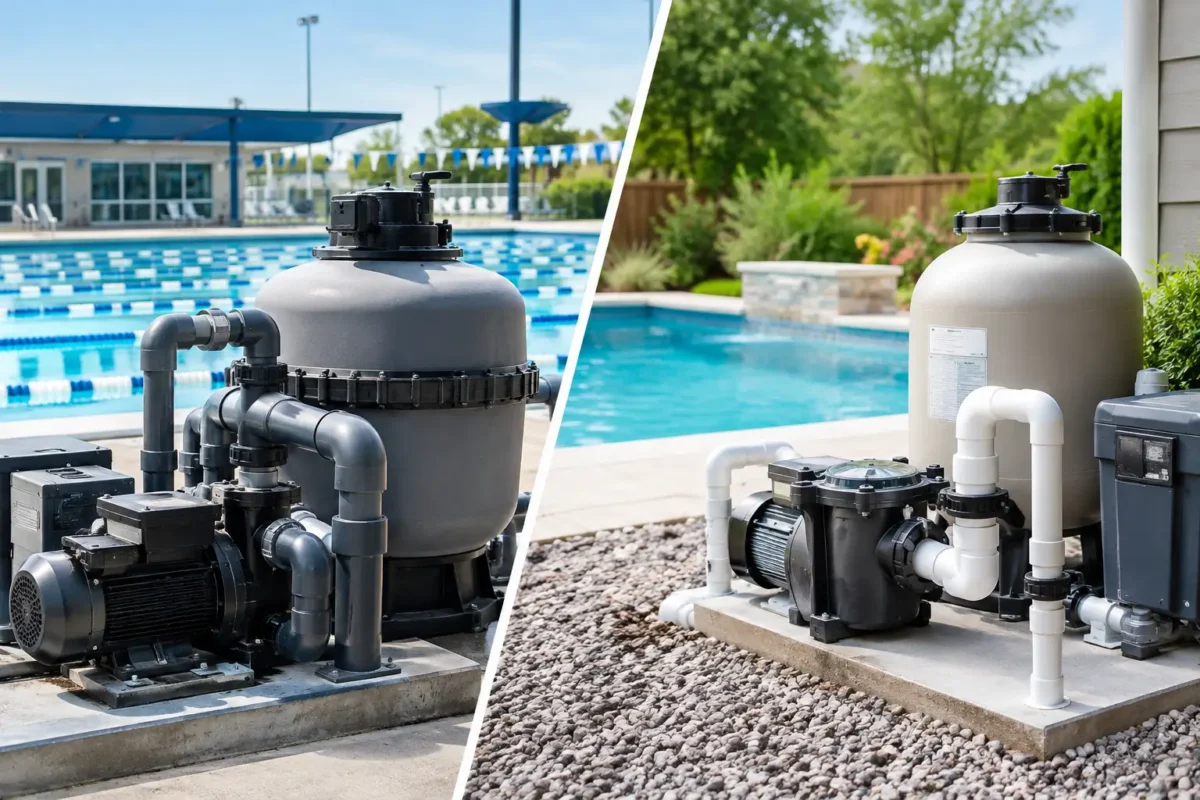
A sand filter uses a bed of specially graded filter media. Water passes through the media, where dirt and debris are trapped. When pressure rises, the operator backwashes the filter, sending accumulated debris to waste before rinsing and returning the valve to normal filtration.

A cartridge filter contains one or more pleated filter elements. Water flows through the pleats, which provide a large surface area for particle capture. Rather than backwashing, the filter is opened periodically and the cartridges are rinsed with a hose. In some cases, they also require a dedicated cleaning solution to remove oils, scale, and stubborn residue.

DE filters use fine diatomaceous earth powder on internal grids and can achieve exceptionally fine filtration. They are effective but demand more careful handling, regular attention, and compliant disposal practices. For many residential and commercial projects, the practical decision remains sand filter versus cartridge filter.

Water Clarity and Filtration Performance

Cartridge filtration is often chosen when water clarity is the highest priority. Quality cartridge elements can capture finer particles than standard sand media, commonly in the range of about 10 to 20 microns depending on the element, flow rate, and operating condition. This can make a visible difference in pools exposed to fine dust, landscaping debris, sunscreen residue, or frequent bather use.

Traditional sand filtration generally captures larger particles, often around 20 to 40 microns. That does not mean sand filters produce poor water quality. A correctly sized sand filter, paired with balanced water chemistry, suitable circulation, and regular maintenance, can keep a pool consistently clean and attractive. It is a proven solution for high-use environments because it handles variable loads with straightforward operation.

The result depends on the complete system. An undersized pump, poor hydraulic design, incorrect valve settings, inadequate sanitizer levels, or neglected cleaning can compromise even the most advanced filter. Filtration should be selected as part of a coordinated equipment package that includes the pump, plumbing, disinfection system, water testing, and automated controls where required.

Consider the Pool’s Surroundings

A sheltered indoor pool has very different filtration needs from an outdoor pool surrounded by mature landscaping or located near active construction. Fine dust and airborne debris place a heavier burden on filtration. Likewise, a hotel pool with continuous bather traffic needs a system designed for reliable performance under changing loads, not a residential unit pushed beyond its intended capacity.

Maintenance: Backwashing or Cleaning Cartridges

The clearest operational difference between sand and cartridge filtration is maintenance.

Sand filters are familiar to many service teams. When the pressure gauge rises above the clean operating pressure, the filter is backwashed. This process is quick and effective, and it restores flow without opening the filter tank. For large pools, busy facilities, and sites with routine technical support, this simplicity is a major advantage.

The trade-off is water use. Backwashing sends water to waste, followed by a rinse cycle. In hot, dry climates and properties where water management matters, repeated backwashing can become a meaningful operating expense. It also requires appropriate drainage planning from the outset.

Cartridge filters do not require backwashing, which can reduce water waste substantially. However, their elements must be removed and cleaned manually. A lightly loaded residential pool may need cartridge cleaning only a few times per season, while a busy pool may need attention much more often. The right interval is determined by pressure readings, water flow, and visual inspection, not by the calendar alone.

Cartridges also have a replacement cycle. Even careful cleaning cannot restore an element indefinitely. Pleats can degrade, bands can weaken, and accumulated oils or mineral scale can restrict flow. Premium replacement cartridges and correct cleaning procedures protect the performance of the whole circulation system.

For a facility manager, the practical question is not which filter needs less care. Both require care. The better question is whether the property is better equipped to manage periodic backwashing or planned cartridge cleaning and replacement.

Energy Use, Flow Rate, and Equipment Sizing

A cartridge filter typically creates less resistance to water flow than a sand filter, particularly when the cartridge is clean and generously sized. Lower resistance can allow the circulation pump to move water more efficiently. This is especially valuable when a variable-speed pump is part of the installation, as the system can be tuned for efficient daily filtration while retaining capacity for cleaning cycles, water features, or peak use.

Sand filters can create more resistance as they collect debris, but they are highly dependable and well suited to systems that require strong, steady flow. They are often selected for larger pools, commercial installations, and pools with water features that place additional demands on circulation equipment.

Sizing is critical in both cases. Choosing a filter based only on the connection size or a general pool-volume estimate can cause poor circulation, frequent cleaning, high energy use, and premature pump strain. The filter must match the required turnover rate, the pump’s flow curve, plumbing diameter, pool volume, bather load, and any connected features such as waterfalls, spa jets, fountains, or heat-cool pumps.

An oversized cartridge filter is often a smart investment for a luxury residence because it provides more surface area and longer intervals between cleanings. A correctly sized commercial sand filter can provide reliable, repeatable operation for a high-traffic facility. There is no single best option across every property type.

Choosing the Right Filter for Your Property

A cartridge filter is usually a strong choice for premium villas, smaller to mid-sized residential pools, and properties focused on water conservation and fine clarity. It is particularly appealing where plant-room drainage is limited or where frequent backwashing is undesirable. It also suits owners who want a quieter, more efficient circulation setup when paired with the right variable-speed pump.

A sand filter is often the preferred choice for larger pools, apartment developments, hotels, schools, and commercial facilities where straightforward service procedures and durable high-volume operation are priorities. Its backwash process is simple for trained maintenance staff, and the filter media generally has a long service life when properly maintained.

The decision may also be shaped by the service model. A property with an on-site technical team may find sand filtration highly practical. A private villa owner using scheduled pool service may prefer cartridge filtration, provided the service plan includes proper element cleaning and timely replacement.

Professional Installation Protects Filter Performance

The filter tank or cartridge housing is only one part of a high-performing pool system. Correct installation includes properly sized pipework, isolation valves, pressure gauges, unions for service access, electrical protection for the pump, and space to remove cartridge elements or operate the sand filter valve safely.

For commercial and luxury residential projects, equipment should also be selected for durability in demanding plant-room conditions. Quality valves, fittings, pumps, and filtration components reduce avoidable downtime and preserve the refined appearance clients expect from a premium aquatic installation. Aquatic Pools and Fountains supports this process with professional equipment guidance, installation expertise, and maintenance solutions tailored to each project.

The right filter should make ownership easier, not create a recurring operational compromise. Select the system around the pool’s actual use, water conditions, available service support, and long-term operating priorities, then give it the professional installation and maintenance it deserves.

Categories
Uncategorized

Residential Pool Equipment Buying Guide for UAE

A beautiful residential pool is only as dependable as the equipment working behind the scenes. In the UAE, where high temperatures, frequent use, fine dust, and strong sun place constant demands on a pool, choosing equipment on price alone can create years of unnecessary maintenance costs. This residential pool equipment buying guide focuses on the systems that protect water quality, improve comfort, and preserve the refined appearance expected in a premium home environment.

The right specification is not simply a matter of selecting the largest pump or the most advanced control panel. It requires a balanced system designed around pool volume, hydraulic layout, bather load, location, finish materials, and the owner’s expectations for efficiency and convenience. Quality equipment, professionally sized and installed, delivers quieter operation, lower energy consumption, clearer water, and a more reliable ownership experience.

Start With the Pool’s Real Operating Requirements

Before selecting individual products, establish the details that determine capacity. Pool dimensions and total water volume are essential, but they are not the full picture. A compact plunge pool with an overflow edge, spa jets, water features, and a heat-cool pump may require more specialized hydraulic planning than a larger, conventional skimmer pool.

Consider how the pool will be used. A private villa pool used by a family on weekends has different requirements from a pool that hosts regular gatherings, serves a rental property, or supports a landscaped fountain feature. High bather loads increase the demand on filtration and disinfection. Pools exposed to direct sunlight for most of the day may also require closer attention to sanitizer control and cooling capacity.

Equipment should be selected as one coordinated system. A premium filter cannot compensate for an undersized circulation pump, and a high-performance disinfection system will not perform as intended if flow rates are inconsistent. Professional hydraulic calculations are particularly valuable for infinity pools, rooftop pools, pools with long pipe runs, and installations with multiple water features.

Select a Pool Pump for Efficient, Reliable Circulation

The circulation pump is the center of a residential pool system. It moves water through the skimmers, main drains, filters, heaters, and treatment equipment, making it one of the most influential choices in long-term operating cost and water clarity.

For most modern residential projects, a variable-speed pump is the preferred option. Unlike a single-speed model that operates at full power whenever it is on, a variable-speed pump can run at lower speeds for daily filtration and increase output when vacuuming, operating water features, or supporting backwashing. This can significantly reduce energy use while also lowering noise levels.

Pump sizing should be based on the required turnover rate and the total resistance within the plumbing system. Oversizing is not always beneficial. A pump that is too powerful can create excessive flow velocity, increase wear on fittings, make filtration less effective, and add unnecessary power consumption. The goal is stable, properly matched flow, not maximum force.

When comparing pumps, look beyond horsepower. Motor efficiency, speed control, noise rating, saltwater compatibility, warranty support, and local availability of replacement parts all affect the value of the investment. For luxury villas, quiet operation is often just as important as power, especially when equipment rooms are close to outdoor living areas.

Choose Filtration Based on Water Quality Goals

A filter removes suspended debris that can make water look dull or place extra pressure on the sanitizer. The right option depends on the pool’s size, usage pattern, available plant-room space, and maintenance preference.

Sand and Glass Media Filters

Sand filters remain a practical choice for many residential pools because they are durable, simple to operate, and well suited to UAE conditions. Glass media is a premium alternative that can provide finer filtration, improved dirt capture, and longer media life when correctly maintained. Both options require periodic backwashing, so drainage planning and water use should be considered during system design.

Cartridge Filters

Cartridge filters can offer excellent filtration with no backwashing requirement, making them suitable where water conservation is a priority. However, cartridges need regular cleaning and eventual replacement. They work best when the owner or maintenance provider can follow a consistent service schedule.

Diatomaceous Earth Filtration

Diatomaceous earth filters provide exceptionally fine filtration, but they demand more attentive maintenance and careful handling of filter media. They are usually selected for projects where exceptional water polish is a priority and skilled service support is available.

For most premium residential pools, the best choice is not necessarily the filter with the finest micron rating. It is the model that can maintain excellent water clarity while matching the pool’s circulation rate and the property’s maintenance routine.

Plan Heating and Cooling for Year-Round Comfort

Pool temperature has a direct effect on how often a pool is enjoyed. In the UAE, a heat-cool pump is frequently the most versatile solution because it can extend comfortable swimming through cooler months while helping reduce excessive water temperatures during the hottest periods.

Capacity should be selected according to pool volume, desired temperature range, exposure to wind and sun, and whether a pool cover will be used. An undersized heat-cool pump may run continuously without reaching the desired temperature. An oversized unit can increase initial investment without delivering meaningful additional value.

Pool covers deserve consideration here. They reduce heat loss, limit evaporation, keep debris out of the water, and can improve the effectiveness of both heating and cooling equipment. For clients focused on operating efficiency, a cover is often one of the most sensible additions to the overall equipment package.

Invest in Water Treatment That Fits Your Lifestyle

Clear water is not simply an aesthetic standard. It depends on disciplined disinfection, proper pH balance, dependable circulation, and routine testing. The best water-treatment system should make those requirements easier to manage without compromising performance.

Salt chlorination is popular for residential pools because it produces chlorine continuously from dissolved salt, reducing the need for frequent manual dosing. It can provide a more consistent sanitizer level and a more comfortable swimming experience when balanced correctly. It still requires regular water testing, cell inspection, and pH management.

UV and ozone systems can be valuable additions to a primary sanitizer program. These systems help reduce the demand on chlorine and support improved water quality, particularly in heavily used pools. They should not be treated as stand-alone replacements for an approved residual sanitizer.

Automated chemical dosing is a strong option for owners who want dependable control with less manual intervention. Dosing systems monitor and adjust key water parameters, helping avoid the swings that lead to cloudy water, surface damage, or swimmer discomfort. The equipment must be calibrated and serviced properly, but it offers considerable value for larger villa pools and properties with limited daily supervision.

Do Not Treat Lighting and Controls as Afterthoughts

Underwater lighting defines the pool’s appearance after sunset. High-quality LED lights use less energy than traditional fixtures, offer long service life, and can create a sophisticated white or color-changing effect for entertaining and landscape design. Select fixtures designed for the pool finish, desired beam spread, and required level of brightness rather than choosing by color options alone.

Smart controls bring the equipment system together. A properly configured controller can schedule filtration, manage variable pump speeds, operate lights, regulate heat-cool pumps, and coordinate water features from one interface. This is especially useful for homeowners who travel frequently or manage several properties.

Automation should be specified for practical use, not just visual appeal. A simple, reliable control system that is easy for the homeowner and service team to understand is usually more valuable than an overly complex setup with functions that are rarely used.

Include Safety, Cleaning, and Equipment-Room Details

A complete residential pool equipment buying guide must account for the items that protect people and simplify upkeep. Safety covers, compliant drain covers, secure access barriers, anti-entrapment components, and clear equipment isolation points should be part of the planning process from the beginning.

For cleaning, a robotic pool cleaner can reduce manual labor and help maintain the pool floor and walls between service visits. Built-in suction or pressure cleaning systems may suit certain designs, but they should be evaluated alongside their pump and plumbing requirements.

The equipment room itself matters. It should provide ventilation, drainage, safe electrical access, adequate working space, and protection from excessive heat and dust. A well-organized plant room makes routine service faster, supports a longer equipment life, and reflects the same standard of care as the pool area above it.

Aquatic Pools and Fountains helps homeowners and project teams select premium equipment packages that match the technical and aesthetic requirements of each installation. The strongest result comes from treating pumps, filters, treatment, heating, lighting, and controls as one engineered solution – so the pool remains elegant, efficient, and ready to enjoy whenever the property demands it.

Categories
Uncategorized

Robotic Cleaner vs Suction for Your Pool

Fine sand after a windy afternoon, leaves around landscaped villas, and heavy bather use all create a cleaning demand that basic circulation alone cannot solve. The robotic cleaner vs suction decision directly affects water clarity, operating costs, and the workload placed on your pool equipment. For premium residential and commercial pools, the right choice depends on more than the purchase price.

A suction cleaner is a proven, economical option when the pool’s pump, plumbing, and filtration system are correctly sized. A robotic cleaner offers independent cleaning power, dedicated filtration, and more predictable coverage. Both can keep a pool presentable. Their real differences appear in performance, maintenance planning, and long-term system efficiency.

Robotic Cleaner vs Suction: The Core Difference

A suction-side cleaner connects to a skimmer line or dedicated suction port. It moves through the pool using the suction created by the main circulation pump. Debris collected by the cleaner travels through the hose and into the pool’s existing filter basket, pump basket, and filter.

A robotic cleaner operates independently from the pool circulation system. It uses a low-voltage power supply, an internal motor, and its own filter basket or cartridge. The unit draws in water, captures debris, and returns filtered water to the pool without sending that debris through the pump or main filter.

This distinction matters for every installation. A suction cleaner relies on the hydraulic condition of the pool. A robotic cleaner relies on its own motor, drive system, and programmed cleaning cycle. One uses infrastructure already installed; the other reduces dependence on it.

Why a Robotic Cleaner Is Often the Premium Choice

For villa pools, hospitality properties, and high-visibility amenities, robotic cleaners are often selected for their cleaning precision and operational independence. Premium models can scrub the floor, climb walls, and clean the waterline, where sunscreen residue, dust, and airborne contaminants tend to accumulate. That level of coverage is difficult for many suction-side cleaners to match.

Robotic units also place less cleaning load on the pool’s main filtration equipment. In Dubai and across the UAE, fine dust can enter outdoor pools quickly. When a suction cleaner collects this material, it ultimately reaches the primary filter. This can increase the need for backwashing, cartridge cleaning, or filter servicing. A robotic cleaner captures a significant share of debris in its own removable filter, helping preserve the performance of the main pump and filtration system.

Energy use can be another advantage. A robotic cleaner does not require the main circulation pump to run at a higher speed simply to create enough suction for cleaning. For a property using a variable-speed pump, this can support a more efficient daily operating schedule. The exact savings depend on pump size, electricity rates, cleaning frequency, and the existing filtration design, but the operational benefit is clear: cleaning can occur without making the whole pool system work harder.

Robotic cleaners are particularly valuable when the pool has complex geometry, benches, steps, tiled finishes, or a prominent waterline. Their navigation is not flawless in every pool, and a unit must be correctly matched to the pool size and surface. Still, a well-selected robotic cleaner provides consistent, professional-looking results with minimal interference to circulation equipment.

What Robotic Cleaner Owners Need to Consider

A robotic cleaner has a higher upfront cost than most suction models. It also requires basic care: emptying the filter after use, rinsing the basket or cartridges, checking brushes and tracks, and storing the unit appropriately when not in operation. These are straightforward tasks, but they should not be overlooked.

Not every robotic cleaner is designed for every surface or depth. Large commercial pools may require a heavy-duty model with a longer cable, higher debris capacity, and a duty cycle suited to frequent use. A lightweight residential unit may be excellent for a compact villa pool but insufficient for a hotel pool deck with continuous guest traffic.

When a Suction Cleaner Makes Good Sense

A suction cleaner remains a practical solution for many pools. It has fewer electronic components, a lower entry cost, and a simple operating principle. For a smaller residential pool with a reliable pump, a properly balanced circulation system, and manageable debris levels, it can provide dependable day-to-day cleaning.

It is also a sensible option where a property owner wants a cleaner that can remain connected for longer periods. Once the hose length, flow rate, and cleaner movement are correctly adjusted, the unit can work as part of the regular filtration schedule. There is no separate power supply to position and no internal robotic filter to empty after each cycle.

For straightforward pool layouts, this simplicity has value. A suction cleaner can be effective at removing settled debris from the floor, especially when the pool is used moderately and the surrounding environment is controlled. It is a cost-conscious choice, not an inferior one by default.

The trade-off is that a suction cleaner depends on consistent hydraulic performance. A partially blocked skimmer basket, worn hose, air leak, dirty filter, weak pump, or incorrect valve setting can reduce cleaner movement immediately. It may also struggle with walls, steps, sharp corners, and waterline cleaning. The pool’s filtration system must carry both circulation and debris collection duties, which can increase maintenance demand over time.

The Hidden Cost of Using Pool Suction

The purchase price of a suction cleaner can be attractive, but it should be assessed as part of the full pool system. If the cleaner requires the circulation pump to run longer or at a higher speed, energy consumption may increase. More debris passing through the pump and filter may also mean more frequent cleaning, backwashing, and service attention.

This does not mean suction cleaners are expensive to own. It means the installation must be evaluated correctly. A high-quality suction cleaner paired with the right pump, filter, valves, and plumbing can be reliable for years. A cleaner added to an underperforming system will expose problems that were already present.

Choosing for Villas, Hotels, and Commercial Properties

For a luxury villa, the decision usually comes down to convenience and finish quality. A robotic cleaner is often the stronger investment for owners who want clean floors, walls, and waterlines without adding strain to the circulation system. It also offers flexibility when cleaning is needed outside the normal pump schedule.

For apartment communities and hotels, cleaning frequency and visual standards carry greater weight. Pools may be used daily, inspected regularly, and expected to look immaculate before guests arrive. A commercial-grade robotic cleaner can support maintenance teams by handling routine debris removal efficiently. However, it should complement a professional maintenance plan, not replace water testing, brushing, vacuuming of difficult areas, or filter servicing.

For facilities with multiple pools, a suction cleaner may still be appropriate for secondary pools, smaller water bodies, or applications with a dedicated high-capacity filtration system. The best approach is often a tailored equipment plan rather than choosing one method for every pool on the property.

Key Questions Before You Buy

Start with the pool itself. Consider its dimensions, depth profile, surface finish, steps, ledges, and waterline exposure. Then assess the debris load. A pool surrounded by mature landscaping or exposed to frequent windblown sand has very different cleaning requirements from an enclosed indoor pool.

Next, examine the existing equipment. If the pump and filter are already working near capacity, adding a suction cleaner may not be the most efficient route. If the hydraulic system is strong, simple, and well maintained, a suction cleaner may offer excellent value. Also consider who will operate the cleaner. A robotic unit asks for regular filter emptying, while a suction cleaner asks for periodic hose, valve, and filter checks.

Finally, think about the standard you need to maintain. If your pool is part of a luxury property, hospitality venue, or corporate facility, presentation is a daily requirement. Equipment should be selected for reliability under real operating conditions, not only for its lowest initial cost.

Aquatic Pools and Fountains helps property owners, developers, and facility teams match cleaning equipment to the pool’s design, filtration capacity, and maintenance objectives. The right recommendation considers the complete system, from pumps and filters to cleaning access and long-term service requirements.

A cleaner should make pool ownership easier, not create a new maintenance concern. Choose suction when your pool has the hydraulic capacity and your priorities favor straightforward value. Choose robotic when independent filtration, broader surface coverage, and premium cleaning control are the priority. A proper equipment assessment before purchase will protect both your pool’s appearance and the performance of the system behind it.

Categories
Uncategorized

What Pool Chemicals Are Essential for Clear Water

A premium pool can lose its appeal quickly when the water turns cloudy, develops scale along the tile line, or causes discomfort for swimmers. The answer to what pool chemicals are essential is not simply to buy every product on the shelf. It is to use the right chemistry, in the right order, based on accurate water testing and the specific demands of the pool.

For villas, hospitality properties, residential communities, and commercial facilities, water treatment protects more than appearance. Proper chemical control safeguards finishes, equipment, plumbing, and the people using the pool. In hot climates with high bather loads and strong sun exposure, a disciplined treatment plan is a core part of reliable pool operation.

What Pool Chemicals Are Essential?

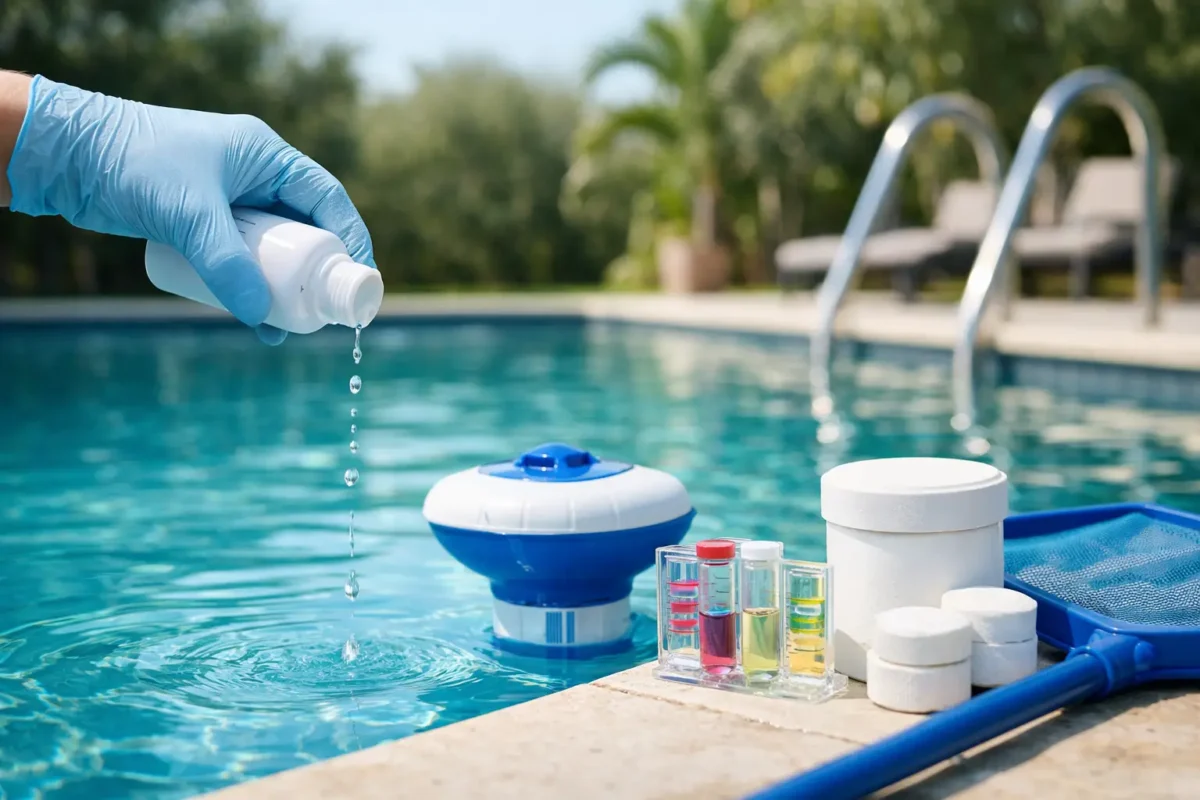
Every well-maintained pool needs a sanitizer, pH control products, total alkalinity control, calcium hardness management, and a dependable water testing method. Most pools also benefit from routine shocking, while stabilizer, algaecide, clarifier, metal control, and specialty treatments should be selected according to the water source, pool finish, circulation system, and usage level.

The goal is balance, not excessive chemical use. Adding chemicals without testing can create a different problem from the one you intended to solve. For example, repeatedly adding chlorine to cloudy water may not restore clarity if the pH is too high, the filter is dirty, or calcium levels are out of range.

1. Sanitizer: The Foundation of Safe Pool Water

A sanitizer is non-negotiable. It controls bacteria, algae, and other contaminants introduced by swimmers, windblown debris, rain, and the surrounding environment. Chlorine remains the most widely used option because it is effective, economical, and suitable for a broad range of residential and commercial pools.

Chlorine may be supplied as liquid chlorine, granules, tablets, or through a salt chlorination system. Each format has a place. Tablets provide convenient, gradual dosing but can raise cyanuric acid over time. Liquid chlorine does not add stabilizer, making it useful where cyanuric acid is already elevated. Salt systems generate chlorine automatically, but they still require regular water testing and careful balancing.

Bromine is another sanitizer option, particularly for warm-water applications such as spas. It performs well at higher temperatures, although it is generally less common for large swimming pools. The right choice should account for pool volume, equipment compatibility, desired automation, and operating budget.

2. pH Increaser and pH Reducer

pH affects nearly every aspect of water quality. When pH is too low, the water becomes corrosive. It may irritate eyes and skin, damage metal components, etch plaster finishes, and shorten the service life of heaters and pumps. When pH is too high, sanitizer becomes less effective, water can appear dull, and scale may form on surfaces and inside equipment.

Most pools operate best with a pH of approximately 7.2 to 7.6. A pH increaser, commonly sodium carbonate, raises low pH. A pH reducer, often dry acid or muriatic acid, lowers high pH. These products should be dosed carefully, with circulation running, and never mixed together or combined directly with chlorine.

For high-value installations, gradual adjustment is preferable to aggressive correction. This reduces the risk of overshooting the target and helps preserve sensitive finishes such as natural stone, glass tile, and polished metal features.

3. Total Alkalinity Adjusters

Total alkalinity acts as a buffer for pH. If alkalinity is too low, pH can shift rapidly and become difficult to control. If it is too high, pH often drifts upward and becomes resistant to adjustment. Both conditions can affect sanitizer performance and the visual quality of the water.

An alkalinity increaser, typically sodium bicarbonate, is used when levels are low. Reducing alkalinity generally requires a controlled acid treatment, often performed in stages. The ideal range depends on the sanitizer system, water source, and finish, but many traditional chlorine pools are maintained around 80 to 120 ppm.

Alkalinity should be corrected before making major pH adjustments. This sequence produces more stable results and prevents unnecessary chemical consumption.

4. Calcium Hardness Treatment

Calcium hardness is especially relevant in regions where fill water has a high mineral content. Water with insufficient calcium can draw minerals from plaster, grout, and other cementitious finishes, contributing to surface deterioration. Excessive calcium can lead to scale formation on tile, fittings, heaters, salt cells, and filter equipment.

A calcium hardness increaser is used for low readings. When calcium is too high, dilution with appropriately balanced water is often the most effective long-term solution. A scale inhibitor may help manage the risk, but it does not replace proper water balance.

This is one area where professional assessment adds clear value. The recommended hardness level varies between plaster, tile, vinyl, fiberglass, and specialty finishes. It also changes based on water temperature and the overall balance of pH and alkalinity.

5. Pool Shock for Oxidation

Regular sanitizing does not always remove the organic waste that builds up in pool water. Sunscreen, body oils, cosmetics, leaves, and nitrogen-based contaminants can combine with chlorine and reduce its effectiveness. This is when pool shock becomes essential.

Shocking oxidizes this waste and restores the sanitizer’s ability to work efficiently. It is commonly needed after heavy use, a storm, visible algae, unusual odor, or a period of neglected maintenance. The correct frequency depends on the pool’s bather load, circulation performance, and exposure to heat and sunlight.

There are chlorine and non-chlorine shock treatments. Chlorine shock provides strong corrective action when water quality has deteriorated. Non-chlorine shock can be useful for routine oxidation and allows a faster return to swimming in many cases. Always follow the product instructions and verify that sanitizer levels are safe before reopening the pool.

Supporting Chemicals That May Be Needed

Not every pool needs every specialty chemical every week. These products are valuable when used for a specific, tested condition rather than as automatic additions.

  • Cyanuric acid, or stabilizer, protects chlorine from rapid breakdown caused by sunlight. Too little can lead to high chlorine consumption, while too much can reduce chlorine effectiveness.
  • Algaecide can support sanitation in pools with recurring algae pressure, shaded areas, warm water, or periods of low circulation. It is a preventive aid, not a substitute for proper chlorine levels.
  • Clarifier gathers fine suspended particles so the filtration system can capture them more easily. It can improve mild cloudiness, but it will not solve a chemical imbalance or undersized filtration system.
  • Metal sequestrant helps prevent staining and discoloration caused by iron, copper, or other metals in source water. It is particularly useful after filling a pool or when water testing identifies metal content.
  • Scale and stain treatment may be required for mineral deposits, surface discoloration, or difficult water conditions. Product selection must match the pool finish to avoid damage.

Testing Is an Essential Part of the Chemical Program

Chemicals without testing are guesswork. A quality test kit or digital water testing system should measure free chlorine or bromine, pH, total alkalinity, calcium hardness, and cyanuric acid. Commercial pools and high-use hospitality facilities may require more frequent testing and documented readings to support consistent operating standards.

For a typical private pool, testing two to three times per week is a practical baseline during active use. Test more often during extreme heat, after gatherings, after heavy rainfall, or when the water appearance changes. Pools with automated dosing systems still need manual verification because sensors, feeders, and salt cells require calibration and maintenance.

Keep records of results and chemical additions. A simple log makes recurring problems easier to identify, whether the cause is high evaporation, a failing feeder, inadequate circulation, or an imbalance in the source water.

Safe Handling Protects People and Equipment

Store pool chemicals in their original labeled containers in a cool, dry, ventilated area away from direct sunlight, fuel, fertilizer, and other household products. Chlorine and acid must be stored separately. Never mix chemicals, never add water to acid, and never use a wet scoop in a chemical container.

When adding treatment products, run the circulation system and follow the manufacturer’s dosage instructions for the actual pool volume. Add one correction at a time when possible, then retest. This measured approach protects premium surfaces and avoids wasting product through overcorrection.

For complex pools, fountains, salt systems, heat-cool pumps, or commercial installations, a professional water analysis can prevent costly equipment issues before they become visible. Aquatic Pools and Fountains can support the selection of quality chemicals, testing systems, and maintenance solutions matched to the demands of your installation.

Clear water is the result of controlled chemistry, effective filtration, and regular technical attention. Treat the numbers before treating the symptoms, and your pool will remain safer, more elegant, and better prepared for daily use.

Categories
Uncategorized

Luxury Pool Design Trends for Dubai Properties

A luxury pool is no longer treated as a separate backyard feature. For premium villas, hospitality venues, and commercial properties, luxury pool design trends now center on creating a complete water environment that supports architecture, entertaining, wellness, and long-term asset value. In Dubai, where outdoor living is central to the property experience, the strongest projects combine visual impact with equipment selected for heat, intensive use, and dependable maintenance.

The most successful designs are not driven by one statement finish or a passing social media look. They begin with a clear understanding of how the pool will be used, how it connects to the property, and what is required to keep the water clear, comfortable, and efficient throughout the year.

Luxury Pool Design Trends That Add Lasting Value

Architectural integration over standalone pools

The defining trend in premium pool design is integration. Rather than placing a conventional rectangle beside the house, designers are extending the property’s architectural language into the water. Clean linear pools reinforce contemporary villas, while curved outlines can soften landscaped hospitality spaces. Coping, decking, wall cladding, and waterline tile are specified as one material palette instead of separate choices.

This approach can make a pool feel larger and more intentional, particularly where outdoor space is limited. It also requires careful coordination. A very dark finish may deliver a dramatic mirror-like surface, but it can absorb more heat and make minor debris more visible. Pale finishes create a bright resort effect, yet may require more attention to grout selection and surface cleaning. The right choice depends on sun exposure, surrounding materials, and the desired water color.

Resort-style edges and visual continuity

Infinity edges remain a premium choice where a pool overlooks a garden, skyline, waterfront, or lower terrace. The effect depends on exact structural levels, a properly sized balance tank, and reliable circulation. It is a technical feature as much as a visual one, and underspecified equipment can compromise both the water level and the finished appearance.

For properties without a view line to frame, perimeter-overflow pools offer a refined alternative. Water sits close to the deck level and flows evenly into a concealed channel, producing a calm, architectural surface. This design is especially effective in hotels, residential towers, and formal villa settings because it creates a polished, high-end visual from every angle.

The trade-off is that overflow and infinity systems need precise hydraulic design, accessible drainage channels, and consistent maintenance. They should be planned early, not added after the pool shell and surrounding hardscape are complete.

Sun shelves, integrated seating, and social zones

Luxury is increasingly measured by how comfortably a pool can be used throughout the day. Wide tanning ledges, shallow sun shelves, submerged benches, and integrated spa zones are now common in premium residential projects. These areas make the pool more versatile for families and entertaining, allowing guests to sit in the water without swimming.

A sun shelf can accommodate loungers or provide a safe shallow play area, while a submerged bench encourages conversation and creates a natural transition between the deck and deeper water. In commercial settings, these features can elevate the guest experience, although designers must consider bather load, circulation patterns, and safety requirements.

Hydrotherapy features also continue to grow in demand. Targeted jets, air blowers, and heated spa sections can turn a beautiful pool into a daily wellness amenity. In the UAE climate, heat-cool pumps are particularly valuable because comfort is not only a winter consideration. The ability to moderate water temperature during hotter months can extend practical pool use and protect the guest experience.

Water Features Are Becoming More Deliberate

Decorative water is moving away from oversized, purely ornamental installations toward features that complement the architecture. Sheer descents, slim scuppers, rain curtains, deck jets, and wall-mounted spillways can add movement and sound without overwhelming the setting. A carefully positioned fountain can also define an arrival court, lobby, courtyard, or landscaped retail zone.

The best feature is not always the loudest or most complex one. A fountain near guestrooms or a villa’s primary seating area should be selected with sound levels in mind. Wind direction, splash zones, and evaporation are equally important in exposed outdoor locations. Every water feature needs a practical plan for filtration, pumping, water treatment, and service access.

For large commercial properties, independent systems may be preferable for pools and fountains. This gives facility teams better control over water quality, operating hours, and maintenance without affecting adjacent aquatic elements.

Lighting Designed for Mood and Safety

Underwater LED lighting has developed into a core part of luxury pool design rather than an afterthought. High-quality LED fixtures can define steps, benches, pool walls, and water features while reducing energy demand compared with older lighting technologies. Warm white lighting creates a sophisticated hotel-inspired atmosphere, while controlled color-changing systems can support events and seasonal programming.

The key word is controlled. Too many colors or poorly positioned lights can make an expensive pool look distracting after dark. For most luxury villas and hospitality spaces, a restrained lighting plan delivers stronger results: clear illumination on entry points, soft wash lighting through the water, and carefully placed accent lighting on fountains or landscape features.

Safety remains essential. Steps, depth transitions, handrails, and deck edges need to be visible without introducing glare. Professional electrical installation, correctly rated fittings, and accessible service points are non-negotiable for reliable operation.

High-Performance Equipment Is Part of the Design

A premium finish cannot compensate for poor water circulation. In Dubai’s high temperatures, equipment selection directly affects clarity, comfort, energy consumption, and the longevity of finishes. Variable-speed pumps, correctly sized filters, automated water testing, and dependable disinfection systems should be considered part of the design specification from the outset.

Variable-speed pumps are a particularly strong choice for luxury residential and commercial pools because they can adjust flow according to filtration, water-feature operation, heating or cooling demand, and cleaning cycles. They may cost more initially than basic equipment, but the operational benefits can be meaningful over time, especially for pools with multiple features.

Disinfection should match the property’s usage profile. Salt chlorination can provide a softer-feeling swimming experience for private villas, while commercial pools may need a more comprehensive treatment strategy that supports higher bather loads and local compliance requirements. UV and ozone systems can complement primary disinfection, helping reduce chloramine formation and improve water quality, but they do not eliminate the need for correct chemical control.

At Aquatic Pools and Fountains, the most effective premium installations are approached as complete systems, with pumps, filtration, lighting, water treatment, fittings, and maintenance access planned together rather than sourced in isolation.

Automation for confident daily operation

Smart controls are increasingly expected in high-value properties. Automated systems can manage filtration schedules, lighting scenes, temperature settings, water features, and certain water-quality functions from a central controller. This is useful for villa owners who travel frequently, as well as facility managers responsible for multiple pools across a development.

Automation should simplify operation, not create unnecessary complexity. A system is only as valuable as its setup, commissioning, and ongoing support. Controls must be intuitive for the daily operator, and there should always be a clear manual override for essential equipment.

Sustainable Choices Without Compromising the Experience

Sustainability in luxury pool design is less about reducing the pool to a basic utility and more about preventing waste while maintaining premium performance. Energy-efficient pumps, LED lighting, pool covers, optimized filtration schedules, and leak monitoring all support lower operating demand. These choices are practical, not decorative, and they can help protect a property’s long-term operating budget.

Water conservation deserves particular attention in hot climates. Reducing unnecessary splashing, controlling water-feature run times, maintaining correct water levels, and addressing leaks promptly can limit avoidable loss. A pool cover may not suit every architectural concept, but it can be highly beneficial for private pools when the property is unoccupied or the pool is used seasonally.

Material durability matters as well. Premium tiles, corrosion-resistant fittings, quality grilles, and equipment designed for demanding conditions reduce the risk of premature replacement. The lowest initial purchase cost rarely represents the best value for a luxury asset.

Designing for Maintenance From Day One

The least visible trend may be the most valuable: serviceable design. Equipment rooms need sufficient ventilation, drainage, lighting, and working clearance. Pumps, filters, dosing equipment, valves, and control panels should be accessible without removing finished walls or disrupting guest areas. Fountain equipment requires the same discipline.

A well-designed plant room protects the visual investment outside it. When technicians can inspect, clean, and repair equipment efficiently, the pool is more likely to maintain its intended water level, finish quality, and operating performance. For commercial sites, planned maintenance also helps avoid costly downtime during peak occupancy.

The strongest luxury pool projects pair distinctive design with equipment that can perform under real conditions. Before choosing the final tile or water feature, establish the intended use, operating expectations, and maintenance plan. That early technical clarity gives every visible design decision a better chance to remain elegant for years.

Categories
Uncategorized

Cartridge Filter vs Sand Filter: Which Fits?

When a pool starts looking dull, the issue is often not the pump or the chemistry – it is the filter doing less than the property demands. In the cartridge filter vs sand filter decision, the right choice affects water clarity, maintenance time, operating cost, and the overall standard of your pool environment.

For villa owners, hospitality operators, and facility managers, this is not a small equipment detail. A filter has to match the size of the pool, the bather load, the maintenance schedule, and the performance level expected from the property. A residential pool built for quiet family use does not have the same filtration demands as a hotel pool, a residential tower amenity deck, or a high-visibility commercial installation.

Cartridge Filter vs Sand Filter: The Core Difference

A cartridge filter captures debris through a pleated fabric element inside the filter tank. Water passes through the cartridge, dirt is trapped in the media, and clean water returns to the pool. When the cartridge becomes loaded, it must be removed and cleaned, and eventually replaced.

A sand filter uses specially graded filter sand inside a tank. Water moves through the sand bed, which traps debris before the water returns to circulation. As dirt builds up, the system is cleaned by backwashing, which reverses water flow and flushes the trapped contaminants to waste.

That basic difference shapes everything else. Cartridge systems generally offer finer filtration and lower water waste. Sand systems are usually simpler to manage for larger pools and are often favored where maintenance teams want fast cleaning cycles without opening the filter body.

Water Clarity and Filtration Performance

If your priority is sharper water clarity, cartridge filters usually have the edge. They tend to capture finer particles than standard sand filters, which can help produce a cleaner, more polished look in the water. For premium residential pools and luxury properties where appearance matters as much as function, that can be a decisive advantage.

Sand filters still perform well, especially when properly sized and maintained. They are dependable workhorses and widely used across residential and commercial installations. But in a direct comparison, standard sand media is generally less precise than cartridge media when it comes to very fine particles.

That said, filtration is never just about the filter tank. Circulation design, pump sizing, turnover rate, water balance, and maintenance discipline all influence the final result. A premium filter installed on a poorly designed system will not deliver premium performance.

Maintenance: Hands-On Cleaning vs Backwashing

This is where the cartridge filter vs sand filter comparison becomes practical.

A cartridge filter does not require backwashing in normal operation. That means less water loss, which is attractive for owners who want efficient pool management. Cleaning, however, is more hands-on. The system must be shut down, the tank opened, the cartridge removed, and the element washed thoroughly. In higher-use pools, that process can become frequent.

A sand filter is easier to clean in day-to-day operation. Backwashing is straightforward and fast, which is why many commercial operators appreciate it. The trade-off is water consumption. Every backwash cycle sends water out of the system, and that means refilling, rebalancing, and managing waste.

For a private villa pool with moderate use, cartridge maintenance may be perfectly reasonable. For a busy commercial pool where speed and operational efficiency matter, sand can feel more practical.

Operating Costs and Long-Term Value

Upfront cost is only part of the equation. The better question is what the filter will cost to own over time.

Cartridge filters may reduce water waste because they do not rely on regular backwashing. In areas where water conservation and efficient system design matter, that can be valuable. They also often operate with lower resistance, which can support efficient circulation when the system is correctly engineered.

On the other hand, cartridge elements are consumable components. They need periodic replacement, and the quality of the replacement media matters. If the pool sees heavy use, replacement intervals may be shorter.

Sand filters typically have lower ongoing media replacement frequency. The sand can last for years before it needs changing, depending on operating conditions and maintenance quality. But water loss from backwashing adds cost over time, along with the chemical adjustments needed after each cleaning cycle.

So which is more economical? It depends on usage. A lightly to moderately used residential pool may benefit from the efficiency and water clarity of a cartridge system. A larger pool with frequent contamination loads may justify the simplicity and durability of a sand filter.

Cartridge Filter vs Sand Filter for Residential Pools

For high-end residential pools, cartridge filters are often a strong fit. They support excellent water clarity, avoid regular backwashing, and align well with owners who want a cleaner, more refined finish in the pool. They are especially appealing where aesthetics, efficiency, and quieter operation are priorities.

They do require proper maintenance. If the cartridge is neglected, performance drops. For homeowners who rely on professional pool service, this is usually manageable. For owners who want the lowest possible hands-on servicing, the cleaning process may feel less convenient than a backwash valve.

Sand filters also work well in residential settings, particularly for larger family pools, outdoor pools exposed to dust, or homes where simplicity matters most. In environments with windblown debris or heavy seasonal use, sand filters can be very forgiving.

Which Option Suits Commercial and High-Demand Properties?

For hotels, apartment towers, health clubs, and large real estate assets, the decision is often driven by maintenance logistics and usage intensity rather than filtration theory alone.

Sand filters are frequently selected for commercial applications because they are durable, familiar to service teams, and easy to clean quickly. When a facility team needs predictable maintenance routines and reliable performance across heavy bather loads, sand remains a proven solution.

Cartridge systems can still be used in commercial or semi-commercial settings, especially where water savings and fine filtration are priorities. But they need a maintenance plan that matches the demand. On a busy property, that may mean keeping spare cartridges, scheduling more frequent cleaning, and ensuring technicians are equipped to service the system properly.

In premium installations, the best answer is often the one that fits the property’s operational model, not just the one with the strongest specification sheet.

Space, Plumbing, and System Design Considerations

Filter selection should never be made in isolation. Tank size, plant room layout, plumbing configuration, pump performance, and service access all matter.

Cartridge filters can be attractive where water discharge from backwashing is inconvenient or restricted. They may also suit projects where minimizing water loss is part of the design strategy. But they need enough service clearance for cartridge removal and cleaning.

Sand filters are often favored where robust, simple infrastructure is preferred and backwash drainage is already integrated into the system. They can be particularly effective in large equipment rooms serving commercial pools or multi-unit developments.

This is why experienced technical guidance matters. A filter that looks right on paper may be the wrong choice if the installation conditions, maintenance resources, or water treatment strategy are not aligned.

How to Choose Between Cartridge and Sand

If your priority is premium water clarity, lower water waste, and a refined residential pool setup, a cartridge filter is often the stronger option. If your priority is easy routine cleaning, proven durability, and practical operation for larger or busier pools, a sand filter may be the better investment.

There is no universal winner in the cartridge filter vs sand filter debate. The right answer depends on pool size, expected usage, debris load, available maintenance support, and the performance standard the property must maintain.

For buyers investing in premium pool infrastructure, the smartest approach is to evaluate filtration as part of the full circulation system, not as a standalone product. That is where specification quality, correct sizing, and professional support make the difference between acceptable performance and consistently excellent results.

Aquatic Pools and Fountains works with property owners, developers, and commercial clients who need filtration systems that match both technical demands and presentation standards. When the equipment is selected correctly from the start, the pool stays clearer, maintenance becomes more predictable, and the installation performs the way a premium property should.

A filter should do more than keep water moving – it should support the level of quality your property is expected to present every day.

Categories
Uncategorized

Pool Safety Equipment Checklist for Any Pool

A beautiful pool should never leave safety to chance. A proper pool safety equipment checklist helps property owners, developers, and facility teams protect guests, reduce risk, and maintain a higher operational standard from day one.

For luxury villas, residential towers, hotels, and commercial properties, safety equipment is not just a box to tick. It is part of the pool’s core infrastructure. The right setup supports safer daily use, faster emergency response, and stronger long-term confidence for residents, staff, and visitors. In premium environments, that standard needs to be visible, durable, and professionally selected.

What a pool safety equipment checklist should cover

A complete pool safety equipment checklist should address prevention first, then response. That means creating layers of protection around the water, controlling access, improving visibility, and making sure rescue tools are available and in excellent condition.

This matters because no single product solves every risk. A pool fence may help prevent unsupervised access, but it does not replace rescue equipment. Clear depth markers improve user awareness, but they do not help if lighting is poor at night. The strongest safety approach combines physical barriers, warning systems, rescue tools, and routine inspection.

For residential pools, the priority is often preventing child access and ensuring immediate response tools are close by. For hospitality and commercial facilities, the checklist usually expands to include signage, larger rescue provisions, emergency communication considerations, and more frequent inspection routines. The exact mix depends on the pool type, user profile, and local operating requirements.

Access control is the first line of protection

If people can enter the pool area without restriction, risk rises immediately. That is why barriers and controlled entry points sit at the top of any serious pool safety equipment checklist.

Pool fences should be sturdy, difficult to climb, and designed to preserve both safety and the visual quality of the space. In high-end residential and commercial settings, clients usually want a barrier that feels refined rather than intrusive. That balance is achievable, but only when the materials, height, gate hardware, and installation quality are all handled properly.

Self-closing and self-latching gates are equally important. A premium fence loses much of its value if the gate is routinely left open or does not secure properly after use. For villas with children or frequent guests, this feature is essential. For shared amenities in apartment buildings or hospitality properties, it becomes even more critical due to higher traffic and less predictable user behavior.

Pool covers can also support safety, though their role depends on the product selected. Not every cover is safety-rated. A basic debris cover may keep leaves out of the water, but it should not be treated as a child-protection system. If safety is part of the goal, the cover must be designed and specified for that purpose.

Alarms and alerts add another layer

Alarms are especially useful where pools are attached to homes, private gardens, or low-supervision areas. Door and gate alarms can notify occupants when someone enters the pool zone. Surface disturbance alarms may add another level of awareness, although performance varies by pool design, wind exposure, and water movement.

This is one of those areas where product selection matters more than many buyers expect. An alarm that triggers too often becomes background noise and may be ignored. One that is poorly matched to the pool environment may fail to deliver reliable performance. In premium properties, the goal is not just to install an alarm, but to install one that works consistently within the real operating conditions of the site.

For larger commercial properties, alarms are only part of the picture. Staff procedures, monitoring routines, and clear emergency protocols matter just as much. Equipment supports safety, but it does not replace trained oversight.

Rescue equipment must be visible and ready

Any practical pool safety equipment checklist needs immediate-response rescue tools positioned near the pool. These are not decorative items and should never be stored in a locked room or hidden behind maintenance supplies.

A life ring with rope is one of the most recognizable essentials. It provides a fast way to assist someone in distress without requiring another person to enter the water. A reaching pole is equally important, especially for pulling or guiding a swimmer toward the edge from a safer distance.

For commercial pools, larger pools, or deeper installations, rescue hooks and additional throw devices may also be appropriate. The key is access and condition. Equipment should be mounted properly, easy to identify, and checked routinely for wear, sun damage, or corrosion. In the UAE climate, material durability is not a minor detail. Heat, UV exposure, and humidity can shorten the life of lower-quality products.

First aid provisions should also be close to the pool area. A stocked first aid kit, clearly designated emergency contact information, and, where appropriate, resuscitation equipment can strengthen readiness. For hospitality and managed facilities, this should align with staff training and site procedures rather than exist as a disconnected item on a wall.

Signage, markings, and visibility are often overlooked

Pools are safer when users can understand the environment immediately. Clear signage and markings help prevent misuse, reduce confusion, and support faster decisions in an emergency.

Depth markers are essential and should remain visible over time. For commercial and public-facing pools, no-diving signs may also be necessary in shallow zones. Rules signage should communicate the basics clearly, such as whether children require supervision, whether running is prohibited, and whether emergency equipment must remain accessible.

Lighting also belongs in the conversation, even though many buyers think of it as a design feature before a safety feature. Proper underwater and surrounding area lighting improves visibility at dusk, at night, and in enclosed settings. It helps users judge depth and edges more accurately while supporting supervision and emergency response.

Slip-resistant poolside materials are another practical protection point. While technically not a rescue item, they reduce one of the most common poolside incidents. For hotels, towers, and villas with polished aesthetic finishes, this is where specification discipline matters. Premium design should not create unnecessary slip hazards.

A pool safety equipment checklist for residential and commercial use

The exact checklist will differ, but most well-equipped pools should include the following core items:

  • Secure pool fence or barrier
  • Self-closing, self-latching gate
  • Safety-rated pool cover where applicable
  • Door, gate, or pool alarm based on site needs
  • Life ring with attached rope
  • Reaching pole or shepherd’s hook
  • First aid kit
  • Emergency contact instructions
  • Clear depth markers and warning signage
  • Adequate pool and perimeter lighting
  • Slip-resistant surrounding surfaces

For commercial properties, the list may extend further depending on pool size, occupancy, operating model, and compliance requirements. Managed environments often need more formal inspection routines, stronger staff readiness, and a wider range of emergency response tools.

Inspection matters as much as installation

Even the best pool safety equipment checklist fails if nobody checks the equipment after installation. Gates drift out of alignment. Latches wear down. Rescue ropes become brittle. Signs fade. First aid supplies expire.

A premium pool should have a documented inspection routine. For private homes, that may mean a simple scheduled review of barriers, rescue tools, and alarms. For hospitality or commercial properties, inspections should be more formal and frequent, with clear accountability for maintenance teams or operators.

This is where working with an experienced equipment and service partner makes a measurable difference. The best outcomes come from combining quality products with correct installation, technical support, and ongoing maintenance. Aquatic Pools and Fountains supports this standard by supplying high-performance pool equipment and helping clients build systems that are not only elegant, but dependable under real operating conditions.

Choosing the right equipment for your property

A compact villa pool, a rooftop amenity deck, and a hotel leisure pool do not carry the same risk profile. That is why a one-size-fits-all package is rarely the right answer.

For family homes, child safety and access control usually lead the discussion. For developers and facility managers, durability, compliance, visual integration, and maintenance practicality are often just as important. Hospitality operators may prioritize guest clarity, staff response readiness, and products that continue to perform well under frequent use.

The common thread is quality. Safety equipment should match the pool environment in both function and finish. Cheap components may save money upfront, but they often create more risk, more replacement cycles, and a lower overall standard for the property.

If you are reviewing a new installation or upgrading an existing pool, treat safety equipment as a core specification, not an afterthought. The right checklist protects people, strengthens the property, and supports the level of performance a premium aquatic space is expected to deliver.

A well-designed pool should feel inviting, but it should also be prepared. That balance is what turns a good installation into a responsible one.

Categories
Uncategorized

Pool Leak Detection Methods That Work

A pool that needs topping off every few days is not just losing water. It may be losing finish life, chemical balance, equipment efficiency, and in some cases, structural integrity. Effective pool leak detection methods help property owners and facility teams separate normal evaporation from a real system failure before the damage becomes expensive.

In premium residential and commercial settings, leak detection is not a cosmetic concern. It is an operational one. Water loss can affect surrounding decking, plant rooms, electrical systems, water bills, and the overall performance of pumps, filters, and treatment equipment. The earlier the source is identified, the easier it is to protect both the asset and the appearance of the installation.

Why accurate leak detection matters

A hidden leak rarely stays small for long. In a villa pool, it can undermine finishes, stain adjacent surfaces, and create avoidable maintenance costs. In hospitality, residential tower, or commercial environments, even a modest leak can disrupt water quality, increase utility consumption, and place unnecessary strain on mechanical systems.

The challenge is that not every drop in water level points to the same problem. Heat, wind, sun exposure, splash-out, and backwashing all contribute to water loss. That is why professional assessment matters. The goal is not simply to confirm that a leak exists, but to identify where it is occurring and how serious it is.

The first step in pool leak detection methods

The most reliable starting point is to distinguish evaporation from leakage. This sounds simple, but it is where many pool owners make the wrong call. Topping up the pool too often can hide the pattern. Ignoring it can allow damage to spread.

A practical first check is the bucket test. A bucket is filled with pool water and placed on a pool step so the water inside the bucket matches the pool water level outside it. After 24 to 48 hours, the two levels are compared. If the pool water drops more than the water inside the bucket, the loss is likely more than evaporation.

This method is useful, but it is only a screening tool. It does not tell you whether the leak is in the shell, fittings, plumbing, or equipment line. For premium pools and fountains, that level of precision is essential.

Visual inspection and surface-level clues

Some leaks reveal themselves through visible symptoms before testing equipment is ever used. Cracks in the pool shell, loose tiles, separated coping, wet spots near the pool, or unexplained algae growth around one area can all point to a leak path. Air bubbles returning through inlet lines may also suggest suction-side plumbing issues.

At the equipment pad, technicians look for damp valves, drips around pump seals, filter tank seepage, and pressure irregularities. In many cases, the problem is not inside the pool basin at all. A worn gasket, failing union, or leaking multiport valve can create steady water loss that is easy to miss during routine operation.

Visual inspection is fast and valuable, but it has limits. Many serious leaks are hidden behind finishes, below grade, or within underground plumbing. That is where more targeted pool leak detection methods become necessary.

Dye testing for pinpointing structural leaks

Dye testing is one of the most effective methods for confirming localized leaks in the pool structure. A technician releases a small amount of dye near suspected points such as cracks, light niches, return fittings, main drain areas, skimmer throats, and joints where materials meet. If there is an active leak, the dye is pulled toward the opening.

This technique is especially useful in still water and works well when the suspected leak is in the shell or around embedded fittings. It is precise, low impact, and often helps confirm areas that appear visually suspicious.

That said, dye testing depends on access and water conditions. If circulation is too strong or the leak is within buried pipework, the results may be limited. It is an excellent diagnostic tool, but not a complete solution on its own.

Pressure testing for plumbing lines

When the pool shell appears sound, plumbing becomes the next priority. Pressure testing isolates individual lines such as skimmers, returns, cleaners, main drains, and water features to determine whether they can hold pressure. If a line loses pressure during testing, there is a strong indication of a leak in that section.

This is one of the most important pool leak detection methods for larger installations because underground plumbing issues can waste substantial amounts of water while remaining completely invisible from the surface. In commercial properties and luxury residences with integrated spas, balance tanks, fountains, and water features, line testing helps narrow the issue quickly.

The trade-off is that pressure testing identifies the affected line, but not always the exact physical location of the break. Additional acoustic or tracing methods may be needed to complete the diagnosis.

Acoustic listening and electronic location tools

Professional leak detection often relies on acoustic equipment that detects the sound of water escaping under pressure. Specialized listening devices can help technicians trace hidden plumbing leaks beneath decking, landscaped areas, or technical rooms without unnecessary demolition.

Electronic tools may also be used to trace pipe routes and narrow excavation zones. For high-value properties, this matters. The goal is not just to find the leak, but to do so with precision and minimal disruption to finishes, hardscape, and surrounding design elements.

These methods are highly effective in experienced hands, but they are sensitive to background noise, pipe material, depth, and site conditions. That is why leak detection should be treated as a technical service rather than a trial-and-error maintenance task.

Leak detection around fittings and penetrations

Some of the most common leak points are the ones built into the pool itself. Skimmers, return fittings, underwater lights, main drains, vacuum points, and expansion joints all create transitions between materials. Over time, movement, aging sealants, or installation defects can compromise these areas.

Light niches are a frequent example. Water can migrate through conduit lines behind the light fitting and escape where it is not immediately visible. Skimmer throats can also separate slightly from the shell, especially if there has been movement or finish deterioration.

In these cases, the repair is often manageable once the source is accurately identified. The larger cost usually comes from delayed detection, not from the fitting itself.

When water loss is not a leak

Not every case of falling water level requires invasive testing. In hot climates, evaporation can be significant, especially with wind exposure, high water temperature, and long pump run times that increase surface movement. Splash-out from active use, infinity edge systems, and backwashing losses can also distort the picture.

This is why experienced evaluation matters. A pool that loses water after heavy usage may not have a structural problem. A pool that drops to the same level every time may indicate a leak at a particular fitting elevation. The pattern tells the story.

For facility managers and developers, this distinction is important because it protects maintenance budgets from unnecessary repair work while ensuring real faults are addressed quickly.

Choosing the right response

The best response depends on the pool type, the symptoms, and the installation complexity. A small residential pool with visible tile separation may only need dye testing and a targeted repair. A commercial property with concealed pipe networks, multiple circulation systems, and decorative water features may require a staged diagnostic process that includes pressure testing, acoustic tracing, and equipment inspection.

What should not happen is guesswork. Random sealing, repeated chemical balancing, or constant refilling does not solve the root issue. It usually increases long-term cost.

For premium aquatic environments, professional support is the standard. Aquatic Pools and Fountains works with property owners, developers, and facility teams that expect dependable diagnostics, quality equipment knowledge, and technically sound solutions across both residential and commercial installations.

Protecting the pool after detection

Finding the leak is only part of the job. The repair must match the system design, material condition, and operating demands of the installation. A quick patch may help in the short term, but if pressure, movement, or worn components are not addressed, the issue can return.

A quality repair strategy often includes checking surrounding fittings, reviewing hydraulic performance, and confirming that pumps, filters, valves, and treatment systems are operating within proper parameters. A leak can be the symptom of a broader maintenance issue, particularly in older or heavily used pools.

If your pool is losing water faster than normal, acting early protects more than the waterline. It protects the finish, the equipment, the surrounding property, and the standard of performance your installation was built to deliver.